
[ad_1]
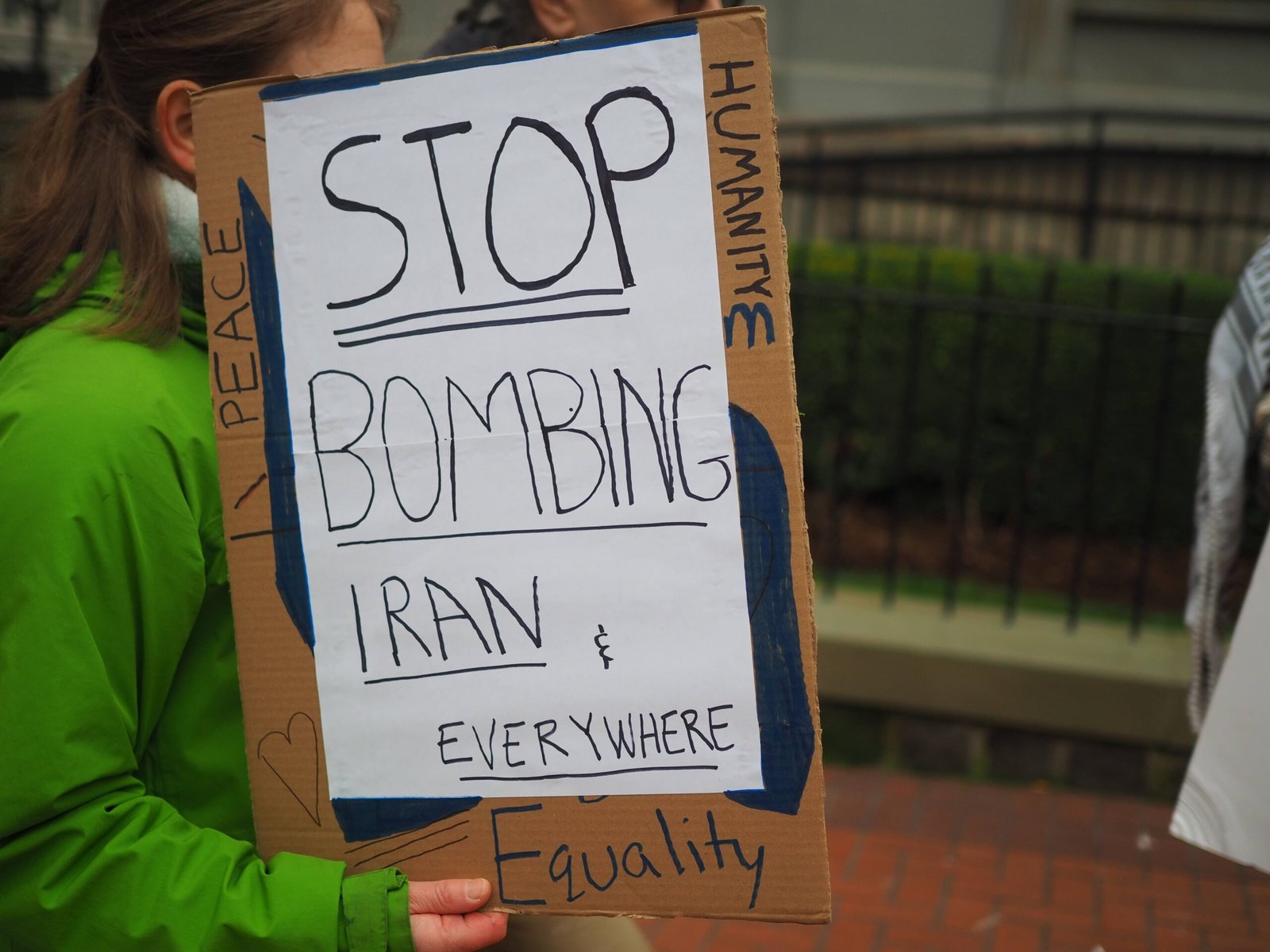
Photograph by Nathaniel St. Clair
I have sought out the following to show that peace can be mutual across warring sides. The key is not to drift into maudlinness or sentimentality.
Across both American and Iranian poetic traditions, anti-war poetry leans towards a few core themes. The dehumanisation of conflict. The grief of survivors. The illusion of glory. And the long and often inescapable shadow of memory.
I could go further—comparing stylistic differences between American and Persian anti-war poetry, or offering longer excerpts and analyses—but I do not have the authority. I should leave that to academics.
For now, these simple, tentative findings will have to do.
War, as we know, divides the world into flags, languages, and the blunt and sometimes ugly arithmetic of sides. Poetry, at its most honest, when at its best, resists such divisions.
Through the eyes of poets—in this instance, American and Iranian—the world is not split but continuous. It is like a single field across which the same grief travels.
The grief just comes under different names—like a river, or some endless variation, into which a composer, say, like Bach, as well as a poet, might dip with effortless invention.
When Walt Whitman kept vigil beside the wounded and the dead, he did not write of victory or nation. He wrote of his feeling close, of a shared being.
In Song of Myself, he declares:
I think I could turn and live with animals, they are so placid and self-contain’d…
And in The Wound-Dresser:
I do not ask the wounded person how he feels, I myself become the wounded person.
The soldier becomes “my son and my comrade,” cold hierarchy collapses into warm kinship. This is not an argument against war so much as a refusal to let the dead belong exclusively to one side.
A century later, Denise Levertov asks, in What Were They Like?:
Did the people of Viet Nam
use lanterns of stone?
Did they hold ceremonies
to reverence the opening of buds?
The questions are deliberately naive, but their purpose, to me, is not. It is to restore specifics that war has erased. Culture, rather than tactics, becomes the measure of loss.
If Whitman and Levertov expand the circle of recognition, Yusef Komunyakaa complicates it.
In Facing It, standing before the Vietnam Veterans Memorial, he writes:
I said I wouldn’t,
dammit: No tears.
I’m stone. I’m flesh.
My clouded reflection eyes melike a bird of prey…
Identity becomes untenable. The living and the dead blur. Unity here is not comforting—it is disorienting.
This darker unity finds an echo in the work of Iranian poet Ahmad Shamlou, who writes:
I am the pain of common feeling.
Here, the “I” becomes a vessel for many—not erasing difference, but carrying it.
After the Iran–Iraq War, Simin Behbahani gives voice to maternal grief:
Tell me, where have you taken my son?
Which road swallowed his footsteps?
The question is unanswerable—and not uniquely Iranian. It could be asked by any graveside.
Even poets who turn away from war, such as Sohrab Sepehri, contribute to this vision.
In The Address:
Where is the friend’s house?
The question gestures towards a world grounded in relationships rather than conflict—but also shows absence.
A contemporary American voice such as Brian Turner strips away even that.
In Here, Bullet:
Nothing but bullets and pain…
Likewise, Fatemeh Ekhtesari writes:
We wrote peace
but they answered with bullets
—and the paper bled.
Turner offers the body to the bullet, naming its parts as if language could hold violence at bay.
Ekhtesari, by contrast, begins with language itself—“We wrote peace”—only to have it answered and undone. The page, like the body, becomes a site of injury.
Read together, Turner and Ekhtesari begin to form not a dialogue but a sequence: the body offered to the bullet, the word offered to the world, and in both cases the same reply—violence, which completes the sentence by breaking it.
Through a poet’s eyes, the world is indivisible not because it is harmonious, but because its wounds are continuous.
The field Whitman walked is not separate from the streets Behbahani mourns, or the deserts Turner describes. It is one space, extended across time and language, marked by many graves.
A quiet return to Whitman:
the dead… are alive and well somewhere.
To see this clearly is not to transcend war. It is to recognise that no one stands entirely outside it.
[ad_2]
Source link
