
Regeneration is one of the futuristic tropes of science-fiction, because it is both incredibly powerful and not theoretically impossible. Imagine the ability to regrow a lost limb, or simply to replace a diseased or worn out limb. There are about a million limb amputations worldwide every year, so it is a very common medical problem. What if we could regenerate organs? This would be a game-changer for medicine.
There are several approaches to addressing missing limbs or failing organs. One is the cyborg approach – make a mechanical version to replace the biological one. We are making progress here, with brain machine interfaces, mechanical hearts, and other advances. Or you could transplant the body part from another person, or even an animal that has been genetically modified to be compatible. You can also regrow the missing or failing body part from the intended recipient’s own tissues and then transplant that. Or you could inject stem cells programed to regrow the needed part inside the recipient. All of these options are active research programs, have shown some incredible promise, but are also years or even decades away, especially in their mature form.
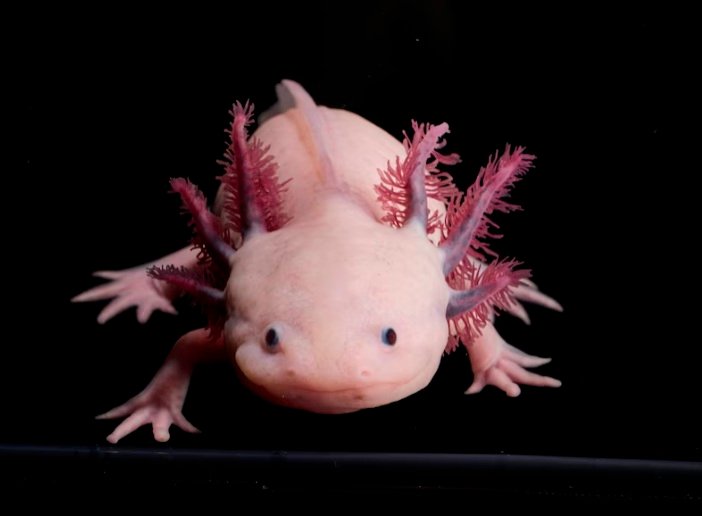
Let’s now add one more technology to the list – genetic therapy that triggers natural regeneration, meaning from the person’s own tissue. This has long been a target of potential therapy, inspired by the fact that there are many animals that can already naturally do this. Most extreme is the axolotl (a type of salamander that for some reason has become very population with the young generation), which can regenerate just about any of its body parts. They form a blastoma of pluripotent stem cells at the site of injury that can quickly regrow into a missing limb, heart, spinal cord, parts of the brain, etc. in weeks. There are also zebrafish, which can regrow their tail fins. Mice can also regrow missing digits, which is important because they are mammals showing that regeneration can happen even within the mammal clade. You don’t have to be a salamander.
The amazing regenerating ability of the axolotls was first documented in 1768. Molecular and genetic studies of the regeneration process go back to the end of the 20th century. But now with modern genetics tools, like CRISPR, genetic research is really taking off. A recent study tried to find if there were any genetic similarities in the regeneration abilities of axolotls, zebrafish, and mice. If these three animals share the same genetic basis of their regeneration that this would suggest that these genetic abilities are highly conserved, all the way from fish to mammals. This would be good for the prospects of regeneration in humans, because we would likely share some of these same highly conserved genetic infrastructure. As you may have guessed, these researchers hit pay dirt (which is why I am writing about this today). They found that they shared SP6 and SP8 transcription factors. They confirmed the relevance of these factors by making knockout mice missing SP6 and SP8, which impaired their ability to regenerate lost digits. Knocking out sp8 in the axolotl also impaired their ability to regenerate – so the same factor seems critical for both species.
They then took a factor from the zebrafish which has been shown to enhance regeneration – FGF8, whose gene is normally turned on by SP8. Replacing the missing FGF8 then partially restored the regeneration ability of mice missing SP6 and SP8.
Do humans have SP6 and SP8 genes? Yes, we do. Again, these are highly conserved genes with basic biological function. They are the Specificity Protein family of genes that are involved in regulating the development of limbs, teeth, skin, and even organs. That is essentially how development works – there is a suite of genes with all the information to make, for example, a human arm (or a bird’s wing, or a the antenna of a moth). This suite of genes is turned on by a regulatory gene, that essentially says – build an arm here. Regeneration in a creature like the axolotl essentially involved going back to this developmental stage, creating a blob of stem cells, and then saying – build a limb here.
Obviously this entire process is more complicated than just tweaking one gene or replacing one missing factor. It is very complex. Humans form scar tissue to repair a wound, they do not form a blastema. This is partly driven by differences in the availability and sensing of oxygen in the tissues. Further, scar formation is driven by the immune reaction, involving macrophages, which are actively suppressed in salamanders. And finally, the reason we do not already have the ability for unlimited regeneration, is that there is a tradeoff between regenerative ability and cancer suppression. It is likely that our ancestors sacrificed regenerative abilities for cancer suppression mechanisms – this was the best evolutionary tradeoff. In other words – we simply went down a different evolutionary path than the axolotl. Gaining the ability to regenerate limbs or organs would therefore probably involve a complex coordination of multiple factors, while simultaneously preventing cancer formation.
Interestingly, at present there is nothing we know that would make it theoretically impossible to have full regeneration in humans. However, it is extremely complex. It is the perfect sci-fi technology – possible, but likely only in the distant future. I suspect it will take decades to perfect this technology.
