
[ad_1]
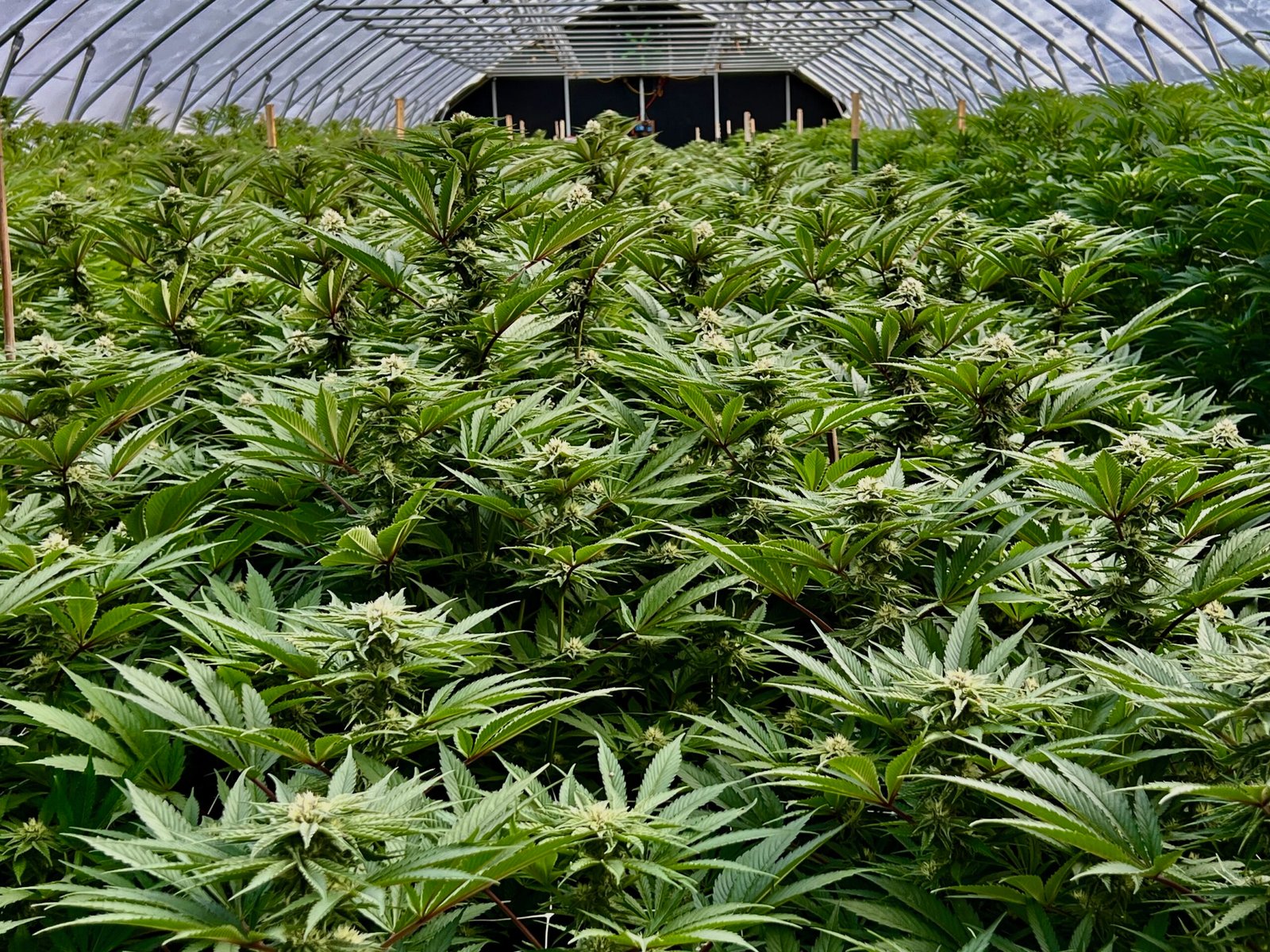
Marijuana grow operation, Northern California. Photo: Jeffrey St. Clair.
Ten years ago I was invited to an “Eve-of-420” event It was at a club in San Rafael called Terrapin Crossroads, launched by Phil Lesh of Grateful Dead fame. There was valet parking, a rare treat for my 1986 Volvo. I told the attendant, “It’s not a jalopy, it’s a classic.”
As I approached the entrance a tall, longhaired man named Tree offered up a thin square of chocolate laced with way more cannabis oil than I wanted to ingest then and there. Marin County, indeed. The dark confection started melting on my fingertip so I headed in to the bar to get a plastic cup, figuring I’d bring it home for future investigation.
A man was giving me a puzzled look as I dropped the melting sliver of chocolate into the cup. “It’s an edible,” I explained. “I never got into edibles,” he said. I asked if he’d had an early bad experience with a brownie and he said yes. “I’m a Waldo,” he added, introducing himself as Larry. “The Waldos are real. We’ve decided to tell our story —how we started using ‘420’ as code for smoking marijuana.” Tell me more, said I.
Although the five friends all remained cannabis aficionados, they have kept their distance from the burgeoning industry —until very recently.
In the fall of 1971 Larry Schwartz, Steve Capper, Dave Reddix, Jeffrey Noel, and Mark Gravich, marijuana smoking students at San Rafael High School, had a designated meeting place: a wall near the statue of Louis Pasteur in front of the Science Department. As teenage boys are wont to do, the five friends shared a certain comic sensibility. They were all big fans of Johnny Carson (the Stephen Colbert of his day). Their usual meeting time was twenty minutes after four, and that became their secret word for getting together and getting high. “Like we might say ‘Four twenty at three thirty today,” Larry explained.
Other students dubbed them the Waldos in reference to their hang-out of choice.
The first of many exploits through which the friends bonded was a search for a small patch of marijuana plants near the Point Reyes lighthouse. They had been given a map with the location of the patch. Asked who gave it to them, Larry consulted Jeffrey Noel about how much the Waldos were now planning to reveal. “We’re not holding back anything,” said Noel. We went outside where it was quieter.
As Noel tells it, “The term we used was originally ‘420 Louie.’ It was our code term for ‘this is when we’re gonna meet at the statue.’ The synonym so we could communicate without saying ‘Let’s go get high together.’
“I had to be somewhat secretive because my father was a state narcotics agent for 32 years. I couldn’t be as open as the others in verbally expressing myself. This was back in the days of landlines and everyone listening to one another. ‘Four twenty’ was our way to get under the radar.
The friends would jive amicably with students passing by —the jocks, the academics, the stoners, the hot-rod afficionados— and they would go off and smoke joints together. Steve Capper was a senior and had a big 1966 four-door Chevy sedan. The others were juniors and sophomores. Noel says, “We would sit on the wall and make comments as everyone went by. We were self-deprecating as well as comical. We had a wry but vibrant humor that we thrived on. We still do. That was part of getting high, too —verbal play and banter. We all loved comedy. We all loved travel and seeing new places and exploration —all of that kept re-enforcing itself.”
Larry Schwartz credits the school administration with maximizing the Waldos’ 420 time: “The teachers thought they came up with this brilliant thing called ‘modular scheduling.’ It gave us big breaks in time between classes. We would have 30 minutes to drive around smoking joints.”
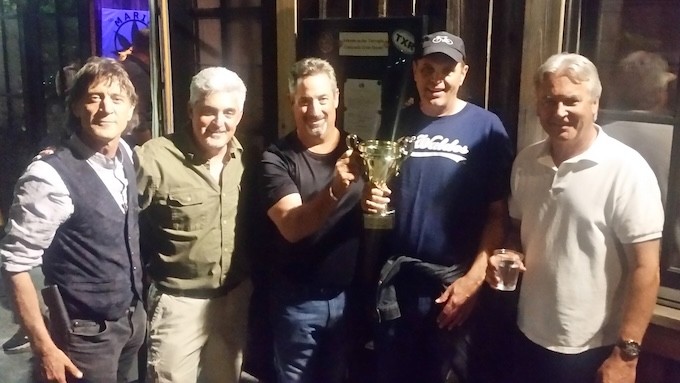
The Waldos.
After high school the five Waldos stayed in touch with one another. They and their families socialize to this day. All still live in Marin except Noel, who moved to Calistoga and worked for a company that made candles (and for 11 years grew cannabis behind trellised grapevines). He now lives in Santa Rosa.
Steve Capper runs a successful lending company in San Francisco. Dave Reddix works with him and is an independent filmmaker. Mark Gravich is a professional photographer specializing in real estate (pictures for listings and sales). Larry Schwartz is a project manager for a company in San Rafael, married for 23 years, two kids in college. “We’ve all done all right,” he observes.
I asked if the Waldos had heard the urban legend that 420 was police code for a pot bust in Connecticut. Noel said, “Yes, but not in Connecticut.” I also laid out my own private theory: some stoned hipster, probably in the 1950s, thought the hands of a clock at 4:20 looked like a face smoking a joint.
Noel said, “We’ve heard all the theories of how 420 started —which is part of the reason we’ve decided to explain how it really happened. Another was the number of compounds in the cannabis plant.”
Some of the first 420 get-togethers involved driving to Pt. Reyes in search of the pot patch. According to Steve Caper, “My friend Bill McNulty (and his brother Pat McNulty) had a brother in law named Gary Newman, who was in the U.S. Coast Guard and stationed at the Pt.Reyes Peninsula. They would go out to visit with him often. Gary planted his plants in the spring while an Active, and then got out of the active military and went into the Coast Guard Reserve. During his time in the Reserve he took a job as a ranch hand just a mile or so down the road from the lighthouse. By fall when the crop was ready to harvest, he became fearful that he would be busted and decided not to harvest. One day when Bill and Patrick were up there visiting with him, Gary drew the map of the growing location and personally handed it over to them with a permission for them, and anybody they truly trusted, to harvest. Bill McNulty brought the map to the Waldos —trusted friends— and 420 was born.”
Was the map like the one in Treasure Island with “X marks the spot?” According to Noel, “There was a power box marked, a generator, a rock, and the patch was supposed to be behind the box where the generator was. We still have a copy of it. We recently interviewed Gary and got that information. It took years to find him. Steven hired a PI who searched records and came up with his location. (Newman is down on his luck in the South Bay.)
“So we all would meet at the Louis Pasteur statue at 4:20 and jump in Steven’s Chevy Impala and go out to Point Reyes. Of course on the drive we would smoke and get high, which really wrecked our ability to find the patch. We would walk around the fields — acres and acres of cow pastures and woods—and eventually we’d give up. We did this I don’t know how many times.” Clapper thinks there were five or six search attempts over the course of a month.
The Waldos were not desperately in need. “It was the early ’70s and Marin County was rife with avenues to access,” notes Noel. “And Marin was rich, so it drew people who had it and wanted to gain the best profits. I had come from San Francisco. Marin seemed kind of soft at first, not the same diversity, but then I made good friends. My older brother and his friends were going to the Fillmore, the Avalon Ballroom, Winterland —all those places. We knew people who were bringing it into the country, driving to Mexico, going to Hawaii. Guys in the military bringing it in from Southeast Asia.
“My dad was in the Bureau of Narcotics Enforcement in San Francisco. He had a different car every few months. One time he came home —I was shooting hoops in our driveway with two of my friends and he said, ‘Hey guys, come over here and look at this.’ He threw open the trunk and he threw an aluminum-foil-rapped kilo brick to one of my friends —2.2 pounds of pot. He showed a Thompson submachine gun to another guy. Me, I’m looking in the trunk and there’s all sorts of other confiscated drugs. Back in the day agents used to bring that stuff home. It was awesome. A block of hash as big as my head… I must admit I was a bit of a thief.”
Noel’s father died a few years ago. His disapproval of his children’s marijuana use had been tempered, Noel recalls, by a document published by the state of California in the mid-1970s. “It was heavy on the technical side but it demystified the bullshit put out by the federal government.” His father gave it to him to read, saying, ‘I’m not going to stop you from doing this, but I want you to be aware of the facts.’ And that’s when we kind of met at a common point.”
As I was interviewing the Waldos, Big Mike Barnes, who operates the 420 Limo service, took some photos and joined the conversation. He explained how he used to chauffeur Elvy Musikka, a glaucoma patient who had won the right to receive cannabis from the federal government, grown at the University of Mississippi under contract with the National Institute on Drug Abuse. This was all news to the Waldos, who had for all these years kept their distance from the movement that has now become an industry (except as footsoldiers, i.e., users). The Waldos are bemused by their status as icons and justly proud of their unique accomplishment: adding a word/number/symbol to the international vocabulary. What a legacy!
“It’s not something we tried to do,” says Noel. “We were just a bunch of goofs It’s mind-boggling that somethingthis personal —what we thought was code used by a tight group of people— just expanded and expanded. Friends outside our inner circle picked up on ‘420’ and started using it. We have a letter from a friend who went to Israel in 1972. He wrote, ‘Oh, wow, having a wonderful time. There are some hot chicks here at the kibbutz but no 420.” One of our friends in ’74 went into the military and was stationed in Germany. He wrote us ‘No green 420 here, it’s all Lebanese kief.’ Dave Reddix’s brother was good friends with Grateful Dead. He used the terminology and it spread through them. There were a number of circuitous connections.”
Bonus track: https://fredgardner.bandcamp.com/track/the-waldos
[ad_2]
Source link
