
[ad_1]
Racial discrimination is alive and well in higher education.
That’s what the Trump administration strongly – and rightly – suspects. In late March, the Department of Justice opened investigations into admissions policies at three major medical schools, including those at Stanford University, the University of California at San Diego, and Ohio State University. The administration wants their admissions data to see if the medical schools are still practicing the discriminatory DEI policies that the Supreme Court banned in 2023.
The president’s team is asking the right questions. And based on investigations we’ve done at Do No Harm, the answer is clear: Racial discrimination endures to this day.
Do No Harm has submitted freedom-of-information requests to each of America’s 93 public medical schools, requesting their admissions data for the 2024-25 academic year. Twenty-three provided this information as of last summer. And skin color still plays an enormous factor in who gets admitted to all but a handful of these schools. They’re discriminating by race, the Supreme Court be damned.
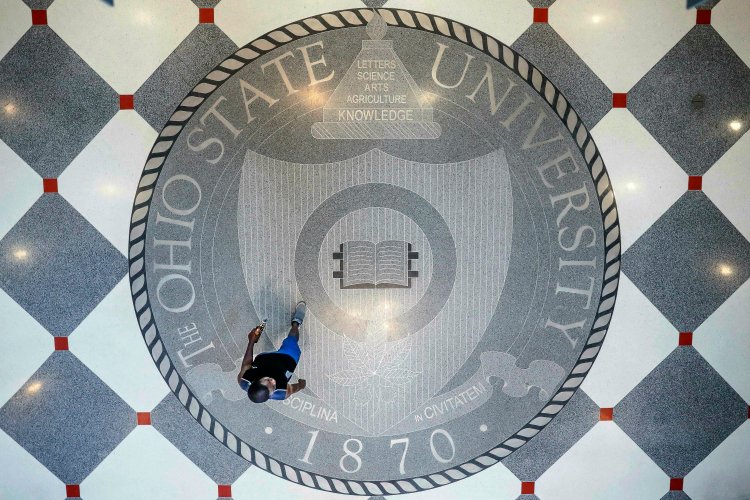
The Ohio State University’s medical school is a case in point. In the first admissions cycle after the court banned race-based admissions, Asian and white applicants whom the school rejected had stronger scores on the medical school entrance exam than black students who were accepted. Moreover, the acceptance rate for black applicants was more than double that of Asian applicants despite Asian applicants having, on average, significantly stronger academic metrics. No wonder the Trump administration is investigating.
But it’s not just Ohio State. At the other medical schools that responded to our request, Asian and white applicants had to score higher than black applicants on the MCAT to be accepted at all but one school. Worse, at 13 of those schools, the average black applicant who was accepted had a lower score than the average Asian and white applicants who were rejected. At two schools, black applicants were about 10 times as likely to be accepted as Asian and white applicants with the same qualifications. None of this is possible unless black applicants receive major preferential treatment – i.e., racial discrimination.
We suspect that many medical schools declined or didn’t respond to our data requests because they continue to discriminate, too. That includes institutions in states like Texas, where the University of Texas system’s medical schools have a long history of race-based admissions policies. Before the Supreme Court’s 2023 ban, black applicants at UT’s flagship Dell Medical School had about eight times the odds of admission as equally qualified white applicants. At UT Southwestern, black applicants had roughly 21 times the odds of admission compared with otherwise identical white applicants.
Have these striking disparities been corrected since 2023? Americans have a right to know. But none of the five UT medical schools has given us the data we requested. As for America’s many private medical schools, they aren’t covered by freedom-of-information laws, so we couldn’t request their admissions data. Even if we could, we doubt many would have responded. Thankfully, the Trump administration has the authority to ferret out the truth. The current investigation of Stanford University’s medical school is a warning to every private institution that receives federal funding.
Our experience proves why the Trump administration is right to demand that colleges and universities hand over their admissions data. It’s also telling that earlier in March, 17 Democratic attorneys general sued the Trump administration for requesting admissions data from universities in their states. They claim that the administration is acting arbitrarily and putting heavy burdens on college administrators. But every university and college already collects and tracks admissions data, so turning over the information shouldn’t be a burden. More likely, the Democrats are afraid that the Trump administration will discover the truth – that racial discrimination is still widespread across higher education.
Despite the Supreme Court’s ban on racially discriminatory admissions and despite the Trump administration’s attempts at reform, collegiate administrators are still largely bought into race-based ideology. That’s why so many institutions – not just medical schools – have renamed their DEI departments but not abandoned DEI programs or indoctrination. If they’re doing that, you can bet they’re also looking at skin color when choosing who to accept. Their racist ideology demands nothing less.
The Trump administration is right to focus on this injustice. It’s all but guaranteed that federally funded colleges and universities are defying the law and still discriminating by race – not just the three medical schools that are now under investigation. If colleges and universities don’t want to be investigated, they simply need to do what they should have done a long time ago, and stop discriminating by race.
[ad_2]
Source link
