
[ad_1]
While evacuating more sections of Gaza and ethnically cleaning more towns in the West Bank, Israel has been striking Lebanon. It dubbed its merciless assault on April 8 “Eternal Darkness,” suggesting the kind of barbarity involved.
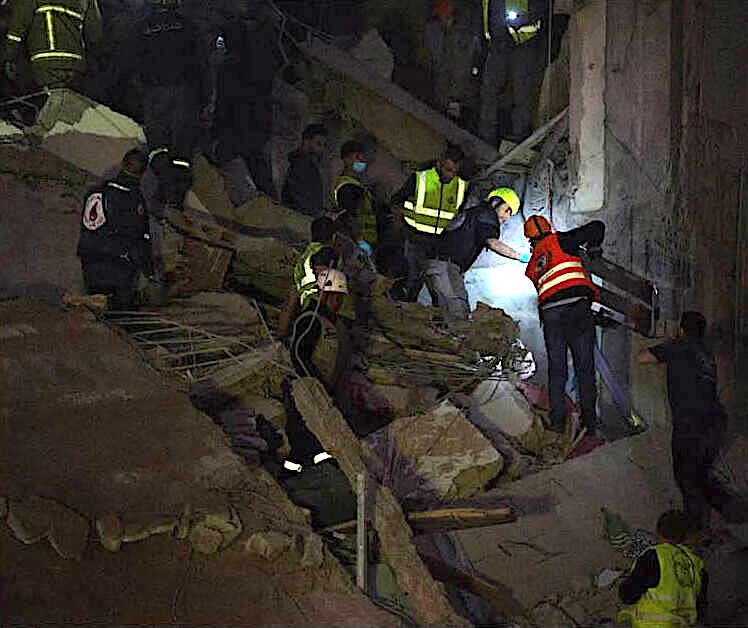
Aftermath of an Israeli strike in Beirut on April 8. (Megaphone /Wikimedia Commons/CC BY-SA 4.0)
By Vijay Prashad
Peoples Dispatch
 As the United States farcically walks away from the negotiations with Iran in Pakistan, it was always a matter of concern whether Israel would abide by any such agreement.
This was particularly the case with Lebanon and with the Palestinian territories, where Israel seemed absolutely hell bent on creating new “facts on the ground,” including evacuating more sections of Gaza, ethnically cleaning more towns in the West Bank and eliminating almost one million people from the entire southern half of Lebanon.
Israel has a history with these ceasefires: in the immediate period before a ceasefire, Israel typically bombs with extra ferocity to send a message that it does not really recognize the situation as peace but only as a temporary break between wars.
It was, therefore, not clear whether Israel had refused to accept the negotiated fact that Lebanon and the Palestinian territories were part of the ceasefire with Iran or that it was simply bombing with brutality at the start of the truce.
Whatever it might be, the bombing of Beirut — in particular — on April 8 over 10 minutes struck more than a hundred targets mostly in the Barbour neighborhood of central Beirut. It was horrendous, a total shock to the entire country where already 1-in-5 people have been displaced.
Israel claimed that it hit Beirut to strike at Hezbollah, but in fact, as residents said over and over again, Israel hit solely civilian buildings with no concern for human life. The name of the operation, “Eternal Darkness”, suggests the kind of barbarity that has been inflicted by Israel upon the people of Lebanon.
50 Years of Aggression
When I first went to Lebanon about 20 years ago, I met an old taxi driver who told me an interesting story. In the period before 1948, when Israel was created, he would take passengers to Jerusalem (250 miles) and then sometimes from Jerusalem to Damascus (200 miles). There were no borders in those days, he told me, and “we could enjoy the figs of Galilee and the pomegranates from the hills outside Jerusalem.”
Alawites, Armenians, Bedouins, Druze, Jews, Lebanese, Maronites, Palestinians, Shia, Sunni, Syrians — whatever they called themselves (and he recited most of these names) all would know each other and would have a cordiality that defined the old world.
That life was shattered in 1948, when Israel was created, and when Lebanon’s small army joined the war to defend the Palestinian people.
As it turned out, the Palestinian Nakba (Catastrophe) led to the displacement of 100,000 Palestinians into Lebanon, who then settled under the protection of the United Nations and the Lebanese government in Ain el-Hilweh, Bourj al-Barajneh, Nahr al-Bared, Rashidieh, and Shatila.

Palestine refugees in Gaza board boats to Lebanon or Egypt in 1948. (Hrant Nakashian/UNRWA Photo/Wikimedia Commons/ CC BY-SA 3.0 igo)
When I visited Rashidieh with my friend Robert Fisk, he took me to meet some of the old Armenian families (who now lived in Tyre proper) that had fled their genocide (1915-1923) in the new Turkey and had taken refuge in this camp in 1936.
It was to their camp that the Palestinians arrived from their villages and towns. Palestinians fled the Israeli terror initially for Egypt, Jordan, Lebanon, and Syria, and then went further afield.
The Palestinian camps in Lebanon remain today, where generation after generation of Palestinians have grown up waiting for the day when they can use their old keys to go back home (there are now half a million Palestinians registered in Lebanon).
It took a few years for the Palestinian political formations to reestablish in exile. The Palestine Liberation Organization (PLO) was formally established in 1964, following a decision at the first Arab League summit in Cairo earlier that year; its founding Palestinian National Council convened in East Jerusalem (then under Jordanian control).
Within a few years, the PLO rooted itself in the Palestinian camps around Israel and began civil protests initially for control over the camps (which was adopted through the Cairo Agreement of 1969), and slowly moving toward the armed struggle (with more determination and organization after the 1967 Six Days War, when Israel occupied East Jerusalem, Gaza and the West Bank).
When the Jordanian monarchy expelled the PLO from their camps in September 1970, the organization based itself in Beirut and set up a series of important institutions in the country for the battle of ideas and for the armed struggle.
The Palestinian camps in Lebanon and the Palestinian institutions in Beirut became direct targets of Israeli attacks, including assassinations (for example: Ghassan Kanafani in 1972; Kamal Adwan, Muhammad Youssef al-Najjar, and Kamal Nasser in 1973).
Certainly, the PLO had rooted itself as the legitimate political organization of all Palestinians and had become central to life in the camps, alongside the United Nations agency for the Palestinians (UNRWA, which provided the schools, health care facilities, and employment).
In 1978, Israel conducted its first full-scale invasion of Lebanon, Operation Litani, named after the Litani River in southern Lebanon.
The Israelis imagined that they would create a security buffer in this land, which comprises 10 percent of Lebanon and was home to hundreds of thousands of Lebanese citizens as well as Palestinian refugees.
The idea was to push the Palestinian fedayeen (fighters) north of the river and keep them out of distance from operations in northern Israel (where Palestinians had begun to agitate for rights from Land Day in 1976 in Galilee).
From 1978, Israel repeatedly invaded Lebanon, eroding its sovereignty through such illegal interventions as Operation Peace for Galilee (1982), Operation Accountability (1993), Operation Grapes of Wrath (1996), the July War (2006) and Operation Northern Arrows (2024).
During these, and other operations, Israel massacred civilians, attacked the United Nations and shifted its target from the PLO (which it expelled from Lebanon in 1982) to the Lebanese resistance, largely Hezbollah (which was formed in 1982).
With Lebanon’s own army unable to secure the Blue Line that divides Lebanon from Israel, it was left to Hezbollah and other such para-military and political Lebanese organizations to attempt to protect the country.
Twice Hezbollah, under the leadership of Sayyed Hassan Nasrallah (1960-2024) defeated Israel (once in 2000, when it forced Israel’s withdrawal from southern Lebanon after 18 years in the country, and second in 2006, when despite heavy bombardment of Lebanon, Israel could not wipe out Hezbollah). These have been the 50 years of aggression, from the first invasion in 1978 to the present, and during this period, Israel has been unable to subdue the Lebanese resistance.
Lebanon’s Fortitude
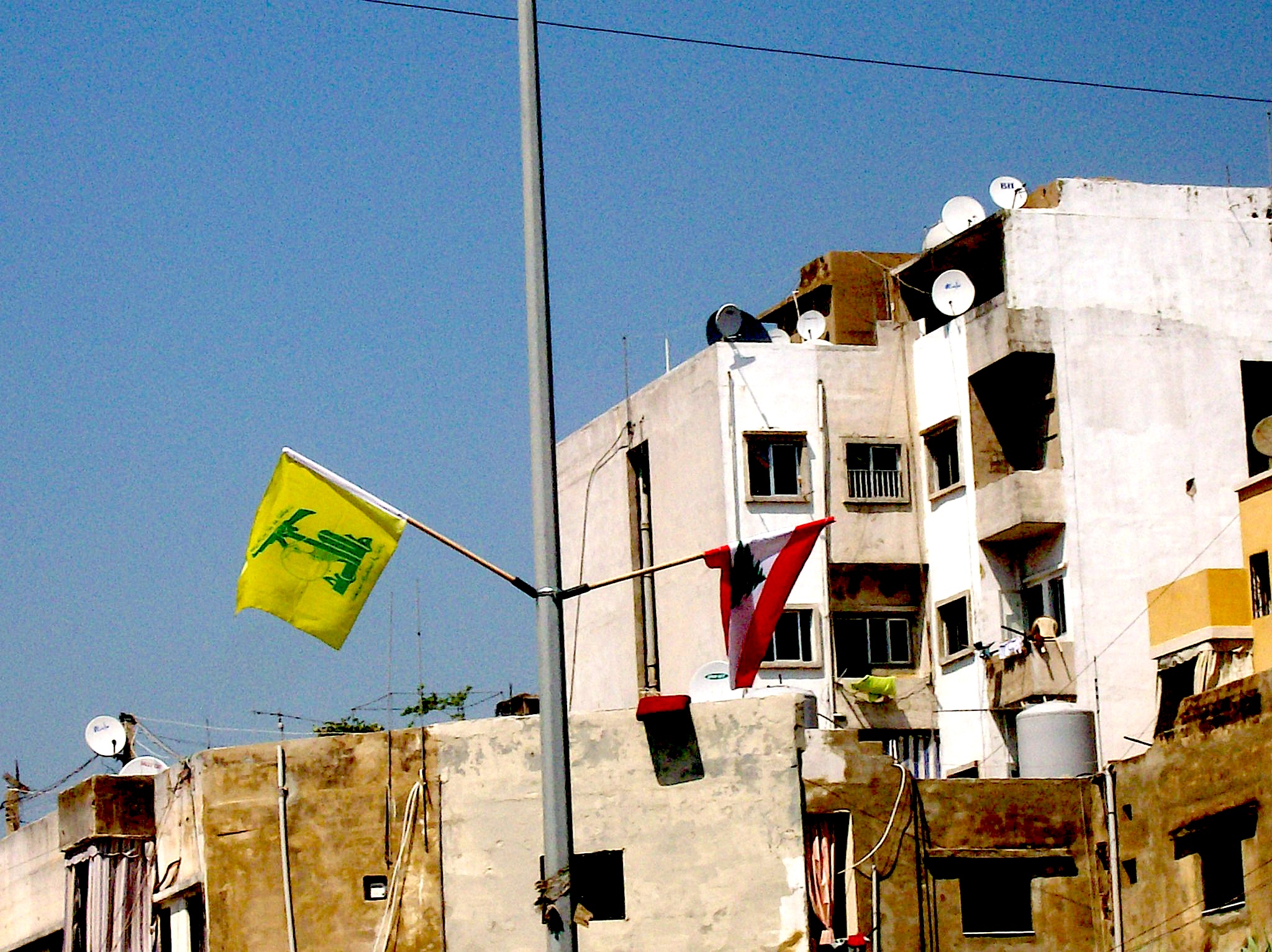
Hezbollah and Lebanese flags in a Beirut neighborhood in September 2011. (Nicholas A. Heras/Flickr/CC BY-NC-SA 2.0)
One day, in an old car, I drove around Beirut’s old neighborhood of Dahieh, literally the suburb but often known as southern Beirut.
The Western media calls this the “Hezbollah stronghold,” but what I saw then, and what I have seen in my many trips to the area, is civilians — their homes and their shops.
What is also clear in this area is that where Hezbollah exists, it is integrated fundamentally into the lives of the people — not merely as an armed organization, but as a community group that provides the glue to hold people together and to provide them with the means to survive very difficult economic and cultural circumstances.
There were, of course, the Hezbollah offices, since Hezbollah under the name Loyalty to the Resistance has 15 members of Parliament who have a public profile (one of the politicians, Amin Cherri, is a popular figure in the area and has been the one who has been speaking on behalf of the displaced Lebanese in recent months).
It is this neighborhood that has been most fiercely bombed by the Israelis since 1982, and savagely since 2006. There is no section of this part of Beirut that does not feel threatened by Israeli violence.
An architecture student I had once designed a building that would be impervious to Israeli aerial surveillance since it would be covered by a canopy of trees and plants on the roof and along walkways through the neighborhood. That is the level of fear and resistance in Dahieh.
Lebanese airspace has no sovereignty as, even on days when there is no violence, Israeli aircraft and drones routinely fly over the country.
With a weak Lebanese government, it is left to the imperial powers to denounce the Israeli violence (France, which was the former mandate power over Syria and Lebanon, warned the Israelis against the creation of a “New Gaza” in southern Lebanon). There is no Lebanese army and air force.
The entire country would be totally vulnerable to Israeli attack if not for the resistance led by Hezbollah, and therefore the Israeli and the United States designed Hezbollah as a terrorist organization (as they have done to every Palestinian group that opposes the occupation) and so uses the logic of the War on Terror to attack all of Lebanon.
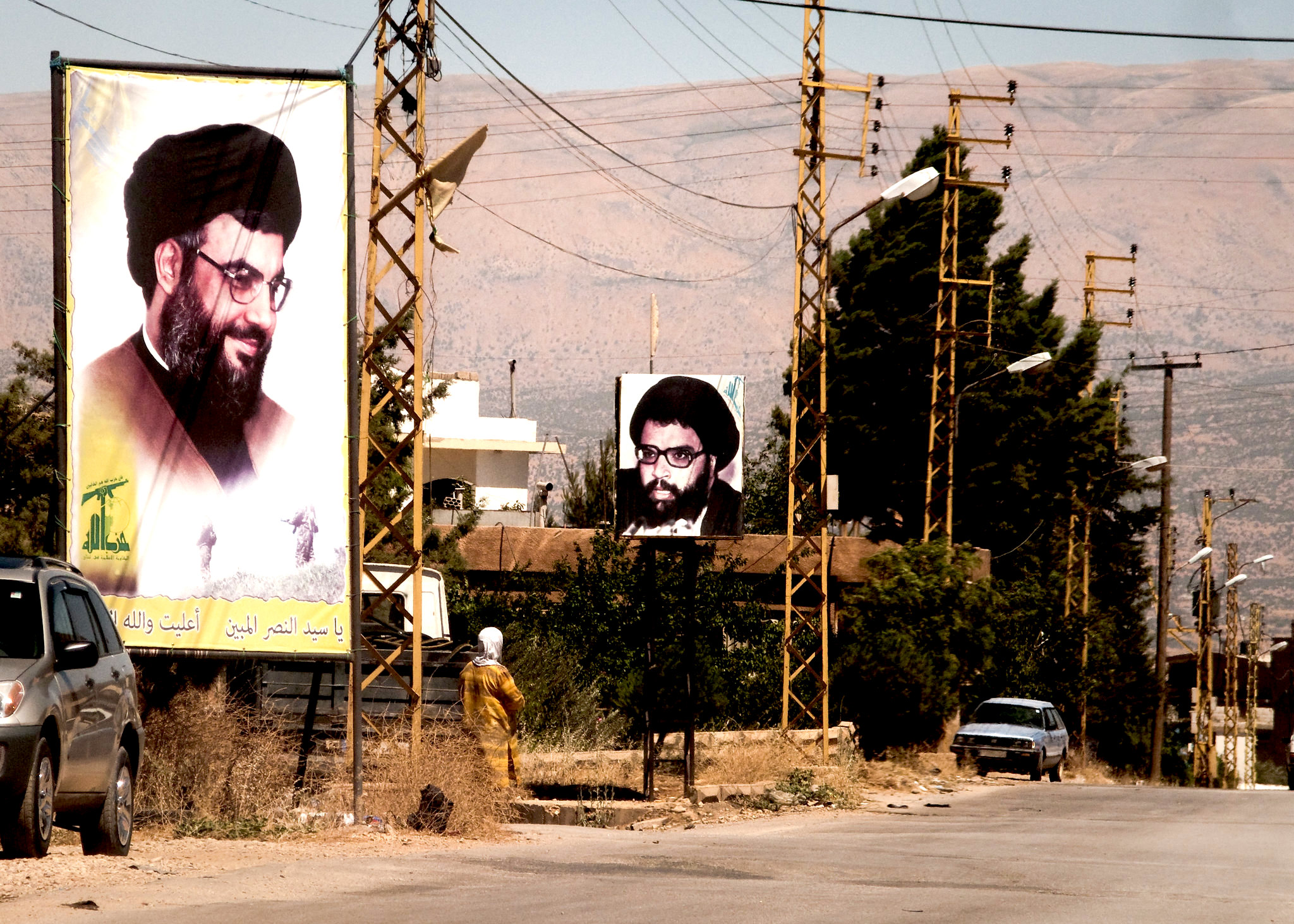
Hezbollah posters of Hassan Nasrallah around the streets of Baalbek, Lebanon, 2009. (Will De Freitas, Flickr, CC BY-NC-ND 2.0)
The idea that the entire south of Lebanon can be cleared of its hundreds of thousands of people and that it can be made into a buffer zone because Israel wants it goes not only against international law, but against the entire notion of humanity.
During the genocide of the Palestinians in Gaza, the Israelis decided to build these buffer zones in the West Bank, in Syria and in Lebanon.
Under cover of the bombardment in Gaza, Israel has almost had a free hand to enter the West Bank, remove entire villages and arrest anyone who is opposed to the occupation.
Israel provided the crucial air support for the former Al-Qaeda leader Ahmad al-Sharaa to take power in Damascus and then forbid any resistance to Israel from Syria.
Finally, Israel conducted the most violent bombing campaign in Beirut that not only killed Nasrallah — enormously popular across the Arab world but also in Iran — but killed layers of the leadership of Hezbollah.
For a time, Hezbollah looked to be fatally wounded, but in fact it recovered, and its recovery has occasioned this current bombardment — a message to Lebanon to submit to the permanence of Israeli violence.
A decade ago, I spent time with some young Lebanese scholars who were putting their PhDs into books, and I began to read articles and PhDs by others whom I had not met.
Each of them seemed to be working on the detritus of the Israeli wars on Lebanon.
Joanne Nucho (Everyday Sectarianism in Urban Lebanon, 2016), Sami Hermez (War is Coming, 2017), Andrew Arsan (Lebanon: A Country in Fragments, 2018), and Munira Khayyat (A Landscape of War, 2022) — the entire sensibility of the nation convulsed by Israeli aggression and in anticipation of the next, inevitable, war.
That is the atmosphere of Lebanon — inevitable war, terrible destruction, but necessary resistance against an intractable and inhumane enemy.
Robert Fisk’s monumental collection of writings on the region is called Pity the Nation, the title taken from a poem by the Lebanese poet Khalil Gibran (from his Garden of the Prophet, 1933).
The title of this article is taken from a poem by June Jordan written in 1982 that apologizes to the Lebanese people on behalf of the people of the United States for the atrocities committed upon it. It bears thinking that the world needs to apologize to Lebanon and to Palestine as the genocide by Israel grinds on from Gaza City to Beirut.
Vijay Prashad is an Indian historian, editor and journalist. He is a writing fellow and chief correspondent at Globetrotter. He is an editor of LeftWord Books and the director of Tricontinental: Institute for Social Research. He is a senior non-resident fellow atChongyang Institute for Financial Studies, Renmin University of China. He has written more than 20 books, including The Darker Nations and The Poorer Nations. His latest books are Struggle Makes Us Human: Learning from Movements for Socialism and, with Noam Chomsky, The Withdrawal: Iraq, Libya, Afghanistan and the Fragility of U.S. Power.
This article is from Peoples Dispatch
The views expressed are solely those of the author and may or may not reflect those of Consortium News.
[ad_2]
Source link
