
[ad_1]
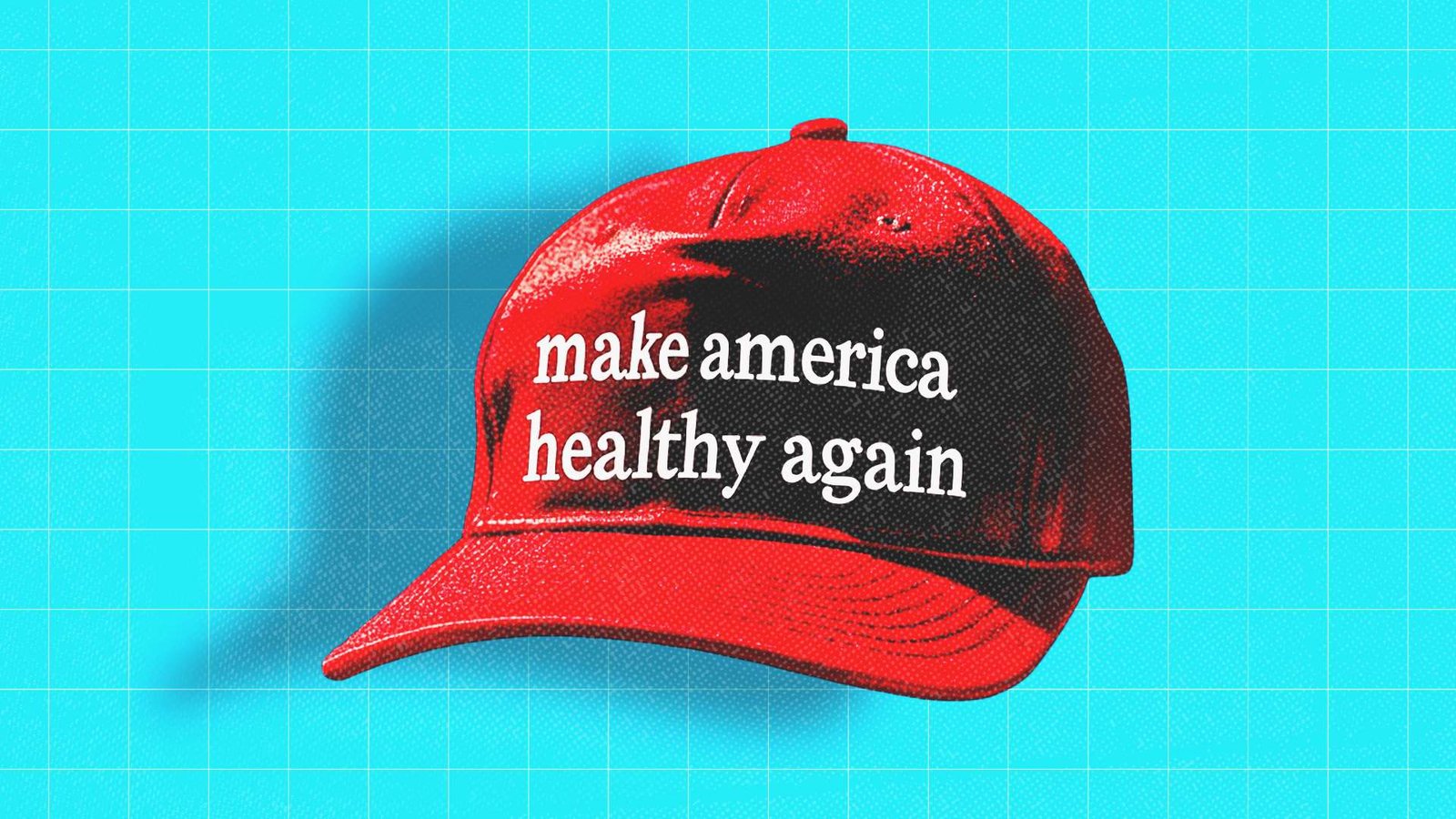
President Donald Trump was reelected, in part, because he reached new voters by vowing to “Make America Healthy Again.” It’s been more than a year since he returned to the Oval Office, and Americans are growing frustrated with his progress on this promise.
That’s the result of a recent Politico poll, which found that 52 percent of Americans think the Trump administration “has not done enough to make America healthy again.” Notably, only 45 percent of respondents who self-identified as members of the Make America Healthy Again (MAHA) movement said Trump has done enough to make the country healthy.
The poll also revealed significant disagreements within the movement. Despite comprising a significant share of the population, about one-third of respondents said they identified as MAHA, but only 50 percent of the group said they could explain what MAHA is. Meanwhile, only six issues garnered a majority of support from MAHA respondents to be deemed key priorities of the movement. These include removing ultra-processed foods from diets (56 percent support), increasing physical exercise (53 percent), and limiting pesticide use (50 percent). Other policies typically associated with MAHA that did not reach the 50-percent threshold were banning genetically modified foods (49 percent) and “encouraging small-scale farming over industrial agriculture” (42 percent).
Even limiting vaccines, a core priority for MAHA guru and Health and Human Services (HHS) Secretary Robert F. Kennedy Jr., does not have majority support within the movement; only 42 percent say it is a core issue.
“I know vaccines also get highlighted, but I think more people are into the food than they are the vaccines,” Kelly Ryerson, co-executive director of the regenerative farming project American Regeneration, tells Reason. “In my mind, [our priorities are] clean food, definitely clean water to drink, decreasing plastic exposure, obviously decreasing pesticides, and giving people local, healthy food grown in places that are nutrient-dense.
These tensions have led to a lack of progress, which is “just really disappointing,” says Ryerson, who also volunteered on RFK Jr.’s presidential campaign. “There are a lot of inconsistencies that I don’t think we planned on at all.…For people that are not as wholly committed, let’s say to Bobby Kennedy, ‘That’s going to be a really big problem in the midterms.'”
Indeed, the dissent has stained the public’s perception of the GOP’s commitment to healthier living. Respondents said they were more likely to trust Democrats’ ability to make America healthy, “challenge big pharmaceutical companies,” and resist lobbying efforts from the food and drug industry.
Still, that’s not to say that the MAHA movement hasn’t notched significant wins. As Ryerson points out, “MAHA has been successful in the capacity of HHS and the [Food and Drug Administration] FDA.” Under Kennedy’s leadership, HHS has removed government webpages disputing the link between vaccines and autism and reduced the recommended number of childhood vaccines from 17 to 11. The FDA has worked to remove synthetic dyes from the food system, alleging that they’re dangerous to childhood health and development (despite limited evidence). Following Kennedy’s lead, West Virginia outlawed seven synthetic dyes—including Red 3 and Yellow 5—from school lunches last year. In 2025, it also became the first state in the country to ban the sale of food and drugs that contain these synthetic dyes. This MAHA victory was short-lived, however. A federal judge has temporarily blocked the measure, deeming it to be “unconstitutionally vague.”
For MAHA to be successful in making America healthy, Ryerson thinks change is needed at the Department of Agriculture and the Environmental Protection Agency, including an accelerated ban of “certain chemicals” like paraquat and atrazine, which are used to control weeds and grass in agriculture, and the gradual elimination of the herbicide glyphosate. It is worth noting that the evidence surrounding the toxicity of pesticides is disputed, with some studies showing that glyphosate is among the more benign herbicides.
It’s unclear how far Trump will go to placate the MAHA movement. But given the president’s unpopularity, the administration could take drastic measures to keep this constituency happy, which is likely to come at the cost of consumer choice and personal freedom. A “group of people that prioritize health over everything,” as Ryerson puts it, is one that is increasingly comfortable with bans, subsidies, and government intervention to achieve its goals. “I think that a lot of people that maybe consider themselves more libertarian have also reached that breaking point where they’re like, ‘Okay, maybe some regulation might make sense.'”
[ad_2]
Source link
