
[ad_1]
The U.S.-Israeli war on Iran has turned the Strait of Hormuz into a choke point for the world economy, with the gravest consequences falling not on the powerful but on the poorer nations of the Global South.
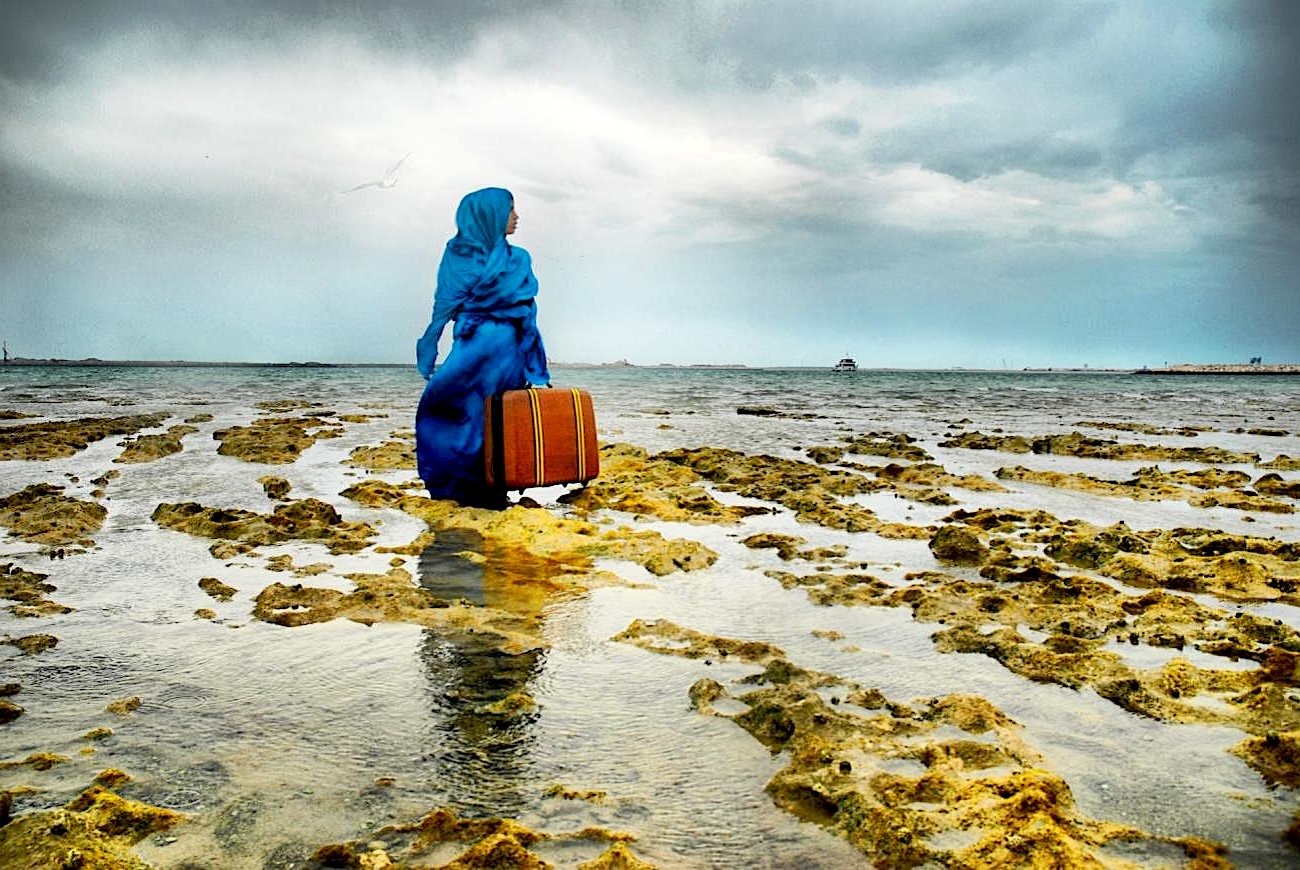
Lateefa bint Maktoum, U.A.E., The Last Look, 2009. (Via Tricontinental Institute)
By Vijay Prashad
Tricontinental: Institute for Social Research
Note: On 7 April, after his ghastly genocidal threat that “a whole civilization will die tonight,” U.S. President Donald Trump agreed to a provisional two-week ceasefire reportedly based on a set of proposals from Iran. As of April 8, transit through the Strait of Hormuz is set to resume, though the terms remain unclear. But the chaos generated at the strait by the U.S.-Israeli attack remains, and the threat hanging over the region remains as well. A genuine and lasting peace is necessary — but what was announced on April 7 is not that peace; it is merely a cessation of hostilities for a fortnight.
 In the 13th century, the great Arab geographer Yaqut al-Hamawi described the Sea of Persia as “a branch of the Great Sea.” In his compendium, Dictionary of Countries), he wrote that through the Sea of Persia would “pass the ships of India, Oman and Basra.” Hormuz was not the name of that sea but of a “great mart of trade to which merchants resort from India and other lands.”
Centuries later, those waters would be called the Strait of Hormuz: a 54–kilometre passage between the Sultanate of Oman’s Musandam Peninsula and the Islamic Republic of Iran.
The strait was never an isolated geographical point. It was part of the maritime road that connected the Arab world with the Indian subcontinent, the Malay Archipelago, and beyond, China. For millennia, trade across the vast Indian Ocean was robust and varied — ships carrying luxury goods, such as cinnamon and ivory, passed those carrying war supplies, such as horses and, later, gunpowder.
Right through the centuries, the Strait of Hormuz remained open under successive powers — from the Portuguese in the 16th and early 17th centuries to British dominance in the Gulf from the 19th century to 1971 and, in the modern era, Oman and Iran. The gates to the Great Sea did not close even during periods of imperial conquest and regional war.

Babak Kazemi, Iran, Exit of Shirin and Farhad, series, 2012. (Via Tricontinental Institute)
When Trump and Israeli Prime Minister Benjamin Netanyahu began their miscalculated aggression against Iran on Feb. 28, there was no disruption of trade through the strait. Everything was as it had been for centuries, with free passage through the waters for goods — now mainly oil and natural gas — to fuel the world economy. Unlike other chokepoints such as the Suez and Panama Canals, neither Iran nor Oman ever claimed fees for transit or for maintenance of order in the strait.
After the war began, and more explicitly by late March, Iran restricted traffic through the Strait of Hormuz in retaliation for the illegal U.S. and Israeli strikes on Iranian civilians and civilian infrastructure.
These restrictions included a ban on passage for vessels linked to the United States, Israel and other hostile countries; coordination with Iranian authorities for passage; and toll-like fees on some ships, including payments in Chinese yuan.
Moreover, the U.S. torpedoing of the IRIS Dena in the Indian Ocean and the flying of missiles over the strait have given insurance companies an opportunity to jack up premiums, further discouraging ships from passing through the strait. These conditions have caused maritime traffic in the strait to drop by about 95 percent.
For the first time in known history, the Strait of Hormuz — the gate to the Great Sea — is virtually closed.
After failing to overthrow the Iranian government, Trump has suggested that the new goal of the U.S. war on Iran is to “open’ the strait; in other words, to restore the pre-war status quo.
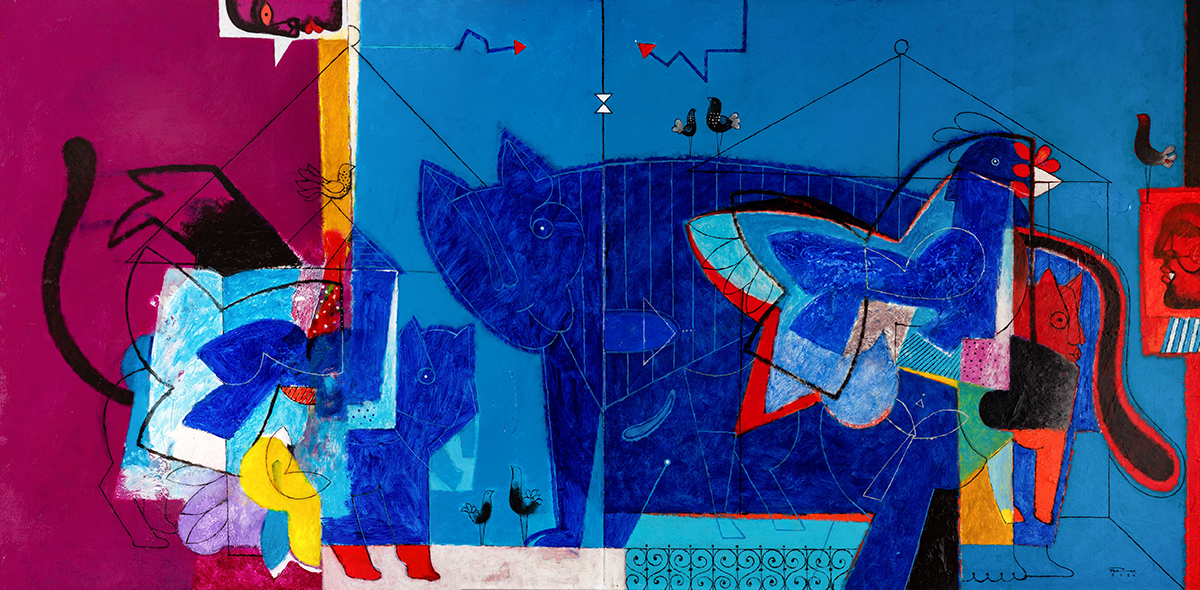
Ebrahim Busaad, Bahrain, Fairy Tales, 2023. (Via Tricontinental Institute)
Over a quarter of the world’s seaborne oil trade transits through the Strait of Hormuz, with almost 90 percent of it going to Asia (China, India, Japan and South Korea importing three quarters of it). The disrupted flow of crude oil, natural gas condensates and refined petroleum products not only strains these countries but directly impacts every aspect of the global economy.
The U.N. Conference on Trade and Development (UNCTAD) reports that “the resulting ripple effects go far beyond the region, affecting energy markets, maritime transport and global supply chains.”
As natural gas prices rise, so do the prices of nitrogenous fertiliser. As oil prices and fertiliser prices rise, so do food prices — not just immediately but for years afterwards due to the impact of high fertiliser prices on cultivation cycles. Meanwhile, insurance premiums have surged by 300 percent and bond yields are increasing, making borrowing much more costly. These facts suggest an impending crisis in the world economy.
The International Monetary Fund (IMF) reports that, “The shock is global, yet asymmetric. Energy importers are more exposed than exporters, poorer countries more than richer ones and those with meagre buffers more than those with ample reserves.”
As a result, in early March UNCTAD predicted that poorer countries burdened by high debt service will face fiscal strains which will increase pressure on “household budgets, potentially heightening economic and social pressures and complicating progress toward sustainable development.”
All these poorer countries are in the Global South.
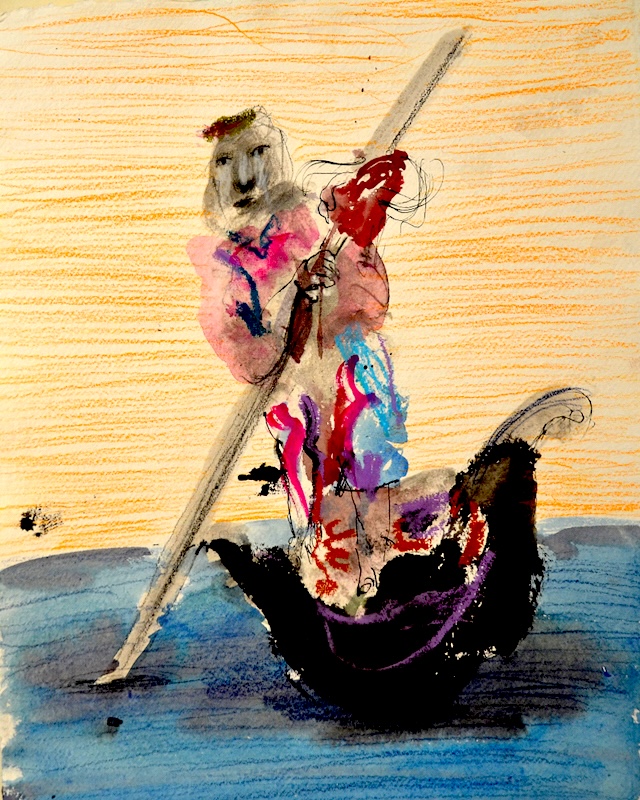
Mehrdad Jafari, Iran, The Last Saviour, 2020. (Via Tricontinental Institute)
The IMF’s PortWatch allows for real-time observation of how maritime disruptions, such as the one in the Strait of Hormuz, cascade through global trade networks. The high sensitivity of the global economy to single-point failures was already evident in 2021, when the Ever Given container ship ran aground in the Suez Canal and blocked traffic for six days, leading to nearly $1 billion in short-term losses and much more in the long term due to supply chain disruptions.
UNCTAD’s Review of Maritime Transport 2024 warned that several critical “chokepoints” in the global supply chain were already under severe strain — the Panama Canal from drought lowering water levels; the Red Sea–Suez corridor due to the Israeli genocide against the Palestinians and the retaliatory attacks by Yemen on Israel; and the Black Sea from the war in Ukraine.
Thus, even though maritime trade has grown in volume over the past few years, the routes on which that trade depended have become more vulnerable, more costly and more exposed to war and disruption. Even before restrictions were imposed in the Strait of Hormuz, global chokepoints had already shown how structurally vulnerable the world’s economy remains to the geography of conflict.
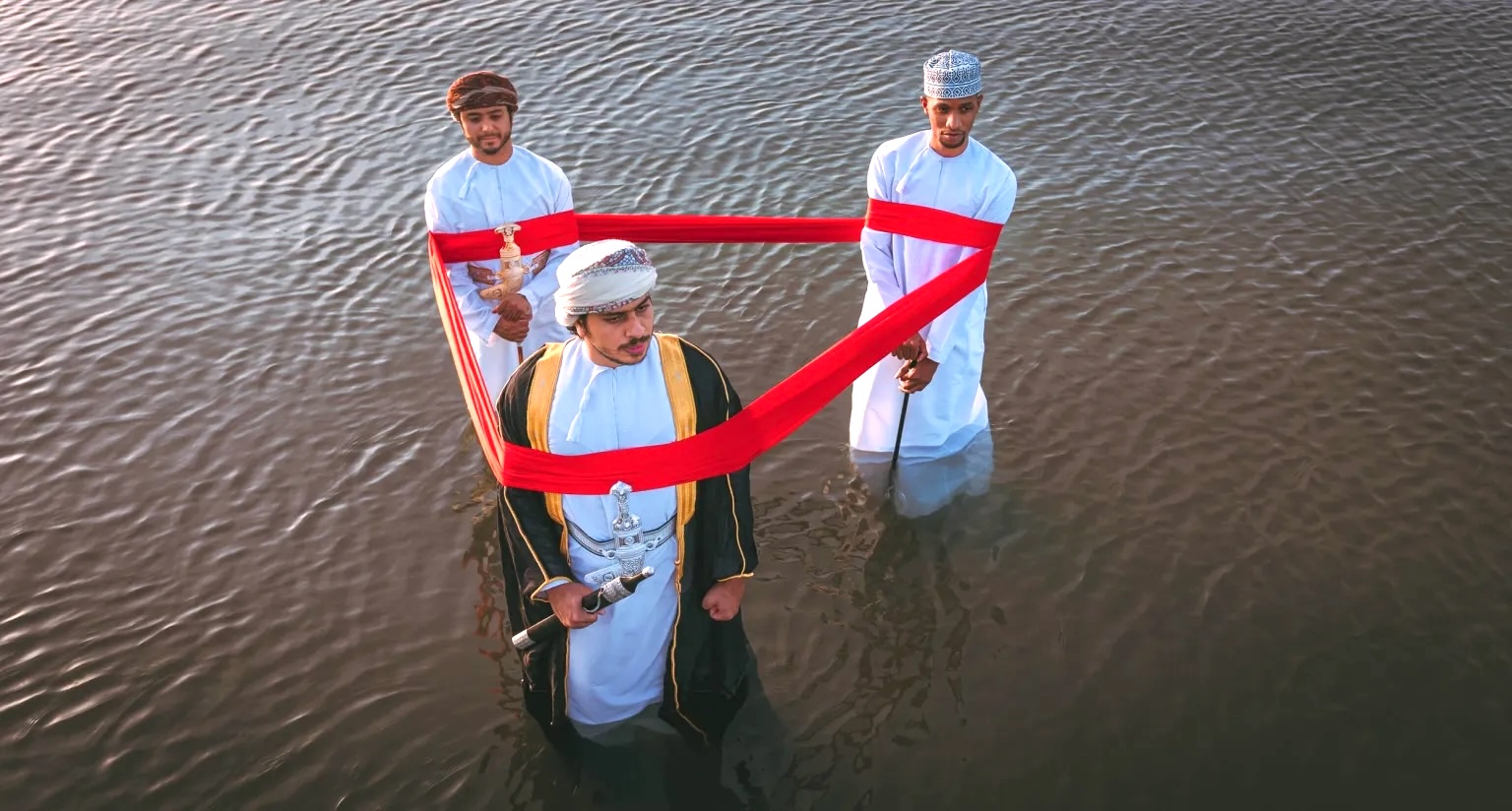
Mahmood al-Zadjali, Oman, At What Cost, 2020. (Via Tricontinental Institute)
On the last day of March, U.S. Secretary of War Pete Hegseth claimed that Iran had lost the war and that “regime change has occurred.” Such rhetoric may signal an attempt by Washington to declare victory and wind down the war. But whether the U.S.-Israeli war on Iran ends or not, its economic damage to the poorer nations remains significant. For many of the poorer nations, this war comes in the wake of decades of neoliberal restructuring and debt-austerity cycles.
As the war threatens to tip many of these nations over the edge, there is a need for a coordinated international response. We do not know whether there is the political will for such action. But Tricontinental: Institute for Social Research proposes a set of possible policy measures — categorised under four thematic areas — to immediately address the asymmetrical impact of the war on Iran:
- Expand financial liquidity:
-Provide access to currency swap lines, such as through the People’s Bank of China, to stabilise exchange rates for import-dependent countries.
-Provide rapid finance for potential balance of payments shocks through the crisis windows of multilateral banks like the World Bank and the Asian Development Bank.
-Expand emergency IMF financing to the Global South through the Rapid Credit Facility and Rapid Financing Instrument, both with faster and larger disbursements and, crucially, no conditionalities.
-Redirect the IMF’s unused Special Drawing Rights – reserve assets held by member countries – from richer countries to vulnerable economies.
Temporarily suspend the IMF’s surcharges to reduce borrowing costs. - Provide energy price buffers:
-Create a global fuel price stabilisation fund to subsidise essential fuel imports for low-income countries.
-Coordinate the release of strategic petroleum reserves to stabilise the market and prevent profiteering and price gouging by corporations.
-Guarantee energy supply corridors to least developed countries with limited bargaining power in oil and natural gas markets.
-Provide a massive emergency subsidy for renewable and off-grid energy, including technology transfer and regional supply diversification (through alternative pipelines and storage).
-Finance these measures through a temporary windfall tax on energy companies and anti-speculation measures in commodity markets.
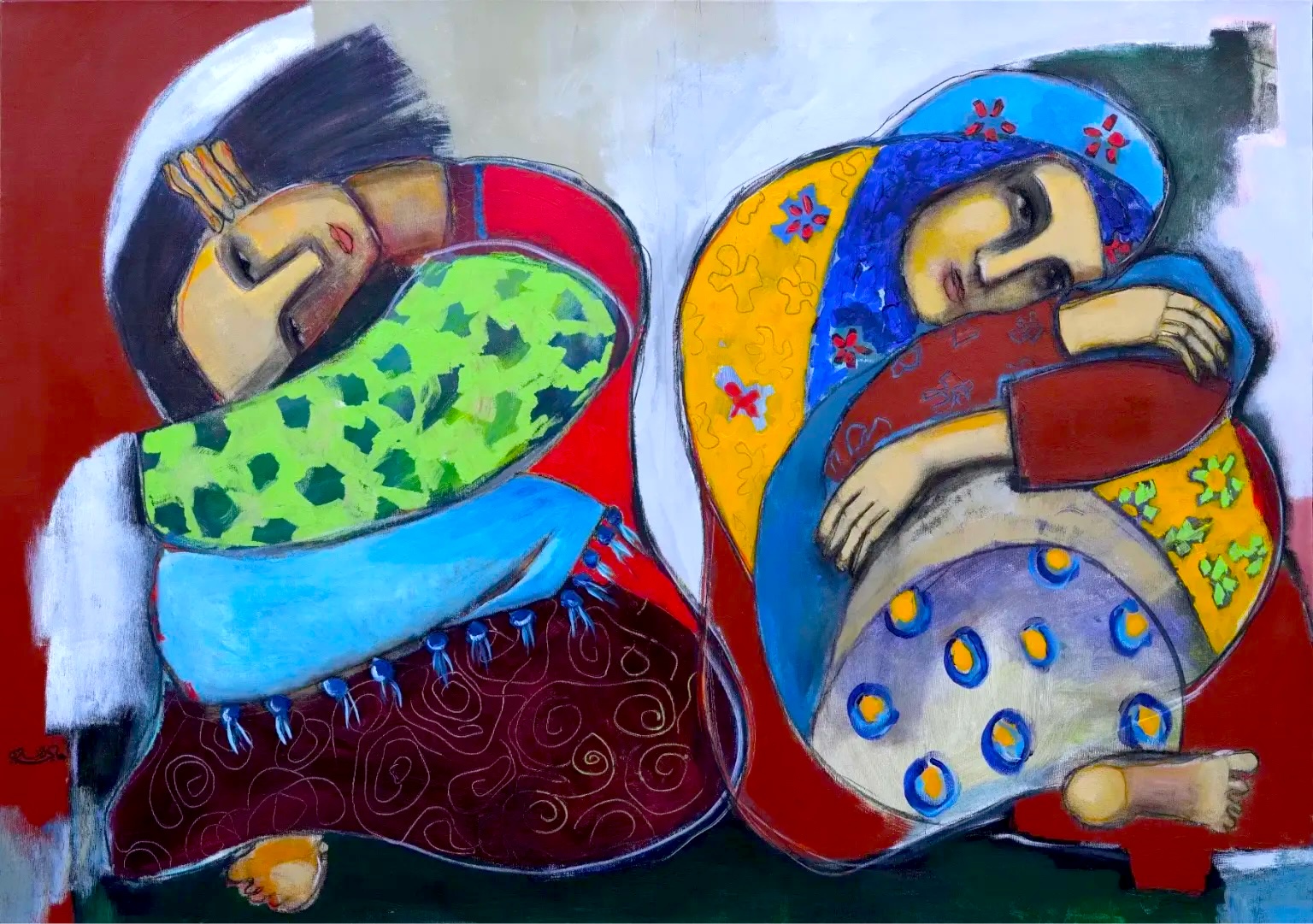
Alia al-Farsi, Oman, My Friends, 2015. (Via Tricontinental Institute)
- Support and stabilise logistics:
-Reduce panic-driven price spikes by enforcing transparency requirements for energy and shipping markets.
-Reduce cost spikes for essential imports by subsidising shipping insurance for high-risk routes.
-Offset higher transport costs to poorer countries by implementing freight equalisation schemes.
-Create fast lanes for essential goods at ports and through major chokepoints. - Intervene to stabilise food prices:
–Cover higher food import bills through emergency food import financing mechanisms, as proposed by the Food and Agriculture Organisation (FAO)’s Global Food Import Financing Facility —Ensure access to fertilisers by creating a global version of the FAO and International Fertiliser Industry Association’s fertiliser distribution mechanism.
-Replace market-based export restriction discipline with solidarity-based coordination among major food exporters to guarantee preferential access for vulnerable countries.
-Provide subsidised food and fuel to vulnerable populations through public distribution systems and, if necessary, introduce quantitative rationing to guarantee access to essential goods. Subsidised fuel for public transport and measures to discourage private automobile use should also be considered if the crisis deepens.
We have listed these proposals to demonstrate that even within the framework of the system as it is, there are always pathways to alleviate the suffering of the peoples of the poorer nations from a war they neither wanted nor supported.
Even if a fraction of these proposals is implemented, they would ease the burden on billions of people. The conditions to alleviate suffering exist in our reality; the fact that they are not used in practice is a political choice.
It is also, of course, important to acknowledge that the institutions that could advance these proposals are in the hands of the Global North countries, such as the International Energy Association (controlled by the Organisation for Economic Co-operation and Development) and the IMF (in which the Global North has nine times the voting power of the Global South), or they are in the hands of multinational shipping corporations (such as the Danish company Maersk and the Swiss company MSC).
The question remains as to who would provide the political leadership to enact, or even lobby for, such measures. We live in a time of dangerous unilateralism and the new mood in the Global South has not yet taken institutional form.
A process like BRICS+, which includes some of the nations most affected by the war outside the Global North, possesses the political weight and economic scale to negotiate on matters related to fuel, fertilisers and food. With Iran itself a member of BRICS+ and, in principle, willing to ensure trade access to the Global South, the possibility of agreements based on solidarity — rather than free trade — exists on the horizon.
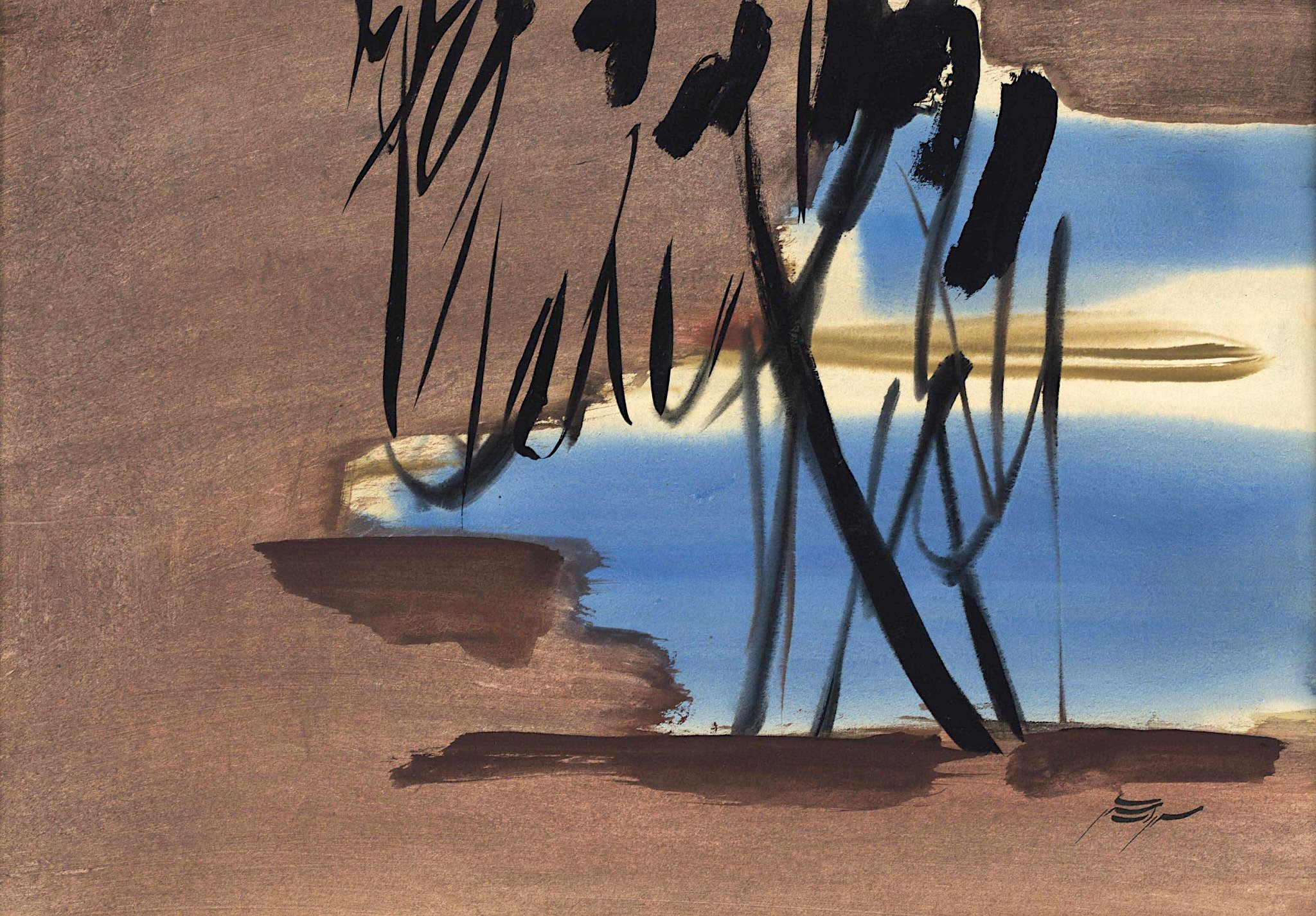
Sohrab Sepehri, Iran, Untitled, c. 1960s. (Via Tricontinental Institute)
For centuries, Persian poetry, from Jalal al-Din Muhammad Rumi (1207–1273) onward, has searched for answers to the fundamental questions of life. Persian poets pondered human suffering and imagined that solutions existed somewhere inside the mysteries of nature itself. In the 20th century, one of the great modern voices of that tradition was the Iranian poet and painter Sohrab Sepehri (1928–1980). In his volume Hajm-e sabz (The Green Volume, 1968), Sepehri has a poem called Posht-e-Daryaha (Beyond the Seas), which opens with that Rumi-like desire to vanish into the ether:
I will build a boat
And cast it into water
And I will sail far away from this strange land
Where no one awakens the heroes
In the glade of love;
A boat with no nets
And a heart with no desire for pearls
I will keep sailing
And will lose no heart to the blue of the sea,
Or to mermaids
Emerging out of water to cast the charms of their locks
Upon the glowing solitude of the fishermen.
….
Beyond the seas there is a town
Where windows are open to epiphanies
The rooftops are inhabited by pigeons
Gazing at the fountains of Human Intelligence
Every ten-year-old child holds a bough of knowledge
The townsfolk see in a brick row a flame,
Or a delicate dream;
Dust can hear the music of your feelings
The fluttering wings of mythical birds are audible in the wind
Beyond the seas there is a town
Where the Sun is as wide-open as the eyes of early-risers
Poets are the inheritors of water, wisdom, and light
Beyond the seas there is a town,
So one should build a boat.
Vijay Prashad is an Indian historian, editor and journalist. He is a writing fellow and chief correspondent at Globetrotter. He is an editor of LeftWord Books and the director of Tricontinental: Institute for Social Research. He is a senior non-resident fellow atChongyang Institute for Financial Studies, Renmin University of China. He has written more than 20 books, including The Darker Nations and The Poorer Nations. His latest books are Struggle Makes Us Human: Learning from Movements for Socialism and, with Noam Chomsky, The Withdrawal: Iraq, Libya, Afghanistan and the Fragility of U.S. Power.
This article is from Tricontinental: Institute for Social Research.
The views expressed are solely those of the author and may or may not reflect those of Consortium News.
[ad_2]
Source link
