
[ad_1]
Jonathan Cook Substack
The BBC suggests 2026 will replace 1976 as the ‘benchmark’ for a hot summer. It could not be more wrong. We will look back on this year’s succession of heatwaves with unbearable nostalgia
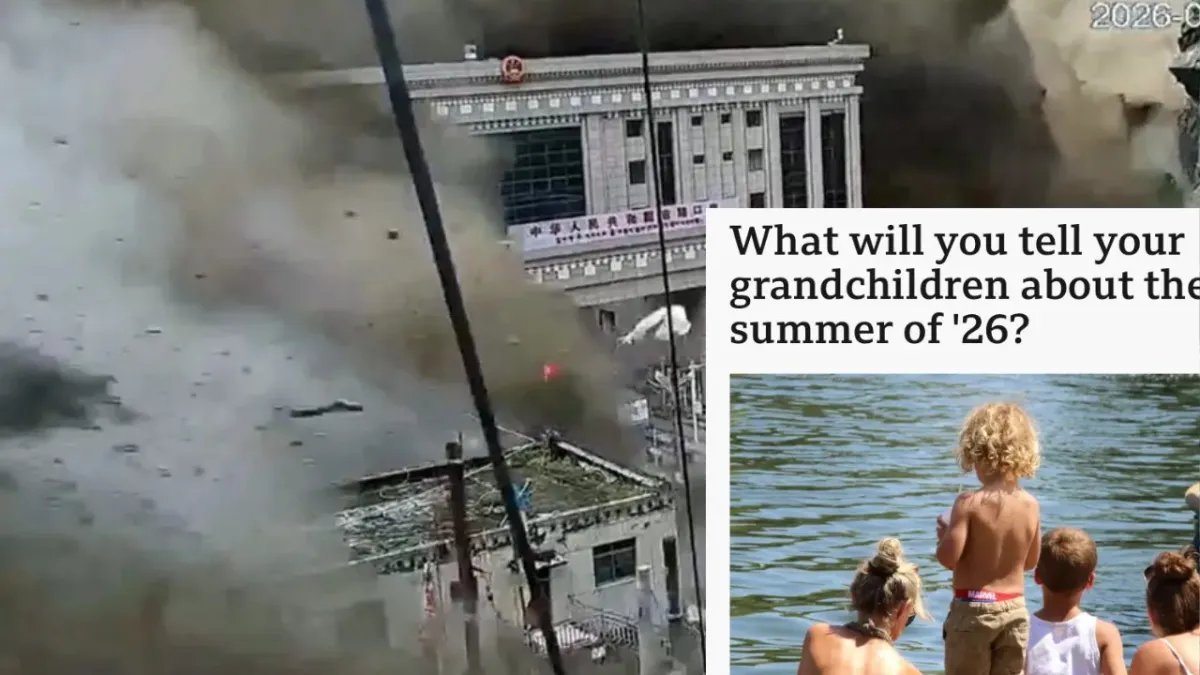
A BBC headline asks: “What will you tell your grandchildren about the summer of ‘26?”
The British state broadcaster believes we will be talking about this summer for “years to come”, with 2026 supposedly replacing 1976 as the “benchmark” for an exceptionally hot and calamitous summer.
But the truth is, in a few years’ time, 2026 will not be remembered for its summer heat. In fact, unlike 1976, it will not be remembered at all.

But if, as the BBC imagines, I do talk to my grandchildren about 2026, what will I tell them?
I will tell them how, in those days, we did not have to shelter indoors, in air-conditioned rooms, all summer long. How there was a time before we lived like bats, emerging only as night fell.
I will tell them how almost no one died of heat stress. And that, back then, the mass-casualty climate “events” they see regularly on the news were only just beginning. That the scenes of a tidal wave of flood water sweeping away a huge building in Nepal looked unworldly to us then, like a Hollywood disaster movie.
BREAKING: At least 380 people missing after flash flood hits near Nepal-Tibet border pic.twitter.com/iCRpXJaBAe
— BNO News Live (@BNODesk) August 26, 2026
I will tell them how food was plentiful before the crops started failing. How rationing was something we associated with wars. How fresh fruit and vegetables were affordable for ordinary people, not just the lab-grown slop that is now the mainstay of their diet.
I will tell them how, in those far-off days, the taps didn’t run dry for months on end. How we barely gave a thought to water, or how to access it. How we could have long showers whenever we wanted. Even baths, if we preferred. And we watered our gardens and washed our clothes regularly too.
I will tell them how we didn’t have to live in constant fear of our homes being lost to (summer) wild fires or (winter) storms and floods. How these disasters were so rare that there were firms that would insure us against any loss.
I will tell them how, decades ago, homeless people were few in number, at least compared to the large number of unfortunates now living in tent cities – refugees from the waves of destruction.
I will tell my grandchildren how much I now miss the reliability of public services like healthcare and schools, which were left to crumble year after year as tax revenues declined and more and more public money had to be spent on mitigating the worst of the climate shocks.
I will tell them how I regret not having done more to raise the alarm, to persuade people that they could not afford to go on pretending there was no price to pay for drilling, fracking and burning so much of the stored energy beneath the Earth’s surface.
I will tell my grandchildren how their grandparents’ generation, my generation, lived in a collective delusion, fed by a God-complex that assumed humans could rise above the laws of nature, that the planet was ours to plunder, that there should be no limits on our ambition, on our greed.
I will tell them that the climate coverage in state-corporate media like the BBC deceived us into thinking a day of reckoning would never arrive.
Perhaps to underscore my point, I will dust off an old BBC article, published on the last day of August 2026, headlined: “What will you tell your grandchildren about the summer of ‘26?”
I will note that, even as the climate crisis deepened, even as scientists warned that planetary warming was accelerating, the BBC misled its huge audience into believing that 2026 would be a remarkable, exceptional, memorable year. That it would mark a highpoint of heat, rather than just another data-point on a relentless climb up the thermometer.
I will tell my grandchildren…
But wait. Maybe my children, like so many others, will decide that they don’t want to bring children into the hothouse world they themselves are facing.
In which case, my grandchildren won’t exist. And I will have no one tell about the summer of ‘26.
Although my posts are freely accessible, they are reader-supported. If you liked this one or any of the others, please consider sharing it with friends and making a donation to support my work. You can do so by becoming a paid Substack subscriber, via Paypal or my bank account, or alternatively by setting up a monthly direct debit mandate with GoCardless. A complete archive of my writings is available on my website. I’m on X, Facebook and Bluesky.
Please share this story and help us grow our network!
[ad_2]
Source link
