
[ad_1]

Photo by Dan Dennis
Secretary of State Marco Rubio’s denunciations of the International Criminal Court (ICC) last July are only the latest U.S. threats against that judicial body. In June and July,1998 the United States participated in the drafting of the Rome Statute creating the ICC. But America refused to ratify the Statute when it became effective in 2002. The U.S. remains a non-member.
ICC jurisdiction is limited to crimes that fall into one of four specified categories: genocide, crimes against humanity, war crimes and aggression (the use of armed force against the sovereignty or political independence of another State). Note also that the ICC prosecutes individuals, while the jurisdiction of its sister court, the International Court of Justice (ICJ “World Court”) accepts only cases brought against States.
President Trump and his predecessors have feared that U.S. sovereignty would be impaired if an ICC prosecutor could target an American citizen under the territorial provision in section 12 of the Rome Statute. Indeed, the Court has already begun investigating possible war crimes by members of the U.S. military in Afghanistan.
It should be noted that any government can avoid ICC jurisdiction if it prosecutes the accused in its own courts.
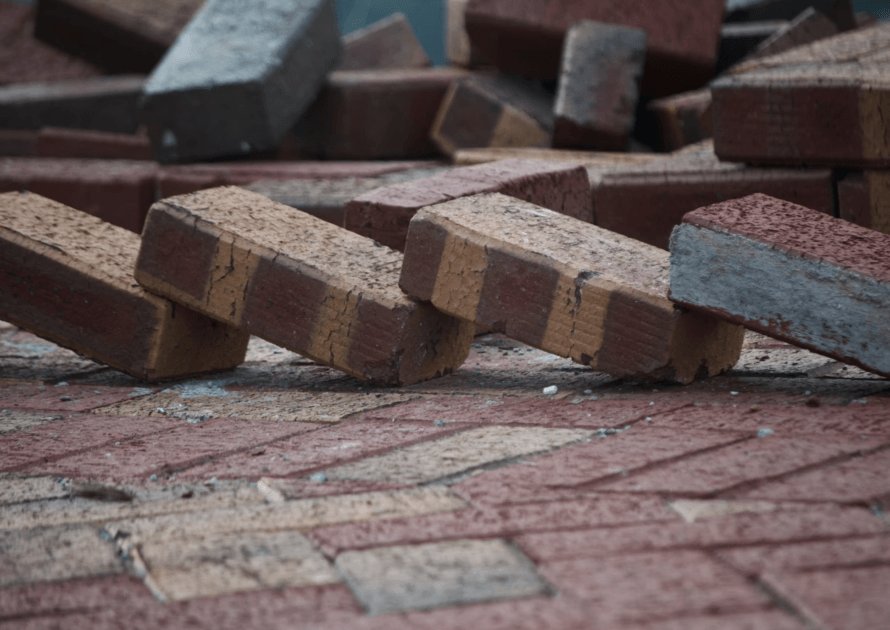
No U.S. official has lashed out against the International Criminal Court as sharply as Marco Rubio. In various fora in mid-July this year Rubio threatened to “dismantle the ICC, brick by brick if necessary.” Denouncing the Court as a “sham” and a “corrupt and fatally politicized” institution, he followed up in August with new financial sanctions against the Court’s president, Judge Tomoko Akane and senior lawyer Abdoulaye Seye.
Those sanctions, already imposed on 12 Court officers, block most personal financial transactions, the use of credit cards, and access to any assets located in the U.S. In addition, Trump administration pressure on member states has caused at least two of the 125 members (Chad and Venezuela) to withdraw from the Court.
Section 12 of the Rome Statute lies at the heart of Rubio’s fury. In effect, that section defines so-calledterritorial jurisdiction as giving the Court authority to prosecute individual citizens of a non-member state if the alleged crimes occurred in a member state. This was the legal basis for an ICC prosecutor to issue arrest warrants to Prime Minister Benjamin Netanyahu and his former Defense Minister Yoav Gallant for war crimes in Gaza; and to Hamas leaders (now dead) for the October 7 massacre of civilians in Israel.
Despite its strenuous objections to the ICC, U.S. policy has been somewhat inconsistent. It has given limited support to the ICC in some specific cases, such as the Court’s investigation of President Putin’s invasion of Ukraine.
If and when persons under an ICC warrant can be apprehended in a member country, that country is obliged to execute the arrest warrant and refer the accused for trial at The Hague.
While some legal scholars accept the U.S. position limiting the Rome Statute’s territorial jurisdiction, most States (principally the current 123 state members) do not. They are each willing to trade a measure of national sovereignty for accountability against individuals who commit horrific crimes that are ignored by the courts in their own country.
The ICC has achieved some notable successes in holding individuals criminally responsible for atrocities. For example, the Court has prosecuted individuals from the Democratic Republic of the Congo (DRC) and Uganda (child soldiers and crimes against humanity), Mali (destruction of cultural and religious heritage sites), and Sudan (atrocities in Darfur).
Even heads of state (including Russia’s Putin, Sudan’s Omar al-Bashir and Netanyahu) have been subject to ICC arrest warrants. The significance of these and other ICC prosecutions lies in their legal precedent for demanding accountability. The Rome Statue provides no exemption for government leaders.
U.S. action against the ICC reflects a wider attack on international organizations. Despite America’s leading role in creating many of them, President Trump signed a January 7, 2026 executive order withdrawing the United States from 31 U.N. bodies and 35 non-U.N. organizations.
U.S. withdrawals from the United Nations included the Climate Change Convention (“Paris Agreement”), the U.N. Population Fund, the International Law Commission, and several regional economic commissions.
Although the United States remains a member of the World Trade Organization (WTO), it has moved to weaken its enforcement authority (for example by blocking appointments to its appellate body) and it increasingly disregards WTO core rules (for example on tariffs and the payment of dues).
One of Trump’s first actions in his second term was to decimate almost all of the U.S. Agency for International Development (USAID), the major vehicle for U.S. economic aid to developing countries. The abrupt ending of its HIV and food programs in Africa has led to an untold number of deaths in South Africa, Sudan and other places.
As part of its attacks on non-UN organizations that support a global rule of law, Trump withdrew America’s long-standing membership in the International Development Law Organization (IDLO) in Rome, a body I co-founded and led for 17 years.
Trump’s “America First” policy has deprived the United States not only of participation in the post-World War II institutions it helped create, but also of a role in shaping the emerging world order.
Marco Rubio’s uncompromising attacks on the ICC mirror his (and President Trump’s) disdain for international organizations in general and for the rule of law in particular. Yet most nations, including the ICC members, recognize the importance of international guardrails that protect human rights.
When individual states fail to prosecute their citizens for the grave crimes cited above, only the ICC can ensure individual accountability and promote global respect for the rule of law.
[ad_2]
Source link
