
[ad_1]

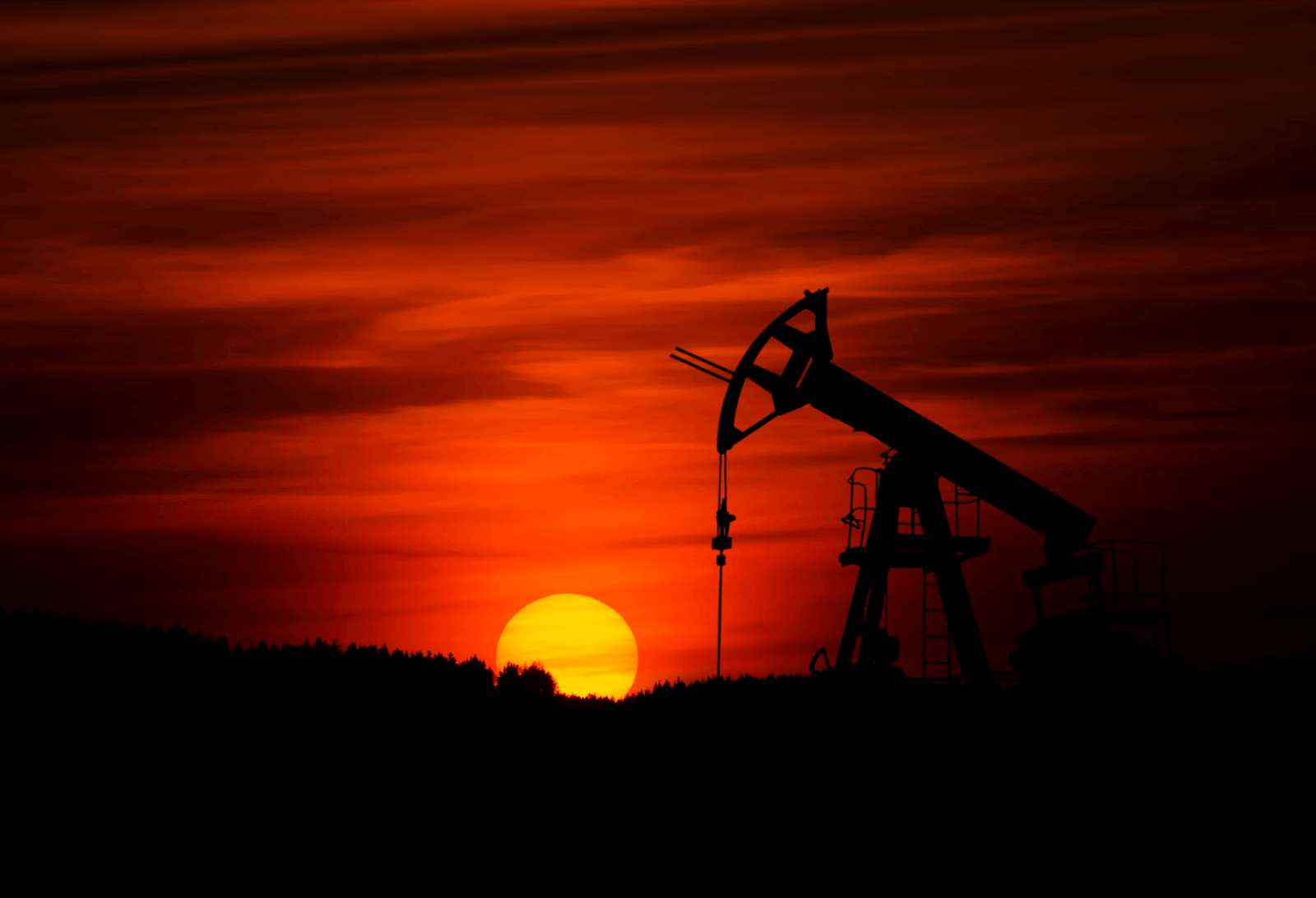
Photo by Zbynek Burival
Back in March, when the Trump administration and the Israeli government initiated their attack on Iran, it didn’t take a prophet to foresee the potential for an energy disruption due to the Strait of Hormuz getting blocked off to at least some extent. With over 10 million barrels a day worth of oil blocked at its peak, along with 20 percent of the global economy’s liquefied natural gas (LNG), the blockade has caused the greatest energy supply disruption in history. At the start, some analysts were predicting oil could go as high as $200 a barrel. Instead, oil jumped to a peak of $103.90 sixteen days into the war and settled below that mark in the months after.
Of course, it is not all good news. The local effects of the disruption on poorer Asian countries have been real, the price of diesel fuel is nearing a record high, and, along with the disruption of fertilizer (before the war about a third of fertilizer passed through Hormuz) food prices could increase in the coming months. But this wasn’t the first time in recent history that there were predictions of skyrocketing oil prices that didn’t pan out. In July 2022, five months into the Russian invasion of Ukraine, JPMorgan Chase forecast that oil could have reached $380 a barrel. Indeed, the G7 was so spooked by the potential price increases with the loss of Russian oil, even as Russia is trying to conquer Ukraine, that it set up a price cap system, rather than completely cut off the Russian war machine. Yet, a few years later we see a far greater disruption and still no explosion in the price of oil.
How was the worst avoided? There have been some practical explanations: Saudi Aramco was able to maximize the East-West pipeline and the Red Sea to bypass Hormuz, at least until the Houthis began their efforts to block off that route. Now it is increasingly using a longer route through Egypt’s SUMED pipeline; some so-called ‘dark’ tankers (tankers that switch off their transporters), at least sometimes under the escort of the U.S. Navy, have managed to avoid Iranian drones; at last check, shipping through Hormuz is half its pre-war amount; countries that could afford to find alternative sources, such as South Korea, replaced Saudi oil with Canadian oil; India is again importing Russian oil at a blistering pace (recall that fleeting moment when Trump complained about India funding Russia’s invasion causing India to briefly pull back on Russian oil); prices to ship LNG to the Panama Canal jumped. The U.S. drew down heavily from its Strategic Petroleum Reserve. So did Japan.
China has proven to be a most interesting case. Long the world’s largest importer of oil, before the war China purchased 90 percent of Iran’s oil exports, it managed to reduce its oil imports by half. While numbers are kept close to the vest, China has a SPR of billions of barrels. Between drawing it down and not replenishing it accounts for some of the decline. Then there is the nasty business that much of China’s petrochemical industry is based on coal. For some context, the petrochemical industry consumes somewhere between 10 and 12 percent of global oil demand. China is the only country with a significant chemical industry based on coal (a method pioneered by the Nazis in World War II and later taken up by South Africa’s apartheid regime). It is an inefficient, very polluting method but if China’s chemical industry were a country it would be the third largest consumer of coal in the world. Its coal-to-chemical stocks have apparently risen 30 percent since the war started.
A more hopeful thread is the doomsday forecast being wrong means that oil is slowly losing its significance to alternative energy. Afterall, more countries, like Australia, Pakistan, China, Iceland, Spain, and Denmark, have built-in flexibility due to their buildout of renewables and with energy disruptions a constant feature in recent years, solar energy is rapidly expanding. Even Cuba imported enough Chinese solar panels to generate 1,308.8 megawatts of energy (compared with 19.4 megawatts in 2023). A recent report by energy think tank Ember found renewables surpassed coal in global electricity generation for the first time in a century with solar meeting 75 percent of the increase in global electricity demand. Solar’s share of energy generation grew nearly 19 times from 2014 to 2025.
On one hand, crude oil is still the planet’s most traded commodity and global consumption is still consistently rising. On the other hand, at the time of the partial OPEC embargo in 1973, oil supplied almost half the world’s energy demand. Last year, oil’s share fell below 30 percent, according to the International Energy Agency. It is worth noting that crude oil became the world’s leading source of energy only in the mid-1960s and its share has been declining for decades. Of course, much of the demand has been replaced by natural gas, another fossil fuel, particularly in heating and cooking. But we have the technology and know-how to minimize oil use in transportation, through public transit and EVs, and electricity through an array of alternatives.
In his informative book How Solar Became Cheap, Gregory Namet presents a history of solar and a model for other needed technologies. It was back in 1954 when Bell Labs demonstrated the first functional solar cell. The first practical use was on a satellite in 1957. The U.S. did much of the early R&D, particularly through the Defense Department for the space program in the 1950s and 1960s and in the midst of the partial OPEC embargo in 1973. Not long after, with oil prices lower, there was Ronald Reagan’s idiotic decision to remove the panels from the White House roof. The panels were expensive and didn’t generate electricity (all they did was heat water for things such as kitchen use) but the symbolism, along with the administration’s slashing of the solar budget from 1981 to 1985, was probably the biggest setback in the industry’s history.
From there progress shifted to niche markets in Japan in the 1980s and 1990s. 1983 saw the development of the Passivated Emitter and Rear Cell (PERC), which included an extra reflective layer on the back of the cell that captured more light and blocked longer wavelengths that could damage the equipment. These came out of the University of New South Wales in Sydney, Australia, and remain the standard. The late 1990s saw a shift to Germany, where the Green Party leveraged its power-sharing agreement to fund subsidies to stimulate demand for rooftop solar and Chinese companies have since achieved efficiency and scale of production.
As Nemet puts it:
This was a joint effort. No one country did it. There was no dominant strategy. Major players- the U.S., Japan, and Germany- each relinquished their commanding dominance of the industry at some point, meaning that no country applied persistence for the whole lifecycle of PV development. Leadership was like a relay race, with each leader passing the torch to another, sometimes involuntarily.
The 60 year-long Odyssey from Bell Labs to full-scale deployment is clearly too long for what needs to be done to head off global warming. There are many sectors to decarbonize, from concrete to aviation and there isn’t time for boom-and-bust cycles. As markets inevitably drive for profits above all else, public research and real international coordination in the form of both in terms of industrial policy, innovation, and technology transfer to poorer countries will have to lead the way. The explosion of solar the past few years is quite hopeful but with heatwaves and wildfires raging worldwide there is no time to back off.
[ad_2]
Source link
