
In his preface to the 2026 National Defense Strategy, Secretary of Defense Pete Hegseth promised a decisive break from the past: an American approach to the world that set clear priorities. “We recognize that it is neither America’s duty nor in our nation’s interest to act everywhere on our own,” he wrote. “Instead, the Department will prioritize the most important, consequential, and dangerous threats to Americans’ interests.”
The Trump administration has failed to deliver on this promise. In fact, it has delivered the opposite, expanding the U.S. military footprint in Latin America, starting a disastrous war in the Middle East, and remaining deeply involved in the ongoing war in Ukraine, despite rhetoric to the contrary. Now, the bill has come due, as reports surface that four top military commanders have raised concerns about whether they can resource their own expansive missions with military operations in Iran ongoing.
If accurate, this assessment suggests a deep readiness crisis that could present a much more urgent threat to American interests than anything happening in the Middle East. Talk of “conserving resources” to prepare for war with China or Russia misses the point: On its current course, the Trump administration risks leaving the homeland exposed for years to come. This reality leaves Washington with no choice. It must recommit to its prioritization promise, shedding military commitments until means match ends, even as this requires some retreat from the world stage.
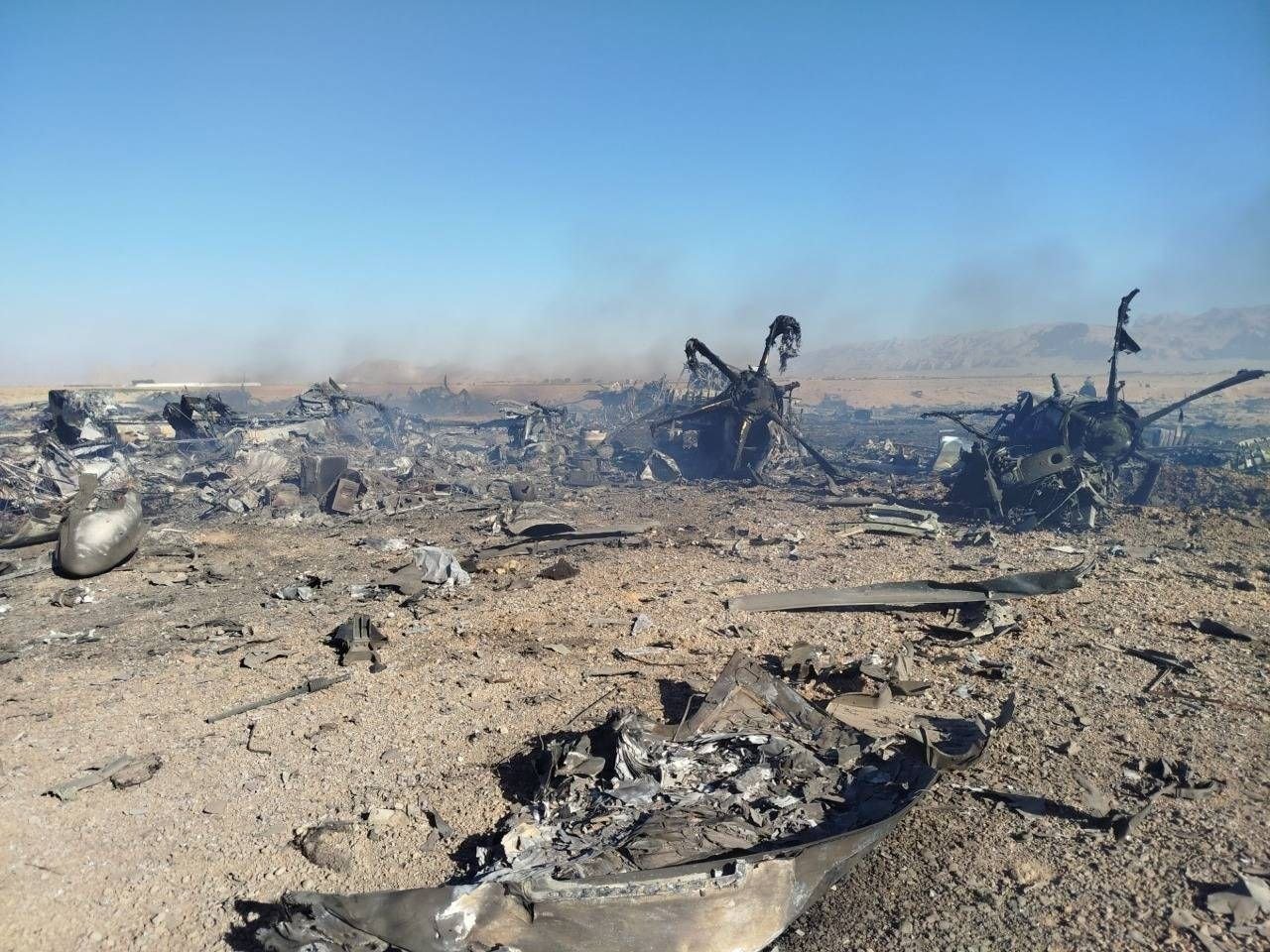
That the U.S. military faces widespread exhaustion should surprise no one. The proximate and most obvious cause is the unnecessary war with Iran, which just passed its six-month mark. That war has kept at least 50,000 U.S. service members deployed overseas, many beyond the end of their scheduled tours, along with dozens of naval vessels and aircraft. Losses experienced during Operation Epic Fury and its aftermath have included 25 percent of the U.S. fleet of MQ-9 Reaper drones, numerous aircraft, and significant portions of the air defense network based in the Middle East. Though the intense kinetic phase of this operation seems to have subsided, President Donald Trump has shifted to an economic pressure campaign that relies in part on an open-ended blockade, a manpower- and resource-intensive approach that will grind down the force.
Notably, the 2026 war in Iran is only the latest of several U.S. military operations in the region since Trump took office last January. First, there was the campaign against the Houthi rebels which burned through years’ worth of munitions. Then there was Operation Midnight Hammer and U.S. support for Israel in the 12-Day War. Previous administrations are not blameless, having doubled down on involvement in the region at many points, but it is undeniable that Trump has expanded U.S. military entanglement in the Middle East, despite the lack of clear threat to the United States coming from Iran or its proxies.
It would be a mistake, however, to blame U.S. overextension only on the war in Iran, as some have tried to do. Indeed, the most surprising change in U.S. posture over the past 18 months has not been in the Gulf region, but in Latin America, where the United States is building new permanent infrastructure and now keeps naval and air assets deployed on a nearly constant basis, adding a fourth major theater (in addition to the Middle East, Europe, and Asia) to an already long list of ongoing military commitments.
Resources allocated to Latin America have decreased somewhat since the U.S. operation to seize Venezuela’s President Nicolas Maduro, but several thousand personnel and half a dozen maritime assets remain deployed in the region. Many of these personnel and assets are involved in the ongoing U.S. campaign of air and drone strikes against alleged drug smugglers, and counter-drug operations conducted with partners. And, of course, there are 8,000 or so military personnel deployed in areas along the U.S. southern border, supporting immigration enforcement.
The Trump administration is right to invest more in the security of America’s near abroad. But there are two problems with the way the Trump administration has gone about this. First, it has relied primarily on already stretched military power for a range of tasks, including border security, that should be conducted by law enforcement personnel. Second, the Pentagon has not dropped any other missions to create space for these new commitments. Involvement in the Middle East has increased and operations in Europe and Asia remain largely unchanged.
In Europe, for example, U.S. military presence remains essentially the same as when Trump arrived in office in January 2025. European allies are spending more, to be sure, but the United States has given up precious few obligations. It turned over several command positions and cut commitments to the NATO force model—what it would provide to support a contingency in Europe—but at the same time, personnel in Europe assumed additional responsibilities associated with the Iran war. And their intelligence and logistical assistance to Ukraine actually increased, despite rhetoric to the contrary.
Ironically, it is in Asia, the theater long described as being the most important region for the defense of U.S. interests, that the Trump administration has pulled back most, though even here changes remain mostly on the margins. Some assets, including warships and air defense systems, that were typically deployed in the Pacific have been moved to the Middle East, and the Pentagon has canceled some military exercises. But while some have bemoaned the “pivot from Asia,” the United States remains very active in the region, conducting its usual series of military exercises and live-fire drills and expanding integration and cooperation with partners like Taiwan and Japan.
The signal coming from military commanders now, however, seems to be that the military has reached a breaking point and cannot keep going at its current pace. This admission, coming from a group of men trained for decades in a “can-do” military culture, should be a wake-up call for the White House.
For months, the national security commentariat has worked itself into a frenzy over U.S. munitions shortages. In response, the Pentagon has denied any serious problem and argued that the massive $1.5 trillion dollar defense budget will address any limitations that do exist, leaving the U.S. military stronger than ever.
Warnings from combatant commanders, service chiefs, and even outgoing Secretary of the Army Dan Driscoll, who reportedly resigned in part over force readiness concerns, suggest a much more serious situation. The shortfall in military resources is not just a munitions problem, but rather a systemic erosion and degradation of U.S. military strength and preparedness that pervades the force across domains and includes both personnel and assets.
To be clear, the Trump administration is not solely responsible for the military’s weakened position. Consecutive presidents stretching back decades have expanded the military’s responsibilities while rarely removing tasks from its to-do list. But Trump’s decision to dramatically increase military operations globally after acknowledging the need for rebalancing deserves criticism.
The predicament facing the military today is worrisome because it cannot be fixed by simply throwing more money at the industrial base or by deploying fancy new systems like the Golden Dome. Repairing equipment, resting personnel, and resetting training and deployment schedules can take years, not weeks or months. Instead, a strategic adjustment and downsizing of missions and objectives is required. Notably, just ending the war in Iran will not be enough. With a substantial portion of the Navy now undeployable and many Army units facing an unsustainable deployment tempo, the Pentagon will have to scale back operations elsewhere as well.
Here, U.S. officials have some choices. They could reduce the U.S. military presence at the southern border, bring home Marines based in Latin America, or cut rotational Army deployments and Navy assets in Europe. They could also downsize the military footprint in Asia, perhaps by withdrawing some Army personnel from South Korea or returning some naval and air assets to U.S. bases.
It will be tempting for policymakers to frame retrenchment in some areas as creating room for expanded operations in others, for example, by suggesting that giving up some responsibilities in the Middle East or Europe ensures the U.S. military will be prepared for future war with China. But such statements suggest deep denial of the state of American military power today. It should be obvious to observers inside and outside of the United States (even without leaks to the media) that the Pentagon is not prepared for a peer or near-peer conflict. The U.S. military could probably still do damage to a major adversary, but its staying power would be limited, its chances of strategic success low, and its margin for error very narrow.
Subscribe Today
Get daily emails in your inbox
American military and political leaders will need to stop talking about the “what-ifs” of a conflict with Russia or China and instead start focusing on a much narrower set of objectives, specifically those absolutely required to protect the vital physical and economic security interests of the United States.
Accomplishing this will require hard decisions. It will mean distinguishing between the interests of allies and those of America (which are not the same) and giving up what remains of efforts to protect U.S. hegemony. It will also require adopting a truly defensive posture that emphasizes avoidance of escalation over deterrence and accommodates the core security interests of competitors where necessary to prevent unaffordable wars.
These compromises will be uncomfortable for those who still lust after global dominance, but they are inevitable. The United States had a one-war military, chose to fight a war with Iran, and will now face the consequences.
