
[ad_1]
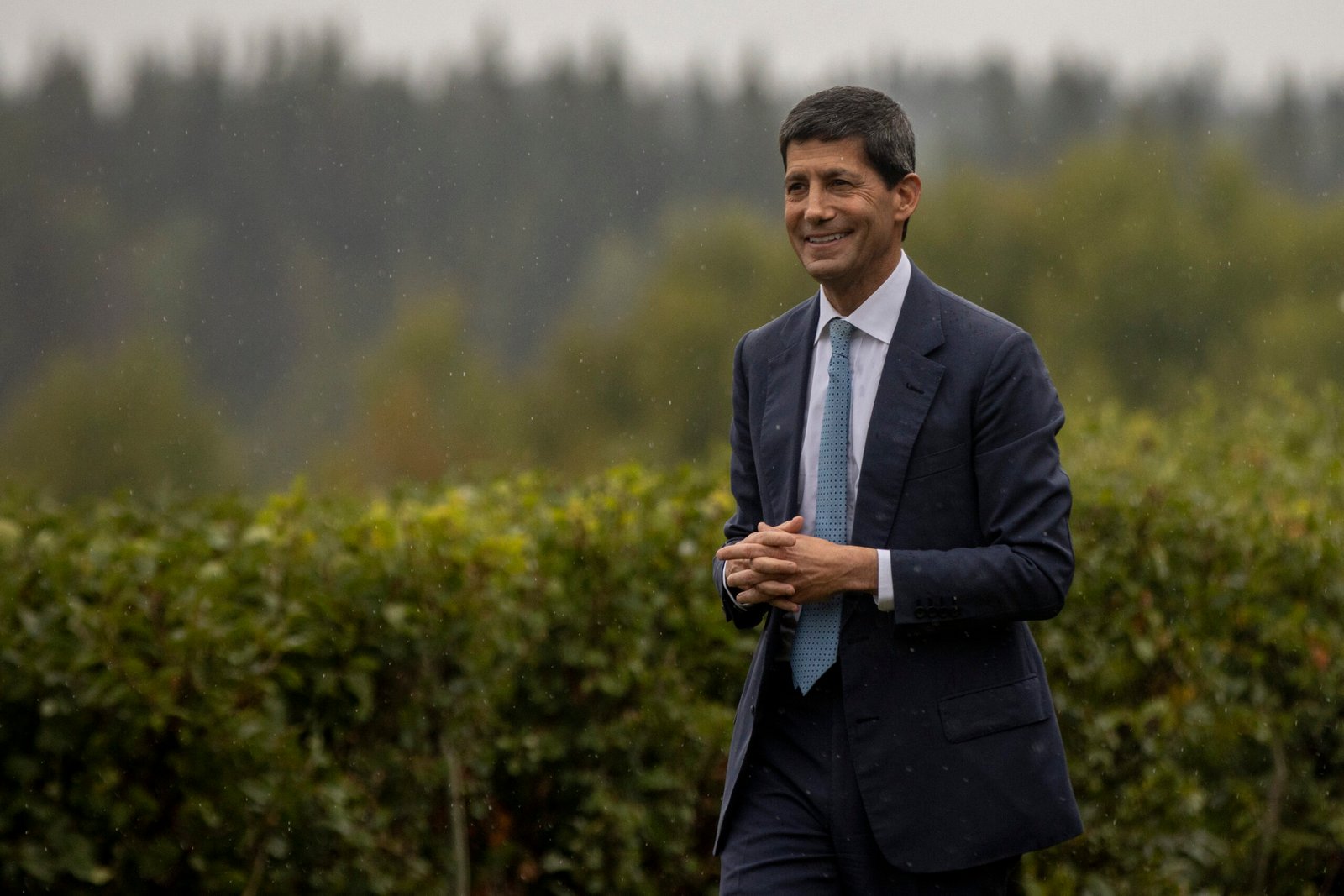
Kevin Warsh gave his first major speech as chairman of the Federal Reserve on August 28 at this year’s Jackson Hole Economic Policy Symposium. He followed his predecessors in giving clues about the Fed’s future direction—as much as he might prefer not to—and perhaps even set himself on a collision course with President Trump.
Hosted by the Federal Reserve Bank of Kansas City each year, the symposium draws bankers, policymakers, and academics to the small resort town of Jackson, Wyoming, for three days to discuss long-term policy concerns. The highlight of the conference is the Federal Reserve chair’s annual address, usually given on Friday morning.
Paul Volcker was the first Fed chair to attend in 1982 (in fact, the picturesque location, with its proximity to some of the world’s best fly-fishing, was chosen in part to lure that avid angler to the meeting). Alan Greenspan was a regular opening speaker for over 14 years, his celebrity helping to swell attendance and raise the symposium’s profile. And Warsh’s immediate predecessor, Jerome Powell, frequently used his annual address to foreshadow the direction of Fed policy, thrusting it further into the spotlight.
There is, then, no more ironic place for Warsh to go to war against forward guidance. Forward guidance—Fed slang for broadcasting monetary policy moves well in advance—became “a regular practice” during the global financial crisis, as Warsh explained in this year’s speech, and was intended to maintain calm in the markets during economically tumultuous periods. The current Fed chair believes it has overstayed its welcome, as markets have become too reliant on this information, locking the central bank into whatever policy it foreshadowed regardless of subsequent changes in circumstances. Warsh, beginning with his first Federal Open Market Committee (FOMC) press conference as chair on July 29, appears determined to retire the policy.
As he noted at Jackson Hole last week, forward guidance can in fact lead markets, businesses, and households astray, obstructing the ability of policymakers to make rate decisions based on hard data. Emphasizing the need to find the proper relationship between financial markets and the Fed, Warsh added that:
The Fed needs clear market signals, as unfiltered as possible from market internals: the level and change in asset prices across sectors, the prices and trading volumes of Treasury securities, the foreign exchange value of the dollar, the cost and availability of credit, and the price of a broad set of commodities. [Emphasis added.]
In the reference to Treasury securities, one cannot help but see a jab at Treasury Secretary Scott Bessent’s recent maneuvers. In August, the national debt rose to exceed $40 trillion, while 30-year Treasury yields jumped to almost two-decade highs. The increasing burden of the debt on government financing has pushed up interest rates, as buyers price in the risk of non-payment. By buying back some of these long-term bonds, Bessent hopes to bring down yields on the long end of the yield curve (the normally upward sloping curve showing the difference between short- and long-term bond yields) and thus lower borrowing costs for the government.
Subscribe Today
Get daily emails in your inbox
So far, this hope has not been realized. While yields did initially fall, they quickly returned to pre-intervention levels. Warsh’s point about clear market signals appears to place him alongside Stanley Druckenmiller, a former mentor of Bessent, in cautioning against distorting such an important signal as the Treasury yield. In a Wall Street Journal op-ed criticizing Bessent’s move, Druckenmiller argued that “the long-term Treasury yield is the most important price in the world,” adding that “it is also the only fiscal disciplinarian the U.S. has left.” He also asserted that “every basis point of artificial yield suppression is a subsidy to procrastination” when it comes to the debt.
Pushing down the yield at Treasury auctions is exactly the kind of distortion Warsh seems to be trying to end.
More directly, Warsh has continued to highlight the central bank’s focus on price stability over the employment side of the dual mandate. In his Jackson Hole address, he characterized the labor market as “stable,” and spent considerable time digging into the various inflation indicators that remain concerning. He reiterated that “the responsibility for 65 months of sustained, elevated inflation sits squarely with the central bank. And that is where it belongs.”
Markets took this focus as a sign that rate hikes are soon to come—which puts Warsh, who was appointed as Fed chair in part because he was seen by Trump as open to rate cuts, in an interesting position.
Just prior to the FOMC meeting in July, at which the committee voted on interest rates, President Donald Trump pushed for cuts despite the persistence of elevated inflation. He spared his appointee—“Kevin is fantastic,” he wrote—but accused the committee of keeping rates too high. Per Trump, “He’s got a board, and the board members are very political.”
Trump hit the Fed again in August, asking why good news on unemployment and GDP didn’t lead to rate cuts: “My point is, years ago, 25 years ago, when the country announced good numbers, interest rates went down because we had a stronger country.” If Warsh moves this month to raise interest rates, it could therefore place him directly in the president’s crosshairs—but posturing as an advocate for rate maintenance or cuts will likely undermine his credibility with markets.
To maintain his inflation hawk credentials, Warsh may have to upset his president. (Recent Supreme Court decisions should protect him from being removed arbitrarily, although the Trump administration has shown a willingness to harass Fed chairs it perceives to be offsides.) Inflation remains a problem, and Kevin Warsh insists he is still committed to fixing it. But talk is cheap; we will have to see whether September brings action.
[ad_2]
Source link
