
[ad_1]

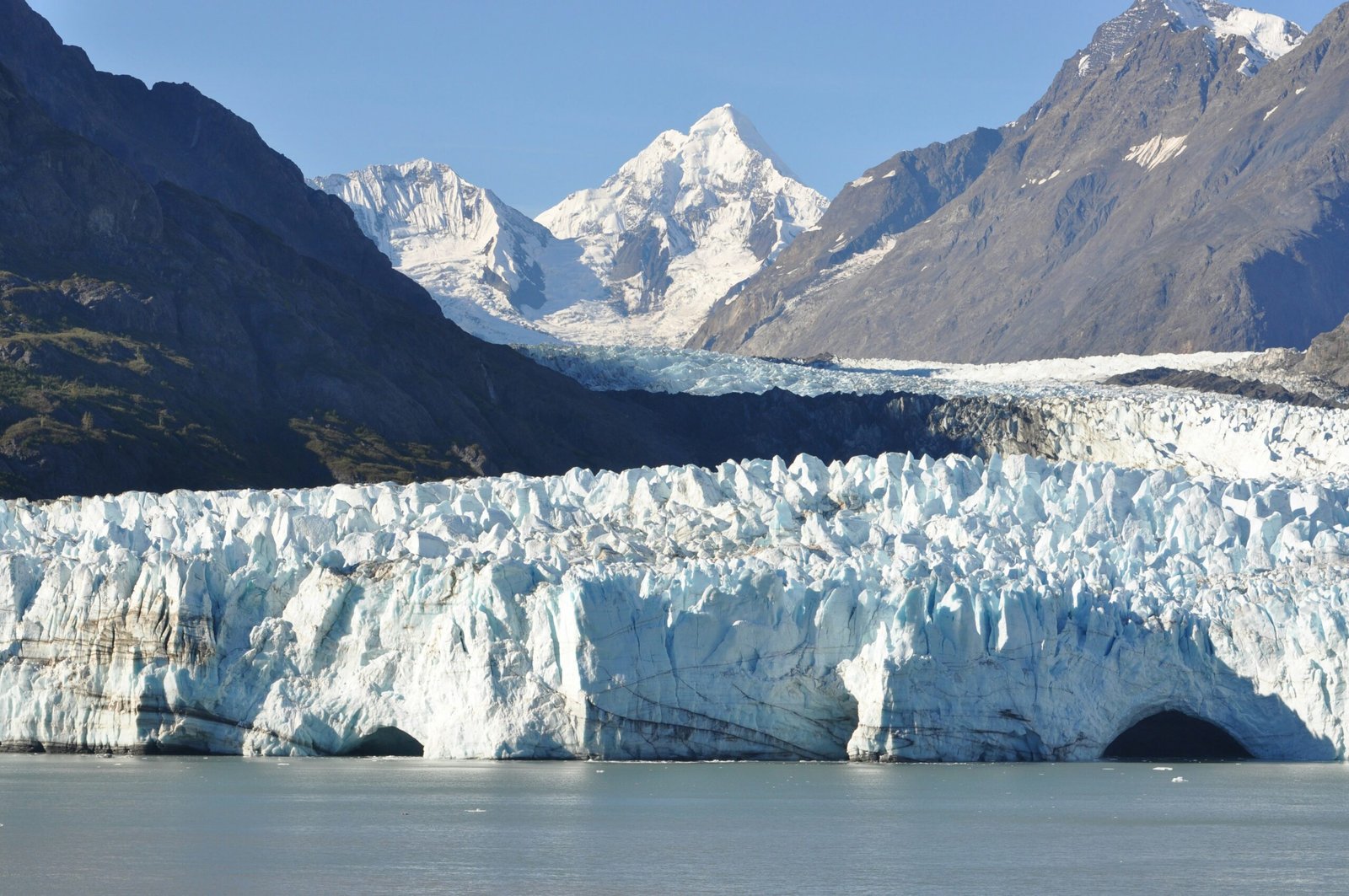
Image by Richard Young.
Global warming is becoming a self-advertised nuisance with the recent Nepal disaster bringing renewed attention: Is global warming fueled by fossil fuel CO2 emissions behind the Nepal catastrophe?
In High Mountain Asia, there are thousands of glaciers at some stage of transforming into large lakes that may burst, barreling down mountainsides. The recent Nepal incident is but a warning, according to Jason Gulley, professor of geology, University of South Florida, who focuses on glacier hydrology. (The Melting Glacier in Nepal Was a Time Bomb. There are More to Come, The New York Times, August 28, 2026)
Professor Gulley understands the dynamics of cascading glaciers. Since 2005, he’s made six expeditions to the Khumbu region to study how glaciers disintegrate into hazardous lakes.
So far, here’s what’s known: “What’s clear at this point is that a giant hunk of glacier peeled off the side of the mountain, tumbled down 4,000 vertical feet and slammed into a tributary of the Bhote Koshi River in China. Originally misidentified as an earthquake, the mountain-shaking event registered as a 5.2 magnitude seismic event. Moments later, a wall of rocks and water blasted through the Gyriong Port building as the flood barreled down the valley,” Ibid.
Stop CO2 Emissions or Suffer More Glaciers Barreling Down Mountainsides
“Unless the carbon dioxide emissions that are heating the planet are curbed, scientists project warming across High Mountain Asia, a broad region encompassing the Himalaya, Karakoram, Pamir, Hindu Kush and Tien Shan, will erase as much as 75 percent of the remaining glaciers by 2100… Meltwater pooling behind moraines and in depressions exposed by the ice will transform thousands of glaciers into large lakes, each one a potential ticking time bomb for vulnerable communities downstream,” Ibid.
Over millennia, Nepal’s glaciers formed and grew until they filled valleys in mountains and in the process “bulldozed” piles of rocky debris up to hundreds of feet in height down mountainsides, thus forming what glaciologists call “moraines.” Essentially, these moraines serve as nature-made dams that are now containing the water of the Great 21st Century Glacial Meltdown, forming large lakes in mountainous terrain. Eventually, the unrelenting pressure of additional meltwater overwhelms the moraines, breaking loose, cascading down mountainsides. Voilà, the Nepal incident!
Mystery of the Nepal Incident
“While Wednesday’s flood had a massive landslide, there didn’t appear to be any glacier lakes below it, making it a bit of an anomaly, certain to be studied intensely in the coming years. Some scientists have speculated that the impact of a piece of glacier falling 4,000 feet could have pulverized the ice into water… But we know that there will be more floods — and some may be far worse than this week’s catastrophe,” Ibid.
International Scientist Shaken by World Glacier Meltdown
A 20-yr. international study of glacier meltdowns, involving 35 research teams, was published in SciTechDaily d/d February 22, 2025: “The Great Glacier Meltdown Uncovered 273 Billion Tonnes of Ice Lost Annually”
That headline is bad enough, but it gets worse. Over the second decade of the 20-year study, the massive meltdown accelerated by 36%.
“The rate of ice loss has escalated over time. While the average annual loss stands at 273 billion tonnes, this figure increased by 36% in the second half of the study period (2012–2023) compared to the first half (2000–2011) … The rate of glacier ice loss has increased significantly from 231 billion tonnes per year in the first half of the study period to 314 billion tonnes per year in the second half.” Ibid.
Additionally, sea level projections by the IPCC and others are likely too low by not factoring terrestrial glaciers: “Over the full study period, glacier ice loss was 18% greater than that of the Greenland Ice Sheet and more than twice the loss from Antarctica’s Ice Sheet, underscoring the critical role glaciers play in global sea-level rise.”
Meanwhile, Glacial Lake Outburst Floods endanger populated areas of mountainous regions, according to Carbon Brief, 22-25% of the global population, roughly 2 billion people, live downstream from snowpacks and glaciers. About 10% of the world’s land surface is covered by 200,000 glaciers.
Oxford Academic
Scientists’ Warning on Fossil Fuels, Oxford Open Climate Change d/d March 31, 2025:
“The evidence is clear that fossil fuels—and the fossil fuel industry and its enablers—are driving a multitude of interlinked crises that jeopardize the breadth and stability of life on Earth. Every stage of the fossil fuel life cycle—extraction, processing, transport, and combustion or conversion to petrochemical products—emits planet-heating greenhouse gases and health-harming pollutants, in addition to causing widespread environmental degradation. We review the vast scientific evidence showing that fossil fuels and the fossil fuel industry are the root cause of the climate crisis, harm public health, worsen environmental injustice, accelerate biodiversity extinction, and fuel the petrochemical pollution crisis. Fossil fuels are responsible for millions of premature deaths, trillions of dollars in damages, and the escalating disruption of ecosystems, threatening people, wildlife, and a livable future. The fossil fuel industry has obscured and concealed this evidence through a decades-long, multi-billion-dollar disinformation campaign aimed at blocking action to phase out fossil fuels.”
[ad_2]
Source link
