
[ad_1]
The Israeli-US war on Iran, initiated six months ago, cost consumers around the world a jaw-dropping $330 billion in extra petroleum and fossil gas import costs so far. In other words, Israeli Prime Minister Benjamin Netanyahu, who convinced Trump to launch the war of aggression, personally imposed a tax of about a third of a trillion dollars on the public in other countries for the sake of his political survival. Next winter and spring when the full effects of the fertilizer crisis caused by the war are felt in food markets, there will be a substantial toll in human lives from high-priced food that the poor won’t be able to afford.
In the first six months of the year, Turkiye’s energy import bill alone rose $2 billion over what had been projected, which helped widen the country’s trade deficit.
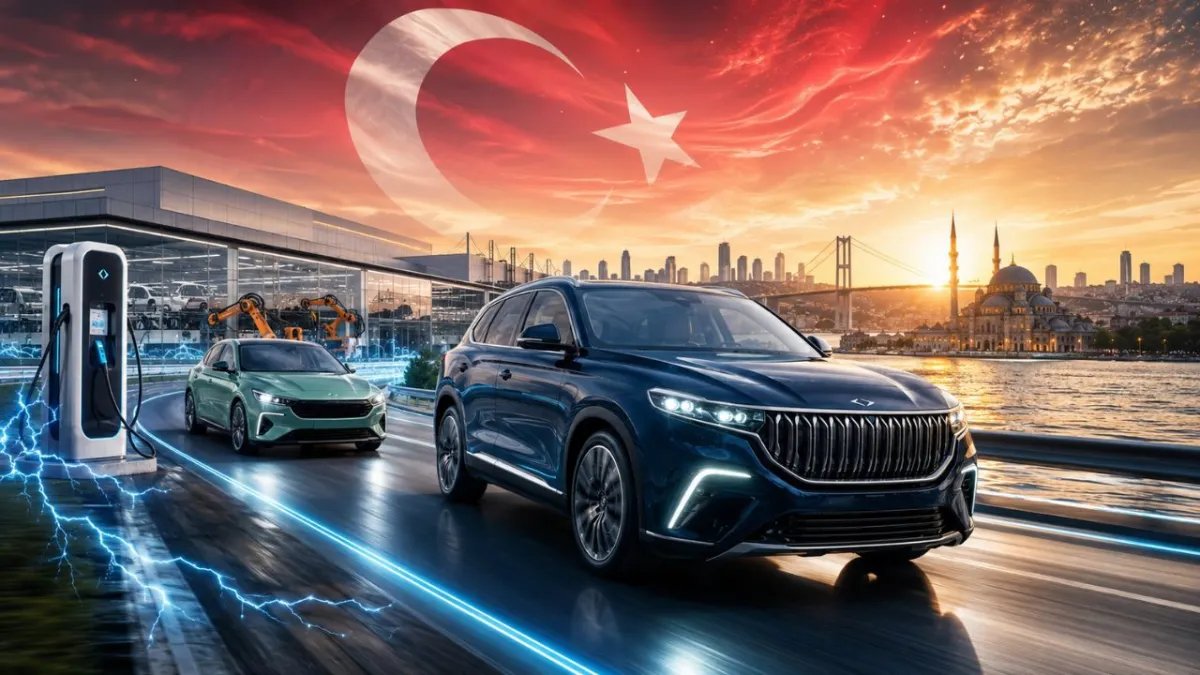
One of the ways Turkish consumers have responded to higher gasoline and diesel prices has been to buy electric cars. The combined sales of battery-electric vehicles (BEVs) and Plug-in Hybrid Vehicles (PHEVs) constituted 51.7% of new car registrations in H1.
That is worth repeating. A majority of new vehicles bought in Turkiye in the first half of this year are electric, for the first time in history. Among European countries, only Norway and Denmark do better than Turkiye.
In the first seven months of this year, gasoline car sales plummeted nearly 20%. Interestingly, pure electric sales were also off a little, but plug-in hybrid purchases were up by 3.5%. Turks cut back on car buying substantially during the first half of the year, with a 12% decline year over year. So the 9% decline in pure electric vehicle purchases was actually smaller than the general decline in automobile purchases.
The high cost of fossil gas and diesel, provoked by the twin crises of the war on Iran and the Russian war on Ukraine, also drove Turkiye to seek green alternatives. In July of this year, 15.5% of Turkiye’s electricity generation was solar.

Overall in July, 58% of Turkiye’s electricity came from renewables. And if we take the seven-month period from the beginning of the year until the end of July, about 60% of Turkiye’s power was generated by renewables. The biggest renewable source at 26.2% of electricity generation was hydroelectric. Wind turbines produced another 12% of the country’s electricity in the first seven months of this year.
Turkiye now ranks fifth world-wide in wind installations and tenth in solar capacity. The country has 25 gigawatts of new wind installations in the pipeline between now and 2035. It is also expected to double its solar installations by 2030, in only three and a half years.
Storing wind and solar energy for those times when the wind is not blowing or the sun is not shining has become an increasingly important component of renewable grids. Turkiye plans 8 gigawatts of battery capacity by 2035.
Their green energy installations have saved consuming nations enormous amounts of money during the Hormuz crisis, the most severe energy crisis since the 1990-1991 Gulf War. The Centre for Research on Energy and Clean Air writes, “In the first five months of the crisis alone, clean power generation added since 2020 saved importing countries an estimated USD 36 billion in avoided coal, gas and oil imports.”
[ad_2]
Source link
