
[ad_1]
Marcus Baram Capital and Main
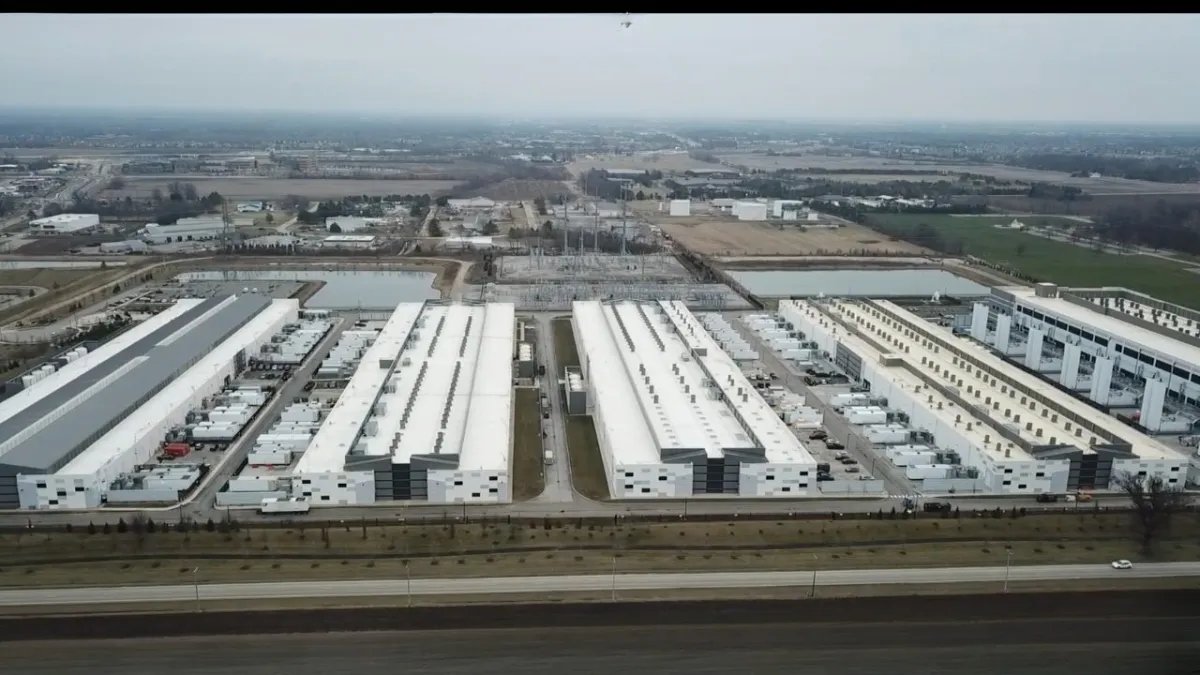
With some of the highest electricity rates in the Midwest, Ohio has seen a remarkable policy shift from lawmakers in both parties. Every candidate for governor has now called for restrictions on the data center boom, each proposing some form of moratorium unless certain conditions are met.
Both U.S. Senate candidates have turned sharply critical of the industry. And the state’s highest court just ruled that local governments can’t fast-track new data centers without providing specific reasons — giving teeth to referendum drives in small towns where residents are trying to block project approvals.
The tide may be turning on data centers in Ohio, as it is in states across the country — from Pennsylvania to California. But when it comes to how the state generates its power, fossil fuel interests are using the moment to entrench themselves and box out solar and wind. The Republican-controlled Legislature is trying to redefine “clean energy” to include coal and gas, explicitly to the benefit of data centers, through a little noticed proposal — Senate Bill 294 — that passed the state Senate in June and awaits a House vote.
The Redefinition
SB 294 would make it the policy of the state to ensure “affordable, reliable, and clean energy security.” The catch is in the fine print: a minimum capacity factor standard of 50% — a measure that compares the energy source’s actual output to the maximum that is technically possible, a threshold that solar and wind fall far short of. Only nuclear, certain types of natural gas and wood-burning power plants can feasibly meet the threshold, per Inside Climate News.
Energy experts consider it a definitional sleight of hand, with real consequences, with supporters casting the bill as energy security and critics arguing it intentionally sidelines the renewable projects needed to power massive energy-hungry data centers. The Senate passed it 24-9 on June 10.
The irony is that Meta, one of the biggest tech companies in the state, has already signed an agreement to access more than 2.1 gigawatts of nuclear energy from power giant Vistra for its regional Ohio data centers — greener than the legislature that courts it.
Beneath the maneuvering sits the number driving voter anger: The average Ohio electricity bill grew 55% from July 2021 to July 2026, far above the national average, according to the Heatmap/MIT Electricity Price Hub. Efforts at creating guardrails on data centers have stalled — a House bill to cut the sales tax break for new data center projects from 100% to 50% went nowhere, even with the House speaker’s support.
“We don’t think we should be granting tax exemptions to multibillion-dollar corporations, especially when many of them are already coming here to build these data centers anyway,” Speaker Matt Huffman, a Republican, told the Ohio Capital Journal.
Leatra Harper, managing director of the FreshWater Accountability Project, testified against SB 294 and has spent 15 years tracking bills like it. “The bad bills never seem to die and the good bills go away forever,” she told Capital & Main. “They let them linger. They hold it over our heads.”
The Referendum
The clearest test of the backlash comes Nov. 3 in Ashville, a town of about 4,500 south of Columbus, where the fossil-fuel dimension of the fight is unusually literal. The Ashville Village Council struck a tentative agreement with EdgeConneX to build two data centers and an 800-megawatt natural gas plant on about 195 acres of village property, declared the deal an emergency so it could take effect immediately and exempted the project from Ashville’s own data center moratorium.
Residents gathered enough signatures for a referendum in the November midterms. Village leaders refused to forward the petition. On Aug. 7, the Ohio Supreme Court unanimously ordered it submitted to the Pickaway County Board of Elections, ruling that Ashville leaders never explained why waiting the standard 30 days would have delayed anything.
“I think this will be the first vote on data centers in Ohio,” said Marc Dann, the Democratic former state attorney general now representing Data Center Resistance, a group backing residents in such fights. Among them is Brian Meyers, a bus technician of more than 20 years who told Ohio Capital Journal that he learned about the project from an announcement on the back of his water bill.
Northwest of Columbus, Jerome Township trustees imposed their own nine-month moratorium on new data centers after residents complained about a persistent “industrial buzz” from Amazon’s two existing facilities there, which carry 10-year tax abatements approved at the county level.
“According to the way that the noise is measured, it may be in compliance, but it still is not pleasant,” former township trustee Wezlynn Davis told WOSU, insisting the nine-month moratorium was not anti-business. “We’re finding now that we’re experiencing data centers in real time. It is not tolerable for our residents.”
The politics have followed the complaints up the ballot. Sherrod Brown, the Democratic nominee for U.S. Senate, has hammered Republican opponent Jon Husted in attack ads as “the face of data centers in Ohio”, calling him the point man for the 230-odd new data centers in the state who pushed the Legislature to grant $2.5 billion in tax subsidies for operators. But both men have shifted their positions — a decade ago Brown celebrated Amazon Web Services’ arrival in central Ohio. Husted, for his part, has conceded the ground entirely: “They’ve earned that backlash,” he told the Statehouse News Bureau of the industry, faulting companies for not offering to pay energy bills in the communities where they build power plants.
The Reprisals
Harper, the FreshWater Accountability Project managing director, watches the conversion of Ohio’s politicians with the wariness of someone who fought this fight when it was a lonely quest.
“People are slowly realizing that there’s a double standard — that our elected officials are catering more to fossil fuels and really putting all their eggs in the fracking basket,” she said. “It’s so much more blatant since the Trump administration has taken over.”
Harper has felt it personally: Her own solar installation in Bowling Green was hit with a rider that she said wiped out its payback period, and she sued the city over it.
Now she is fighting an $800 million Meta data center of more than 280 acres outside Bowling Green — one with its own permitted gas facility, fed by lines running off the Nexus and Rover fracked-gas pipelines. “I call it the Pandora’s box of fracking,” she said. “They’re just following that frack gas pipeline and installing these behind-the-meter gas plants.”
The tools available to residents keep shrinking. Referendums, Harper said, were already difficult — volunteers canvassing around full-time jobs and 30-day windows — before lawmakers in 2023 raised the signature threshold for township zoning referendums from 8% of the last gubernatorial vote to 35%.
“They sneak these bad laws in,” she said. “They put it in the chicken bill, or the budget bill. By the time you even catch on to what the impact is, it’s too late.”
Still, she believes the resentment aimed at data centers is about something larger.
“It might be as much about the billionaires as it is about the data centers themselves,” she said. “The data centers represent something — it’s tangible to the intangible that people are really beginning to resent, which is how our government’s pretty much bought and sold by moneyed interests.”
Whether that resentment shows up in November is an open question. Harper thinks of her grandmother in Appalachia, who never cast a ballot in her life.
“She said, ‘You know, if they’re not crooks when they go in, they’re crooks when they come out,’” Harper said. “And I used to think, Grandma, what are you saying? That can’t be true. But it is.”
Copyright 2026 Capital & Main
Editor’s Note: At a moment when the once vaunted model of responsible journalism is overwhelmingly the play thing of self-serving billionaires and their corporate scribes, alternatives of integrity are desperately needed, and ScheerPost is one of them. Please support our independent journalism by contributing to our online donation platform, Network for Good, or send a check to our new PO Box. We can’t thank you enough, and promise to keep bringing you this kind of vital news.
You can also make a donation to our PayPal or subscribe to our Patreon.
Please share this story and help us grow our network!
[ad_2]
Source link
