
[ad_1]
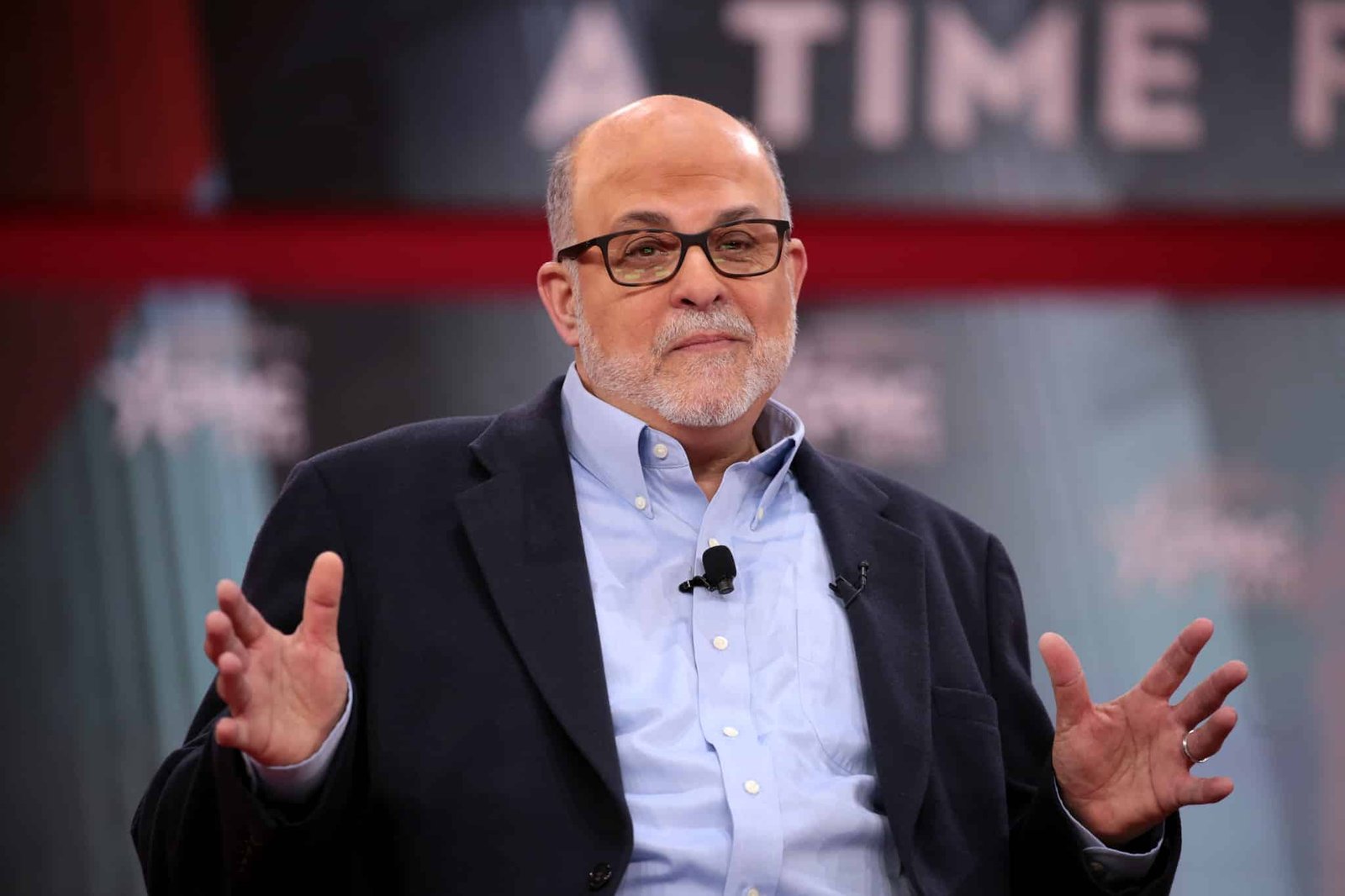
On August 5, longtime broadcaster and Fox News host Mark Levin posted on Twitter/X:
I look forward to — indeed, am excited about — the debate between we, the constitutional conservatives/capitalists, and the nationalists-populists (or whatever nomenclature they settle on) in the lead up to the 2028 presidential primaries, including domestic and foreign policy,…
— Mark R. Levin (@marklevinshow) August 5, 2026
Levin fancies himself a defender of free-market capitalism, standing strong against the wave of socialism sweeping both major political parties. Confident in his beliefs, Levin seeks to promote the virtues—both moral and economic—of voluntary cooperation between individuals.
This mission, though noble, has one core problem: Levin himself has socialist tendencies. While he claims that he upholds voluntary exchange and private property as cornerstones of his economic worldview, he is perfectly willing to compromise on these values when he feels the cause is just. Simply put, he will justify the state’s aggression against private property when he feels their goals are sufficiently important.
To outline this, let’s first understand the conflict between socialism and capitalism. Socialism, as defined by Libertarian Institute managing editor Keith Knight, is the “institutionalized interference with, or aggression against, private property and private property claims.” Capitalism, on the other hand, is defined by Knight as a “social system based on the explicit recognition of private property, and non-aggressive contractual exchanges between private property owners.”
We can briefly describe capitalism as an economic system which respects the private property rights of individuals, and where said individuals engage in the voluntary (non-aggressive) exchange of said property. Socialism, by contrast, necessarily involves infringing on these rights through the aggressive seizure of an individual’s private property by the state, supposedly to serve a “common good,” which only the state has the authority to define. In this system, property is not exchanged on a voluntary basis, but rather by force.
Levin has explained the virtues of capitalism. In a 2025 episode of “Life, Liberty & Levin,” he argued against the democratic socialism of New York City Mayor Zohran Mamdani, and said that voluntary exchange is the natural state of humanity. He called capitalism “a voluntary, spontaneous system of human interaction.”
Implied in this description is that if the government were to intervene in this dynamic, it would be involuntary, and thus a feature of a Mamdani-like democratic socialist order. Based on this, it would appear to the average listener that Mark Levin is a staunch supporter of voluntary exchange, and a harsh critic of coercive economic interventionism by the state.
Well, upon digging deeper into Levin’s ideology, there is actually no principle upon which this view is built. He is a supporter of economic interventionism in his own way, and he establishes this worldview not on a set of consistently applied moral rules, but instead on preferences for what projects the state ought to use your money to fund. While he masks his socialism under the rhetoric of Misesian economic theory, it is nonetheless present.
This hypocrisy is seen in Levin’s vocal opposition to government-run grocery stores, a program Zohran Mamdani proposed. “If we had only government-run grocery stores,” Levin says, “we’d starve to death.” Levin argues that state-run programs cannot provide basic goods in an efficient manner, because due to the state receiving their revenue by force (not necessarily by providing value) they lack the incentives and market signals that private industry possesses to help them provide consumers with value. On its face, this is a sound point.
However, Levin does not apply this critique of government programs consistently, specifically when it comes to war, the deadliest of all government programs.
Levin himself described capitalism, the system he seeks to defend, as “voluntary.” If we apply this principle to the grocery store example, we can clearly see his point. If a store is receiving its revenue by force, and not via voluntary economic exchange, then it won’t have the economic signals or incentives necessary to meet consumer demand or adjust their prices accordingly. Similarly, if we apply this string of logic to a service, say education, an entity which receives revenue regardless of its quality will not have the incentives to improve their operations.
In a bizarre twist, however, Levin does not apply this logic to national security. When it comes to war, Levin applies Austrian-style economic reasoning inconsistently. For all of his talk about the economic stupidity of state-run grocery stores and the faulty incentive structures they create, he has repeatedly advocated for increasing the budget of the Pentagon, which hasn’t passed an audit in eight years.
The capitalist understands that without market pricing being set based on voluntary economic exchange, humans cannot make rational decisions about where to allocate resources. This core understanding doesn’t only apply to Mamdani’s grocery stores, it applies whenever humans act to allocate scarce resources.
Therefore, we can conclude that the same inefficiencies that would occur in a government-run grocery store should also apply to government-run national security. Due to its revenue being acquired through taxation rather than voluntary exchange, the government lacks the market signals that would help it use its resources efficiently.
Similarly, all of Levin’s concerns about voluntary exchange go out the window the minute the topic shifts to matters of war. When it comes to healthcare and groceries, the government would be interfering with the “voluntary, spontaneous system of human interaction” if they were to intervene, therefore making the system no longer capitalist (again, according to his own description).
Voluntaryism is disregarded instantly, however, when anyone complains about being forced to fund the mass murder of innocent children being conducted by Israel in the Gaza Strip. When the cause is just in Levin’s view, he is perfectly happy for the government to forcibly seize your money (your private property) and use it to manufacture weapons of war. Once this has been conceded by Levin, he is no longer debating for a consistent set of principles. He has entered the realm of preferences, and therefore can no longer say that he fundamentally rejects the state intervening into the economy on a foundational level. He instead is seeking to convince us of the morality behind his policy preference, which is a very different thing.
It is also very hard to do in this case, due to his preferences having led him to supporting the most murderous of all government programs.
Levin’s core contradiction is the conditional and shifting value he places in the right of individuals to private property. Despite purporting to speak in defense of this capitalist principle, Levin has actually advocated vocally, and very proudly, for the forcible seizure of private property by the state. Of course he doesn’t see it as such. Rather, he views it through a democratic socialist lens, where theft is justified to serve the common good, in this case “national security.” By “national security,” he means a war of choice against Iran, resulting in the immediate murder of over 175 innocent people, including many young girls, at an elementary school.
For a guy who rants and raves against the economic “waste” caused by socialist policies, he has little concern about the innocent human life that is needlessly wasted in the mass murder campaigns he enthusiastically supports. Strange.
For purposes of clarity, of course national security is important. We all want to be safe. The question at hand is regarding how the government acquires its resources to operate this program. By justifying aggression, Levin is conceding the very argument he made when defending capitalism. Whereas before he claimed that capitalism, a system built on voluntary exchange, better allocated resources, he now abandons that principle and instead supports the government in their forcible seizure of private property, and their centralized control over this industry.
Mark Levin is, at best, a confused and inconsistent capitalist. He claims to advocate for the necessity of private property, yet does not hesitate to support the state when it aggresses on an individual’s private property rights when the stolen money is being used to fund wars. Voluntary exchange, despite it being a core pillar of capitalism, is also quickly disposed of when Levin feels the cause is just.
Clearly, there are no principles against government interventionism, nor in favor of voluntaryism and private property, upon which his ideology is constructed. Levin possesses a set of preferences, without a consistent moral framework, from which he justifies the state’s use of violence and force to fund their programs. Levin, therefore, supports socialism in this sense, as he supports the “institutionalized interference with, or aggression against, private property” when it is done to forward the government’s wars.
Not only does Levin support government programs, but he is a passionate cheerleader for the deadliest one of them all, warfare. He is certainly not the best standard-bearer for capitalism and free-markets.
[ad_2]
Source link
