
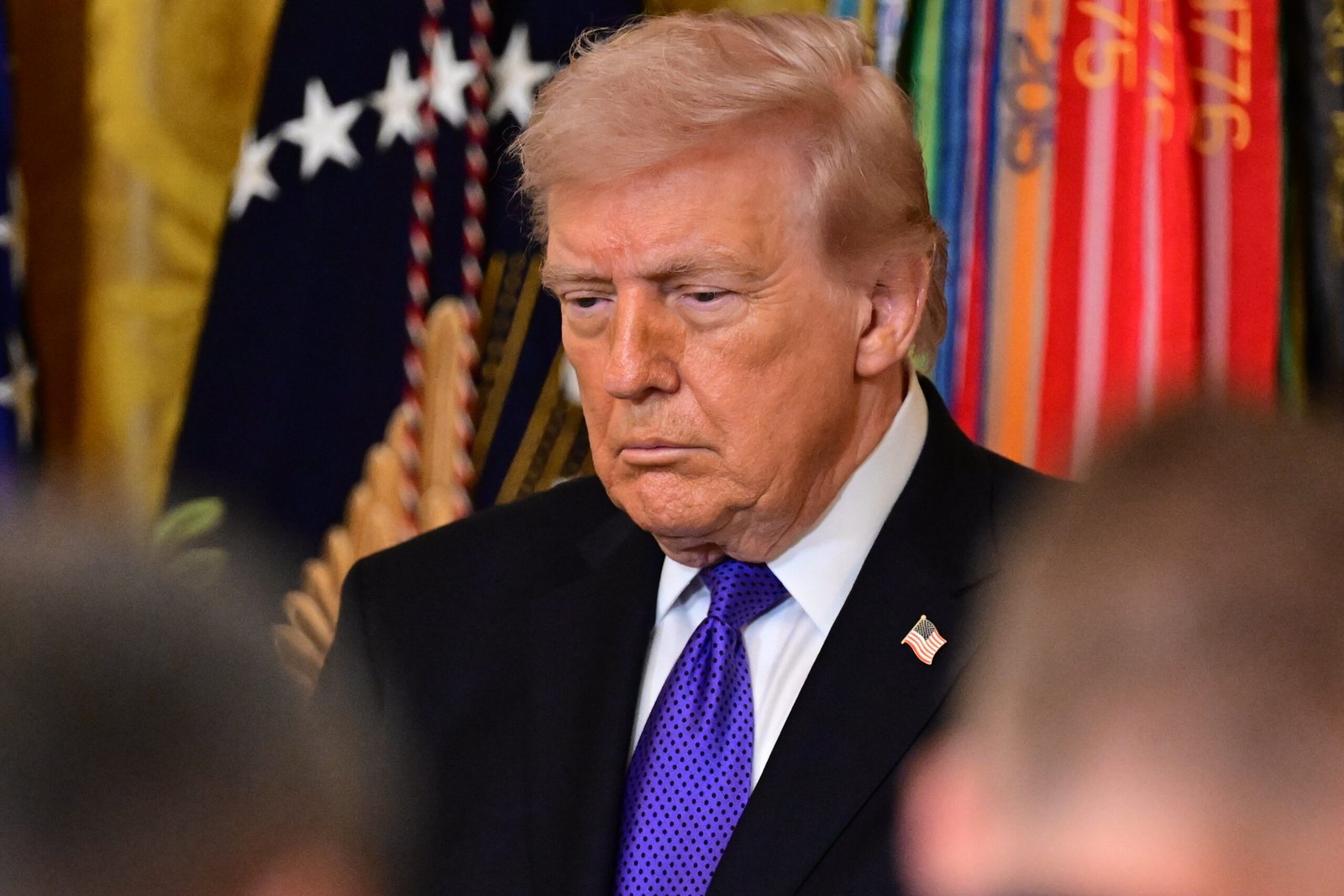
Although President Donald Trump is unable to publicly admit that “mistakes were made” in his war with Iran—as American leaders sometimes describe their own blunders—he seems to be implicitly acknowledging that the military strategy he pursued has failed. He’s moving to a new strategy of extracting concessions from Iran via economic coercion, rather than bombing.
Trump has described this as a “low-key” and longer-term approach to the conflict. He is concentrating on opening the Strait of Hormuz, downgrading the focus on negotiating with Iran over its nuclear program, which he has insisted is now buried deeply underground and thus out of commission anyway.
It was probably no coincidence that Trump’s strategic shift coincided with two developments: 1) American public awareness that expensive U.S. missile stockpiles had been mismanaged, resulting in dangerously low supplies that cannot be replenished quickly; 2) recent maximalist demands by Iran’s Supreme National Security Council. That body demanded that Washington, just to get the Strait of Hormuz back open, quit threatening Iran, permanently end the war, withdraw its military from the region, compensate Iran for war damage, remove its naval blockade of Iranian ports, remove economic sanctions, and unfreeze Iranian assets.
Yet Trump’s strategy of wearing Iran down economically would seemingly require him to keep the blockade and sanctions in place and the assets frozen, and certainly rules out providing war reparations. Moreover, the strategy isn’t truly “new”—America has long maintained economic pressure on Iran—and there’s little reason to suppose it will work now.
Sanctions are, or should be, economic penalties designed to achieve political goals. But academic studies cast doubt on the effectiveness of imposing even draconian economic pressure to force capitulation or compliance.
No doubt, severe sanctions can immiserate populations. But they have two problems. The first is that, like bombing, economic sanctions tend to rally the targeted population around even odious governments, such as the theocratic regime in Iran. (Sometimes sanctions inflict even more widespread pain on a society than bombing.) The rally-around-the-flag phenomenon has been demonstrated time and time again in many countries under grinding political, military, or economic coercion from an outside actor.
Second, Trump’s comments on a “low-key” strategy of economic attrition implied that the longer U.S. economic pressure lasted, the more likely Iran would cry uncle and begin seriously negotiating an end to the war. Yet my research has shown that although economic sanctions do take some time to implement and achieve maximum economic bite, over the long term, target countries become adroit at evading the sanctions, mitigating the coercive effect.
In this case, Iran has plenty of open land borders with other countries through which commerce, both legal and illegal, can flow. In addition, the United Arab Emirates has an economic relationship with Iran by sea.
Subscribe Today
Get daily emails in your inbox
My research has shown that even drastic, comprehensive, and multilateral economic sanctions regimes have failed to achieve their political ends. For example, some of the most comprehensive multilateral economic sanctions in world history were imposed on Saddam Hussein’s Iraq, beginning in the early 1990s, to persuade him to withdraw his invasion forces from Kuwait. The blunt force of sanctions inflicted widespread economic pain, but did not cause Saddam to pull back his troops. In fact, economic sanctions may be scarier to the target when threatened than when implemented, because after the sanctions come, the target then realizes there are many ways to move around them.
Economic sanctions, like bombing, usually achieve only modest goals and fail to improve the target state’s behavior. Since World War II, the United States has been the biggest user of economic sanctions, framing them as punishments for states that violate the rules-based order. In reality, most U.S. sanctions are imposed as a “goldilocks” option when the U.S. government wants to push back against an official adversary but diplomatic protest appears too weak and military force seems too strong or risky. The main function of sanctions is therefore political: showing the American people and special interests that the U.S. government is taking some kind of action against the bad guys.
President Trump may see the “low-key” economic strategy as serving that domestic political aim. Unfortunately, what he most needs now—both politically and geopolitically—is to get the Strait of Hormuz back open and the Iran war in the rear-view mirror. Instead of waiting for economic sanctions to bring Iran to the negotiating table, Trump should cut his already substantial losses and secure whatever deal he still can with Tehran.
