
[ad_1]
Neil Thompson Informed Comment
Chinese electric vehicles (EVs) have continued to make inroads into Western European markets in the first five months of this year according to data from Schmidt Automotive Research. It found that sales of EV rose 14.2% year-on-year, reaching 171,800 EVs sold to European consumers, with Italy and the UK (which is outside the continent’s dominant EU trading bloc) among the leading purchasers of Chinese EV exports. At the same time, the continent has endured a summer of record-breaking heatwaves and wildfires in countries like France, Spain Greece, and the UK, which have displaced hundreds of thousands of people. Credit ratings agency Morningstar DBRS estimates that French insurers alone face a bill of between $10bn and $15bn as a result.
Gathering Climate Crisis, Worsening Oil Prices
The climate crisis is accelerating Europe’s shift away from fossil fuels, and Chinese EV manufacturers are keen to benefit. Moreover, another factor is driving the continent’s uptick in Chinese EV sales, and that is the elevation of fuel prices caused by the on-again, off-again conflict between Iran and the US in the Strait of Hormuz. European oil and gas prices have surged this year due to a combination of both factors, having an impact on fossil-generated electricity, petrol and diesel prices on the continent. This in turn is fuelling European consumers’ interest in goods like solar panels, heat-pumps and EVs, many of which China makes and exports.
Both the climate crisis and the war in the Middle East will continue have a serious effect on Europe (given the distance between the Iranian and US negotiating positions). The secretary of Iran’s Supreme National Security Council, Mohsen Rezaei, said on August 11 that the Strait would remain closed to shipping unless the US first agreed to a number of conditions, such as unfreezing Iranian funds and ending US strikes against Iran and its overseas allies. In response to Iranian demands, US President Donald Trump has demanded Iran pay compensation for the deaths of US soldiers and to the families of Iranian anti-government protesters killed by security forces there. He also claimed to be slow walking negotiations, saying: “We are only semi-negotiating with them. We are just watching Iran with its huge inflation and the fact they have no money.”
EU-China Trade Tensions Pose Barrier to Green Exports
Chinese companies exporting EVs and other green goods like wind turbines to Europe face barriers, however. The EU placed tariffs on Chinese EV exports in 2024, complaining that Chinese manufacturers were benefiting from state subsidies and dumping EVs at cheaper prices in European countries to gain market share. The EU’s President Ursula von der Leyen complained in 2023 that global markets were being “flooded” by cheap Chinese EVs whose prices were kept “artificially low” by state subsidies. US tariffs on Chinese exports have since exacerbated concerns on the continent that Chinese goods are being diverted there instead.
The result is growing EU scrutiny of Chinese exporters, including green ones, despite the climate crisis and Europe’s own Green New Deal plan to switch to a more climate-friendly economic model. As well as maintaining its tariffs on Chinese EVs, the EU has opened an investigation this year into a Chinese wind turbine firm, Goldwind Science & Technology Company, using the bloc’s Foreign Subsidies Regulation. The two sides agreed last month to hold three months of talks after exchanging a series of threats and counter-threats about the EU’s growing deficit with China. The process will climax in October when the EU’s trade commissioner visits Beijing.
EU-China Differences Could Slow, Not End Green Exports
The EU has set October as the date it wants to get “tangible” results from China, EU Trade Commissioner Maroš Šefčovič said back in July, without which trouble looms. The bloc has a record trade deficit with Beijing, and fierce competition between European and Chinese manufacturers like carmakers is mostly going China’s way. The Germany automobile industry plans to shed 100,000 jobs over the coming years in part due to Chinese competition. China has previously threatened to retaliate if the EU passes measures that lock Chinese firms out of EU markets to protect local industry, such as the bloc’s Industrial Accelerator Act. A bruising trade war that sees the EU open further investigations into Chinese exporters and impose new tariffs as trade barriers seems likely.

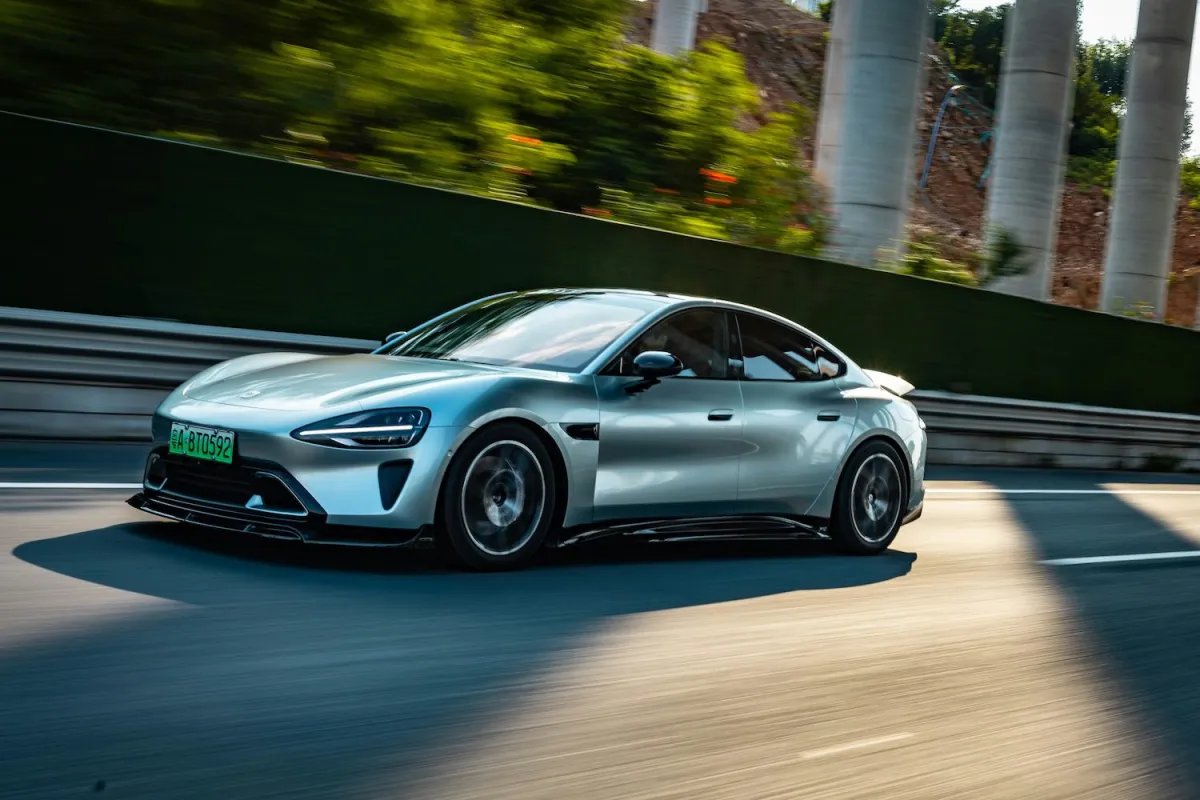
Photo of Xiaomi SU7 EV sedan by Ryan Lu on Unsplash
However, while this would reduce or slow Chinese green exports to Europe it would be unlikely to end them. Chinese vehicle manufacturers have responded to EU tariffs on EVs since 2024 by switching some production to plug-in hybrid EVs. These still have a petrol engine but also a battery, allowing users to switch and thus avoiding the EU’s definition of an EV import from China. German media reported in June that the EU is drawing up plans to impose duties on Chinese hybrid plug-in EV exports, but the process will take time and EU consumers will continue to purchase Chinese plug-ins in the interim. Similar tactics or adjustments are likely to occur in other sectors where Chinese green manufacturers operate.
Conclusion
The war in the Middle East and the climate crisis are combining to accelerate European states’ move away from fossil fuels. This is manifesting in part by European consumer purchases of green goods that are often made in China, exacerbating the EU’s trade deficit problem. Ultimately however, the EU seeks a sustainable accommodation with China rather than a conflict for supremacy like that between Beijing and Washington. To meet its targets to achieve a 90% reduction in vehicle emissions by 2035, EU policymakers will likely require access to China’s advanced EV and battery technologies. Given the massive urgency of the climate emergency, in the long run the two sides are likely to carve out an exception for China’s EV exports whatever the result of the October talks, because Europe needs what China is selling.
Editor’s Note: At a moment when the once vaunted model of responsible journalism is overwhelmingly the play thing of self-serving billionaires and their corporate scribes, alternatives of integrity are desperately needed, and ScheerPost is one of them. Please support our independent journalism by contributing to our online donation platform, Network for Good, or send a check to our new PO Box. We can’t thank you enough, and promise to keep bringing you this kind of vital news.
You can also make a donation to our PayPal or subscribe to our Patreon.
Please share this story and help us grow our network!
[ad_2]
Source link
