
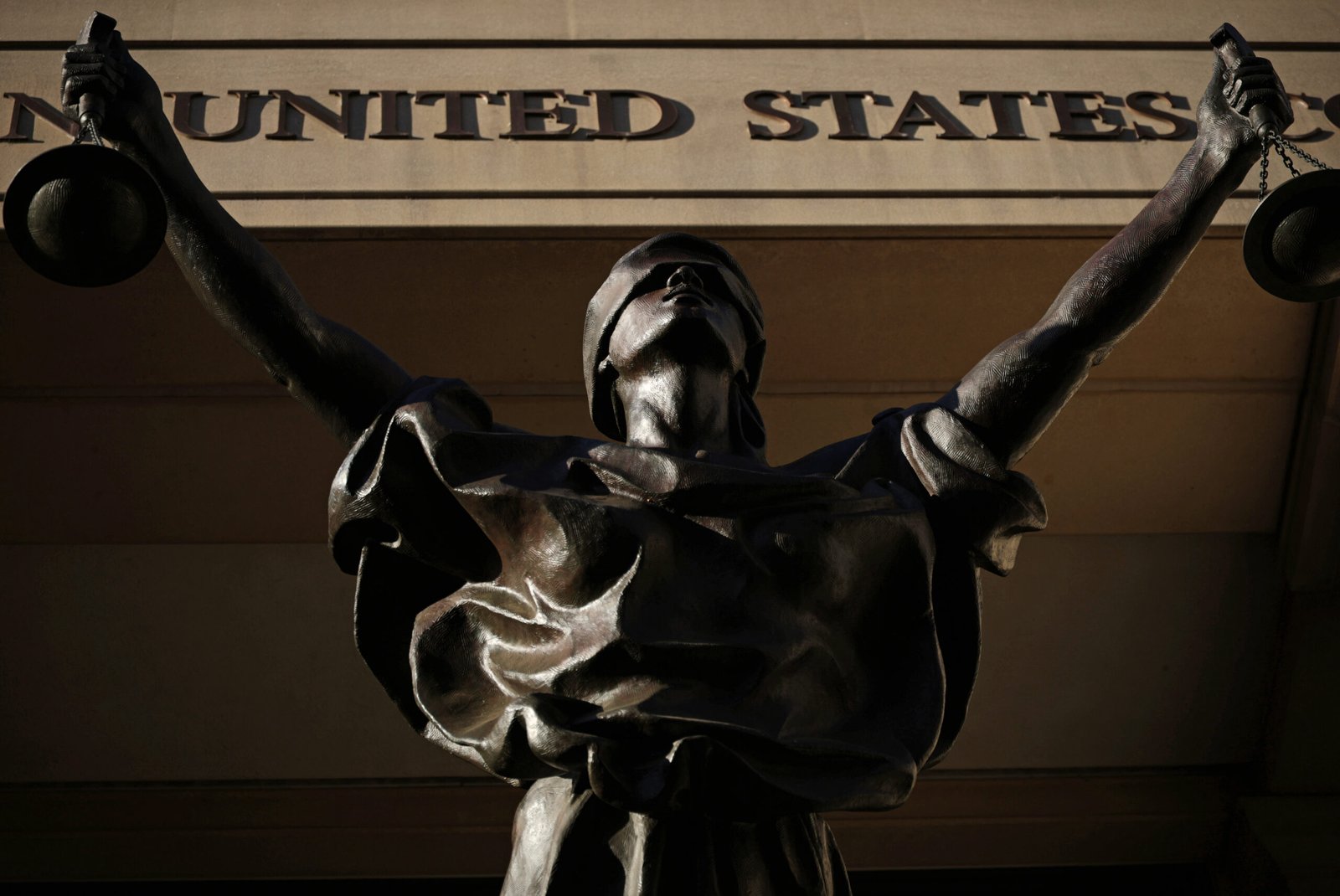
The Illusion of Law
Judges will not save our republic.
Law is power with lipstick.
Contra Chief Justice John Roberts, judges are not really umpires calling balls and strikes. The rules and precedents they must interpret are too diffuse and contradictory; choosing which to prioritize or rely upon is a bit like looking out over a crowd and picking your friends. Decisions of the United States Supreme Court are better understood as corroborative. Majority, concurring, and dissenting opinions alike are the product of subjective reasoning, often telling us more about the priorities and predilections of their authors than the objective meaning of the law itself.
Take constitutional interpretation. One school of thought, most prominently advanced by Justice Antonin Scalia, is “originalism”—that is, the notion that the text must be read and understood as the contemporary public would have read and understood it. A competing perspective endorses a “living constitution” whose meaning evolves in the manner as circumstances change. Chief Justice Earl Warren captured the essence of this view in the opinion he authored on Trop v. Dulles (1958): the Constitution, he wrote, “must draw its meaning from the evolving standards of decency that mark the progress of a maturing society.”
Both methodologies can be defended; different people find them compelling for different reasons. Justices can switch back and forth depending on what result is desired in a particular case. Consistency is not required. As the bard says, the wish is often father to the thought.
Statutory interpretation is similarly plagued by contradictory canons: the Plain Meaning Rule v. Legislative Purpose. Judicial precedents are sometimes confined to the specific facts of the case, and sometimes applied broadly according to a decision’s rationale. Justices can and do apply both approaches to reach results they applaud.
The principle of stare decisis instructs the Justices to resist overturning precedents. But the doctrine is more a mood than a command. The Supreme Court abandons or affirms precedents as it pleases.
Practicing lawyers know judges are not bloodless, impartial umpires. This is why they “forum shop” (that is, look for favorable jurisdictions in which to plead their cases) and tailor arguments to individual judges based on the latter’s interpretive proclivities.
And the ultimate tendency is for the law to reinforce, rather than constrain, the exercise of political power. The paradigmatic case here is Trump v. United States (2024), in which the Supreme Court crowned the president with atextual or counter-textual constitutional immunity for presidential crimes. The decision imbued the occupant of the White House with vast powers, including the implied ability to launch whatever wars he sees fit, kill criminal suspects without evidence, spend or impound billions of dollars, and rule by decree.
The venerated Justice Oliver Wendell Holmes acknowledged in The Common Law that judging is not defined by Aristotelian logic:
[BLOCK] The life of the law has not been logic: it has been experience. The felt necessities of the time, the prevalent moral and political theories, intuitions of public policy, avowed or unconscious, even the prejudices which judges share with their fellow-men, have had a good deal more to do than the syllogism in determining the rules by which men should be governed. [/BLOCK]
The equally legendary Justice Benjamin Cardozo expressed a similar view of judging in The Nature of the Judicial Process: “The great tides and currents which engulf the rest of men, do not turn aside in their course, and pass the judges by.”
Chief Justice Charles Evans Hughes went perhaps the furthest to remove the lipstick from the law: “We are under a Constitution, but the Constitution is what the judges say it is.”
Judges, then, are not our salvation—and they never were. Our republic can only make meaningful, lasting improvements through the action of the citizenry. Americans must use their votes and their advocacy to constrain an overpowered presidency and make Congress again the first branch among equals, as the Constitution’s authors intended.
As a final consideration, let us look at the war powers the President has been able to seemingly effortlessly usurp from Congress. Taking cures from the latter’s supine impotence, the Court has mostly refused, in the modern era, to rule on questions that implicate the balance of such powers between the executive and legislative branches. But it was not always this way.
In Little v. Barreme (1804), it ruled that President John Adams lacked legal authority to order the capture of ships sailing from French ports. Congress had authorized seizing vessels traveling to French ports, and the executive order exceeded that statutory limit. Further, the Court declared that Captain George Little could be held personally liable in damages for following an illegal presidential order.
In contrast, it is unimaginable in today’s monarchical White House that President Donald Trump, Defense Secretary Pete Hegseth, or their military subordinates would be held legally accountable for murdering hundreds of suspected drug traffickers without trial in the Caribbean or eastern Pacific. The execrable “King can do no wrong” principle of the monarchies our forefathers sought to consign to the ashbin of history is, unfortunately, back in the saddle in the United States.
The post The Illusion of Law appeared first on The American Conservative.
