
The Trump administration’s Latin America policies are too simplistic for the complicated problems facing the region, a panel of restraint-oriented foreign policy experts concluded Tuesday.
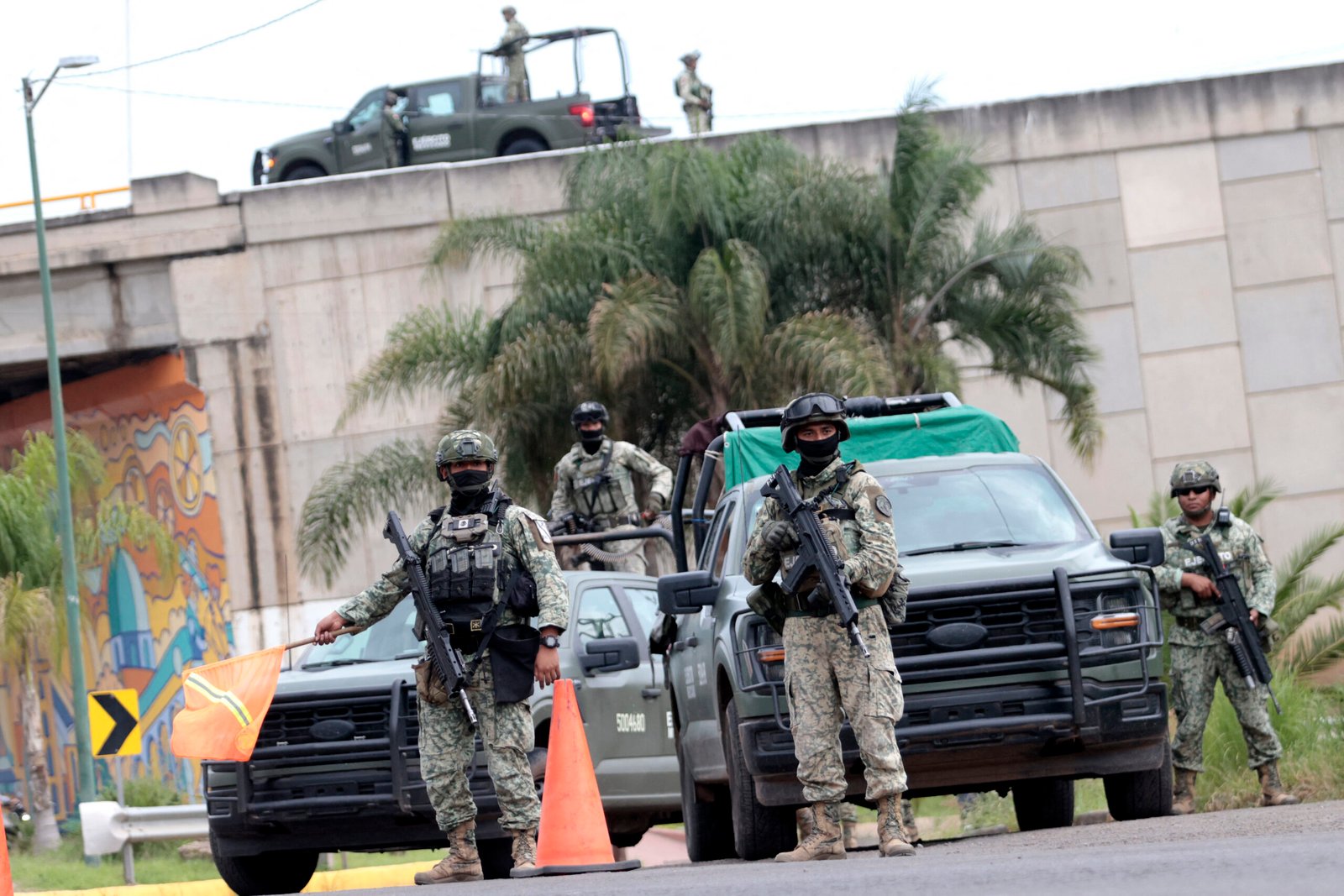
The Quincy Institute for Responsible Statecraft gathered Guadalupe Correa-Cabrera, co-director of the Corruption, Networks, and Transnational Crime Research Center (CONTRA) at George Mason University, Isabel Pereira Arana, senior coordinator for drug policy at the Center for Law, Justice and Society (Dejusticia), and Lee Schlenker, research associate in the Quincy Institute’s Global South program, for a forum on the Trump administration’s policy toward crime and narcotics in Latin America. The panelists discussed potential issues with the United States’ decision to pursue a militarized approach to problems in the region, including the elasticity of criminal operations and the collateral damage an overreliance on coercion tends to produce.
Schlenker argued that an overly securitized strategy for confronting organized crime and drug production neglects root causes such as local poverty. In many areas of Colombia that are heavily involved in the growing of the coca plants used to produce cocaine, for example, the crop is one of the only ways local populations can make a good living. Increasing development in these rural regions can provide alternatives to coca production for their citizens and increase accessibility for the national government, which struggles to consistently control remote areas of the countryside.
Schlenker also noted that a military- and law enforcement–first approach does not address the political and financial networks that enable cartels to continue their illegal activities.
“There are security challenges,” Schlenker said, “but they need to be paired with real efforts to actually have opportunities and alternatives and state presence and legal institutions and efforts to combat corruption and impunity and collusion with business and political executives that enable these illicit economies to thrive.
Another issue with the Trump administration’s fixation on drugs is that it neglects the diversification of organized crime into other areas of the economy, noted Correa-Cabrera. “We’re dealing with criminal networks in a complex adaptive ecosystem that are criminal, but that are not connected with drugs only,” she said. “That’s something that U.S.–Mexico cooperation is never going to deal with.”
Subscribe Today
Get daily emails in your inbox
Correa-Cabrera argued that Trump’s demands and threats are forcing Mexico’s President Claudia Sheinbaum to pursue a suboptimal, drug-focused strategy to appease Washington, rather than effectively attacking the most vulnerable parts of the cartel economy. Allowing countries like Mexico more independence in their counter-cartel campaigns would probably yield more success than demanding they subordinate their policies to the American “War on Drugs”-style approach.
As Pereira explained, militarizing the problem can also backfire. Given the resilience and mobility of criminal networks, cartels are often able to adapt and even expand their operations if the other underlying problems aren’t addressed. “We’re going to see numerous expressions of the balloon effect,” Pereira said. “Once a market is pressed here, it displaces over there. But it’s not just the geographic displacement…. Technology also seems to respond to pressures from interdiction and the market.” Today an acre of coca produces far more cocaine than it did 30 years ago, as growers and the manufacturing process have become more efficient to cope with fumigation and other supply-chain disruptions.
For the panelists, this adaptability helps explain why decades of drug-war policies have failed to eliminate either the supply of narcotics or the criminal organizations that profit from them. Military force may temporarily disrupt cartels and fumigate coca fields, but the underlying business just shifts elsewhere. A more effective policy, these experts argued, would combine targeted security cooperation with rural development, financial enforcement, measures to strengthen local institutions, and a broader campaign against corruption. Unless the Trump administration adopts such an approach, they warn, its efforts may merely shift the ways and places in which organized crime operates, rather than actually defeating it outright.
