
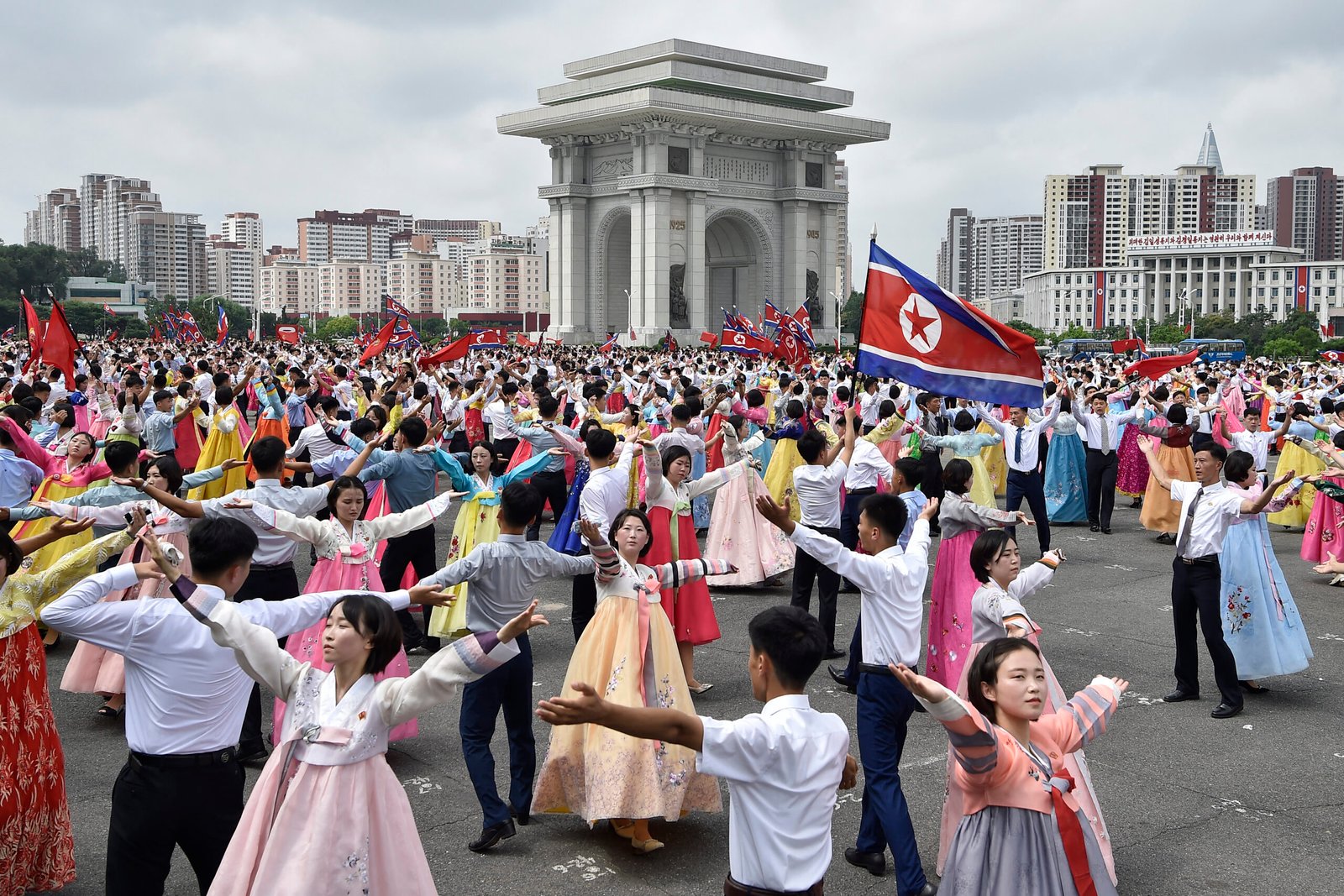
One of President Donald Trump’s few successful diplomatic initiatives during his first term was meeting North Korea’s Supreme Leader Kim Jong Un. Trump’s move shocked the “Blob,” as the foreign policy establishment has been called. However, it represented a welcome alternative approach after Washington’s decades-long, failed effort to suffocate the Democratic People’s Republic of Korea.
Unfortunately, Trump’s own effort crashed and burned after the collapse of the 2019 Hanoi summit. Blame for that result was much debated. Afterwards, Pyongyang abandoned engagement with both the United States and the Republic of Korea. And after that, the Ukraine War dramatically transformed the DPRK’s regional status: Russia’s compensation for North Korean military aid spurred economic growth and military development. Beijing upgraded its contacts and enhanced its assistance as well.
Pyongyang has so far rebuffed Trump’s suggestions for renewed contact. However, Kim has avoided the splenetic rhetoric that first characterized the two leaders’ relationship. He may still desire an opening with Washington—better to have another big partner to pressure the other two for even better deals. In any case, he continues to improve his geopolitical position, maximizing his leverage vis-a-vis the U.S.
Once the ruling Kims began building nuclear weapons, the possibility of CVID—or Complete, Verifiable, and Irreversible Denuclearization—disappeared as a plausible, let alone likely, outcome, absent war. Today, North Korea refuses to even discuss the issue. And who can blame Kim? After Iraq, Libya, and Iran, Kim would be a fool to abandon his ultimate deterrent. It has long been evident that Washington’s only realistic approach to the DPRK is to push negotiations on arms control—not CVID—tacitly,, if not formally accepting the regime’s nuclear status. Today, realism is even seeping through the Blob.
Fostering such a dialogue won’t be easy. Kim may be skeptical about Trump’s willingness and ability to deliver. Thus, Trump would be wise to include some kind of immediate inducement in any new initiative toward the North.
Of course, such an offer would likely be criticized in Washington as making concessions without obtaining an agreement. Thus, the president should choose something that doesn’t plausibly harm American interests or, better yet, would benefit America as well as North Korea. One possibility: dropping the ban on travel to the DPRK. Doing so would be simple and beneficial. It would also signal interest in societal as well as governmental engagement.
The president should act now, since the State Department recently renewed its ban. Almost a decade ago, State declared that normal American passports were not valid for travel to the North. Special permission is required, even for aid workers, journalists, researchers, and policymakers.
The formal justification for the ban was the tragic death in 2017 of Otto Warmbier, a 22-year-old college student visiting the DPRK as a tourist. The restriction made little sense then and has since lost any purpose. Observed Robert King, a longtime special envoy for human rights in North Korea:
The extension of the travel ban comes without any effort to identify whether it has been helpful. Over the last decade, the travel ban has been extended with no indication of improving North Korea’s attitude toward the U.S. or the conditions under which the North Korean people suffer.
Warmbier’s plight understandably received enormous coverage. The administration claimed that travel to North Korea was too dangerous for Americans. However, the cause of his injuries remains unknown. There was no medical evidence of abuse. Indeed, the DPRK authorities long recognized that American prisoners had value only if alive.
Between 2009 and 2017 15 other Americans were detained by North Korea, but only four were tourists, and all had “done something,” according to the head of a humanitarian NGO with whom I talked, though nothing which warranted punishment. That organization investigated every case and judged the threat facing its workers, who routinely labored in the DPRK, to be minimal. In fact, we met while traveling separately, and safely, to the North.
The real lesson of the tragedy, according to private conversations with other tourist operators and multiple published reports citing other travelers, appeared to be to choose a responsible travel agency. The State Department could vet companies and, if Pyongyang chose to revive the tourism trade, work with North Korean officials to better educate travelers and treat claimed infractions differently.
In any case, removing the ban would have little practical impact now. North Korea only recently reopened its borders after the Covid-19 pandemic but quickly reinstated the tourism ban, except for Russians. Earlier this year, the government even canceled the already publicized Pyongyang marathon. However, ending the ban would be an important symbolic step, treating the DPRK like other countries and welcoming future contact among peoples. As such, it could accompany a Trump initiative to reestablish contact with Pyongyang.
Of course, Washington could do more, such as suspending some sanctions and proposing high-level official visits. Most dramatic would be offering diplomatic relations at some level—which should be viewed as a requirement, even a necessity, for America, rather than a reward for the North. Frankly, it is more important to talk to one’s adversaries, especially when they are armed with nuclear weapons and constructing ICBMs, than to one’s friends.
Subscribe Today
Get daily emails in your inbox
U.S. policy toward the Korean Peninsula long ago guaranteed the ROK’s security against the North. However, Washington has failed to end North Korea’s threats against the South and potentially beyond, as well as South Korea’s needless defense dependence on America. Moreover, U.S. involvement impedes the admittedly long-shot objective of reunification of the peninsula as well as Chinese willingness to put greater pressure on Pyongyang.
Although Trump prefers grand gestures, small steps will probably be necessary to forge a path for more dramatic diplomatic initiatives. Ending the travel ban would be a good place to start. Although the State Department strongly warns against travel to 23 different nations, many of which are objectively dangerous, it forbids trips only to North Korea. (Visiting Cuba is legally restricted but allowed for a variety of approved purposes.)
Lifting the ban would be a small, simple action with little downside even if it proved unsuccessful. However, it might aid the administration in developing new diplomatic strategies to address a region that has grown more complex and dangerous since the president’s dramatic summits with Kim.
