

In the kind of official occasion now vanishingly rare, on July 9 King Charles and Queen Camilla, leading a large slice of the great and the good in British arts and culture, paid tribute to the playwright Sir Tom Stoppard at a memorial event at the National Theatre in London. Indeed, the death of Stoppard eight months ago (his funeral in Dorset was a small family affair), has been the most resonant cultural news story in Britain in the past several years for reasons both superficial and momentous.
Stoppard was the most glittering figure in Britain’s intellectual and high-cultural life for the past six decades. In a country that still dominates world theater, he was at the time of his death indisputably Britain’s greatest dramatist. Equally indisputably, he was also its most—really its only—glamorous one. In suitably Byronic fashion, he awoke the morning after the premiere of Rosencrantz and Guildenstern Are Dead at the Edinburgh Festival in 1966 to find himself famous. (To a reporter who asked what the play was ”about,” the 29-year-old Stoppard replied, “It’s about to make me very rich.”) His dashing looks, playful wit, and easy charm made him an intellectual rock star, a position bolstered by his long-standing and devoted friendships with genuine rock stars, most famously Mick Jagger (Jagger was one of only three speakers at July’s tribute), and with a staggering range of celebrities, from Vaclav Havel to Harrison Ford to the Duchess of Devonshire. His heap of prizes included an Oscar; multiple Tony and Olivier awards; Fellowships in Britain’s and America’s most venerated intellectual and literary societies; a knighthood; and honorary degrees from Cambridge, Oxford, and Yale. Queen Elizabeth II in 2000 placed him permanently at the zenith of British public life by appointing him to the Order of Merit, the pinnacle of the British honors system, in the personal gift of the monarch, and an honor confined to 24 living recipients.
In short, Stoppard, a charming man, led a charmed life (as he always gratefully, charmingly, acknowledged). His gifts and attractive behavior contributed to his good fortune and vice versa; this created an alloy that, surprisingly, was all but universally winning, as his fellow playwright Simon Gray recognized: “It is actually one of Tom’s achievements that one envies him nothing, except possibly his looks, his talents, his money, and his luck. To be so enviable without being envied is pretty enviable, when you think about it.”
Most strikingly, the outpouring of commemorations for Stoppard bridged longstanding cultural and political divides in Britain that seem to grow more chasmic daily. The Guardian and the Telegraph, the New Statesman and the Spectator assembled regular—or formerly regular—contributors who shared a similar, heartfelt admiration, affection and sadness. For peculiar reasons, my own social circle and acquaintanceships in Britain span the theater, academe, cultural and political journalism; high-Tories and Blue Labourites; Marxian old-New Leftists and fairly far-rightists. All of them—provided, notably, that they’re of a certain age—found themselves brought up short by their plangent sense of loss over Stoppard’s death. This is all the more surprising given that Stoppard’s work and outlook stood opposed to the ethos that has come to dominate the cultural world in which he thrived.
Stoppard captured the British theater in the mid-1960s, a milieu and a decade that demanded political commitment and that embraced the theater as a vehicle for social and political change. By contrast, Stoppard’s artistic vision resolutely embraced irresolution. His ambition was to marry the comedy of manners to the play of ideas. This demanded the precedence of style, a lightness of touch, and an exploratory and contingent approach to ideas. Approaching serious ideas playfully demanded a complexity, flexibility, and nuance that abjured commitment and certainty. This put Stoppard aesthetically, intellectually, and politically out of step with his profession. Asked to name the attribute that distinguished him artistically from most of his contemporary playwrights, he replied, “An absolute lack of certainty about almost anything.” His favorite line in the British drama of his contemporaries was from Christopher Hampton’s The Philanthropist: “I’m a man of no convictions—at least, I think I am.” Explaining the motivation that drove him to be a dramatist, he declared, “I write plays because dialogue is the most respectable way of contradicting myself.”
This cool, ironic detachment led Stoppard to shun totalizing solutions to the complexities of human life and society, a stance that prompted what Hermione Lee, his official biographer, characterizes as his “revulsion”—a reaction most un-Stoppardian in its vehemence—toward Les Evenements of the Paris student revolt of 1968. He would explore the hazards of these totalizing tendencies most fully in his 1974 play Travesties (about Lenin, James Joyce, and the Dadaist Tristan Tzara in Zurich in 1917) and in his 2002 trilogy, The Coast of Utopia (his dramatization of the philosophical and political contention among the 19th-century Russian intelligentsia). More generally, that detachment led to Stoppard’s allergy in his work toward the programmatic and even toward a conception of politics that was more than the expression of a disposition. As Stoppard declared in a 1968 anti-manifesto, “I burn with no causes. I cannot say that I write with any social objective. One writes because one loves writing, really.”
By 1974, exasperated by the critics’ efforts to discern a political message in his play Jumpers, Stoppard declared that “in future I must stop compromising my plays with this whiff of social application. They must be entirely untouched by any suspicion of usefulness. I should have the courage of my lack of convictions.” He elaborated, “I used to feel out on a limb, because when I started to write you were a shit if you weren’t writing about Vietnam or housing. Now I have no compunction about that…. The Importance of Being Earnest is important, but it says nothing about anything.” A writer, Stoppard maintained,”has no duty whatsoever to use his work. He has the right to be an adornment or an entertainment. He has no obligation except to write well.” Not for nothing did Bill Gaskill, the artistic director of the voguish Royal Court Theatre—the birthplace of the Kitchen Sink and Angry Young Man theatrical movements and the incubator of heated, politically engaged new playwriting—define a Royal Court play as one not written by Tom Stoppard.
A self-described “timid libertarian,” Stoppard famously—notoriously, by the lights of those inhabiting many of the professional and social circles he flitted through—admired Margaret Thatcher, stalwartly supported her throughout her premiership, and was her not infrequent dinner guest at Number 10. (The duration and intensity of that support and the personal bond are key: Surprisingly, in the 1979 general election, in their despair over the militant trade unions near-ruination of the country, both Peter Hall, then the fashionable doyenne of highbrow British theater, and Harold Pinter, the far-left, future Nobel Prize–winning playwright, had both voted Thatcher in, but their support very soon curdled.)
The epithet “Thatcherite” (which most BBC Radio 4 aficionados and nearly every playwright, director, and actor, and most audience members associated with the prestigious British stage persist in investing with peculiar venom) dogged Stoppard ever after. In fact, he supported Thatcher for characteristically complex reasons, and his voting record ran the gamut from Tory in 1979 to New Labour in 1997 to Green in 2005 to Liberal-Democrat in 2010. The range makes any effort to claim Stoppard as a capital-C Conservative unsustainable. Even his baldest declarations that would today get him cancelled by the progressive Left—such as his 1977 endorsement of “Western liberal democracy, favouring an intellectual elite and a progressive middle class and based on a moral order derived from Christian absolutes”—really put him, as we shall see, in a broad liberal camp. Incontestably, however, by outlook and temperament Stoppard was a conservative of the small-c variety. In 1979, he described himself as “a conservative in politics, literature, education and theatre”; indeed, Hermione Lee, in her indefatigable researches, found that “conservative with a small ‘c’” was among the words and phrases with which those closest to Stoppard most frequently summed him up.
In a lengthy 2021 BBC documentary, intended as a summa of Stoppard’s life, the presenter surveyed the playwright’s Georgian rectory, its decor, and gardens; his books; his preoccupations, prejudices, and predilections. “Some would say,” the presenter quizzically—even somewhat inquisitorially—informed the playwright, “that you’re stuck in the past.” Stoppard responded with a verbal shrug: “I wish I were.” This small-c conservatism, central to Stoppard’s outlook, was entwined with the aspect of his identity that he consistently, insistently invoked: his Englishness. “I love Englishness,” Stoppard boyishly gushed as he spoke in 1993 about his play Arcadia and its many themes and resonances on Meridian, then BBC’s highest of highbrow radio arts program. A practiced interviewee, he was no doubt aware that his seemingly unguarded confession would strike his audience and interviewer as gauche, at best just not done and at worst politically suspect.
Since at least the 1960s, the use of “English” to denote a cultural identity and its locus within a culturally distinct place called England (within the multi-national state of Great Britain and Northern Ireland) has been sneered at by the modernizing, progressive cultural and political bien pensant. To this subset “Englishness” connotes a pale, male, and stale cultural entity of red pillar boxes, warm bitter, and cricket on village greens (or “a cake-filled misery-laden grey old island,” as the actress Emma Thompson dismissed the place when positing her preference for what she saw as the culturally vibrant European Community). Consequently, the English have had to content themselves with the catch-all “British” as the acceptable self-descriptor, even though so many essential aspects of the national culture of England are distinct from Welsh and Scottish identities (and although those terms are considered acceptable descriptors of their respective cultures). To the degree that “Britishness” suggests an acceptable cultural identity, it is pretty much restricted to defined components of a civic identity devised by that same bien pensant in the 1980s—primarily an adherence to multiculturalism and, now, “inclusiveness,” and, secondarily, a broad cultural commonality confined to a consumer-oriented, increasingly global, mass “British” culture, defined most prominently by the global brand that is Premier League football.
The right-thinking modernizing, progressive, internationally-oriented tendency has, in fact, engendered distaste for “Englishness” for a century. As George Orwell observed in 1941 with his usual compound of brio, acuity, and overstatement, “England is perhaps the only great country whose intellectuals are ashamed of their own nationality.”
“In the general patriotism of the country,” he explained, “they form a sort of island of dissident thought.” Orwell dilated that in “left-wing circles it is always felt that there is something slightly disgraceful in being an Englishman and that it is a duty to snigger at every English institution, from horse racing to suet puddings.”
Then the killer blow: “It is a strange fact, but it is unquestionably true that almost any English intellectual would feel more ashamed of standing to attention during ‘God save the King’ than of stealing from a poor box.”
However sweeping that condemnation (and however dubious the adroit omissions and conflations, arguably defensible, that fortified it), the besetting characteristic Orwell defined remains startlingly spot-on. And it’s entirely at odds with Stoppard’s habitual, unabashed, and unironic, if mischievous, identification with Cecil Rhodes’s view that “to be born an Englishman is to have drawn first prize in the lottery of life.” Of course, for decades Stoppard was also deeply involved in Eastern and Central Europe’s cultural politics and artistic and intellectual life. But for him the double foci posed no contradiction. After all, Kipling, who was among the authors he most deeply revered, asked, “What do they know of England who only England know?” And Orwell would reverse Kipling’s assertion-as-question by insisting that any responsible socialism had to be rooted in the local, even as it had to have an international outlook. For the non-committedly non-socialist Stoppard, a healthy cosmopolitanism and a healthy parochialism weren’t antithetical; they were interdependent.
Here I ought to be clumsily explicit: Neither Stoppard’s declaration nor the affections and disposition that lay behind it put him in a camp that can in any way be construed as right-wing nationalist, let alone ethnonationalist. Yes, he was aware that his attitude put him at odds with the outlook that exercised ever-increasing sway in the intellectual and social worlds he inhabited (and that prominent factions in both major political parties embraced). But in aligning himself with “England” and “Englishness,” Stoppard was just being true to those affections and that disposition and to one of his bedrock principles: using words that objectively and precisely conveyed what he meant. Stoppard’s background illuminates the process by which these characteristics developed.
Stoppard and his Czech Jewish family fled the Nazis in 1939. He spent the war first in the British colony of Singapore, where he narrowly escaped the Japanese invaders in 1942 (his father, who’d stayed behind, was killed while making his own escape attempt) and then in the ultra-English enclave of Darjeeling in the British Raj. His surviving family docked at Southampton in 1946. The 8-year-old Stoppard fell hard—ardently, completely, permanently—for England. Until his death he was enraptured by its countryside, especially that of Derbyshire, Somerset, Buckinghamshire, Oxfordshire, and Dorset, and was engrossed by the history and aesthetics of its landscape gardening. He was a lifelong devotee of fly-fishing and assorted field sports. (Arcadia and his television plays of those deeply English but very different novels, Three Men in a Boat and Parade’s End, are rhapsodies to England’s countryside.) Like many of his closest playwright friends, Stoppard was mesmerized from boyhood until death by cricket and played the game into his 60s—for the final decades of his playing life on the team that Harold Pinter commanded with pugilistic earnestness. Stoppard was beguiled and consoled by the “heart-soothing,” centuries-old pattern of streets in the ancient City of London. He revelled in England’s culture, high and low—even its cookery. He prized what he saw as its values and their social and political expression: its dedication to individual liberty, free expression, and fair play; its tolerance; its decency; its equipoise. A self-confessed “patriot,” Stoppard declared to a Guardian interviewer in 2023, “constitutional monarchy and parliamentary democracy—there’s no other way, in my view, that it’s better to be.”
Stoppard consistently made plain that, regarding the basic nature of Britain’s political and social systems, he had no truck with the position espoused by much of the progressive Left. He would measure political and social developments against “a sense of England’s history and traditions.” And though Stoppard didn’t hesitate to recognize injustice and the abuse of power in his own country, he saw these problems as aberrations in a fundamentally good political order. They were not intrinsic to that order–whereas under a repressive regime, as he regularly pointed out, injustice didn’t represent the failure of the system but instead “the triumph of the system.”
For decades, and for a specific reason that went far beyond the political (indeed, that was at bottom only incidentally related to the political), what Stoppard saw as the vulgar slights of hand that the progressive left passed off as verbal analyses of the underlying nature of Britain’s polity aroused in him an uncharacteristic indignation and an equally uncharacteristic tendency to repeat himself. With almost grim regularity he’d hammer home his abhorrence of what he saw as “the sheer perversion of speech” required “to describe the society I live in as one that inflicts violence on the underprivileged”’ (to quote a variant of these diatribes, this one from 1984). The cumulative impression of these excoriations is that, as much as Stoppard understandably took issue with a fallacious and irresponsibly flimsy diagnosis of his country, what aroused his vexation was the means necessary to formulate and deliver that message: “the sheer perversion of speech.” This slack and pernicious sloganeering was an attack on that aspect of his adopted country that he took to and to which he was devoted above all others—its language.
Several deeply-rooted peculiarities have defined England and Englishness. England’s people have called themselves English since at least the 700s, and the notion of an English kingdom and of an English nation with its own land dates to the 800s. This means that political and territorial arrangements have been remarkably long-standing and stable. The system of common law has suffused and therefore influenced the social, economic, and family lives—indeed, the very temperament—of the people. In addition, a shared demotic culture has persisted for centuries. English children, for instance, have been playing many of the same games since at least the 1100s.
Most important, the English have shared, since the incursion of the Anglo-Saxons, an enduring, ever-developing language that spawned a deep sense of distinctiveness and became a mutually reinforcing political, cultural, and linguistic identity, what Edmund Spenser in 1580 called “the kingdom of our own language.” To be sure, every nation is strictly defined by a shared language. But the age and steadiness of England’s particular language-kingdom gave its language an unusual richness of associations, vocabulary, idioms, and metaphors, which at once created and reflected a distinctive mentality. Virginia Woolf vividly evoked this phenomenon, which enfolded folk memory, the concreteness of the everyday, and an almost unconscious absorption of the literature of the language:
Words, English words, are full of echoes, of memories, of associations — naturally. They have been out and about, on people’s lips, in their houses, in the streets, in the fields, for so many centuries…. They are so stored with meanings, with memories, that they have contracted so many famous marriages. The splendid word “incarnadine,” for example — who can use it without remembering also “multitudinous seas”?
Enhancing profoundly the depth and resonance of this long-standing and organic relationship between English and its speakers has been the pervasiveness with which the phrases and rhythms of two monumental literary masterpieces, the Book of Common Prayer and the King James Bible, insinuated themselves into the mental landscape and branded the tongue of the English people.
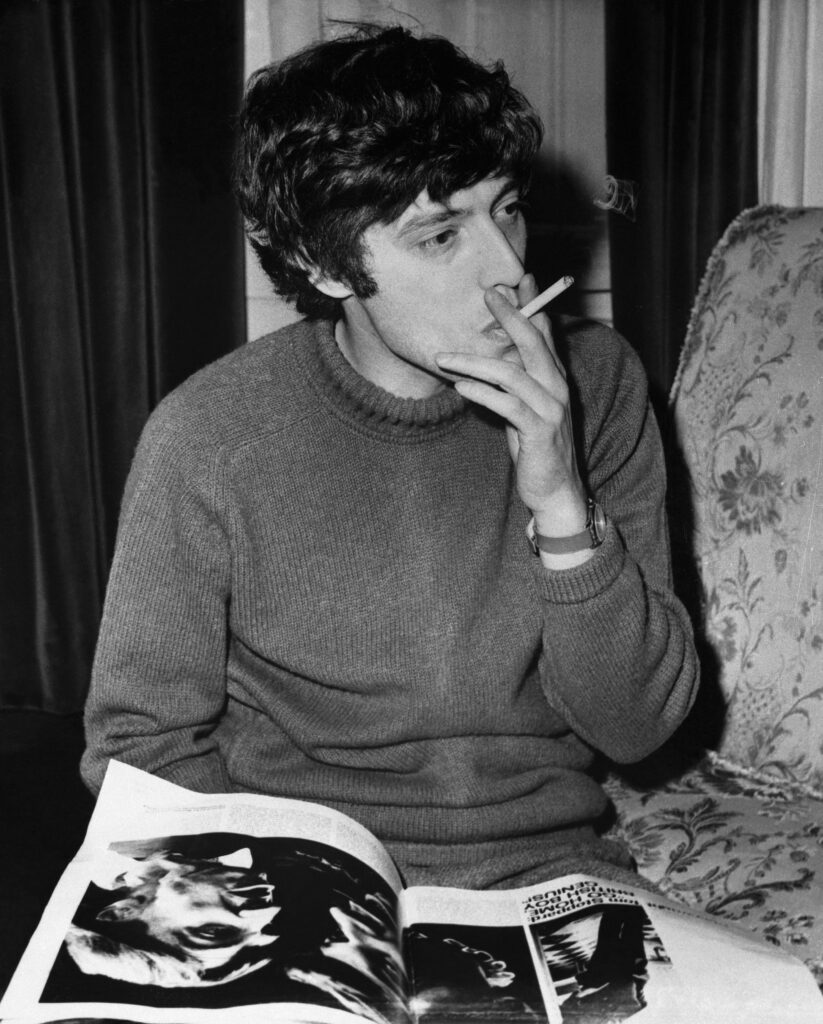
In falling for England, Stoppard, with his preternatural verbal gifts, recognized and craved that easy and complete absorption into its language. He would always be keenly alert to the precision that the suppleness and nuances of English allowed, and to the language’s effects on the people’s inner lives, their ways of apprehending the world, their manners, their mores, and the conduct of their relationships—social, fraternal, romantic, marital. He found those effects irresistibly fascinating and attractive, and he was thoroughly conversant with them, even as they weren’t fully his own.
Stoppard was a superlative English stylist who can arguably be placed alongside two 20th century masters whom he esteemed, Waugh and Wodehouse, his writerly achievement emerging from his self-conscious appreciation of the language and his studied apprehension of its intricacies and refinements. This somewhat off-beat, life-long approach to the language was rooted in his unusual relationship with it, which in turn was owing to his unusual relationship with England. Having taken to England with the zeal of the youthful convert, Stoppard didn’t learn English as a second language (in later life he recalled no knowledge whatsoever of Czech), but neither did he absorb it in the organic process that a native speaker begins at birth. Whatever his process of acquisition, Stoppard’s stance toward England’s language, like his stance toward England as a whole, was an amalgam. On the one hand, although he wore his Englishness completely and with familiarity, his love of his adopted country was almost insistently naive, uncomplicated, and perfervid; his Englishness was neither an affectation nor entirely natural. In the same way, Stoppard was fully in the language, but he wasn’t wholly of it, which explained the singular manner of his speech, in which a Mitteleuropean lilt gilded a phenomenal fluency that stood out even in the fast field of late-ish 20th-century hyperarticulate British men of letters (and nearly all the figures that instantly come to mind are men).
At first, though, Stoppard’s linguistic agility worked against what would emerge as his most fundamental artistic purposes. Like a child genius, he was overly fond of and reliant on his innate gifts. In his early work the too-clever verbal pyrotechnics betrayed the overeager embrace of the proselyte and dulled the sparkle that would be his hallmark. Stoppard deepened his relationship to the language and hence reached the pinnacle of his art when he fused those innate gifts and the convert’s sense of wonder and delight to the measured comprehension of the scholar. The entirely familiar but not overly familiar relationship to English that resulted—simultaneously easy and removed—allowed him to inhabit deeply and to command masterfully and playfully the language’s structures, rhythms, and Woolfian reverberations. Partially grasping Stoppard’s rare relationship with the language, a director who had worked closely with Stoppard noted, “You have to be foreign to write English with that kind of hypnotized brilliance.”
This intentional relationship with English would throughout Stoppard’s life be refined by his superb and characteristically English classical education, instilled in him by his ancient, if minor, Yorkshire public school, where he somewhat unusually mastered both Latin and Greek. Although seemingly a quintessential University Wit, Stoppard in fact left school at 17 to pursue the rackety romantic life of a regional newspaperman in Bristol (where he relished “flashing my press card at flower shows”). But his peculiar gifts, his peculiar relationship to the English language, and his typically English schooling (albeit a schooling typical of a specific time and class and pursued with exceptional abilities) had equipped him with a meticulous, polished understanding of his working language.
His continuing engagement with classical languages ensured that his relationship with English was continually revitalized. Stoppard translated Catullus and Horace for The Invention of Love (his favorite of his plays), about the classical textual scholar A.E. Housman, and the relationship between language and epistemology. His understanding of Greek allowed him to reveal in Rock and Roll the penetration of Sappho’s thought and the strenuous process of understanding the constructions of another language. He conducted lengthy correspondences on complex philological points with a number of classical scholars and with the critic Alastair Macaulay, who had read classics with unusual sophistication and acuity at Cambridge. His only libretto, for Penelope (music by his old friend André Previn and performed by Renee Fleming), is an expertly grounded elaboration of the final two books of the Odyssey. He saturated Arcadia with arcane and intricate classical references and imbued it with his classical sensibility. This career-spanning immersion in the classical languages and the classical world pervaded his work, his understanding of ideas and history and, ultimately, his approach to life. Most of all, however, the painstaking and methodical approach to languages and their structure that mastery of Greek and Latin demanded would inform and bolster his analytical approach to his near-native language, honing what would become an exceptional intimacy with its bones and sinews.
Stoppard’s conviction of the power of language when deployed with comprehension and precision emerges as a focal point in The Real Thing, probably his most popular play and certainly in several telling respects his most atypical one. It’s the only play in which he wrote a character who obviously gives voice to his own opinions, peeves, preoccupations, and way of speaking (it therefore contains, famously, some of Stoppard’s most witty and winsome, if unequally distributed, dialogue and speeches). It’s also his only play that weighs the scales in favor of a particular position (no surprise: the author’s) by making one of its central contests uneven in every way; first staged in 1982, the play contains plenty of what is now called punching down.
This one-sided argument, however memorably entertaining and thought-provoking, diminishes The Real Thing’s artistic success in that it runs counter to Stoppard’s own, otherwise consistently held artistic ethic. Committed to giving equally strong arguments to contradictory points of view, Stoppard held to the Shavian understanding that in a play of ideas, much of the drama lies in that contest. A vigilant, punctilious craftsman, Stoppard in this case sacrificed that purpose to make—and win—his point. Stoppard wrote several plays against backdrops of political history and even current affairs without staking a political position, but in The Real Thing he uncharacteristically champions what amounts to a political stance, even if that stance transcends the political, and even though The Real Thing can’t remotely be defined as a political play. Its plot revolves around marriage, love, and infidelity; it probes those themes with remarkable delicacy and clarity, which gives the play its substantial emotional punch.
But what leaves the deepest impression on its audience is the conviction, wit, and elegance of the one-sided argument that is crystallized in the famous “cricket bat” speech. The argument is a prescriptivist’s cri de coeur against the speciously postmodern and politicized corruption of the English language, the words of which are “sacred.” They are “innocent, neutral, precise, standing for this, meaning that, meaning the other.” But the speech instantly turns into a paean to the power and promise of the language: “So if you look after [those words] you can build bridges across incomprehension and chaos.”
Today’s smart take would dismiss this understanding of language as hopelessly naive and old-fashioned, even as dangerously reactionary, as Stoppard would recognize in 2022. Nonetheless he adhered to his self-avowedly old-fashioned convictions. To him, the English language was the essential, the most enduring feature of the Englishness he embraced because it embodied and sustained a skein of aesthetic, ethical, and moral values; because it helped engender a particular, generous, civilized stance in social relations and toward the human condition; and because it even allowed for a transcendent hope for that condition. All of this, at least from the perspective Stoppard epitomized, was unrelated to the political, even as it is mortally threatened by the political. This, I think, figures prominently in both the broad and deep response to his death, and accounts for the terrible likelihood that his work may soon fade from the British stage.
The reasons for the near-universal rue among the great and the good d’un certain age at Stoppard’s death are, again, both superficial and profound—and, in fact, the former forms an essential part of the latter. In the simplest terms, Stoppard was popular because he knew how to behave. Even when reluctantly thrust into debate or confrontation, he all but unfailingly wore his wry, knowing smile, acknowledged his self-doubt, acknowledged the partial correctness of whatever position he was ostensibly opposing, and sought whatever common ground genuinely existed. He radiated humor and good will. Stoppard was impossible to dislike because, as Mike Nichols—yet another of his many long-standing, close celebrity friends who happened to be very useful to his career—said of him, “He has no apparent animus toward anyone or anything; he’s very funny at no one’s expense.” He was at once a smooth operator and manifestly true to his principled intellectual approach to the world, by which he endeavored “to have the courage of my lack of convictions” by insistently conducting a dialectic with himself.
Layered onto that disarming intellectual large-heartedness were Stoppard’s remarkably good manners. Stoppard led a not uncomplicated private life—albeit a relatively tame one, given what could be described as the loucheness of his social and professional environment, especially in the period that coincided with the acme of his amorous activities—and he managed to accumulate two ex-wives and a not inconsiderable number of ex-girlfriends.
Stoppard’s professional life was potentially as rich a soil for unpleasantness and scandal as his private life. He made and maintained his artistic reputation largely in the rarefied and high-minded world of Britain’s and America’s subsidized and nonprofit theater, fertile spawning grounds of bitchy gossip, envy, bitterness, and decades-spanning resentments. He made his considerable fortune in a 60-year career in Hollywood (he was a hugely well-compensated Oscar-winning screenwriter and a regular script doctor for, among others, Steven Spielberg and George Lucas) and in the notoriously make-or-break gambling dens of Broadway and the West End. Ruthlessness, habitual deceit of varying degrees of ethical slipperiness and legality, and consistently sharp practices are givens in those environments. Virtually no one can emerge without collecting a good many enemies.
Certainly, then, the opportunities have been plenty for those seeking a seamy, nasty, and hypocritical side to Stoppard. In fact, from that overnight arrival as a full-blown celebrity in 1966 through his final marriage to the impossibly rich and glamorous Sabrina Guinness in 2014 (they settled with ostensible contentment in the Somerset countryside until his death), the personal and professional dimensions of Stoppard’s life have been subject to 60 years of energetic ferreting by the New York and Hollywood press and, especially and most intensely, by Britain’s notoriously enterprising tabloids. And every aspect of his life has been open territory for the Stakhanovite scrutiny of the most distinguished literary biographer in the English-speaking world (Hermione Lee’s book weighs in at 978 pages). By all accounts, Stoppard conducted his high stakes business affairs in the cut-throat worlds of the commercial theater and Hollywood with a necessary steeliness and with consistent scrupulousness, humor, honesty, and courtesy. As for his private life, he maintained warm friendships with all of his former girlfriends and wives. Even the ones he’d betrayed.
Of course, perhaps most of this is what one might expect from the smooth operator that Stoppard most certainly was. Then again, what’s most noteworthy about Stoppard’s charm is the universality with which he deployed it, even on those occasions when he had nothing to gain. Lee litters her biography with what she notes are remarkably consistent accounts of Stoppard’s manners: his attention to the neglected and unimportant person in any social gathering; his consideration for the front of house staffs and backstage hands in his productions and the technicians and caterers on his movie sets; his unfailing graciousness with dumbstruck fans in theater lobbies and on the street. (When we met, sharing the stage as readers at the memorial tribute for Christopher Hitchens, Stoppard was almost pointedly attentive and warm. My handful of friends and acquaintances who knew Stoppard invariably relate similar observations.)
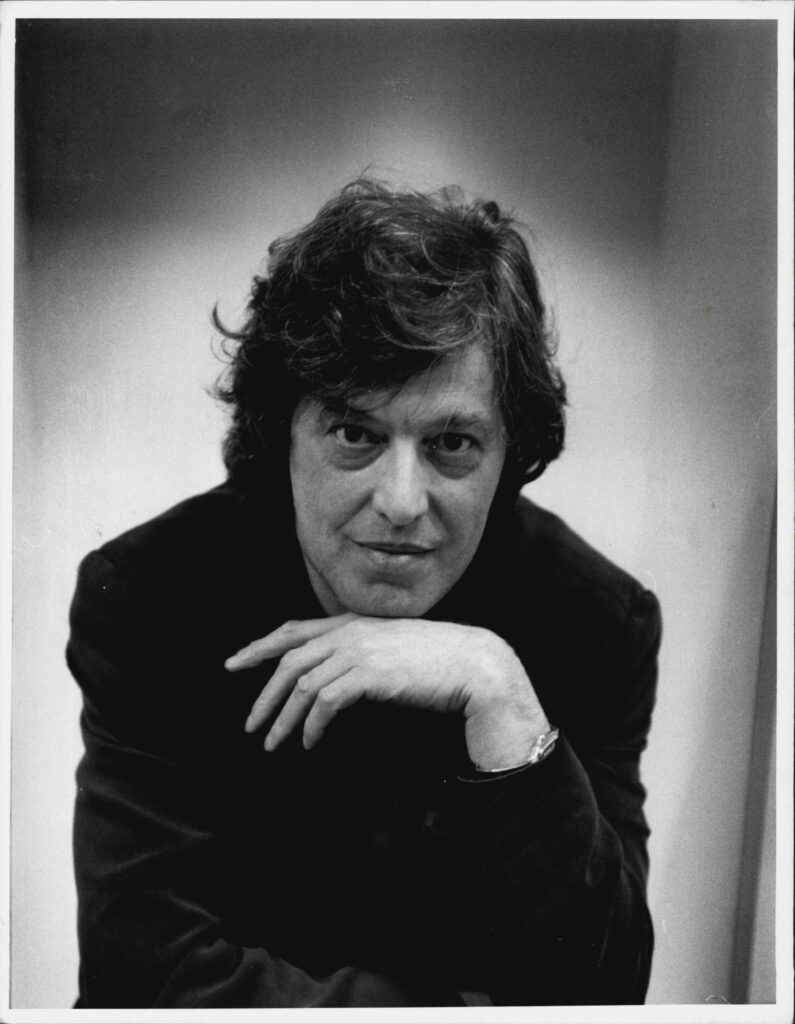
Again, all this could be dismissed as merely superficial and consistent with Stoppard’s studious attention to his public presentation. But this very outwardness makes the point. Neither warmth nor authenticity were qualities with which the cool, ironic Stoppard can be paired; indeed, in their self-assertive earnestness and emotionalism those qualities were alien to his aesthetic and even his ethic. Whether or not his outward kindness was deeply heartfelt, Stoppard knew in his bones how a civilized man and (according to his lights) an Englishman should comport himself; he strictly adhered to mannerliness, which was for him a fundamental quality.
Stoppard discerned the clash of classicism and romanticism as a basic dichotomy, not just in Western intellectual and cultural history, but in pretty much everything. (That dichotomy forms the backbone of his greatest play, Arcadia.) His inclination to the former was at once undogmatic and total, so much so that it’s hopelessly chicken-and-egg to separate cause and effect: That inclination was inextricable from his character, his temperament, his style (in virtually all senses of the word), his aesthetic, and his ethic. It underlies virtually every dimension of his stance toward the world, including that consistent mannerliness in his social, business, and personal relations. Stoppard’s longtime correspondent Alastair Macaulay—the former chief dance critic for the New York Times, chief theater critic for the Financial Times, and resident dance critic for the New Yorker—has elliptically defined “the ethos of classicism” as an approach to life based on and expressive of “a code of manners, a system of morality.”
By “the ethos of classicism” I take Macaulay to mean classicism’s spirit of equipoise and restraint and its foundation in and emphasis on formal structures. This combination—the antithesis of an understanding and presentation of experience grounded in and expressing the unbounded self—engenders a detached formality and an objective, outward orientation in comprehending and relating to the world. This translates into measured courtesy—“a code of manners”—toward others.
Stoppard’s classicism and its entwinement with his devotion to the English language’s clarity, suppleness, and poetic exactitude—and the deepening of meaning and understanding, along with the inventive playfulness that those qualities of the language allowed—largely determined his vital place in British intellectual, cultural, and theatrical life. That place was rooted in language, temperament, and aesthetics, as the critic Kenneth Tynan discerned in his lengthy, quasi-adversarial 1977 profile of Stoppard. That piece remains the smartest assessment of Stoppard’s art and outlook, even as Tynan fundamentally misconstrued Stoppard’s art and outlook owing to his cramped understanding of the value and purpose of language and of the relationship of art and politics. In so doing, Tynan advanced and anticipated a set of assumptions, now unassailable in Britain’s artistic life, that is inimical to Stoppard’s classicism and to the generous, liberal values that classicism enshrined and nurtured.
Crucially, Tynan detected that differences in aesthetics that dictated basic differences in artistic approach had created an essential divide in British theater and among Britain’s dramatists. Using a labored Biblical metaphor, he categorized contemporary playwrights into two groups: the “hairy men” and the “smooth men.” The former included the Royal Court’s John Arden and Arnold Wesker. “Heated, embattled, socially committed,” they aimed to create a theater that would address the issues they perceived to be confronting contemporary society, dissect and expose social injustice (as they understood it) and thereby (by some unexamined alchemic process) bring about social and political transformation. “The smooth men”—Christopher Hampton, Alan Ayckbourn, Simon Gray, Harold Pinter, and Stoppard—Tynan defined as “cool, apolitical stylists.” The hairy men’s very urgency, their burning aspiration to write plays of social relevance, and their commitment to the full-tilt pursuit of theater as a vehicle for political change was alien, Tynan perceived, to the smooth men’s sensibility, preoccupations and aesthetics; the smooth men’s aims clashed fundamentally with the hairy men’s ambitions for the theater and the worldview from which those ambitions emerged.
Tynan was unusually qualified to delineate that clash because he seemed to have a foot in both camps. On the one hand, he was, himself, an assured and precociously gifted stylist. (At 23 he published his first and by far his best book, He That Plays the King, a cocksure analysis and incisive celebration of what he called “high-definition” classical acting, which was mostly drawn from the professional reviews he wrote as an Oxford undergraduate.) Indeed, owing to the verve and panache of his writing, Tynan remains really the only theater critic that Britain’s cultural elite reveres, although he died 46 years ago. On the other hand, since the mid-1950s, Tynan—having discarded the focus on acting technique and style that had driven the first part of his career and declared himself a Brechtian Marxist—had aligned himself to the hairy men’s vision of a politically committed theater.
But while Tynan was the right man to spot the divide separating those hairy men from Stoppard and his fellow stylists, he was the wrong man to comprehend it. His understanding of the smooth men’s artistic approach remained superficial, owing to his own all-encompassing exhibitionism. In contrast to classicism’s courteous approach to life, every facet of Tynan’s being was rooted in gratifying his need to impress. This certainly included his political posture. Thanks to his finely tuned cultural antennae, Tynan knew just how far ahead of the wave of trendy leftism to situate himself; the embodiment of radical chic, he would ride that particularly long-breaking wave from the vogue of the Angry Young Men through the modishly sybaritic leftism of the 1960s and early ’70s to his death in 1980. Putting his wit and verbal facility entirely at the service of his self-presentation, Tynan wrote, as he did everything, to strike a pose.
Tynan’s writerly talent allowed him to recognize and even appreciate Stoppard’s and his fellow stylists’ refined grasp and inventive use of language. He discerned, for example, that the exacting stylists Waugh, Beckett, and Nabokov (the last of whom, he noted, “Stoppard extravagantly admires”—an acid aside, though Tynan’s intended target is ambiguous), were the smooth men’s artistic brethren. But because Tynan understood style merely to be an ornament to festoon an idea, argument, or attitude, the stylists’ artistic commitment eluded him. That commitment was rooted in their understanding that style, while finely wrought, emerged organically from, and was hence both determined by and integral to, the meaning and experience that language conveyed, refined, and enlarged.
Tynan was correct that the approach that unified Stoppard and the other stylists—at bottom an approach to language—impelled an aesthetic and ultimately an artistic stance that was detached and uncommitted. Stoppard’s classicism, and the cool aesthetic (however labelled) of all his fellow stylists, was akin to Wordsworth’s approach to poetry as “emotion recollected in tranquility” and to Wilde’s dictum that “all bad poetry springs from genuine feeling.” To fathom an experience, a thought, or an emotion and then to convey that deep understanding, the writer’s response must be annealed by craft and refined by artifice and formal construction—a process that transmutes that experience, thought, and emotion into art. Heatedness, unwrought emotion and engagement, then, are the antithesis of art.
Moreover, the aesthetic restraint and formal remove inherent to classicism (or, again, whatever term is attached to this artistic approach) carries with it a suspension of commitment that frees the writer from the subjective ordering of experience. This openness begets an imaginative depth and fecundity in comprehending and expressing character, motivation, experience, and ideas. John Keats attributed Shakespeare’s poetic and dramatic achievement to this stance, which he famously defined as “negative capability,” the quality that rendered the writer “capable of being in uncertainties, Mysteries, doubts, without any irritable reaching after fact and reason.”
“The only means of strengthening one’s intellect,” Keats maintained, “is to make up one’s mind about nothing, to let the mind be a thoroughfare for all thoughts. Not a select party.” Suspending commitment refined away subjectivity, which, in fact, annihilated self-expression. From this process would emerge what Keats called “the poetical Character”: “It has no self—It has no character—it enjoys light and shade; it lives in gusto,—It has as much delight in conceiving an Iago as an Imogen. What shocks the virtuous philosopher, delights the chameleon Poet. It does no harm from its relish of the dark side of things any more than from its taste for the bright one.”
T.S. Eliot developed and sharpened Keats’s ideas about the universality of understanding that inheres in negative capability, as well as Keats’s related critique of the artistically deadening effects of Romantic self-expression (a posture Keats lampooned as the extolling of “the Egotistical Sublime”). Not surprisingly, Stoppard and, without exception, every other writer Tynan identified in Stoppard’s artistic camp of smooth men venerated Eliot’s work, and their intense engagement with the poet reinforced and deepened their commitment to an objective artistic outlook. (With equal intensity those Tynan deemed the hairy men and their ilk abhorred Eliot.) In stark contrast to the arts’ current celebration of the individual creator’s identity and lived experience, Eliot prescribed obliterating personality and nullifying subjectivity: “The progress of an artist is a continual self-sacrifice, a continual extinction of personality.”
“Poetry,” Eliot insisted, “is not a turning loose of emotion, but an escape from emotion; it is not the expression of personality, but an escape from personality.” Only by acting as “a medium” rather than as a personality could the writer fully and imaginatively express ideas, characters, actions, and conflicting perspectives. In their own artistic approach, the smooth men took these ideas as a given.
Although Tynan was too smart not to notice the link to Keats in the smooth men’s artistic approach, he couldn’t comprehend that approach because of his commitment to a reductive and instrumentalist conception of theater’s social and political purposes. To him, the stylists’ artistic approach was not only politically suspect, but in fact inconceivable, politically and otherwise. Indeed, in his profile of Stoppard, Tynan’s stunted view, which has now come to saturate the commanding heights of British theatrical and cultural life, drove him to commit a series of categorical errors, to conflate apples and oranges, and to misconstrue fundamentally not only that approach but even the smooth men’s pastimes and political views.
In defining Stoppard’s artistic stance, for instance, Tynan aptly quoted Evelyn Waugh’s assertion: “I… don’t want to influence opinions or events, or expose humbug or anything of that kind. I don’t want to be of service to anyone or anything. I simply want to do my work as an artist.” But Tynan defined that stance as a moral detachment, rather than, at least as both Stoppard and Waugh would have seen it, a purely artistic detachment that emerged from their aesthetic commitments. This same categorical confounding of artistic purpose, social purpose, and morality led Tynan to lump together what he described as the moral outlook of Wilde and the high-Catholic Waugh—two writers, who, though both rightly regarded by Tynan as among Stoppard’s aesthetic progenitors, were actuated by quite different moral concerns.
Tynan’s reductive calculus inevitably led him to conclude that Stoppard and his fellow stylists’ artistic outlook and their concomitant pursuit of precise aesthetic goals to the exclusion of a politically or socially informed agenda meant that they, perforce, subscribed to political views that (by Tynan’s lights) were at best dangerous and at worst reprehensible. Thus in that very same sentence in which he astutely grasped that Stoppard and his fellow “cool stylists” were pursuing a course that fundamentally clashed with that of those playwrights wedded to a politically committed theater, he dubbed them—not their work or the artistic approach that animated it—“apolitical.” Later in the piece, Tynan ruined his not atypically insightful speculation regarding a relationship between the cool stylists’ aesthetic and their passion for cricket by including both Stoppard and Pinter among the “apolitical or conservative” writers whom, Tynan asserted, the game generally attracts. Granting himself a special dispensation, he then preened that, because he, all but singularly, was a “cricket-loving radical,” ipso facto he was regarded by both Stoppard and Pinter, along with others he deemed apolitical or conservative, “with cordial mistrust.”
Here the crudeness inherent in Tynan’s simplistic and sweeping view of the relationship of art to politics—a view that ineluctably led to equally crude categorical errors and false inferences—was breathtaking. Certainly, Tynan was right to include Pinter among the playwrights in Stoppard’s artistic camp of smooth men or “cool stylists”; Pinter, in fact, was the purest and most innovative stylist of them all. It’s true that only in the decades following Tynan’s profile would Pinter write the majority of his most topical political essays, manifestos, and addresses, including his Nobel Lecture in Literature, a famously excoriating interpretation of American foreign policy. But Pinter had always fully and publicly voiced his far-left (to put it too crudely) political convictions. More important, Pinter’s fierce political commitment was all but lifelong, dating at least to his adolescent street fighting against the postwar remnants of Mosleyite fascists, which preceded his remarkably thoughtful and articulate anti-Cold War stand as an 18-year-old conscientious objector—a commitment for which he had risked and expected imprisonment. Far from being apolitical or politically conservative, as Tynan’s formula demanded, Pinter built his life and identity on a foundation of his political conscience and engagement.
But Pinter’s commitment to his art was also at the core of his life and identity. Pinter’s artistic approach dictated that he would largely separate his politics from his drama; most of his plays were unconcerned with politics in any conventional sense. Tynan’s inability to separate art from politics and social concerns kept him from comprehending that Pinter could sustain both commitments simultaneously. Indeed, Tynan’s insistence that a play’s significance be measured according to its political purpose no doubt helps explain the most conspicuous and embarrassing critical lapse of his career: his dismissal in 1958 of Pinter’s first play, The Birthday Party, a work now recognized, along with the English language premier of Beckett’s Waiting for Godot, as the most artistically groundbreaking achievement of the postwar British theater.
At the most basic level, Tynan couldn’t grasp, as Pinter did, that a purely artistic commitment and an intense political commitment were apples and oranges. Far more important, the simplistic, instrumental understanding of the social and political dimensions of artistic works that Tynan instantiates excludes any true fusion of art and politics. Pinter achieves that fusion in his handful of plays that would address themes and questions that could be construed as broadly political (for instance, One for the Road, Mountain Language, and Ashes to Ashes). With formal remove he treated those themes and questions in universal, stylized, indeed, mythic terms, scrupulously shunning specific locales, situations, and time periods and abjuring the programmatic. In other words, Pinter transmuted—coolly, sparely, exquisitely—political concerns into art.
Tynan’s narrow and sterile view also meant that he couldn’t comprehend that a genuinely apolitical stylist could write the most socially and politically incisive plays. On the one hand, in his Stoppard profile Tynan was strictly correct in classifying Stoppard’s fellow smooth man Alan Ayckbourn as “apolitical.” In fact, throughout his career, Ayckbourn, now 87, has regarded all politics and politicians with an indulgently jaundiced eye and has used similar terms to describe himself. But Ayckbourn’s 92 plays comprise a class-oriented body of work of Marxian penetration. A surgical and tragi-comic chronicler of the middle-class of Middle England, Ayckbourn was and is beloved by his subject; from his base in the far northern seaside town of Scarborough he annually delivered his new comedy to the widest audience of any postwar playwright.
In his decades-long engagement with that audience, Ayckbourn has dissected both its changing and enduring sensibilities, anxieties, values, manners, and mores—and the ways in which that class, itself, as well as the individuals within it, have responded to the pressures of modernity and the changes in morals and ethics engendered by the vast economic and social processes to which it has been subject. For Ayckbourn, this chronicle has demanded that he develop intricate, radically ingenious theatrical structures (for which he was venerated by the French film auteur Alain Renais), a precisely off-kilter use of language, and a startling style of humor that integrated acute observation, farcical confusion, and a disconsolate view of the human condition.
The result, almost by accident, is an oeuvre of greater social and political weight than that of the explicit political dramas of any avowedly political playwright. As Peter Hall, that Titan of Britain’s postwar theater, acknowledged, “if people in fifty or a hundred years time want to know what our society was like, they will look to Alan Ayckbourn.” None of this fits into Tynan’s crude framework.
Stoppard’s death brought home the fact that his attitudes and sensibility belong to a vanished age, as the contrast between his and Tynan’s understanding of friendship tellingly illustrates. Anticipating an attitude now prevalent, Tynan proudly declared, “I couldn’t be friendly with a convinced Tory. Only recently someone pointed out to me that I hadn’t had one in my house in two years. It would be like trying to establish contact with some rare plumed bird. All the people I know and like are Liberal or Socialist.” This way of thinking, perfectly in keeping with Tynan’s simultaneously reductive and all-encompassing view of the relationship between art and politics, was foreign to Stoppard, and to all of his fellow smooth men.
The 50-year friendship between the self-declared conservative and Thatcher-supporting Stoppard and David Hare, probably the most conspicuously left-wing British dramatist of the past half-century, provided journalists as myopic as Tynan with what became a hoary line of inquiry that baffled both playwrights. To neither was the personal political, and to both profound qualities and considerations transcended politics. Hare understood that, to Stoppard, the right use of the English language was at once an aesthetic and ethical imperative, and so, as Hare recounted, Stoppard inaugurated their friendship by telling Hare that he was “completely wrong about more or less everything,” but that he wrote so beautifully that “I don’t care whether I agree with you or not.” Stoppard’s own explanation of their friendship was in keeping with the courteous approach to life inherent in his classicism: “Most political questions resolve themselves into moral questions and David and I share an ethos. It’s a simple idea of how human beings should behave toward each other—a simple, intuitive sense of what constitutes good behavior.”
Leaving aside those aspects of Hare’s social and private behavior that Stoppard must have found congenial (a subject about which I’m ignorant), in Hare’s work, as well as in his public role as a polemicist on the left, the playwright has plainly tried to live up to what both he and Stoppard would describe as a typically English sense of fair play and decency. (Indeed, this embrace of Englishness by Hare and Stoppard, and remarkably, by all of Stoppard’s fellow smooth men, regardless of their politics, conspicuously distinguished them from the attitude dominating British theater.) In those of his plays that dramatize political events and issues, Hare, now 79, has adopted a left-wing perspective. But, despite the occasional heated and agenda-driven breach, he has observed a commitment to the Shavian ethic of presenting articulate and intricate verbal contests in which the ideological devil (from Hare’s perspective) is not infrequently given the cleverest lines and most attractive arguments.
By the same token, as a tribune of the left, Hare—yet another of those cricket-fanatic dramatists aligned with Stoppard—has striven to observe the gamesman’s code to play the ball not the man. He has, for instance, routinely castigated what he regards as the Left’s self-righteous urge to demonize conservatives. He affronted his ostensible comrades by defending the Conservative Prime Minister John Major’s decency and good faith. Although he has for nearly 50 years ferociously castigated Thatcherism and its legacies, for just as long he has upbraided the left bien pensants for basing their undiminished loathing of Thatcher on what Hare has called their “snobbish” disdain for her Middle England background, outlook, and taste (an attitude the theater director Jonathan Miller famously exemplified in his sneering dismissal of Thatcher for “her odious suburban values.”) Instead, Hare has insisted that his allies take seriously the ideas of their political opponents, lambasting the left for its “furious and disbelieving” refusal to comprehend the worldview and anxieties of an electorate that found those ideas appealing.
The mutual devotion of Stoppard and Harold Pinter, which endured from the 1960s until Pinter’s death in 2008, would also, according to Tynan’s criteria, have been disallowed by their marked political differences (although Stoppard and Pinter did share a principled concern for human rights). In the sharpest distinction to the sunny, easy-going Stoppard, Pinter was notoriously truculent, habitually prickly, forbiddingly unswerving in his political commitments, and disconcertingly (if endearingly) oblivious to the steady hum of menace he radiated. But he was also ecumenical in his attachments and loyalties, human and otherwise, and was therefore conspicuously uninterested in applying a political metric to those relationships.
Although a born loner, in his teens Pinter developed what his biographer, the critic Michael Billington, calls “an almost sacerdotal belief in the power of male friendship,” forging bonds at his predominantly working-class, though academically elite, boys’ grammar school in East London’s Hackney with a gaggle of friends and with his English teacher. These bonds, rooted in a shared fascination with language, literature, and cricket, would remain steadfast for the rest of his life, despite a stellar rise that took him far from his boyhood circumstances.
Nor did political alignments affect the ties he formed throughout his career. Pinter’s experience as a tyro actor in the troupes of the last two great Shakespearean actor-managers, Anew McMaster, in Ireland, and Donald Wolfit, formed the bedrock of his approach to theater. For the remainder of his life he would revere both men, despite Wolfit’s blatantly reactionary political views. He developed close friendships and sustained theatrical partnerships with the vocally conservative playwright Ronald Harwood (a bond formed when, after both had dropped out of RADA, they toured the English provinces together in Wolfit’s company) and with Simon Gray, whose tragicomedies of the manners of a highly literate subset of the upper middle class, nine of which were first produced under Pinter’s directorship, disdainfully ignored or cast a cold eye on the Leftish pieties and worldview that Pinter largely embraced.
Pinter formed a particularly warm and devoted relationship with the novelist and vocal arch-conservative Anthony Powell, whose work Pinter deeply admired (Pinter was one of the handful of readers at Powell’s memorial service). His friendship with the historian and journalist Paul Johnson (a bond he shared with Stoppard), sustained by their common love of literature and cricket, was unvarying, despite Johnson’s conversion from socialist to a leading right-wing tribune. A speechwriter and advisor to Thatcher, Johnson became particularly identified with the most assertive elements of American neoconservatism and would accept the Congressional Medal of Freedom from George W. Bush, whom Pinter had decried as a war criminal and the leader of an administration he condemned as “the most dangerous power that had ever existed.”
However immoderately stated may have been some of Pinter’s political views, those views (which not a few readers of The American Conservative would find congenial) defined only a discrete segment of his outlook, because—as that sacerdotal allegiance to the idea of male friendship suggests—he was at least equally ardent about other realms of life and understanding, realms that generated their own values. Pinter considered cricket, for instance, to be “the greatest thing God created on earth,” despite the game’s ineradicable associations with traditionalism, conservatism, and the British establishment.
Pinter, who was schoolmarmish in his word choice and beyond fastidious in his revulsion toward slackly expressed sentiment, meant that avowal to be understood literally; and he issued it with his characteristic and oddly winning humorless stalwartness and the ingenuous veneration with which he unwaveringly spoke of, and played, the game. Enthralled by its history, steeped in its lore, earnestly submissive to its codes, Pinter was besotted by its heroes. Most of these men were of a background and class alien to him, and not a few of them held political views inimical to his own. He esteemed them for the power, grace, and audacity of their play; the ferocity of their competitiveness, and the integrity of their gamesmanship. He revered Lord’s cricket ground—which, along with such sites as Ascot racecourse and White’s club, could fairly be classified as the very symbol of the conservative establishment—as the game’s spiritual home. And he boyishly proclaimed that the Long Room of Lord’s Pavilion–-adorned with oil paintings of renowned players and cricket scenes and serving since 1890 as the observers’ gallery and the processional route for the players from the dressing room to the pitch—was “the finest room in the world.” There he conversed rapturously and with courtly deference with his fellow devotees, whom he prized for their love and grasp of the sport. Here politics wasn’t just overlooked, it was never a consideration.
The common hinterland of cricket quickly enabled the warmth, trust, and regard between Pinter and Hugh Fraser, the Tory cabinet member and grandee and first husband of Pinter’s wife, Lady Antonia Fraser, a bond fortified by Pinter’s eventual devotion to the Fraser children. That same common hinterland bolstered Pinter’s bonds with Powell and Paul Johnson and with his fellow playwrights Stoppard, Harwood, Ayckbourn, and Gray. (All save Ayckbourn managed to satisfy the notoriously uncompromising standards of skill and grit that Pinter applied for inclusion on the fine cricket team he commanded, though obviously none remotely shared his politics.) In all these cases and for all these men cricket engendered the mutually recognized ethic of outward conduct—what Stoppard had called a mutual “sense of what constitutes good behavior”—that was inherent in the courteous approach to life integral to Stoppard’s classicism and that Stoppard recognized as a foundation of friendship that transcends politics.
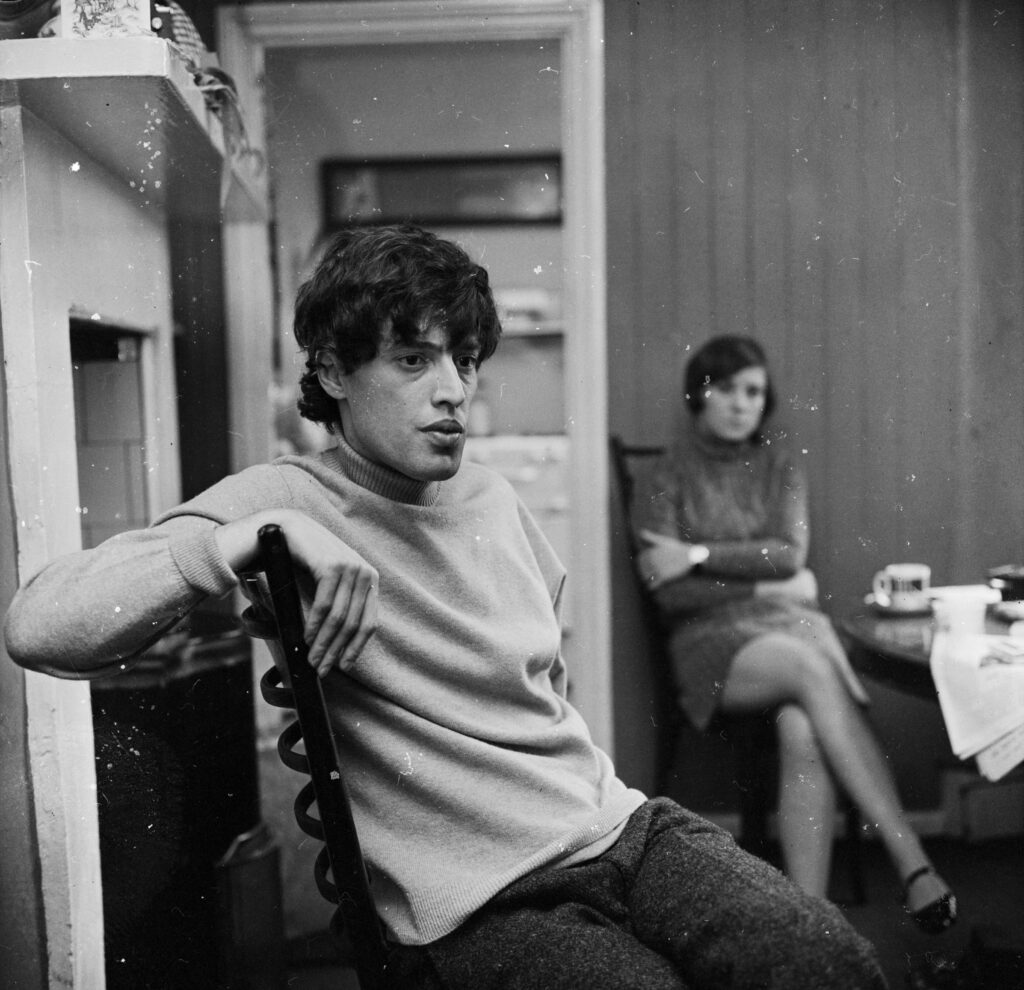
But for Pinter that courteous approach to life wasn’t a natural fit. On the one hand, the austere dimensions of cricket’s ethic appealed to Pinter’s congenital severity. In explaining how the game gave him “a mastery over my own character,” C.L.R. James, the Trinidadian Trotskyite activist, critic, and historian, nicely summarized in Beyond a Boundary, the finest cricket book ever written, what could be identified as the Pinteresquely manly aspect of the game’s code:
Before very long I acquired a discipline for which the only name is Puritan. I never cheated, I never appealed for a decision… I never argued with the umpire, I never jeered at a defeated opponent, I never gave to a friend a vote or a place which by any stretch of imagination could be seen as belonging to an enemy or to a stranger. My defeats and disappointments I took as stoically as I could. If I caught myself complaining or making excuses I pulled up…. From the eight years of school life this code became the moral framework of my existence. It has never left me. I learnt it as a boy, I have obeyed it as a man.
On the other hand, the unfailing mannerliness that inheres to cricket’s code couldn’t be easily reconciled with Pinter’s bellicosity and his concomitantly uncompromising political conscience. Indeed, his exertions to achieve that reconciliation largely explained his markedly dual persona. A ruffian and curmudgeon who nevertheless strove to observe a punctilious courtesy, Pinter was at war with himself. As Marigold Johnson (Paul Johnson’s wife and Antonia Fraser’s closest friend for seven decades) put it, “Harold’s mixture of abrasiveness and good manners, of wolfish irascibility and gentle contrition, would have done credit to a penitent Catholic.”
Pinter fiercely honored the imperatives his political convictions dictated, while just as stringently honoring the imperatives dictated by his commitment to realms independent of politics; to him, political contention was akin to total war, but it was not totalizing. Thus, while one set of Pinter’s principles rendered impossible his accepting a knighthood proffered by a government whose policies he ferociously resisted, an entirely different set impelled him to ensure that his refusal not constitute a grandstanding political gesture made at the expense of the offering party. As he was careful to make plain to a journalist, “I wrote Mr Major a very courteous letter, thanked him and said I was unable to accept such an honour from a Conservative government.”
Pinter’s devotion to cricket and the values it fostered allowed him to recognize and appreciate other domains that were unrelated to his politics and alien to his experience. As a scholar of the game, Pinter recognized cricket’s inextricable link to the English countryside and the ways in which a (small-c) conservative and intensely nostalgic vision of the rural idyll of Deep England and the standards associated with it permeated every aspect of the game. To a nearly Stoppardian small-c degree, this East London Jew assimilated that vision. Pressed by a cricket-loving journalist to define what the game’s link to Deep England meant to him, Pinter was so overcome that effusiveness got the better of his signature terse articulacy: “The English countryside was—and still is, to some extent—the most exquisite countryside in the world. It’s not just that, it’s the absolutely simple fact of the old English values of decency, tolerance, justice and common sense…. I suppose I am actually talking about something I would want to defend. In that sense I’m patriotic, I would want to defend values that I knew and still understand.”
Though probably repulsive to most Islington progressives, these sentiments—identical to those of the socialist Orwell, and, for that matter, to Clement Atlee and most members of his postwar Labour government—hardly betrayed Pinter’s politics. But the imaginative empathy that allowed Pinter to enter and embrace a realm so remote from his own experience, also allowed him to grasp that the values and standards that realm engendered, which he came to revere and which actuated his behavior and actions, took on a life of their own and thereby constituted, themselves, an independent realm. This, in turn, allowed him to grasp that those whose viewpoints were otherwise irreconcilable with his could also embrace and, in very different ways, be actuated by those same standards and values. This recognition itself, of course, immeasurably deepened the imaginative empathy it permitted.
That imaginative empathy—the objectivity and universality of understanding celebrated by Keats and Eliot—was integral both to the art of Pinter and his fellow smooth men and to their understanding of the power and possibilities of the preeminent realm to which they were devoted: the English language and its literature. Just as Stoppard would instigate his friendship with Hare by dismissing the latter’s politics as inconsequential when set beside the force and clarity of his language, so Antonia Fraser was convinced that the sufficient explanation for the bond shared by her uncle, the far-ish right-wing Tory Anthony Powell and her far-left husband was that “like Tony [Powell], Harold loved literature and the English language was everything to him.”
In the same way, T.S. Eliot’s and Philip Larkin’s highly retrograde political views didn’t dim in the slightest Pinter’s intense admiration for their poetry, which he penetratingly analyzed and which served, along with Beckett’s work, as the primary wellspring for his own writing. He and Larkin—whose poetry Pinter regularly recited in public readings and on television and radio, and which he edited and published—conducted a long and affectionate correspondence centered on literature and, of course, a fanatical affection for cricket. Pinter would adamantly maintain his esteem for Larkin and his adoration of his poetry even after the posthumous revelations of Larkin’s privately expressed racist and misogynistic views provoked a near-universal rejection of his work among the correct-thinking literati.
That repudiation of literary work on the grounds of its author’s personal conduct and political outlook, a response characteristic of the Stalinist and the fascist, was alien to Pinter, Stoppard and their fellow smooth men and to the cultural and intellectual world they inhabited. They shared a standpoint that had permitted that courtly revolutionary C.L.R. James to cherish Greek and Latin and Thackeray and to declare that T.S. Eliot “is of special value to me . . . in him I find more often than elsewhere, and beautifully and precisely stated, things to which I am completely opposed.” This standpoint had allowed even the Jewish, atheist Susan Sontag to set aside her simplistic, left-progressive political posturing in prizing above all other novels the profoundly Christian Brothers Karamazov, though its author was ultra-reactionary and viciously antisemitic.
But as the reductive and all-encompassing view of cultural politics typified by Tynan gained cultural sway, Pinter, Stoppard and their fellow smooth men found that the separateness of the realm of language and literature had to be not merely upheld, but uncompromisingly guarded, and even defiantly defended. Indeed, by 1984, in a New York Times profile Stoppard was held to account for venerating the work of Kipling, Waugh, and Hemingway—authors constituting an unholy triumvirate because, the Times helpfully noted, they “held ideas now considered unfashionable or repugnant.” In his disarmingly patient manner, Stoppard felt it necessary to spell out to the obviously flummoxed Times man a distinction that had become no longer obvious, let alone crucial: “[Waugh] was an anti-Semite, and yet I admire him intensely as an artist. I don’t like Hemingway much as a person… but I can’t pretend to like his writing the less for it.”
The cultural climate came to dismiss the distinction on which Stoppard insisted as naively wrong-headed, at best, and to traduce it as fascistic, at worst. As the arts generally and the stage specifically came to espouse the concomitant view that the artist’s role is not simply to depict experience, but to condemn, extol, and interpret according to standards currently deemed enlightened, even Stoppard’s amiable patience was strained. In a 2022 staged conversation about his Homeric libretto, Penelope, Stoppard’s BBC interlocutor, Martha Kearney, epitomized the self-regarding condescension of posterity besetting the theater. That view holds that plays set or written in the past are of value to the extent to which they adopt or can be “reimagined” or “reinvented” to conform to a right-thinking perspective and to address the concerns deemed pertinent to our times. (This view inevitably induces today’s theater directors, for instance, to force the political themes in Shakespeare’s history plays onto the Procrustean bed of contemporary social or political relevance.)
Rolling out the usual codewords, Kearney explained to Stoppard that the domestic values that Homer’s Penelope embodied “aren’t so much virtues for women in the modern world.” The character as Homer created her, therefore, had no business appearing in a contemporary play, Kearney implied, patronizingly suggesting that summoning “that kind of character” to the stage presented “challenges.” With frosty good manners Stoppard responded that in his libretto Penelope “speaks for herself” and that her role as “wife and mother… is delineated by the culture she lived in.” He added with slightly more than a trace of clipped irritation that “in any event I was concerned to treat her in her own context, not in mine… I certainly didn’t want to reinvent her.”
Perhaps surprisingly, David Hare, of all the dramatists in Stoppard’s circle, has probably been the most truculent guardian of the line separating politics from drama’s literary and artistic imperatives. Hare has divided his own work between his “private” and “public” plays, and although the latter plainly advance a left-wing viewpoint, he has also adamantly held that the driving focus of drama is to probe and reveal complexity, moral ambiguity, and paradox. At their best, Hare’s public plays have unsettled and surprised their customary audiences—and, by rejecting progressive pieties, have widened those audiences. For example, Hare wrote Racing Demon—his sympathetic treatment of the Church of England’s vicars and the first play in his “Institutional Trilogy,” which scrutinized British public institutions—in part because “there aren’t any plays for the Christian audience these days. Christians have been alienated… in the last 20 or 30 years… by what they regard as the secular, humanist, modern theatre.”
His political plays, Hare has pointed out, “rarely send [progressive] audiences out of the theater confirmed in their wonderfulness.” His aim, rather, has been “to examine the ills of the world and leave people with very ambiguous feelings about what can be done about them and their own involvement.” In fact, Hare has consistently railed against the political orientation of most theatrical work for shunning artistic and dramatic purposes in favor of dogma, certainty, and moral preening.
Rebuking the ostensibly serious theater for its didacticism and its impulse to flatter itself and its (almost entirely progressive, metropolitan) audience, Hare complained to a journalist that “you go to have what you already believed reinforced. You are simply told that gay people are people just like everyone else, that racism or misogyny is a terrible thing. You are confirmed in your own righteousness.” Asked by the Guardian to name a political play he admired, Hare provocatively chose Beth Steel’s highly unusual The House of Shades, which aimed, he said, to reveal to North London progressives—a tribe that all but defines that newspaper’s core readership—-“why people from a working-class community in Nottingham might not share their worldview. It was a wonderfully eloquent account of the feelings that made them so disillusioned with people [on the progressive left].”
Hare, along with Stoppard, Pinter, Gray, and Ayckbourn, have bridled at what has now become the all but universal self-appointed mission of playwrights and other artists to use their mediums to enlighten their audiences regarding social and political conditions and issues. A source of that distaste lay in the smooth men’s understanding that creative artists in fact possess no special knowledge of or insight into the complexity of those conditions and issues that would put them on a plane above their audiences. More fundamentally, the smooth men’s distaste has been rooted in their grasp of language and therefore in their sophisticated understanding of both the purposes and limitations of their chosen medium. They’ve thus embraced the at once brilliant and seemingly obvious point that the playwright Eugene Ionesco made to win the famous “London controversy” that pitted his views of drama and writing against Tynan’s celebration of a politically- and socially-purposeful theater. Ionesco argued that Tynan’s embrace of a doctrinaire theater driven by a mission “to deliver a message to the world, to wish to direct its course, to save it” would be perforce “inferior to the doctrine it claimed to illustrate, which would already have been expressed in its proper language, that of discursive demonstration [meaning analytical argumentation].” Ionesco thus astutely argued that not only does imposing an ideology onto a play make that play “didactic” and “tautological,” but, because of this gap between the medium and the language appropriate to it, “an ideological play can be no more than the vulgarisation of an ideology.”
If Hare was the most combative and Pinter the most obdurate of Stoppard’s theatrical compatriots in maintaining language and its artistic expression as an independent sphere, Stoppard, crucially, was the most inspiring in illuminating what was at stake in that effort. He articulated a veneration of what he saw as the potency and hope of language and literature. In contrast to the dour and self-serious Pinter and Hare, the invariably jocular Stoppard, with his “absolute uncertainty about almost anything,” might not have seemed the obvious choice for that role. Of course, it was that very commitment to non-commitment—Stoppard’s instantiation of the Keatsian mind “which is the thoroughfare for all thoughts . . . not a select party”—that had so exercised Tynan, wedded as he was to the pursuit of socially committed theater and literature.
In fairness, however, even those who don’t share Tynan’s doctrinaire view of the arts might blanch at the potential ramifications of the formal remove inherent in Stoppard’s classicism and in the dubiety inherent in his embrace of negative capability. After all, the other side of the coin of open-mindedness is radical agnosticism. But even Stoppard’s most hostile critics didn’t impeach his dubiety as the overly-clever relativist or amoral posturing of a verbal gymnast. This was owing to the profound humanism, the intellectual, ethical, and moral integrity, and the intentness and toughness of the liberalism that emerged from Stoppard’s Englishness and from his aesthetic and artistic commitment.
Stoppard loved Pinter for a host of reasons. But he “revere[d]” Pinter, he declared in an interview, for achieving “the simultaneous compression of language and expansion of meaning,” which, he explained, was what “makes Shakespeare breathtaking and defines poetry.” Only if exactly the right word is used in exactly the right position (an impossible task) can a single line or phrase encapsulate—through such devices as metaphor, imagery, syntax, and diction—the multiple meanings that negative capability permits and that language is capable of conveying. And only through what is then essentially poetry—economically presenting many layers of meaning without committing to any single one—can the complexity of the dimensions of human experience be plumbed and expressed.
In this way, meaning is not reduced and pinned down as a personal experience or understanding but instead expanded in a way in which the universal might be revealed. The scrupulous attention to language required when every word and its syntactical position carries meaning produces an aesthetic component, but to Stoppard style derived from a far more essential humanistic and ethical pursuit: to sound and to articulate human experience in order to enlarge human understanding. The purpose of the meticulously refined, and therefore beautiful, use of English for Stoppard and his fellow smooth men wasn’t to embellish (as Tynan posited) but potentially, as Stoppard’s mouthpiece in The Real Thing says, “[to] build bridges across incomprehension and chaos.”
To Stoppard, this pursuit of understanding and the dedication to the means that pursuit demands—a fiercely objective stance and an exacting use of language—defined our humanity. “It’s wanting to know that makes us matter,” as the character Hannah says in Arcadia. But while Stoppard’s biographer and his exegetes routinely and rightly cite that declaration as the summation of Stoppard’s understanding of human purpose, they have consistently failed even to notice Stoppard’s steely qualifications. Hannah concludes her speech not with the predictably anodyne promise of the inevitable progress which that urgent effort will deliver, but by acknowledging the likely futility of that effort in what she (and Stoppard) believed is an existence bereft of an afterlife or any other ultimate consolation: “Better to struggle on knowing that failure is final.”
In the dramaturgical counterpoint to Hannah’s speech, Septimus, the brilliant and dashing early 19th-century mathematician and classical scholar, realizes that the mathematical breakthrough of his even more brilliant student means that the universe must inevitably be brought to a meaningless, entropic end. Nevertheless, he remains devoted to his belief in a universe ordered by God and to his embrace of humanistic inquiry, even as he is now forced to lament what is for him the chilling upshot of those irreconcilable devotions: “When we have found all the mysteries and lost all the meaning, we will be alone, on an empty shore.” Far from celebrating the slack progressive view that holds that untrammeled inquiry leads inevitably to human betterment, Stoppard’s understanding of this endeavor was starkly, heroically tragic. He embraced the pursuit and the absolute dubiety it demanded (“It’s the best possible time to be alive, when almost everything you thought you knew is wrong,” as another brilliant scientist in Arcadia puts it), even as that dubiety extended to his view of the ends that pursuit would achieve.
This understanding—which could be narrowly characterized in political terms as an intrepid dedication to inquiry and process and a strict disinterest in outcomes—signifies that the small-c conservative Stoppard was also a profound liberal (a point that David Hare, who was consistently spot-on in his assessments of his long-standing friend, made regularly if unavailingly in Stoppard’s defense to his left-wing comrades). To be sure, the Keatsian open and objective stance, which amounted to a liberal outlook, was integral to the artistic approach of all the smooth men.
Indeed, the connection between liberalism and that particular approach to literature is plain when comparing the foundational convictions of the English poet and literary critic who most brilliantly advanced Keats’s notion of negative capability, William Empson, with those of his contemporary, that paragon of British liberalism, Isaiah Berlin. Empson repeatedly insisted that “the central function of imaginative literature is to make you realize that other people act on moral convictions different from your own.” Understanding literature therefore demands empathy “with the assumptions and conventions by which the author felt himself bound” (obviously a viewpoint Stoppard reflected in defending his artistic approach to Homer in Penelope). Berlin, in a strikingly similar vein, declared that “it is hardly possible to overrate the value . . . of placing human beings in contact with persons dissimilar to themselves, and with modes of thought and action unlike those with which they are familiar” (emphases added).
Stoppard, himself, implicitly acknowledged that connection in The Coast of Utopia, in which Alexander Herzen’s liberalism, which stood opposed to the overarching abstractions of both the political nihilists and of Marx, emerged from Herzen’s imaginative empathy. That quality allowed him to recognize the variousness and incommensurability of human experiences, values, and aims. Negative capability (in literary terms), or the embrace of pluralism (in broadly political terms), gave rise to Herzen’s understanding that mankind’s defining drive is the ongoing pursuit of understanding without hope of definitive achievement. Thus the play is tinged with the same tragic humanism that would imbue Arcadia. As Stoppard’s Herzen describes humanity’s purpose and predicament, “History has no purpose! History knocks at a thousand gates at every moment, and the gatekeeper is chance…. To go on, and to know there is no landfall on the paradisal shore, and still to go on. To open men’s eyes and not tear them out…. Our meaning is in how we live in an imperfect world, in our time. We have no other.”
While a liberal outlook inhered in the artistic approach of all his fellow smooth men, Stoppard enjoyed the freest exercise of Keats’s artistic commitment “to make up one’s mind about nothing.” Stoppard’s exceptional verbal dexterity, married to the severe studiedness that he applied to the English language, permitted him to pass effortlessly F. Scott Fitzgerald’s “test of a first-rate intelligence”: “the ability to hold two opposed ideas in the mind at the same time.” To a unique degree, Stoppard could seriously play with divergent, even irreconcilable, ideas. As he described his approach: “I’m the kind of person who embarks on an endless leapfrog down the great moral issues. I put a position, rebut it, refute the rebuttal, and rebut the refutation. Forever. Endlessly.” With easeful mastery and moral seriousness he embedded and riffed on ambiguity, ambivalence, and paradox in every concept, conviction, and theory his characters stake out and contend, and in every situation they inhabit or create.
Born of this linguistic, aesthetic, and artistic approach, Stoppard’s fluent objectivity bestowed an uncommon depth to his liberalism. The same unflinching dubiety and devotion to limitless inquiry that drove him to favor drama over novel-writing—“I write plays because dialogue is the most respectable way of contradicting myself”—and the same astringency that underlay his understanding of human purpose imbued his dedication to those bedrock tenets of liberalism (and of English political values, as Stoppard understood them): freedom of expression and the rule of law. Both are unforgiving, principled disciplines rooted in a commitment to uncertainty. Consequently both demand an absolutely objective stance that of necessity abjures ends, however ardently desired, insisting instead that unfettered inquiry is an end in itself.
Oliver Wendell Holmes, Jr. illuminated this uncompromising liberalism by rhetorically and sarcastically arguing the negative position in his dissenting opinion in Abrams v. United States: “Persecution for the expression of opinions seems to me perfectly logical. If you have no doubt of your premises or your power, and want a certain result with all your heart, you naturally express your wishes in law, and sweep away all opposition. To allow opposition by speech seems to indicate . . . that you do not care wholeheartedly for the result, or that you doubt either your power or your premises.” Like his small-c conservatism, then, Stoppard’s liberalism, in spurning the pursuit of a program or agenda, was really (and necessarily) an apolitical disposition.
Subscribe Today
Get daily emails in your inbox
Moreover, just as Stoppard was devoted to the pursuit of understanding while remaining unsure of attaining the ends that effort seeks, so Holmes’s and Stoppard’s austere liberalism shunned the progressive optimism that informs an instrumentalist view of liberalism. In the same way that the rule of law might be a necessary condition for a just society while hardly guaranteeing it, so, as Holmes daringly acknowledged, was free expression an indispensable means to advance human understanding—even though free expression’s pursuit and protection merely amounted to “a wager” and not a warranty. Grounded in humility and uncertainty, defined by an objective outlook, alive to contingency and the limitations of all human endeavor, this was a mature liberalism (and, if one is inclined to put it this way, a conservative one).
By the time of Stoppard’s death, this bracing liberalism, like so many aspects of his outlook and art, was alien to the dominant ethos. To a culture dedicated to perceiving the human condition in personal, particular, and strictly contemporary terms, what could be more passé than the receptiveness and humanist universalism that Stoppard expressed and embodied? (For what it’s worth, I’m hardly confident that the gatekeepers who govern a culture in which the artist’s role is to express his or her own identity and that is convinced that audiences crave only works that reflect their own experience and milieu will continue to produce the plays of Stoppard and his fellow smooth men.) Faced with the current zeitgeist, even the perpetually buoyant Stoppard confessed discouragement. Invited by a Telegraph reporter four years ago to talk about Englishness—the perennial object of his admiration—Stoppard drifted in an elliptical and uncharacteristically despairing direction.
“At some point in the recent past, I lost my optimism,” he said. “The new English men and women coming up now are falling into a world of ‘personal truth versus truth truth’ and that does not make a rational society…. I have lost my optimism about clear-eyed, level-headed, open-hearted generations following ours.” Permeating the lament for the death of the charming man, the devoted friend, and the sparkling writer is a mourning for that “clear-eyed, level-headed, open-hearted” world we have lost.
