
“Turn back, O man, forswear thy foolish ways,” begins an old Episcopal hymn, from the time before that church became a Vestals cult. Conservatives know our country is declining at an ever-increasing pace. But many seem not to understand how to reverse that decline: turn back to what worked in the past. Common sense should tell us what worked then can work now.
Elections provide an example. President Donald Trump has made the electoral process an issue, for good reason. Electronic voting, with everything else electronic, is subject to endless manipulation, which, if done right, cannot be detected. Add in ballot harvesting, voting that stretches out for weeks or months and questionable vote counting, and you strike a blow at the legitimacy of the whole democratic system. Just as a monarchy’s legitimacy depends on God,
so a republic’s rests on the integrity of elections.
How can we restore that? Turn back to voting on one day, with paper ballots counted in full view of poll watchers from both parties. As Tammany Hall and Chicago’s Daley machine showed in 1960, although Richard Nixon actually won in Illinois and thus the presidency, fraud still occurred. But on the whole, the system was seen as legitimate, because for the greater part, it was.
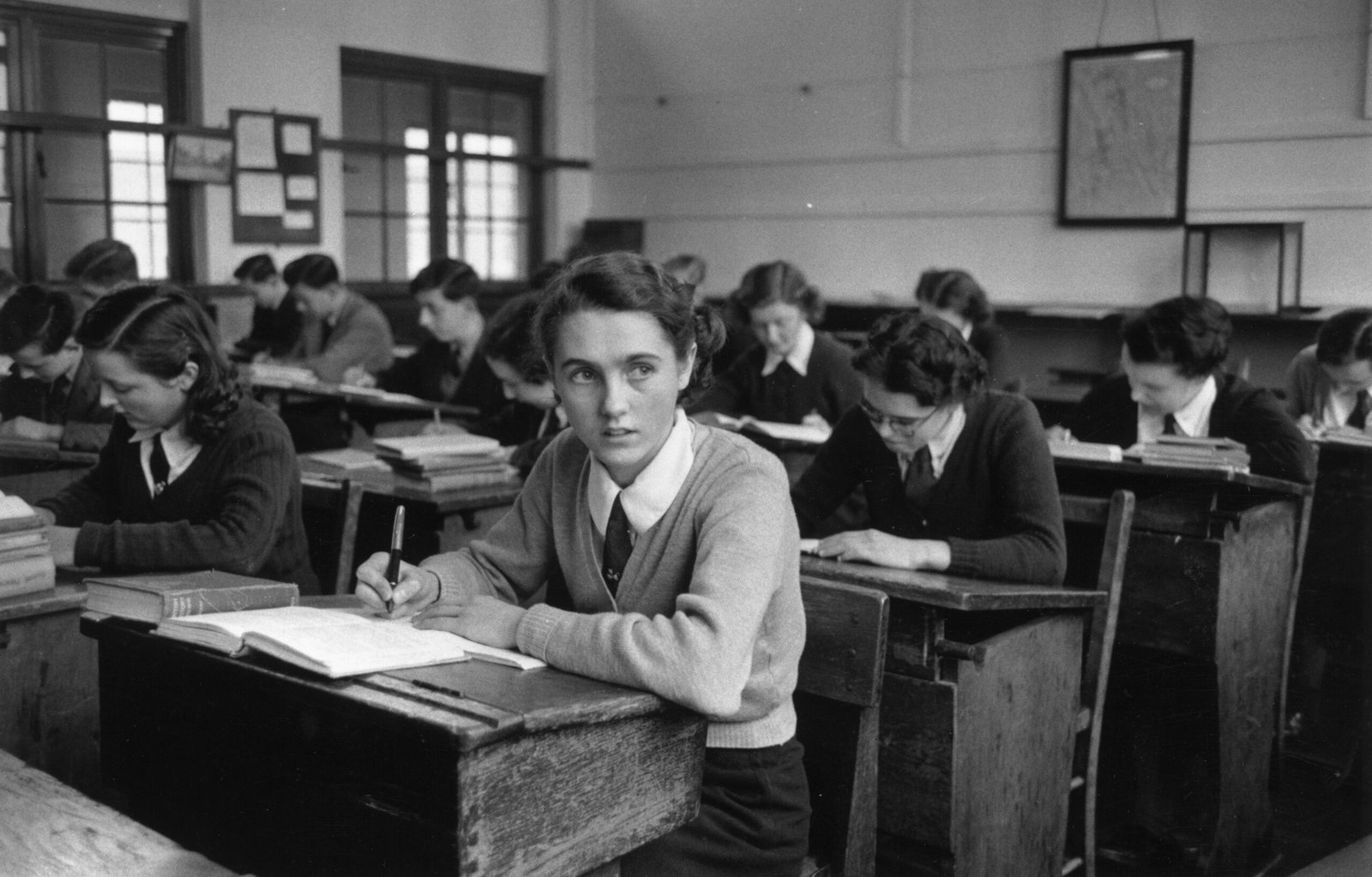
Public schools offer another example. The average high school graduate of 1950 knew more and had better skills than do many college graduates today. How to fix that? Go back to “Schools 1950.” We know how those schools worked, we have the textbooks they used (textbooks that praised our country’s history instead of condemning it), and we know how
they maintained classroom discipline. In my first grade class we had one kid clearly born to be hanged. I finally went for him, in class, took him down, and was pounding the crap out of him. Not only did the rest of the class cheer me on—so did the teacher! Can’t we get at least one state to adopt a policy of Schools 1950? If a single state does it and the rest see it works now as it worked then, it will spread. No place needs to turn back from foolish ways more urgently than our public schools.
The hardest challenge facing conservatives is reversing the decline in our culture. It is also a challenge we must meet, because the culture is the basis of everything else. In the 1980s, the conservative think tank where I worked, Paul Weyrich’s Free Congress Foundation, launched “cultural conservatism.” In a book co-authored by William H. Marshner and myself, Cultural Conservatism: Toward a New National Agenda, we defined cultural conservatism thus: Cultural conservatism is the belief that there is a necessary, unbreakable, and causal relationship between Western, Judeo-Christian values, definitions of right and wrong, ways of thinking and ways of living the parameters of Western culture—and the secular success of Western societies: their prosperity, their liberties, and the opportunities they offer their citizens to lead fulfilling, rewarding lives. If the former are abandoned, the latter will be lost.
Regrettably, in the 40 years since that book was published, our culture has declined further. As we predicted, our prosperity and our liberties have both diminished. It is no longer enough to speak of cultural conservatism; what is now required is cultural restoration, a turning back from the foolish ways that arose in the 1960s and are now considered the norms by America’s elites.
This raises a new date question: what should we turn back to? In the 1990s, Free Congress did a nationwide survey that asked when and where people would most like to live. The top choice was a typical suburb in the 1950s; a small town in 1900 came in second. The first answer was no surprise, because the 1950s were America’s last normal decade. But it
is the second answer that points to what must be the goal of cultural restoration: a return to the Victorian era.
The 1950s were the last afterglow of the Victorian peak years. If we are to re-create the America of the ’50s, we must first restore what created that America. Or rather, who created it, our amazingly wise, moral and productive ancestors, the Victorians. We live today on the infrastructure the Victorians built. Not just the physical infrastructure, though that remains vital to our cities. Nor the infrastructure of beauty, of which enough remains that our structures are not all ugly, as Adorno dictated they must be under capitalism. The only reason America continues to function as well as it does, which is not as well as it did, is because Victorian morals still live, beyond the cities and their elites, in the people who inhabit the countryside and elements of the
exurban but not rural middle class. Ever notice who first shows up when disaster hits? It’s not just cops and firemen; it’s also construction workers and other men who work with their hands. Those are the people where Victorian values still live.
What exactly are Victorian values? They begin with the Ten Commandments and add standard middle-class values such as living below your means, recognizing that work is a good thing in itself and dependency is shameful, helping your neighbors who are in need, setting the family on a pedestal and keeping it there (the Victorians regarded the woman’s place in the home as the higher sphere, above the man’s in the world of affairs) and acting through the rest of the week on what they heard in church on Sunday. And they were in church on Sunday.
When Queen Victoria came to the throne in 1837, both Britain and the United States were very rough societies. Social problems were rampant, especially alcoholism. Broken families with single mothers were common, childhood ended at about age 8, when the children were put to work in the mines and mills, domestic and child abuse were normal and church attendance was low.
The Victorians fixed all that. They did so not through government but with broad volunteer movements such as the Temperance Movement, most organized and led by women. Victorian women were not chained to the stove, and they were not shy, delicate flowers. As a small child, I knew Victorian women, my grandmother’s friends in the small resort town of Oakland, Maryland. If a feminist had told them they were “oppressed,” they would have responded with gales of laughter.
The late, great social historian of the Victorians, Gertrude Himmelfarb, with whom I several times had the pleasure of conversing, did not hesitate to point out in her books that in the Victorian period the incidence of social problems steadily went down, while since the 1960s it has steadily gone up. The lesson is obvious: If we want to replace a “Great Society” (which funded social decay) with a good society, we need to learn from the people who did exactly that, our Victorian ancestors. The place to start is with Himmelfarb’s books and with the writings of Victorians themselves. Dickens depicts English society before Victorian reforms; Downton Abbey’s episodes set before World War I show not only how leading Victorians lived, but how seriously they took their duties.
Subscribe Today
Get daily emails in your inbox
As we must also. We do the future no favor if we conserve what we have now. Our duty is to recreate the good America we had and have lost. That requires a new, broad-based movement, probably again led by women, which I call Retroculture.
Ladies, it is again time to hear the call.
William S. Lind is the author of Retroculture: Taking America Back.
