
[ad_1]
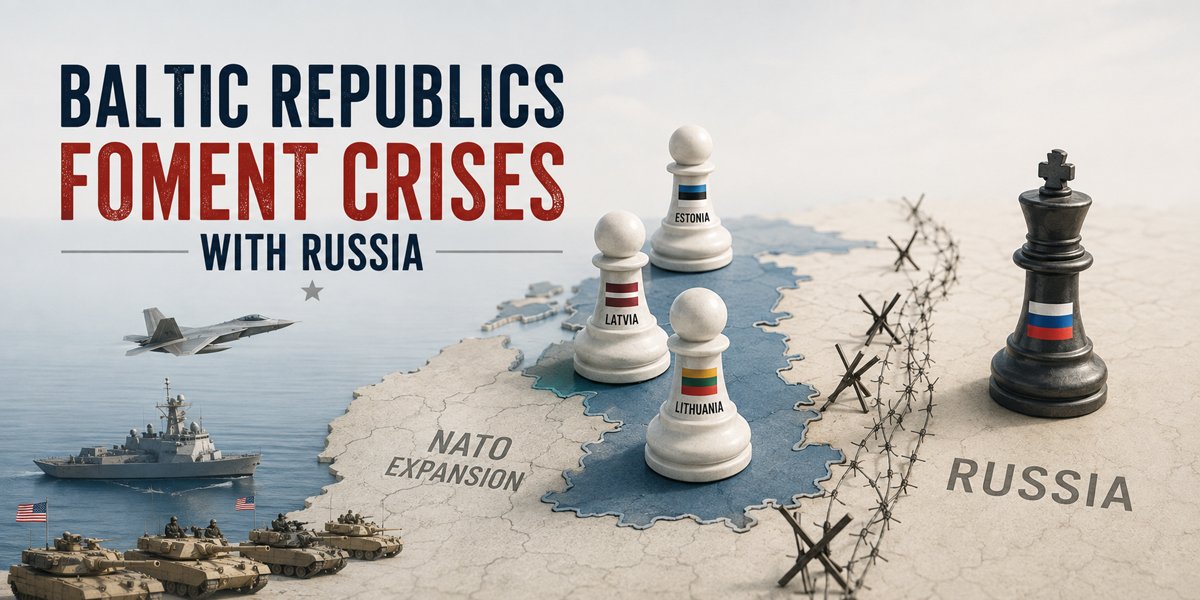
Historically, one of the greatest dangers to a major power in the international system is letting smaller allies and clients drag that power into an unwise war. Both the United States and leading European powers seem inclined to make that blunder with respect to the Baltic republics. Too many U.S. policymakers have not only tolerated but also facilitated the obsession those “allies” (i.e. protectorates) have exhibited with defeating Russia in Ukraine and weakening their arch adversary overall.
The belligerent behavior of some of NATO’s smallest members creates the prospect of disastrous results in Europe and beyond. A crucial policymaker, Kaja Kallas, is a former prime minister of Estonia and now serves as the European Union’s High Representative for Foreign Affairs and Security Policy and Vice‑President of the European Commission. That does not help matters. Kallas is not only one of Ukraine’s most avid supporters, but is also an outspoken Russophobe on a wide range of issues. Kallas has received strong, vocal support from Dutch-born Ursula von der Leyen, an influential German politician and currently President of the European Commission.
Kallas has repeatedly pressed her EU colleagues as well as NATO officials and policymakers in other European governments to make no concessions to Russia with respect to territorial or other issues involving Ukraine. Any compromises, she contends, would reward Moscow’s aggression, and increase the risk of a much larger war.
The former Estonian leader combines such policy rigidity with an alarming degree of arrogance and overconfidence about Europe’s power. In one speech, Kallas asserted that if NATO simply stayed united on policy, Russia stood no chance of prevailing in Ukraine or of achieving any of its other objectives. Horrific wars have emerged throughout history from far less hubris than she routinely displays with respect to the democratic West’s policy toward Russia.
The centerpiece of the current effort by leaders of the Baltic states to exacerbate tensions with Moscow is a propaganda campaign asserting that the Kremlin is plotting to launch military attacks on vulnerable NATO members in the near future. In mid-July, the presidents of Lithuania and Latvia warned that Russia “may be preparing ‘limited kinetic operations’ against NATO’s eastern-flank infrastructure to test Article 5” – the provision in the North Atlantic Treaty proclaiming that an attack on any Alliance member will be considered an attack on all. Latvian President Edgars Rinkēvičs asserted that “The next few months, or even the next 12 months, will be crucial for Baltic security.”
Predictably, Russian officials dismissed the warnings as cynical cover for NATO’s own military buildup in the Baltic region. There is no question that such a provocative campaign by the Western powers has taken place and continues to do so. Indeed, a sizable buildup of NATO air, naval, and ground forces has been occurring for years. One important move was the re-deployment of U.S. F-22 fighter planes to Estonia from Poland in the spring of 2023. The most significant Russian provocations have been repeated spy plane incursions into the airspace of the Baltic republics and Russia’s other neighbors. Similar maritime incidents have taken place involving Russian naval and civilian vessels. Although Moscow’s moves are foolish and needlessly antagonistic, they are hardly in the same category as the major NATO buildups of troops, warplanes, and naval vessels.
Alarmist warnings from the Baltic governments also are nothing new, so cynical American observers might be tempted to respond to the latest flurry with indifference. However, Poland – a much more significant political and military player than the tiny Baltic countries–has been outlining similar alarming scenarios. There have been numerous warnings in recent weeks by Polish politicians, following multiple media reports that Russia could carry out a limited military or hybrid provocation against Poland in the near future. In late June 2026, a leading Polish outlet called onet.pl reported that U.S. intelligence had alerted its Polish counterparts about the possibility of a Russian attack. Prime Minister Donald Tusk said on July 3 that the warnings should be taken seriously and noted that he had been issuing similar alerts for weeks. “Poland is preparing very intensively for various scenarios,” Tusk said.
The possibility that the chronically anti-Russia U.S. intelligence agencies are helping to foment such paranoia should be a matter of profound concern to Americans who are opposed to having the Ukraine conflict spiral into a full-blown NATO-Russia war. An especially sad development is how Donald Trump, who once justifiably scorned Washington’s entanglement in Ukraine as a folly, now seems firmly committed to perpetuating NATO’s showdown with Moscow. Baltic hardliners undoubtedly take comfort in the Trump administration’s new course.
The U.S. military’s already risky commitment to the Baltic countries is becoming more explicit and uncompromising. At a June 30, 2016, ceremony in Valga, Estonia, the American commander of NATO’s land forces in Europe made that intention quite clear. Stating that “You’re [the Alliance’s Baltic members] ready to do more and following words with action, and the United States will be there alongside you,” U.S. General Chris Donahue asserted that “is how deterrence is built: Not with words from a podium, but with boots in the mud.” Indeed, NATO is adding a new command headquarters to focus on developments in the Baltics.
With President Trump having effectively capitulated to the NATO hawks, there is an alarming opportunity for anti-Russian zealots in the Baltic republics and elsewhere to push their pro-war agenda. Given Moscow’s egregious behavior toward its neighbors during both the Czarist and communist eras, one can readily understand the hatred that many people in those countries still harbor. But we must not let such poisonous historical memories drive current U.S. policy.
Too many officials in the Baltic states are courting a military conflagration that would consume not only their countries but the United States as well. America does not have any security, economic, or moral interests at stake that even remotely justify incurring such a level of risk. Allowing NATO’s mini-states to drag the United States into a major conflict with Russia – one with possible nuclear implications – would constitute the biggest folly of the post-World War II era.
Join the Discussion!
We welcome thoughtful and respectful comments. Hateful language, illegal content, or attacks against Antiwar.com will be removed.
For more details, please see our Comment Policy.
[ad_2]
Source link
