
Photograph Source: Duma.gov.ru – CC BY 4.0
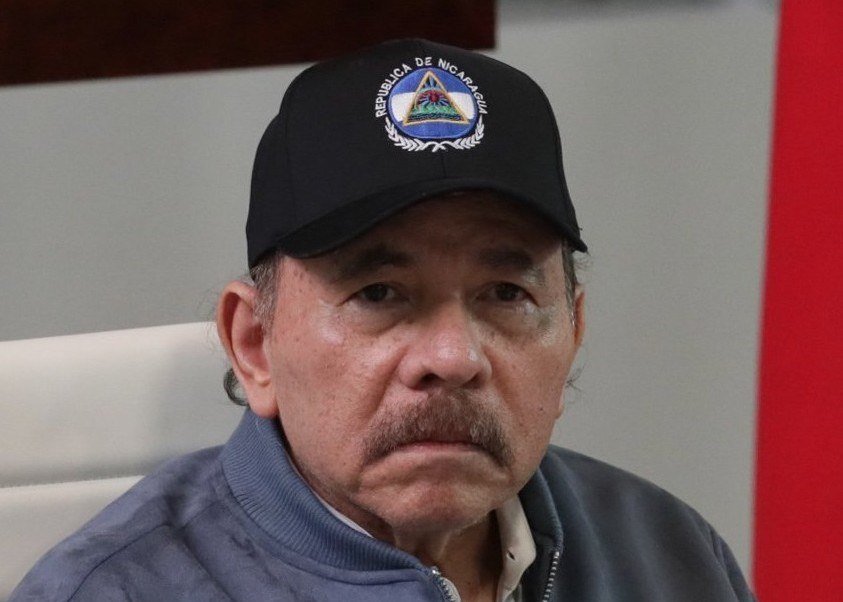
Nicaragua’s co-president, Daniel Ortega finally came right out and said it: “Forget about it—there won’t be any more elections here!”
He was speaking to a hypothetical opposition, which could not have been present since nearly all its members have been exiled, imprisoned or forced into hiding. The announcement came on July 19, the anniversary of the triumph of the Sandinista Revolution. The defeat of a brutal authoritarian dictator, celebrated around the world 47 years ago to the day, had come full circle.
I remember the exact moment we got the news that the Sandinistas had taken Managua and the dictator, Anatasio Somoza, had fled the country. Images of the people’s army pouring into the capital, surrounded by a euphoric population, sent a message throughout a world that self-determination and democracy could succeed even during the Cold War.
Years of armed struggle in Nicaragua led to that unforgettable day, aided by U.S. and Latin American solidarity movements. Resistance to U.S. interventions and funding to sustain bloody tyrants in the name of anti-communism had grown, focused on Central America. Local, often faith-based, grassroots movements against support for death squads in El Salvador and genocidal campaigns against indigenous peoples in Guatemala, and to provide U.S. sanctuary for refugees from these conflicts, embraced the Sandinista Revolution as a sign of hope.
Hundreds of mostly young people joined Nicaragua’s national reconstruction. We picked coffee and cotton, observed elections and reported on what we saw in a small nation thrust into the center of international revolutionary effervescence. Internacionalistas helped in literacy campaigns, built infrastructure and carried out research that instead of becoming seldom-read academic papers, formed the basis for new education, development and social programs.
Dreams die hard, and sometimes it’s difficult to distinguish the moment they take a turn into nightmare territory. In the mid-nineties, prominent heros of the revolution began breaking formally with Daniel Ortega, president from 1985-90, then leader of the Sandinista political opposition until returning to power in 2007. Dora Maria Tellez denounced the hijacking of the revolution and started a new organization in 1995. The Ortegas arrested her in 2021, kept her in solitary confinement for nearly two years, then expelled her in 2023. The poet-priest, Ernesto Cardenal, denounced Ortega as authoritarian in 1994 and publicly opposed him until his passing in 2020. The award-winning writers, Gioconda Belli and Sergio Ramírez. The list goes on and on.
Nicaraguan feminists and human rights leaders began sounding the alarm decades ago. The 2006 absolute ban on abortion; rollbacks in women’s rights; the Ortegas’ denouncement of feminism and misogynist persecution of their own daughter, Zoilamérica, after she accused her stepfather of sexual abuse; attacks on NGOs (to date, more than 5,000 have been shut down), the closing of feminist media, and persecution of leading figures left no room for doubt that the principles of the revolution had been betrayed. The violent repression of the 2018 pro-democracy uprising in the country that left some 350 dead ushered in a period of even greater repression. Constitutional changes in the constitution in 2025 subordinated all powers to the presidency. With the dismantling of checks and balances, the presidential couple was clearly laying the foundation for a perpetual family dynasty.
Ortega’s announcement to cancel elections elicited an immediate response from the Trump administration. The State Department under Cold War operator-in-chief and Joe McCarthy’s reincarnation, Marco Rubio, issued a statement declaring that the announcement ´lays bare the true authoritarian nature of the Murillo-Ortega dicatatorship´and warning that Nicaragua “cannot expect to maintain business as usual”. Rubio posted that “The Trump Administration and the international community will not stand by as the Murillo-Ortega dictatorship deepens repression at home and manufactures instability that threatens U.S. national security.”
So far, no specific measures have been announced. The U.S. government is on thin ice criticizing anti-democratic measures in the midst of outcry over the administration’s blatant attempts to fix the electoral system so, in the words of the president, “the Republicans won’t lose an election for a hundred years.” Although Nicaragua is theoretically an obstacle in the plan to put the extreme right in power in all of Latin America, its move toward authoritarianism, institutionalized patriarchy and neoliberal economics has placed it closer to the far-right camp than to most leftist leaders.
María Teresa Blandón: Reflections From Within
The best way to understand a complex issue is to talk to the people whose lives are directly affected, the actors on the stage. Days after the abolishment of elections, I interviewed María Teresa Blandón, Nicaraguan feminist leader and human rights defender, exiled in Costa Rica since 2022. Blandón formed part of the Sandinista Front as a rural organizer and cofounder of the National Farmworkers Association (ATC). The macho violence and the double day of campesinas working in the field and the home led her to feminism.
From here, she tells her own story…
LC: Were you surprised at Ortega’s announcement?
MTB: Not really, because we had the immediate precedent of the constitutional reforms illegally passed last year in 2025 that clearly stated that the people exercise revolutionary power directly through the executive branch. This constitutional reform revealed the regime’s intention to terminate the system of elections within a democratic framework.
What probably surprised us is that he said it so directly—they had created the conditions, we knew they were maneuvering internally to stage an electoral farse [elections were scheduled for November of this year, a reform extended the presidential period moving them to 2027, now the proposal is a 7-year term without open election], but we didn’t expect the audacity of putting it so explicitly. I think this is what’s caused such a widespread outcry among broad political sectors in Latin America and the world. It’s a challenge to the international system to have said it so openly.
LC: How will the other branches of government and civil society respond?
MTB: The precedents go way back, like to 2021 with the electoral farse in which seven precandidats to the presidency were imprisioned. In 2025, they took down the pillars of electoral democracy with the constitutional reform that should have requrired a consitutent assembly because it was practically a new constitution and that didnt happen. That’s when it became clear that the powers of the state would be subordinate to the Executive Branch—in fact, the reform no longer talks about the branches of state power, bur rather of “organs of the state subordinated to the Executive”.
I really can’t say why the OAS, for example, didn’t activate the Democratic Charter when the reforms clearly demonstrated that balance of powers and rule of law no longer existed in Nicaragua. A new totally authoritarian system took its place that creates the conditions for a dynasty. Now we’re seeing a reaction because Ortega said it publicly, he summed it up in a single phrase: “There will be no more elections in Nicaragua”. I think that now some international actors realize that this is the affirmation of a totalitarian regime.
LC: Do you think that now there will be a response? Would it have an impact if the OAS activated the Democratic Charter?
It would have to have an impact for Nicaragua and for the region because if we accept that a government in Latin America challenges the interamerican system admitting publicly that it’s building a totalitarian regime, then we could have a perverse effect in the region. Other authoritarian regimes could be tempted to replicate the Ortega model given that we still don’t see consequences commensurate to the gravity of the challenge…
The mask is off—there’s no other way to interpret it. The language is explicit; it is perfectly clear. We are facing a dynastic totalitarian regime that seeks to remain in power outside the bounds of the law.
LC: You were part of Sandinismo with the dream of a new kind of government and now we see this massive violation of human rights and democratic principles. How do you respond to those who continue to defend the regime?
MBT: I think that the Latin American left but also the European left got thrown off track when Daniel Ortega returned to power in 2007 because they saw a historic continuity between the revolution and the return of Ortega that didn’t exist. They were unaware of the conservative alliances that Ortega forged, even with discredited Liberal Party caudillos (strongmen) who had a serious history of corruption. I think it was easier for them to believe that there was a leftist, progressive government at the heart of Central America, but it wasn’t. This Sandinista Front, led by the strongman Daniel Ortega, had nothing to do with the principles or the hopes that my generation held after the overthrow of the Somoza dictatorship.
We have been very concerned that this inertia, this silence, has persisted since 2018. In 2018, it became crystal clear that this was an authoritarian government capable of using extreme violence to suppress any social protest, unwilling to respect the rules. So yes, the silence of some leftist governments has been a heavy blow to social movements and human rights defenders. By endorsing the Ortega-Murillo regime through their silence, they aligned themselves with a government that violates human rights, and that allows the most conservative right-wing rhetoric to stigmatize the left as an anti-democratic and anti-human rights force…
LC: The government has had a particularly problematic relationship with feminism. Tell us about that and also, this relates to another question: What were the circumstances behind your departure from the country?
MBT: I’ll start with my story, since that’s the easiest to retell. I was returning from a conference in Chile and they wouldn’t let me enter Nicaragua for no reason at all—simply because, at that stage of the repression, preventing activists, priests and others from entering the country was one of the main tactics for getting rid of them.
It’s really hard because it forces you to make radical changes in your life and separate from your family from one minute to another. But I knew that we feminists had been targeted ever since Ortega’s return to power with his wife. In 2018, Rosario Murillo issued a manifesto dedicated exclusively to attacking Nicaraguan feminists. The title referred to “junk feminism”, “false feminism”, anti-patriotic feminism that serves foreign interests and is atheist. Doña Rosario said exactly the same thing that far-right conservative groups say. With the 2018 crisis, feminist organizations were literally dismantled, their legal status revoked, and their assets confiscated. Since late 2018, no one has been able to mobilize publicly; social movement activities have been completely criminalized.
LC: You were separated from your family and your home, but not from your activism. How do you continue your work from exile?
MBT: Nicaraguan civil society has shown extraordinary commitment with democratic values and that’s why the Murillo-Ortega regime has not been able to silence us.We’re spread out in different countries, but we’ve managed to rebuild our networks to prevent a veil of silence from being cast over Nicaragua. We’ve continued to document human rights violations and carry out solidarity campaigns for political prisoners and international advocacy. We cannot allow a new dynasty to take power in Nicaragua—we already had the Somoza family for more than 40 years.
Question from the audience: How widely accepted is the Ortega-Murillo duo within Nicaragua?
It’s a good question. Many people on the left thought the regime had strong popular support, based on Ortega’s claim that he won 82% of the vote in 2021, but they forgot that the seven opposition candidates were in prison. The latest reliable independent poll indicates that support for the Ortega-Murillo regime ranges between 13 and 16%. When you see these big public demonstrations, it’s because government workers, by executive order, are required to attend the marches and even forced to bring their families to the Sandinsta Front marches.
[Ortega’s party] The Sandinista Front is going through its worst period since 2018. It dropped from Ortega’s 40% support in 2006 to no more than 15% today. The party now operates through fear, with political secretaries exercising total control over neighborhoods and communities, alongside police and para-police forces, so people are very afraid—of speaking out, but also of challenging orders from the secretaries, mayors and security forces. Fear and necessity carry more weight than support for the leadership.
LC: What final message would you have for the international community?
MBT: The message is that we have a collective responsibility to defend democracy and human rights. We are living in very dark times, setbacks, marked by authoritarian leaderships that have become fashionable, so now is the time for all deocratic forces in the region step forward to defend institutional frameworks that allow us to live together in safety—not authoritarian safety, but safety based on democratic consensus.
What’s next?
It’s hard to even speculate about how the current political crisis in Nicaragua will play out. Multilateral diplomatic measures to censure the Murillo-Ortega regime based on failure to comply with democratic norms could create needed pressure. Economic sanctions in any form would be a huge mistake, since they punish a population already suffering.
International solidarity and a determined commitment to democracy and self-determination brought about the Sandinista Revolution. That’s exactly what it will take to restore its principles, to build a future where thousands of Nicaraguans forced into exile, like Maria Teresa Blandón, can return with hope and confidence and where thousands of Nicaraguans in the country can participate freely and joyfully in a truly democratic country. This is the future democratic forces must build together, not just in Nicaragua, but throughout the Americas.
