
[ad_1]
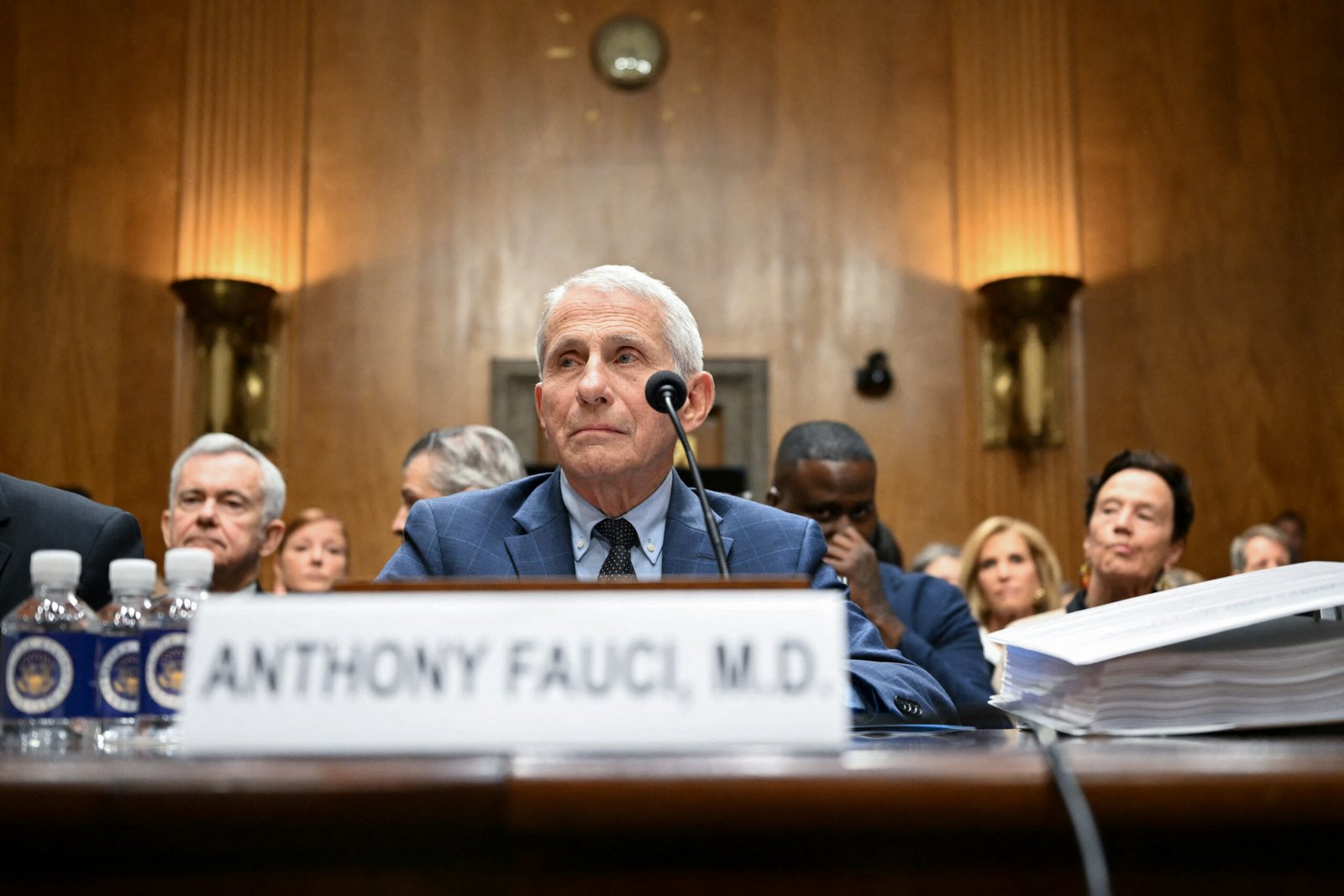
It was a strange coincidence that Anthony Fauci pleaded the Fifth at nearly the same time memorial services for Lindsey Graham were concluding.
While the buck stops with the commander-in-chief, Fauci gave advice publicly and privately that derailed President Donald Trump’s first term. Graham’s public and private counsel may yet derail Trump’s second term.
At a minimum, in neither case did things work out exactly as hoped.
There are key differences, of course. Trump and Graham arrived at a place of genuine mutual affection after their famously contentious start. You didn’t need to read Fauci’s diaries to know that he always viewed Trump with contempt, even if he concealed it a bit early in 2020 to maintain his influence. Once Fauci could see that Trump was going to lose to Joe Biden, thanks in no small part to the good doctor’s own handiwork, he let the mask slip.
Despite the early 2020s conventional wisdom that Trump was too libertine in the face of the pandemic, the well-known germaphobe’s first instinct was in fact to defer to the experts. He elevated Fauci from a not exactly obscure bureaucrat to a national celebrity, the ostensible source of all wisdom on Covid-19. (Fauci was admittedly good on television, a trait the president admires.)
And when fellow Republicans such as Georgia’s Governor Brian Kemp and Florida’s Governor Ron DeSantis favored far less stringent business closures, Trump wasn’t exactly encouraging.
After a few weeks, though, Trump realized that the experts didn’t know a whole lot more about how to stop the spread than he did. And he watched as the lockdowns they prescribed destroyed the strong economy that had been at the center of his case for another term. The president was still slow to change course completely, and he never fired Fauci, but he began to proclaim that everything would be back to normal soon. (Remember his fervent hope for an Easter 2020 reopening?)
Trump’s erratic Covid messaging and comments about bleach have to be judged in the context of his original desire to follow the science, until it became clear that it was a road to nowhere (or at least to a Biden presidency, which turned out to be much the same thing).
Something similar happened with Iran. Trump was convinced the war would be short: 15 weeks to stop the spread of nuclear-armed Islamofascism. The Iranian regime would either be toppled as easily as Nicolas Maduro had been in Venezuela, or else cowed by American military might into total submission.
Instead, what followed was a protracted conflict, marked by fruitless off-and-on negotiations, depleted munitions, and the economically ruinous dueling blockades of the Strait of Hormuz. This last development, of course, fueled inflation—delivering almost exactly the opposite of what Trump promised in 2024 (notwithstanding his deep-seated antipathy toward Tehran).
And, unlike Covid, this was entirely a choice. (Even the dubious narrative that Iran has been at war with us for 47 years implies that the U.S. was able to decline participation for nearly half a century.)
Both situations took Trump away from what he is best at—being a hype man for prosperity or a critic of his political opponents’ mistakes—and redirected him toward reassuring the public in a crisis, which is not really his skillset.
Here too Trump seemed to at least partially recognize his error in trusting the hawks’ judgment—Graham “never saw a war that he didn’t like,” the president said both in interviews and his eulogy at the South Carolina senator’s funeral—and tried to project optimism that it would all be over soon.
But Graham did a much better job of influencing Trump than Fauci ever did, reinforcing the president’s most hawkish instincts at every turn. The senator, in addition to being good on television, was a skilled reader of people. Fauci navigated bureaucracy and played office politics. Graham was an actual politician.
“I talked to Trump this morning,” Graham said, according to a Wall Street Journal report on a documentary about the lawmaker’s longstanding Iran war advocacy. “He’s jacked. He said, ‘Best thing I have ever done.’ He loves blowing stuff up.”
Subscribe Today
Get daily emails in your inbox
The documentary, based on the Journal’s description, is as revealing as Fauci’s diaries. “Look what we’ve done here. I almost cried,” Graham said after Iran was bombed. “How long have we been pushing this?” Some of Graham’s goals reportedly went too far even for Israel’s Prime Minister Benjamin Netanyahu.
Graham, to his credit, doesn’t seem to have had the same discrepancies between his public and private views of the war that Fauci did in his pandemic counsel.
But neither man’s project has gone exactly as planned—or redounded to Trump’s benefit.
[ad_2]
Source link
