
Two weeks ago, the House of Representatives passed its version of a National Defense Authorization Act (NDAA) for 2027. This “must-pass” legislation, which sets policy and authorizes annual funding for the military, is usually a relatively uncontroversial affair. This year’s NDAA process, however, has seen intense criticism directed at one particular part of the bill.
This is Section 219, a provision intended to consolidate and expand the defense relationship between the United States and Israel. More specifically, it mandates the creation of a single executive agent tasked with “synchronizing cooperative efforts between the United States and Israel to expand and accelerate bilateral defense technology research, development, testing, evaluation, integration, and industrial cooperation.” These efforts will cover broad areas, including the integration of Israeli technologies into U.S. weapon systems and supply chains, cooperative research, development, and acquisition programs, licensing agreements and manufacturing partnerships with Israeli arms companies, and joint exercises and information sharing with the Israeli government.
The sweeping scope of this provision has led some media outlets and political commentators to describe it as “merging” the U.S. and Israeli defense industrial bases, which could—as this magazine observed earlier this month—give Israel additional leverage over our defense and foreign policy. In the House itself, Rep. Thomas Massie (R-KY) and six other Republicans defied their party to vote against the NDAA and Section 219, which Massie denounced as “a betrayal of our sovereignty.” (All but six Democrats also voted nay, though many appear to have done so more out of opposition to the Iran War than Section 219 specifically.)
These concerns have increased the pressure on the Senate, which has yet to pass its own version of an NDAA for 2027 (a vote to advance it earlier this month failed due to near-unified Democratic opposition). The Senate’s bill contains a provision—Section 1217—that, though worded differently, is fairly similar to the House’s Section 219. Although historically Senate Republicans have been strongly pro-Israel, the controversy over this provision has already led at least one GOP Senator to oppose defense industrial integration. Sen. Bernie Moreno (R-OH) told Drop Site News last Thursday, “I don’t think we should integrate our military with anybody, not even the Bahamas.”
But Democratic leadership has not come out against this provision, nor have they attacked the broader expansion of U.S.-Israel defense industrial ties. Both House Minority Leader Hakeem Jeffries (D-NY) and Senate Minority Leader Chuck Schumer (D-NY) have preferred to frame their opposition to the NDAA around the Iran War and avoided talking about Israel in this context, even as their voters increasingly question the U.S. relationship with Israel.
The American Conservative reached out to the offices of Jeffries and Schumer to inquire whether they would ask Democratic lawmakers to oppose the inclusion of Section 219/1217 in a final NDAA. Neither returned requests for comment.
The refusal of Democratic leaders to take a definite stance on this issue has frustrated critics such as Glenn Greenwald, who suggested in a post on X that House Democrats coordinated with the GOP to ensure the passage of the NDAA earlier this month. “When something [Democrats] pretend to oppose ‘must pass,’ (like the NDAA)” Greenwald wrote, “they ensure there are just enough Dem votes for it to pass, even if it’s just by one vote. Then they tell all other Dems: feel free to vote NO so our followers think we really oppose it, and we almost sunk it.”
One of the other unique aspects of this debate has been the relative absence of specific defenses of Section 219 by supporters. When pressed, they have tended to respond with broad denials and pivoted to accusing critics of anti-semitism. Sen. Ted Cruz (R-TX) insisted, despite the provision’s direction regarding cooperation and integration, that “we are not merging anything,” while Rep. Mike Lawler (R-NY) accused those who used the term “merger” of “stoking Jew hatred.”
And when defenders have addressed the provision with any specificity, they have described it as merely a reification of the status quo. It just formalizes “something we’re already doing,” Secretary of State Marco Rubio said recently. “I mean, that’s something that already exists.” Even Democrats who voted against the NDAA as a whole—such as Rep. Adam Smith (D-WA), the Ranking Member of the House Armed Services Committee and one of the most powerful House Democrats on defense matters—said the provision would only apply to a handful of discrete programs, such as Iron Dome or David’s Sling, which the U.S. already coproduces with Israel. “We would have three, four, maybe five or six programs that we were co-developing with the IDF,” Smith explained in a recent appearance on Breaking Points.
But such assurances do not provide the full story. As detailed above, the text of Section 219 directs the Pentagon to create a new position with a broad mandate that transcends specific programs. This mandate encompasses R&D, acquisition, production, information-sharing, and joint exercises. It includes cooperation in a vast array of areas, including artificial intelligence, quantum technology, biotechnology, cyber, and directed energies. The provision even leaves open the door for work with “other Department of Defense entities, as appropriate,” which could cover essentially any cooperative program imaginable.
“These categories cover all the most important tech from which the most important weapon systems will come,” the influential conservative commentator and activist Steve Bannon said in a recent conversation with this author. Bannon added that “Section 219 is the equivalent of China’s Made in China 2025 strategy… AGI, quantum computing, advanced chip design, biotech. The top sectors get you to the singularity, to Homo sapiens 2.0. They’ve laid out every crucial massive segment, not a weapons program.”
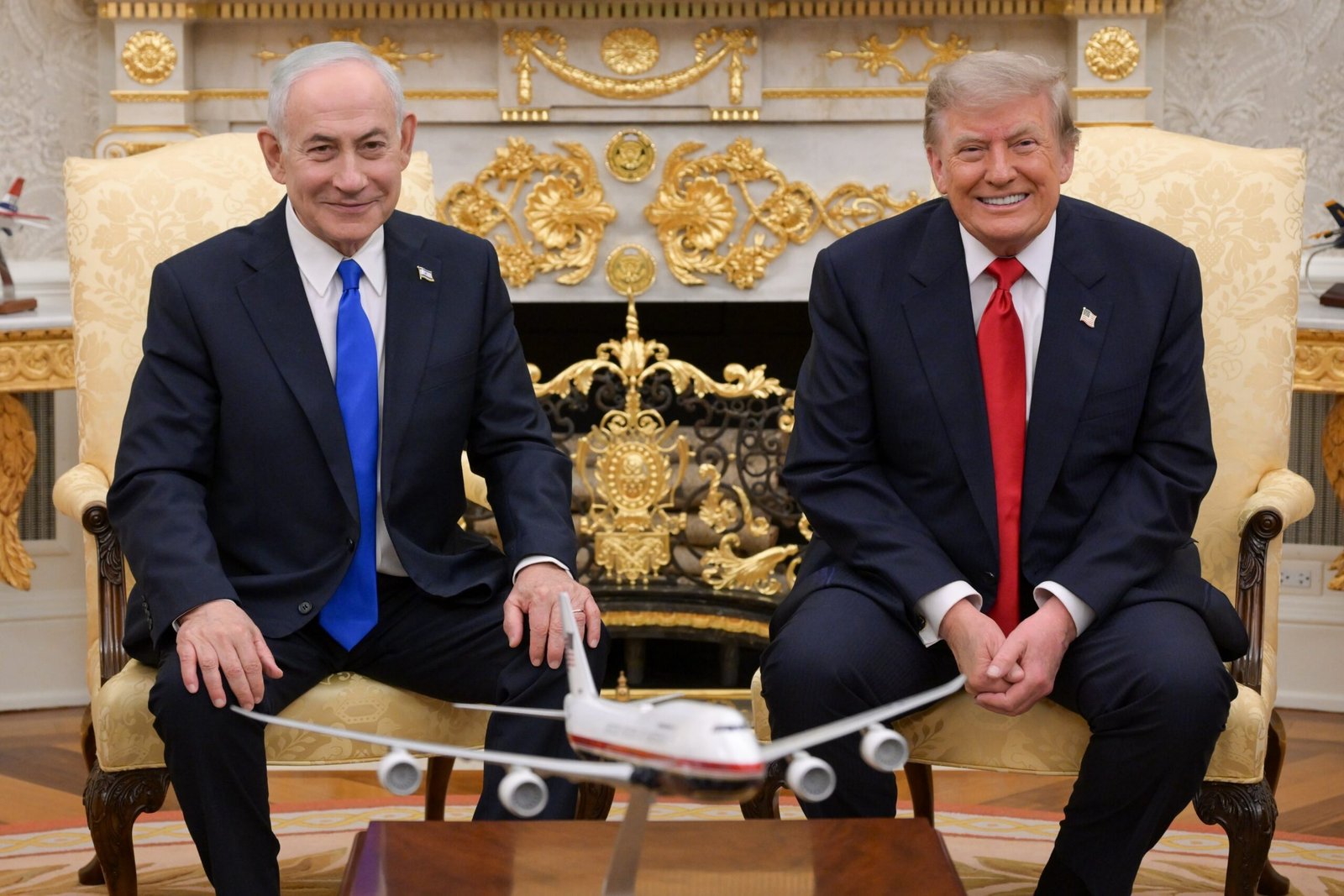
Perhaps most revealing are the words of Israel’s Prime Minister Benjamin Netanyahu himself. In a recent Fox News interview, Rachel Campos-Duffy asked Netanyahu whether, if direct financial aid from the U.S. were to end, “Israel [would] be compensated by the proposal to have a merging of some sort between our Pentagon and your military.”
Subscribe Today
Get daily emails in your inbox
“Yeah,” Netanyahu responded. “I’m calling it from aid to partnership.” Netanyahu has also recently proposed the creation of a new joint U.S.-Israel fund of roughly $16 billion that would go toward research and development of new weapons systems, according to reporting by the Times of Israel.
The Israeli government and its allies here can read public opinion polls just like anyone else. They recognize that the window is closing, and that the next occupant of the White House may seek to put more daylight between the two countries.
Hence the importance of Section 219: by creating a statutory mandate for expanded defense cooperation, it will make a future unwinding of this relationship much more difficult to accomplish. Whether or not this effort succeeds will come down to the willingness of lawmakers—Democrats and Republicans alike—to take a stand.
