
[ad_1]
Iran seeks to establish deterrence in Hormuz against future American aggression
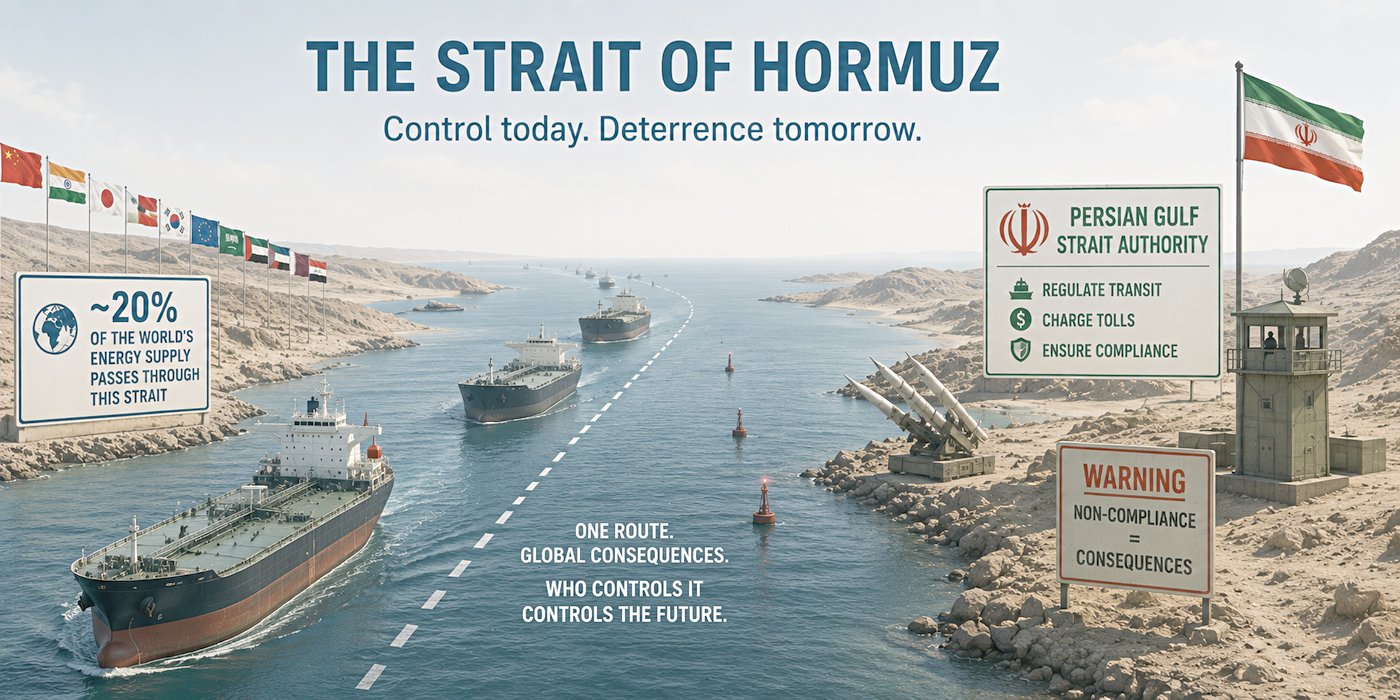
Since the early days of the U.S. war against Iran, the global economy has been reeling from the impact of the effective closure of the Strait of Hormuz. The waterway, which serves as the path used to export roughly 20% of the world’s energy supply from countries along the Persian Gulf, has become incredibly risky to traverse due to Iran’s willingness and capability to strike shipping using drones and missiles.
Iran’s ability to deter ships from transiting the Strait has been one of their largest pieces of leverage throughout this conflict and has become the main focus of both Washington and Tehran. With none of President Trump’s various war objectives having been achieved, he has begun shifting his rhetoric in important ways. Unlike earlier in the war, nearly every strike in this most recent round of fighting has been conducted explicitly over the Strait of Hormuz.
What makes this situation particularly tragic is the fact that the Strait of Hormuz was open to the ships of the world before this war, launched on February 28, 2026. Now, almost five months into the conflict, oil prices are once again on the rise as a result of the Strait’s prolonged closure.
Donald Trump recently cited Iranian attacks on shipping in Hormuz as the rationale for potential new strikes on Iranian civilian infrastructure:
“From this point forward, any time the Islamic Republic of Iran shoots at a ship in the Strait of Hormuz, whether it be by Missile, Rocket, Drone, or any other device or weapon, the United States will bomb and destroy ONE BRIDGE OR POWER PLANT, including those located next to, or in, the Capital City of Tehran. Thank you for your attention to this matter! President DONALD J. TRUMP”
In noticeable ways, the war is now almost entirely centered around the Strait of Hormuz.
The waterway is so crucial for both sides because of the deterrence it would establish against future American and Israeli aggression. If Iran is able to create a precedent that they control the route of export for roughly a fifth of the world’s energy supply, then this leads to a whole host of problems for America’s foreign policy class, which would still like to see Iran’s regime toppled.
If, let’s say, Iran comes away from this conflict with official control over the Strait of Hormuz, then this goes a long way in lessening the likelihood of future American attempts at regime change in Tehran. Should Iran establish new agencies to govern Hormuz and create a bureaucratic process requiring the Gulf countries to coordinate their travel with the IRGC, then this would normalize the IRGC presence in the waterway. Eventually, Iran seems poised to charge each ship that travels the Strait a toll or service fee. All of these various processes entrench the IRGC further into the daily activities of the Strait.
This bureaucratic process has already begun. On May 5, 2026, Iran established the Persian Gulf Strait Authority. This new agency was charged with overseeing all transit in the Strait of Hormuz and setting regulations by which all ships must comply, at risk of being attacked by Iranian missiles or drones. If the U.S. gives up on its attempts to free the Strait from Iranian control, then the Gulf countries are likely to prefer complying with PGSA rules rather than take the risk of the IRGC attacking their ships.
This is where the deterrence against American aggression comes into play. Iran has already managed to shut down the vast majority of transit in the Strait by using cheap drones and missiles to deter ships from taking the risky trip. This, in turn, has resulted in a severe global energy shock. Now, imagine if Iran establishes a large-scale system of governance over the Strait, which is accepted internationally and even by the United States, and which is viewed as the legitimate authority for regulating the waterway. They would undoubtedly be able to close the Strait in a more organized, efficient, and systematized manner if they chose to use it as leverage in a future conflict.
This is the core reason why Washington is refusing to let Tehran control it.
Marco Rubio said just days ago:
“If we create a precedent in the Middle East where a nation-state can decide that they are going to control an international waterway, charge a toll, and if you don’t pay them, blow up your ships, we have created a very dangerous precedent which will repeat itself in other parts of the world, including in this region.”
Future American politicians would need to consider — to a much greater extent than this administration did — whether or not the economic pain will be worth the supposed war objectives. In this current conflict in particular, the calculation is easy, since we know the stated rationale for this war is total fiction.
As is often the case for the neocons, they seem to have miscalculated this war from the get-go. The military campaign that intended on ousting the IRGC ended up empowering it in the region. Now, the Iranians are on the verge of establishing a key piece of deterrence to fend off a future American attack. This state of affairs is unacceptable to the D.C. foreign policy establishment, which is still as war hungry as ever.
We will have to wait and see what lengths they are willing to go to in order to prevent Iran from gaining long-term control of the Strait of Hormuz. Based on the White House’s recent rhetoric, it seems as though this conflict is nowhere near over.
Nolan Denaro is an independent political analyst, writer, and host of “The Quest For Clarity” podcast, which can be found on YouTube and Spotify. His work has been featured on Antiwar.com and Mises.org. He writes on U.S. foreign policy, economics, and current events, with a particular focus on war and imperialism. He writes opinion pieces on his Substack, and you can follow him on X @nolandenaro. Nolan can be reached for correspondence at nolansdenaro@icloud.com.
Join the Discussion!
We welcome thoughtful and respectful comments. Hateful language, illegal content, or attacks against Antiwar.com will be removed.
For more details, please see our Comment Policy.
[ad_2]
Source link
