
[ad_1]
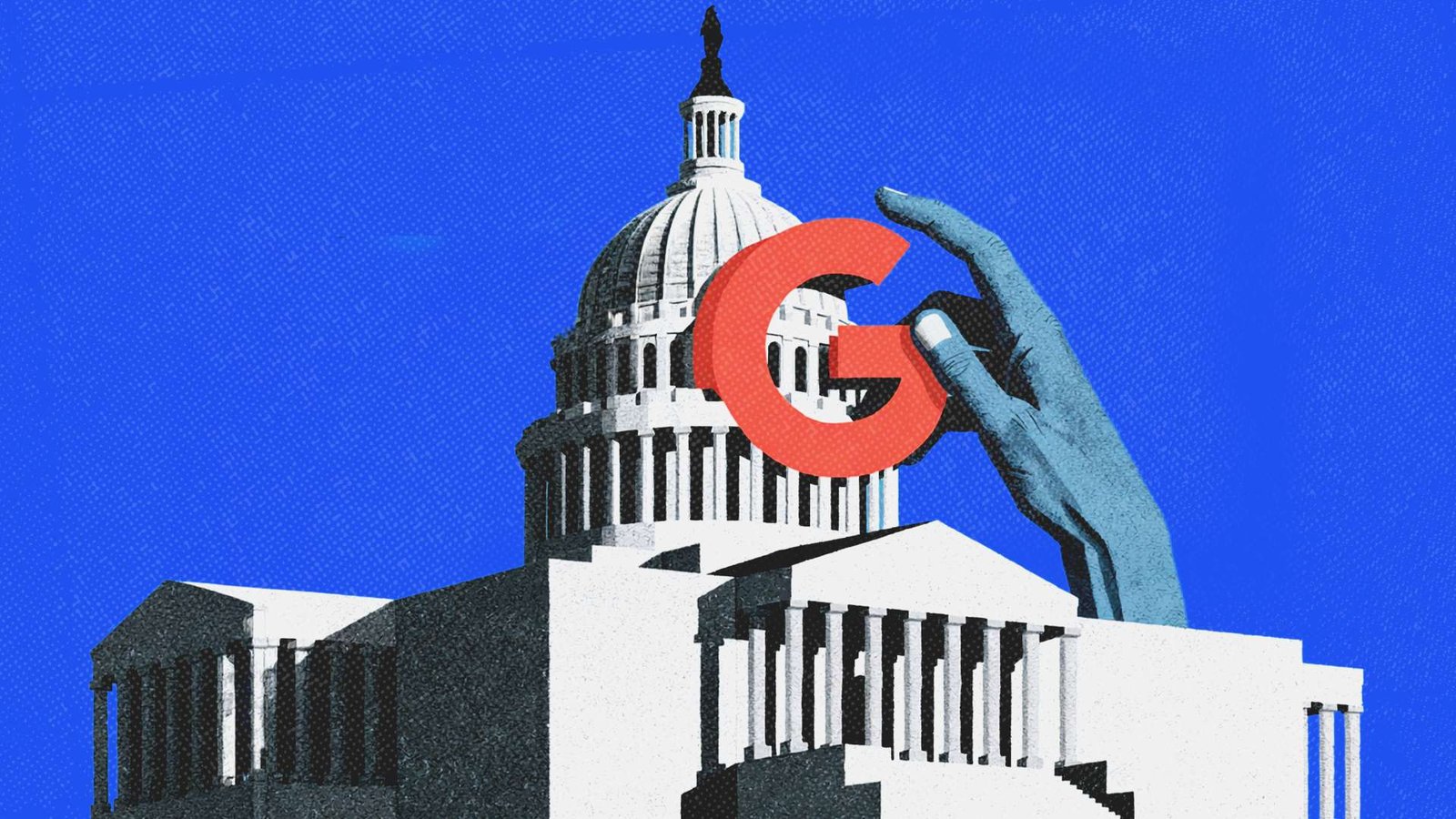
Over the past several years, a regulatory crusade spanning both the Biden and Trump administrations has hyperscrutinized Google’s search engine and business practices in an attempt to label the company a monopoly and justify unprecedented government intervention into Alphabet’s most widely used product. Now Congress is weighing in. A bipartisan group of senators has introduced the Securing Enforcement of Americans’ Right to Competition at Home (SEARCH) Act, which would prohibit dominant search engines from using certain default distribution agreements or favoring their own services over competitors in search results.
Companies that fail to follow these directives will be subject to antitrust enforcement, possibly including civil penalties and court-ordered behavior changes. With the SEARCH Act, legislators will be following in the steps of Europe. On Thursday, the European Union fined Google $1 billion for “illegally undercutting competition through its dominance as a search engine,” per The New York Times.
The SEARCH Act was introduced by Sens. Amy Klobuchar (D–Minn.) and Eric Schmitt (R–Mo.) earlier this month. In a press release, Klobuchar said the bill would “put the guardrails in place that both the Biden and Trump Administrations have said are necessary to bring competition to online search,” and Schmitt said it would “protect one of the key tenets of modern American society: free speech online.” But their legislative approach would go beyond antitrust enforcement or defense of the First Amendment, instead using government power to redesign successful products that consumers voluntarily use billions of times every day.
It should surprise no one that Google integrates its other products into its own search engine. Consumers searching for directions, flights, restaurants, or shopping locations expect useful, integrated results—not a virtual experience designed by the Federal Trade Commission.
The same goes for default agreements—where tech comes preloaded with apps that consumers are likely to want. Technology companies have long competed for default placement because it offers consumers a seamless experience and reflects what users already prefer. Regulators are quick to point out that competition is only meaningful if consumers are free to choose. But that’s just the thing: They are. Anyone who wants to use Bing or DuckDuckGo can change their default in a matter of seconds.
What’s more, with the advent of artificial intelligence, the search market is evolving faster than at any point in the past two decades. Millions of Americans now use ChatGPT, Claude, Grok, or other AI models in place of or alongside traditional search engines. Google itself has fundamentally changed its search engine by integrating in its AI Mode. Regulations on traditional search engines may not even be relevant. Instead of recognizing that innovation is reshaping how Americans find information online, lawmakers are attempting to lock outdated assumptions into federal law.
That’s why the judge in the initial antitrust case cautioned against breaking up Google, despite ruling it held a monopoly in the search business. “The emergence of GenAI changed the course of this case,” wrote Judge Amit P. Mehta of the United States District Court for the District of Columbia.
The SEARCH Act reflects a fundamental misunderstanding of competition. With new technology and more players, the market is evolving without the government prescribing how search engines should work. Congress should let innovation run its course. After all, the customer is always right.
[ad_2]
Source link
