
[ad_1]
Somewhere in Los Angeles this year, someone will get home who otherwise wouldn’t have. You’ll never learn her name. There will be no headline, no celebration, no council resolution—only an unremarkable Tuesday that ends the way Tuesdays are supposed to end. The same non-story will eventually play out in more than a dozen other metro areas where autonomous vehicles will serve as cabs.
Last year, 36,640 Americans died in traffic crashes. That was the fewest since 2019, yet it still works out to more than 100 fatalities per day. The new generation of vehicles quietly accumulating mileage on our streets offers enormous promise to bring the number down even more and more each year.
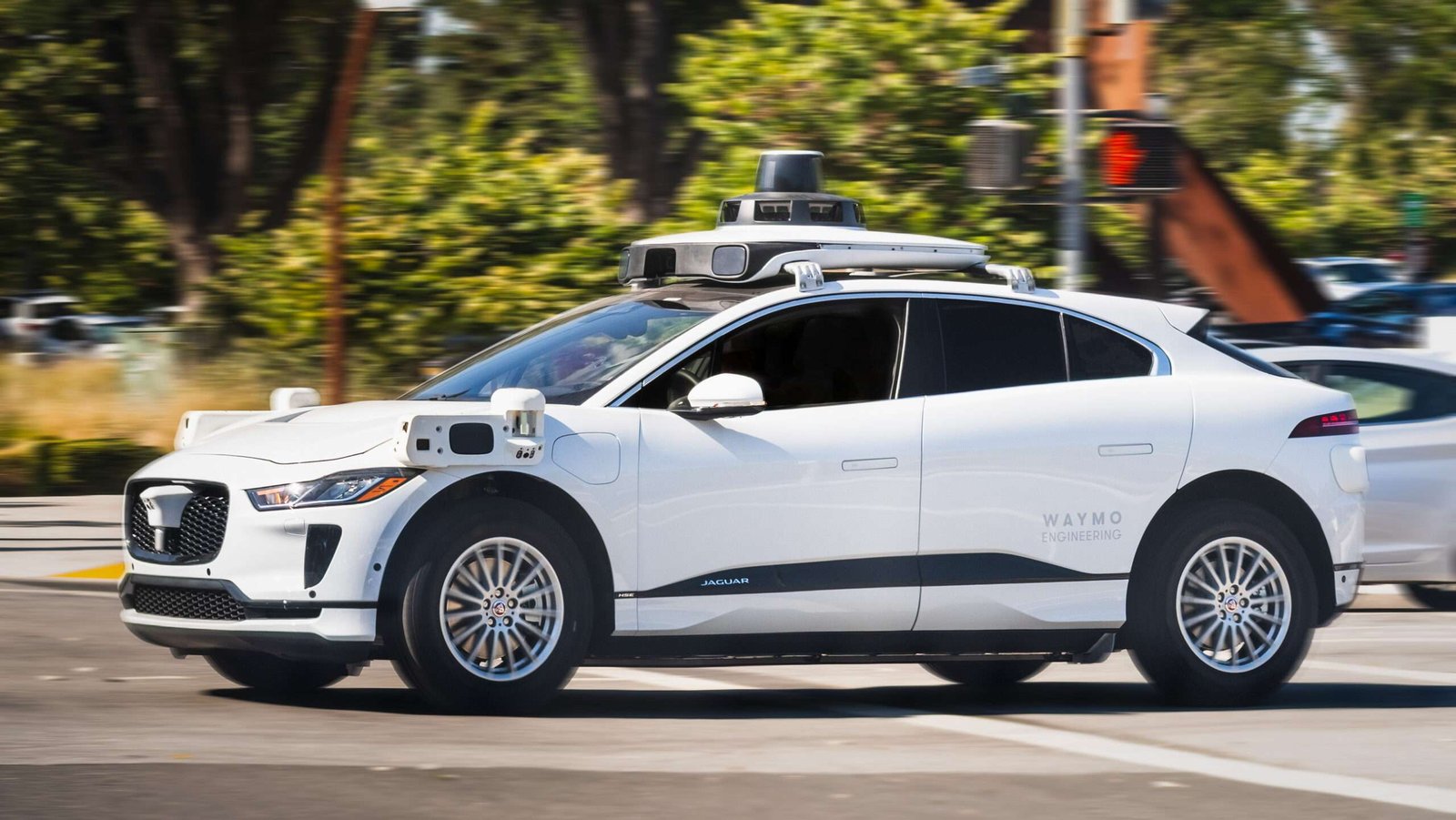
Over at Marginal Revolution, economist Alex Tabarrok reminds us that as of March, Waymo’s driverless vehicles had logged more than 220 million miles across five of its areas of operation. Compared with human drivers on the same roads over the same period, and counting every crash regardless of fault, the Waymo Driver was involved in 94 percent fewer crashes causing serious or fatal injury. It also experienced 82 percent fewer airbag deployments and 93 percent fewer injury crashes involving pedestrians.
Waymo’s data cover only mapped city streets, and serious crashes are rare enough that the counts behind these percentages are small. But its analyses are peer-reviewed, the crash reports go to federal regulators, and no one has produced a competing dataset showing anything different.
So, who is working to slow this happy development? Tabarrok points to trial lawyers. The American Association for Justice has been lobbying against autonomous vehicle (A.V.) legislation for the better part of a decade. American auto insurance pays out somewhere between $180 billion and $220 billion each year, and litigating ordinary collisions is big business. (Tabarrok’s fix is an elegant one used in Britain since 2018: Insure the vehicle rather than the driver, pay the victim directly, and let the insurer recover from the manufacturer if the software erred.)
But lawyers turn out to be the junior partners here. Tech policy expert and executive director of Alliance for the Future Brian Chau looked at the paper trail and found that labor unions account for 78 percent of the entities opposing A.V.s in various forms, 54 percent of those engaged in lobbying and close to 70 percent of the money spent. While Chau concedes that his measures are imperfect, they are directionally correct.
Behind the anti-A.V. campaign is the fear of job losses for union members. Such fear is understandable for the more than 4 million Americans who drive for a living, including long-haul truckers, delivery drivers, bus drivers, and chauffeurs. At the same time, automation tends to replace tasks rather than whole occupations, as MIT’s David Autor showed in his remarkable 2015 paper “Why are there still so many jobs?“
Autor argues that making one step in a chain cheaper due to automation raises the value of every step that still requires a person, such as loading, the last mile of transit, distribution, or dispatch. And A.V.s go only where the streets have been mapped block by block. Therefore, we may end up with fewer drivers but just as many good jobs in transportation.
We’ve seen this movie before. When ATMs began spreading through American banks, it seemed obvious that the machine dispensing cash would dispense with the bank teller. Something more interesting happened: As ATMs made branches cheaper to operate, banks opened more of them. Tellers spent less time counting out twenties and more time performing tasks machines could not. They became more involved in customer service, sales, and other forms of relationship banking.
Technology automated a task and rearranged the work around it. The country has gone through this process at a large scale with the automation of farming.
It didn’t happen without displacement or pain. But protecting workers is not the same thing as protecting every job exactly as it exists today.
This is where I believe unions are making a mistake. A labor movement built for the modern economy could devote itself to training, certification, and helping workers acquire skills that become more valuable as technology changes. It could help a truck driver become a fleet supervisor, a remote operator, a logistics specialist, or whatever other occupation emerges around autonomous transportation that neither you nor I can predict today.
Instead, too many unions choose political power as their business model. Faced with technology that threatens an existing job, they lobby the government to preserve the job. That’s bad economics in any industry. In this one, it carries an additional cost. Delaying A.V. deployment might protect jobs in their current form, at least for a while, but it prolongs the use of what we’ll someday recognize was a primitive technology that killed tens of thousands of Americans every year.
COPYRIGHT 2026 CREATORS.COM
[ad_2]
Source link
