
[ad_1]

By Edward Curtin and Sophie Michel
“A bird does not sing because it has an answer. It sings because it has a song.”
– A Chinese Proverb
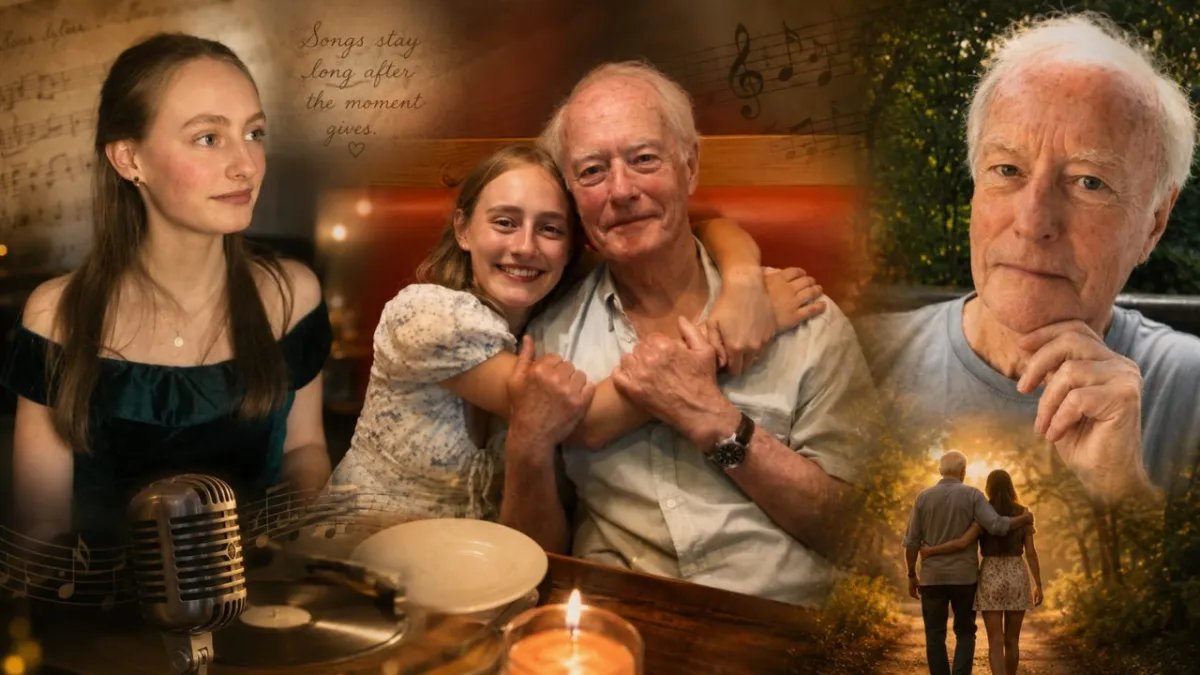
The titular question appropriately arose as our spirits rose during a sumptuous Easter dinner celebrating the triumph of life over death and love over hate. My granddaughter Sophie and I – she, three weeks shy of her eighteenth birthday – discovered that we both love sad songs and wondered why. Sophie, already an accomplished actress, singer, dancer, and writer on the cusp of a brilliant career, said such songs made her happy. I didn’t know if they made me happy, although I knew that I loved them. And I knew my great love of songs also frightened me, for they possess an emotional power that is transformative and overwhelming, like powerful strange dreams that you have to enter to feel their truths. There is a reason songs resonate in our minds like nothing else—that long after first hearing them, snippets jump to mind out of the blue.
“Life is the best play of all,” a seven year-old Sophie once said to me as we talked about acting, music, writing, and sports.
So she and I have decided to play and journey into unknown territory by each picking five sad songs in alternating rhythm that we love deeply to see why we are so enamored of them. We agree that we are probably far from alone in our fascination. Like a book, a poem, or any experience that affects us deeply, songs depend on when we first heard them and what was going on in our lives at the time.
Ed:
For my first song I choose Jesse, sung by Roberta Flack. I first heard this song in the late 1970s when I was torn apart emotionally because of multiple loves and the anguish of decisions. Janis Ian’s beautiful poetic lyrics – “Jesse, come home / There’s a hole in the bed / Where we slept / Now it’s growing cold / Hey Jesse, your face / In the place where we lay / By the hearth, all apart / It hangs on my heart” – interpreted by Flack’s soulful voice, capture not just the sadness of those left lonely but the unexpressed anguish of those who have to leave home for an uncertain future or lose themselves. It made me cry then and makes me cry now, yet makes me glad to know that in my life there are unwritten lyrics that I know but a normal listener doesn’t hear that have brought me not back but forward to a love and home where I belong, while many faces still “hang on my heart.” Yes, the heart is a lonely hunter.
Sophie:
The Subway, by Chappell Roan:
The first time I heard this song, I was sitting alone in a parking lot, waiting to pick up my brother from his soccer practice. It was only a few days before the start of my senior year of high school, so I was feeling both an exciting sense of anticipation and a premature sense of mourning for the parts of my life I knew would soon be left behind. I fell under the spell of the song’s pulsing, melancholic verses as the sun began to set over the sports fields. After casting its forlorn spell on me for a couple of minutes, the song suddenly took a dramatic shift, rising into a rousing and repetitive chorus of the words “She’s got a way / She got away.” In that moment, the song rose from sadness into hope, showing the true complexity of human emotion – the heavy feelings we experience that can coexist with our joy, and how we can find freedom, meaning, and light even within the darkness. Each time I listen to this song, I get chills throughout my entire body.
Ed:
“Changes” by Phil Ochs is my next choice. Like all great songs (and art), it is about time, the mysterious presence that “accompanies” us throughout our lives. We often think we know what it is because we have calendars and clocks and we pin numbers to our ages as we go through life. We are deluded in our pseudo-grasp of this ultimate mystery. When I turned sixty-nine years old, Sophie told me that I would always be sixty-nine, so every year she and I celebrate my sixty-ninth birthday in July. I knew the love that lay behind her decision to stop time for me; it was and always will be reciprocal. For almost sixty years, I have loved Phil’s songs, and “Changes” is one of his best. It is about how change is the essence of life. The lyrics are married to a tune that can break your heart; they are seamless, which is the sign of a great song. To listen to the recorded link above, and to know Phil died at the age of 36 in 1976, allegedly by his own hand, is to grasp the uncanniness of technology and its ability to preserve through machines the living voices and images of the dead. We have our mausoleums of sound and images to comfort us, even though they are detached from the natural cycles of birth and death and time. To contemplate this uncanniness while listening to this song is the consolation that machine modernity offers instead of religious faith; it eases death’s sting. Ironically, recording media (record, from Latin recordari, restore the heart) have made the phantasm of the once living Phil Ochs, his earthly afterlife, available to us, contradicting his beautiful true lyrics: “We’re puppets to the silver strings of souls of changes.” He knew, despite the machines, that when he had died, “you won’t find me singin’ on this song when I’m gone / So I guess I’ll have to do it while I’m here.” “Me,” the living man, one time only. As it is for all of us.
Sophie:
The Greatest by Billie Eilish
We listen to music for many reasons; sometimes we are seeking joy, sometimes we are seeking understanding, sometimes we are seeking distraction. Perhaps most often of all, we are seeking catharsis – fulfilling a deep need to release and make meaning out of the strong emotions we feel within. “The Greatest” by Billie Eilish is the epitome of catharsis, starting out quiet and slow, and sliding up in both pitch and emotion until it reaches an unforgettable climax. The song explores the pain of unreciprocated love and emotional exhaustion, and it changes from soft sadness into raging heartbreak, with epically good instrumentation to back up the transformation. Try listening to this song while driving down the highway in the pitch black of night, and I promise you won’t regret it.
Ed:
I wrote these opening words before I chose my next song. It occurred to me that I am not sure what sad is, what a sad song is. Happy and sad, like so much of our language, seem contradictory, but they are not. They are a bittersweet couple. The best songs marry love and death, time and eternity, hope and despair, joy and sadness, thought and emotion. That’s because they are about us in all our contradictions, our humanness. The best songs touch our hearts and minds. They seem odd at first, but as we listen and reflect we realize that we are the odd ones in thinking that our thoughts and emotions, reasons and passions, are separate realities. For every emotion has its reasons, but the reasonable ones are often passionless, lifeless. Imagine you are driving down a twisting country road in spring, as I once was. The intoxicating smell of newly mowed grass and blooming trees and flowers flowing in the windows. You hear the unfamiliar guitar opening of the song that once chose me – “Follow” by Richie Havens. You pull to the side of the road and listen. “If all the things you feel ain’t what they seem . . . “ Where do you go then? For this song has a hypnotic quality equal to none. It freezes you in place and forces you to follow simultaneously. You are happily lost in Havens’ dream song, letting “the river rock you like a cradle.”
Sophie:
The Lady is Risen by Johnny Flynn
If you really stop to consider it, the vast majority of human emotion is motivated by one chief factor: love. Love is by far the strongest force within us, and all other positive and negative feelings we experience are related to how much love we are giving and receiving. Perhaps that is why, statistically speaking, more love songs are sad in nature than happy. When we are content in our relationships, we have somewhere to put our love. When we are lonely, we have nowhere to put our love, and search for outlets with which to do so – like music. “The Lady is Risen” directly explores this sense of loneliness. The lyrics, like in many other Johnny Flynn songs, are extremely poetic, travelling between direct conversational verses and the singer’s introspective wanderings: “And so soften me now, let me take as it’s given / For the wind’s started up and the lady is risen.” “The Lady is Risen” tells the story of an unfulfilled love, a love that still burns even when the other person has long since moved on. As Flynn ends it: “You know life isn’t always like the end of your novels. / Oh, things might wind up but they always unravel”.
Ed:
And the Band Played Waltzing Matilda, written by Eric Bogle and sung by Liam Clancy. Here’s a very sad song – pathetic in the truest sense of the word – because it’s a never-ending tragedy about the folly of war. But Eric Bogle wrote it no doubt hoping that hearing it listeners might learn from the past, and Liam Clancy sings it with such passion that it affects me deeply. It makes me sad and mad in equal measure. Sad for all the soldiers who answer their government’s call to march off to fight in foreign wars – what U.S. Marine Major General Smedley Butler called a racket in which many die for the profits of a few – always based on lies. Set during WW I, it’s the story of an Australian lad sent to fight the Turks in Gallipoli, Turkey, which resulted in approximately half a million casualties in less than a year. Butchered, as Liam sings, like lambs at the slaughter – “the legless, the armless, the blind, the insane, those proud wounded heroes of Sulva.” And it begins over and over again, as the endless wars over the past century plus have shown. As I listen to this song, rage and pity rise and fall in my breast, and I try to imagine what it would have been like if I had gone to fight in the U.S. war against Vietnam and came back minus a leg or arm or two. It would have been no more waltzing girlfriends around to the dreamy sounds of “Moon River,” no more “rainbow’s end waiting round the bend,” just despondency and regret and ghostly dreams of marching to the war devil’s jolly fiddle.
Sophie: Alleycat by Mumford & Sons
Have you ever listened to a song, and felt an immediate, mysterious connection to it? In April, “Alleycat” began playing in my headphones, and I fell immediately in love. In the weeks that followed, I must have listened to it 200 times, and have only just begun to uncover the themes and elements that make this song so special. The track is uncharacteristically soft and melancholic for Mumford & Sons, a band that is highly regarded for its intense, impassioned music that uniquely blends indie rock, bluegrass, and folk styles. “Alleycat” is gentler than much of their discography, relying mainly on vocals and an insistent, rhythmic guitar picking pattern. The lyrics explore the experience of finding love but still feeling like something is missing, with the chorus responding, “Is this all there is? What do you mean, is this not enough for you?” The song is written in almost a circular pattern, beginning quietly, building as the singers fully realizes their sense of disillusionment, and coming back down again as they realize there is not much they can do about the feeling. The looping nature of the track is a big part of its magic, and makes the song perfect for repeat listening (in fact, as I write this, I am listening to it again and again). Ultimately, Alleycat expresses the sense of sadness and sense of loss we feel when things do not turn out as we imagined—something that almost any human can relate to, regardless of their overall satisfaction with life.
Ed:
For my last song, I have chosen one from the musical, Les Misérables. When I was about Sophie’s age – an age of great romance and deep emotions that has never left me – I read Victor Hugo’s novel upon which the play is based. It swept me away. At the same time I was immersed in listening to music and the fleeting romances that accompany being a teenager. I loved Hugo’s novel, but I knew no one who was reading it and therefore couldn’t share it. Books lack music, except in the lyricism of the writing, and reading them are lonely experiences. Songs on the other hand, especially popular ones, are easy to share. They are “out there,” as books are “in there.” When we listen to them, especially when performed live, we feel alone together. It’s a strong reason why we love sad songs – shared sorrow makes us feel less alone. We can sit in a theater or a room with others and let the songs envelope us together. The song, “On My Own”, sung by Lea Salonga as the brave and tragic lonely character Éponine, whose unrequited love for Marius is the theme of the song, would have overwhelmed me as a teenager – as it does now. It is very sad, lyric, deeply emotional, and sung by Salonga, it mesmerizes. She is singing, on her own in the spotlight, like all tragic characters, from Antigone through Juliet to West Side Story’s Maria, weeping for us all. Alone together. “On my own / Pretending he’s beside me / All alone /I walk with him till morning / Without him / I feel his arms around me / And when I lose my way I close my eyes / And he has found me”
Sophie: Hammond Song by the Roches
“If you go down to Hammond, you’ll never come back.”
Occasionally, talented musicians manage to create a song that can bend both genre and emotion. In my opinion, “Hammond Song” by the Roches is one of these songs. It sits in the gray area between determined optimism for the future, and the pain of having to move on from the past in order to arrive at what lies ahead. This “in-between” sensation evokes a special kind of sadness: the bittersweet melancholy of growing up and leaving the people, places and moments that have shaped you into the person that you are. I’ve been thinking about this a lot recently, as I am preparing to graduate from high school within just four days of writing these words. I think society pressures people to just express happiness, gratefulness, and excitement in these moments of big change, even though in reality, the strange sense of loss and grief is just as apparent. “Hammond Song” is like a gentle invitation to exist in the messiness of change, and to feel the good, the bad, and the ugly that comes with it.
***
In the months since our Easter dinner discussion, the tentative green of April has been transformed into the triumphant blossoming of summer. Despite the joy apparent in our natural surroundings, my grandfather and I continue to find comfort in the melancholy of these songs, among many others. I believe humans have a special attraction to sad music because it provides an oasis from the constant weight of being “pulled together.” Society tells men not to cry, and consistently disrespects women for being too emotional. But for whatever reason, we are allowed to express these more negative feelings through the outlet of music. So it’s no wonder, really, that so many people have an untouched well of sorrow building up inside them, even if they are genuinely happy with their lives, livelihoods, and love. Thus, sad songs hold a special kind of power—they allow people to express the full range of human emotions, an experience necessary in order to feel truly alive.
As Sophie’s grandfather, I feel blessed by the bittersweet bond we have. Old and young, tied by the invisible string of deep love. I am in my twilight years, while Sophie is just starting her adult life. The songs we have chosen could be multiplied many times. They quite naturally reflect our ages, but the reflection is a connection over time. Although songs narrate past experiences, as the great English writer John Berger tells us, they are also “unfixed in time and place.” We listen to them in the present, but they lean forward into the future, offering hope. “The tempo, the beat, the loops, the repetitions of a song construct a shelter from linear time: a shelter in which future, present and past can console, provoke, ironize and inspire one another.”
And isn’t time the saddest song of all, the great mystery that plays us, the rolling river of melody and rhyme that human songbirds sing about because they have songs? Homer’s ancient song begins: “Sing in me, oh Muse, and through me tell the story.” It is still true.
Sophie, while building her ladder to the stars where she will dazzle others for a long time with her writing, singing, and acting, keeps me young as I grow old. If only I can stay in this world long enough to be bedazzled by her future art, I will sing my song of thanks until I’m gone.
Edward Curtin: Sociologist, researcher, poet, essayist, journalist, novelist….writer – beyond a cage of categories. His latest book is AT THE LOST AND FOUND: Personal & Political Dispatches of Resistance and Hope (Clarity Press) edwarcurtin.com
Sophie Michel is an actress, singer, dancer, and published author who will be entering The Bachelor of Fine Arts (BFA) program in Acting at Boston University’s College of Fine Arts in the fall.
Editor’s Note: At a moment when the once vaunted model of responsible journalism is overwhelmingly the play thing of self-serving billionaires and their corporate scribes, alternatives of integrity are desperately needed, and ScheerPost is one of them. Please support our independent journalism by contributing to our online donation platform, Network for Good, or send a check to our new PO Box. We can’t thank you enough, and promise to keep bringing you this kind of vital news.
You can also make a donation to our PayPal or subscribe to our Patreon.
Please share this story and help us grow our network!
[ad_2]
Source link
