
As part of its broader effort to reduce fraud, abuse, and improper payments, the Trump administration has focused on a seemingly straightforward requirement: Federal recipients should be alive.
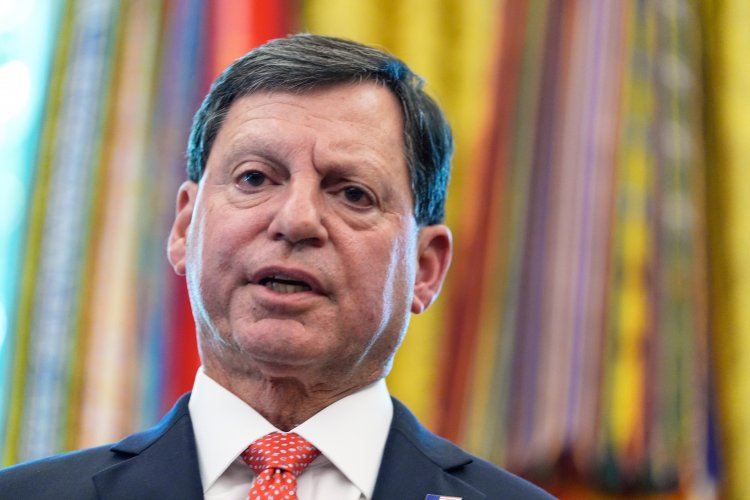
On Tuesday, IRS CEO and Social Security Administration Commissioner Frank Bisignano announced that a new screening and verification process had blocked $99 million in federal payments going to deceased payees.
The effort stems from measures established under the 2025 executive order “Protecting America’s Bank Account Against Fraud, Waste, and Abuse,” which directed the Treasury Department to strengthen oversight and more closely screen federal payments before they are disbursed. The order requires agencies to provide more detailed payment information, verify recipients’ identities and bank accounts, and confirm that recipients are eligible and not deceased.
“We’ve created the control functions both at Social Security and IRS and then at Treasury to make sure funds don’t go to the wrong people,” Bisignano said.
Since the executive order, Treasury has screened 885 million payments totaling $2.77 trillion, according to a department statement. The screening flagged 4,900 payments totaling $99 million that were associated with dead people. The payments were returned to the federal agencies that issued them for further review, the Treasury Department announced.
“[T]his new safeguard addresses a longstanding vulnerability and helps ensure every dollar the federal government spends reaches its intended recipient,” Treasury Secretary Scott Bessent said.
Bisignano noted the effort was possible because the president “allows us to work across the government. Interagency sharing agreements allow us to appropriately share information to stop bad actors.”
That expanded information sharing was supported by the Ending Improper Payments to Deceased People Act, signed in February. The law gave the Treasury Department permanent access to the Social Security Administration’s Full Death Master File, which contains a more comprehensive collection of death records.
Treasury had previously received temporary access through a three-year pilot program authorized by Congress in 2021 that began Dec. 27, 2023. The new law made that access permanent, allowing Treasury to continue checking proposed federal payments against the database and returning payments linked to deceased recipients to the issuing agencies for review before disbursement.
The Government Accountability Office wrote in its report that sharing the Death Master File helped identify, prevent, or recover $113.5 million in improper payments in 2024, the pilot program’s first year. Over the full three-year pilot, Treasury projected the program would produce $337 million in net benefits.
The effort has received bipartisan support. Sen. Mark Warner, D-Va., who co-sponsored the Ending Improper Payments to Deceased People Act, said Congress should be “doing everything in its power to save taxpayer dollars and protect government resources from fraud and abuse.”
Warner said the legislation demonstrated that lawmakers could work “in a bipartisan manner” to improve efficiency and ensure the government serves the public. The measure passed the Senate by unanimous consent before President Donald Trump signed it into law.
Bisignano also pointed to broader problems within the Social Security database, which he says have now been reconciled. “We found over a 10% error rate. That means that people on file in the wrong manner or people who are no longer alive. That doesn’t mean they were getting erroneous Social Security payments, but they had a live Social Security number that could be used for fraud, waste, and abuse,” Bisignano said. The Social Security Administration does not appear to have publicly released data or a report explaining how Bisignano calculated the figure.
The announcement is the latest action connected to the Task Force to Eliminate Fraud, which President Donald Trump established in March and placed under Vice President JD Vance’s leadership. The task force coordinates anti-fraud efforts across departments overseeing programs such as Medicare, Medicaid, food assistance, housing benefits and federal loans. Its mandate includes strengthening identity and eligibility verification, expanding information sharing, and installing controls that can stop suspicious payments before they are disbursed.
The effort to return payments associated with deceased recipients to the agencies that issued them adds to a broader list of task force actions, including shutting down roughly 800 hospice and home health centers in California, blocking $60 million in fraudulent student loan applications, and conducting targeted enforcement operations at nearly two dozen child care centers in Minnesota, the White House said.
