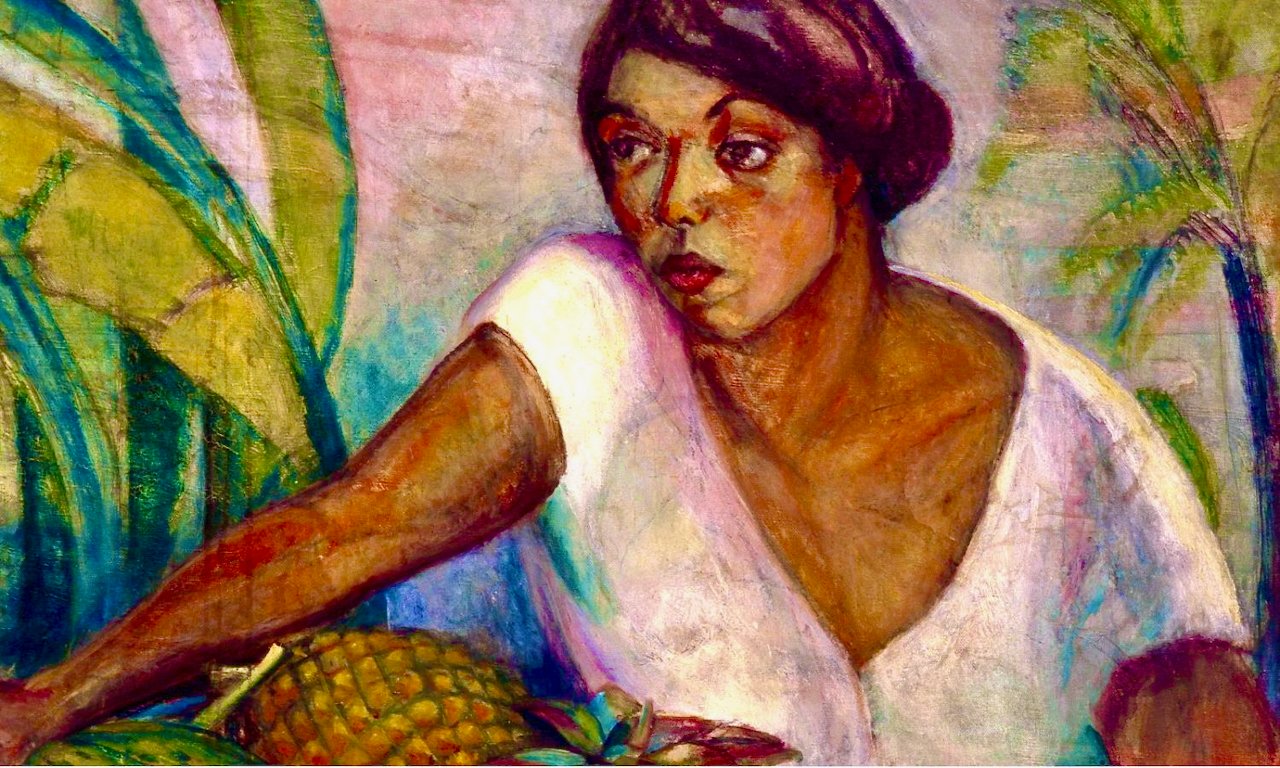
Every year in the for-profit food system, unsafe food causes 866 million illnesses and 1.5 million deaths, with young children suffering nearly a third of all cases of food-borne disease.
Anita Malfatti, Brazil, Tropical, 1917. (Via Tricontinental Institute)
By Vijay Prashad
Tricontinental: Institute for Social Research
 The World Health Organisation (WHO) has released a devastating assessment of the state of the world’s food systems, according to which unsafe food causes approximately 866 million illnesses and 1.5 million deaths every year.
Nearly one in nine people globally falls ill from contaminated food, with the African and Southeast Asian regions together accounting for nearly three-quarters of all foodborne illnesses and 60 percent of global deaths. The burden falls most heavily on those who have contributed least to the crisis: children.
Young children face almost three times the risk of illness from unsafe food compared to older children and adults.
Despite making up only 9 percent of the global population, children under the age of five suffer nearly one-third of all cases of foodborne diseases; in 2021, unsafe food killed 143,000 of them.
These are not mere statistics. They represent lives cut short by preventable diseases, families pushed into grief and societies deprived of the future embodied in their youngest members.
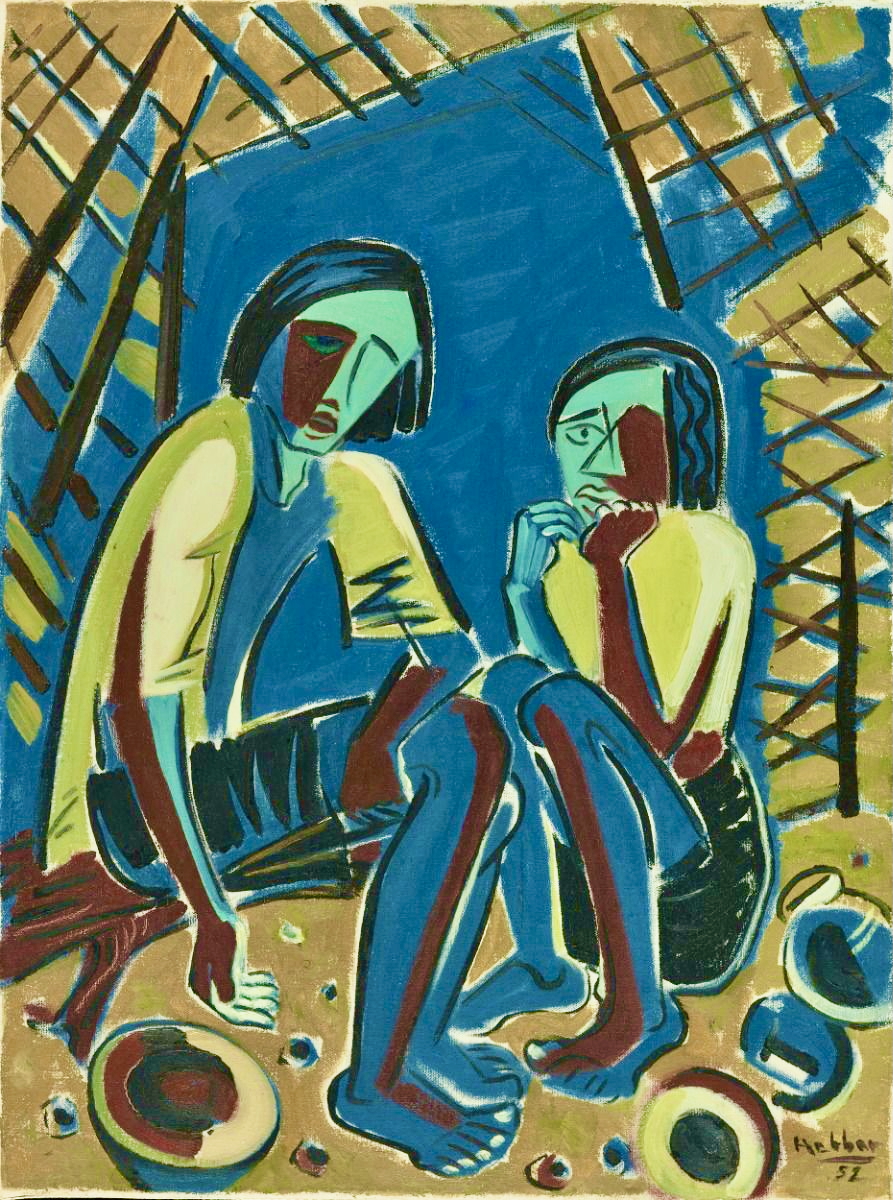
K. Hebbar, India, Hungry Soul, 1952. (Via Tricontinental Institute)
The conventional response to such findings is technical. We are told that food safety is a matter of better inspection, stronger regulation, improved hygiene and effective monitoring. These measures are important and necessary.
Yet they do not explain why hundreds of millions of people continue to consume unsafe food despite decades of accumulated knowledge about how to prevent contamination.
To understand the persistence of foodborne disease, we must move beyond technical explanations and examine the structure of the global food system itself.
The dominant food system is organised around the pursuit of profit, not the right to food.
Across much of the world, food production has been transformed into a highly concentrated industry dominated by large agribusiness corporations, supermarket chains, food processors, logistics companies and financial institutions.
This system, which primarily seeks to maximise returns on investment, generates contradictions that directly affect food safety in at least three key ways.
First, the pressure to reduce costs encourages shortcuts throughout the supply chain.
Workers are frequently employed under precarious conditions (more than 80 percent of agricultural jobs in Latin America lack formal protection and social security), inspection systems are underfunded and producers face intense pressure to increase output while reducing expenditure.
Food travels ever-greater distances through increasingly complex global supply chains, creating more opportunities for contamination and obscuring the conditions under which it was produced.
Second, capitalist food systems tend to externalise costs. Environmental degradation, water contamination, unsafe working conditions and public health consequences are often treated as someone else’s problem rather than the responsibility of private firms. The social costs are borne by workers, consumers, and public health systems, while profits remain private.
Third, global inequalities shape patterns of food safety. It is no surprise that the highest burdens of foodborne disease are concentrated in Africa and Southeast Asia since these regions continue to experience the long-term effects of colonial underdevelopment, debt dependency, inadequate public infrastructure, and unequal integration into the global economy.
Unsafe food is therefore not merely a health issue: it is a manifestation of uneven development.

Gobardhan Ash, India, Bengal Famine, 1943. (Via Tricontinental Institute)
The deaths of tens of thousands of children every year reveal the moral bankruptcy of this arrangement. A society that allows children to die from preventable foodborne diseases has failed in one of its most fundamental obligations.
These deaths are especially tragic because the solutions are largely known. The WHO identifies access to clean water, sanitation, food safety practices, healthcare and effective public regulation as critical tools for reducing mortality.
These interventions require public investment and political commitment and cannot be left solely to market forces. Yet institutions such as the Food and Agriculture Organisation continue to promote public-private partnership models that have failed to confront the structural roots of hunger and unsafe food.
The issue is not only contamination by bacteria and viruses. Contemporary food systems expose populations to a wider range of hazards including toxic chemicals, heavy metals and industrial pollutants.
New WHO estimates increasingly recognise the long-term burden of chronic diseases linked to harmful substances in food supplies. The consequences extend beyond immediate illness to lifelong disabilities, developmental impairments and reduced quality of life.
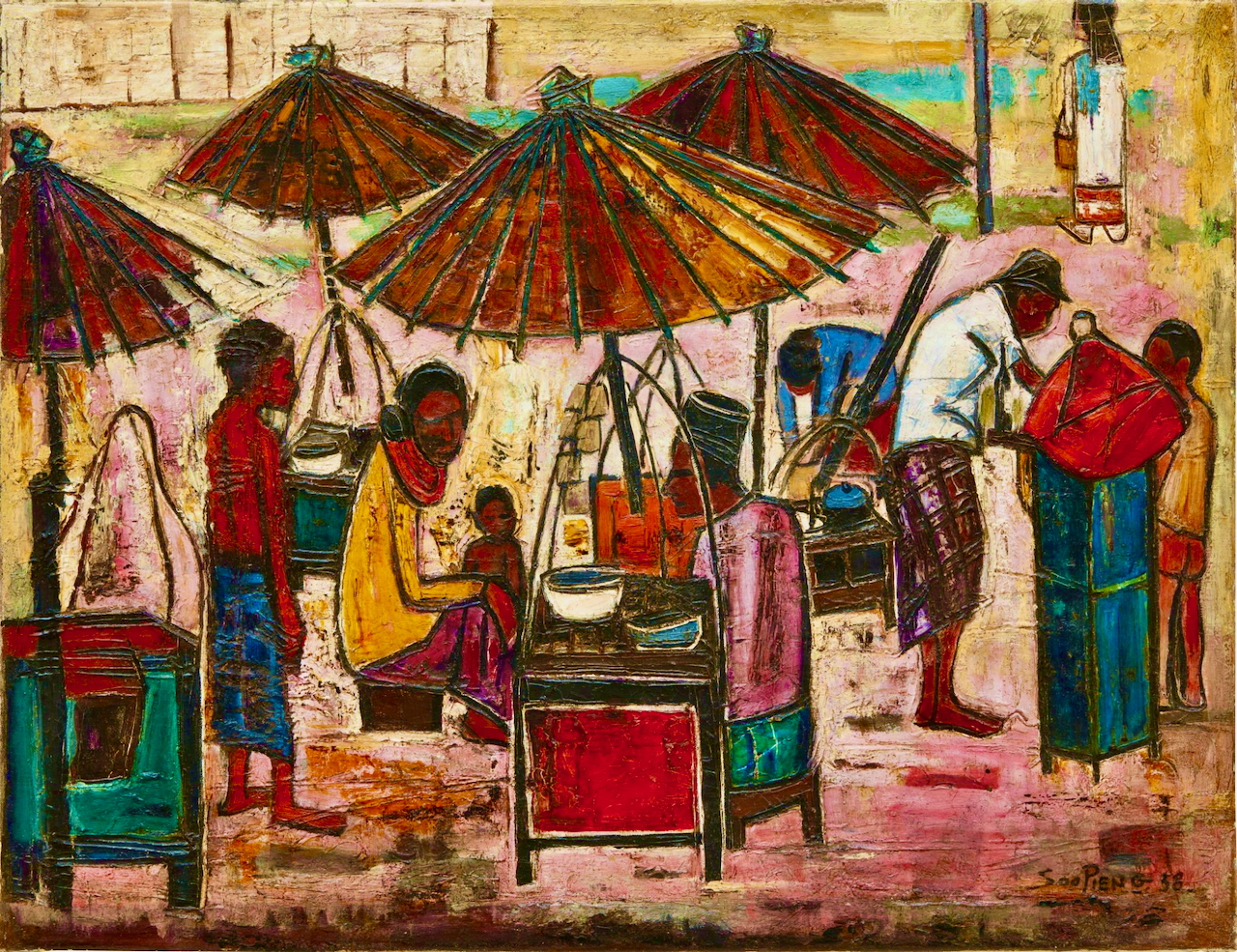
Cheong Soo Pieng, Singapore, Satay Sellers, 1958. (Via Tricontinental Institute)
Moreover, food safety cannot be separated from the broader crisis of food systems. Around the world, millions suffer from hunger while others face obesity and diet-related diseases.
Farmers are driven into debt while food corporations accumulate unprecedented market power. Agricultural production contributes to ecological destruction even as climate change threatens harvests. The same system that generates food insecurity also generates unsafe food.
The contradiction is striking. Humanity possesses the scientific knowledge, productive capacity and technological means to ensure safe food for all. Yet under prevailing economic arrangements, these capacities are subordinated to profitability rather than human need.
The WHO’s findings should be read not only as a warning about contamination but as an indictment of a global food order that continues to expose millions to preventable illness and death.
When a child dies because food is unsafe, the cause is never simply a contaminated meal. Behind that meal lies a chain of political and economic decisions about investment, regulation, infrastructure, ownership, and social priorities.
Foodborne disease is biological in its immediate manifestation but social in its origins.
The challenge before humanity is not merely to make food safer. It is to build food systems organised around care rather than profit, public health rather than private accumulation, and human dignity rather than market efficiency. Only then can the promise of safe food for all become a reality rather than a slogan.

Uche Okeke, Nigeria, Ana Mmuo / Land of the Dead, 1961. (Via Tricontinental Institute)
Here are five simple reforms of the current system to create a safe and just food system:
- Universal public investment in water, sanitation, and healthcare: Guarantee access to clean water, sanitation infrastructure and primary healthcare, especially in rural and low-income communities where foodborne disease burdens are highest.
- Strengthen public food safety institutions: Expand food inspection systems, laboratory capacity, disease surveillance networks and regulatory agencies while protecting them from budget cuts and corporate influence.
- Support territorial and small-scale food systems: Invest in local farmers, cooperatives, public procurement programmes and shorter supply chains that increase transparency, resilience and accountability.
- Democratise food system governance: Reduce corporate concentration in agribusiness and food retail, strengthen worker and farmer participation and ensure public oversight of food production and distribution.
- Recognise safe food as a human right: Establish binding national and international commitments that treat access to safe, nutritious food as a fundamental social right rather than a market commodity.
Taken together, these reforms are rooted in a simple principle: food is a social good, not merely a commodity. They recognise that the right to safe food is inseparable from the right to life.
It is easy to dismiss this approach as naïve. But is it mere idealism to insist that no child should die from preventable foodborne disease?
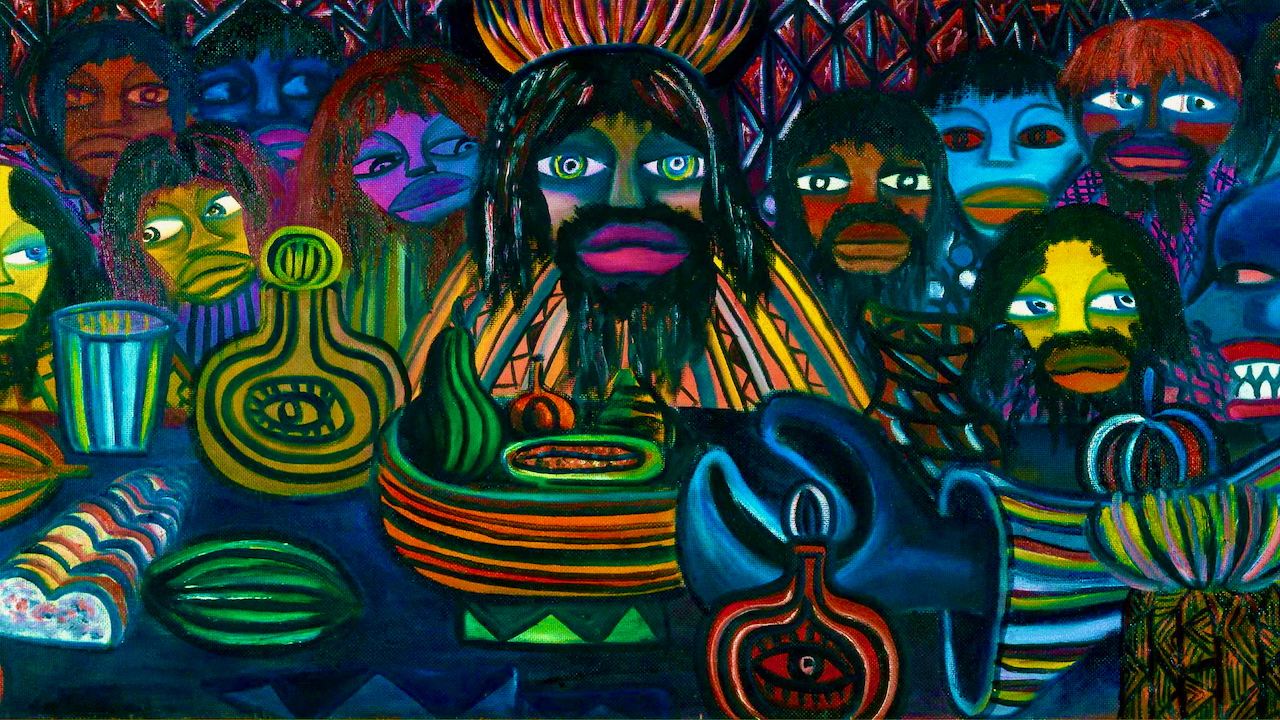
Malangatana Valente Ngwenya, Mozambique, Ultima Ceia / Last Supper, 1964. (Via Tricontinental Institute)
The World Health Organisation report deepened my bitterness towards the callousness of the capitalist system. I was reminded of “Civilisation,” a short poem by the great Mozambican journalist and poet José Craveirinha (1922–2003):
| Antigamente
(antes de Jesus Cristo) os homens erguiam estádios e templos e morriam na arena como cães. Agora… também já constroem Cadillacs. |
In ancient times
(before the time of Jesus) men built temples and stadiums and died in the arena like dogs. Now… they build Cadillacs too. |
Vijay Prashad is an Indian historian, editor and journalist. He is a writing fellow and chief correspondent at Globetrotter. He is an editor of LeftWord Books and the director of Tricontinental: Institute for Social Research. He is a senior non-resident fellow at Chongyang Institute for Financial Studies, Renmin University of China. He has written more than 20 books, including The Darker Nations and The Poorer Nations. His latest books are Struggle Makes Us Human: Learning from Movements for Socialism and, with Noam Chomsky, The Withdrawal: Iraq, Libya, Afghanistan and the Fragility of U.S. Power.
This article is from Tricontinental: Institute for Social Research.
The views expressed are solely those of the author and may or may not reflect those of Consortium News.
Please Donate to
CN’s Summer
Fund Drive!