
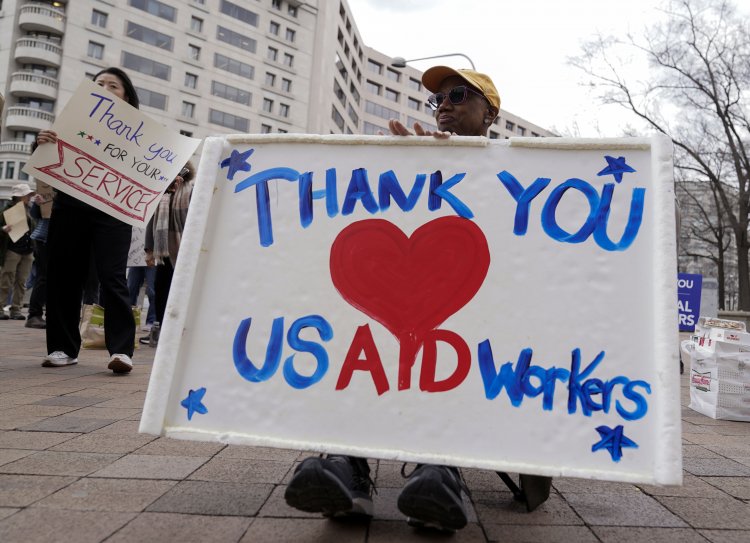
One year after the United States Agency for International Development ceased operations and its remaining responsibilities were folded into the State Department, many in Washington are asking how to restore what was lost.
They are asking the wrong question.
The real challenge is not whether to rebuild USAID. It is whether America will replace it with a foreign assistance system that delivers measurable results instead of funding ideology, bureaucracy, and programs that too often failed both taxpayers and the people they were meant to serve.
The old system did not collapse because Americans stopped believing in generosity. It collapsed because Americans finally saw where many of their foreign aid dollars were going. Taxpayers who thought they were funding safe childbirth and lifesaving medicine discovered they were often financing ideological advocacy campaigns and layers of contractors whose overhead consumed resources before they ever reached a clinic. Worse, the conditions attached to that assistance often bred resentment toward America in the very nations it was intended to help.
The reset was significant. But the machine had broken itself long before it was reorganized. Closing USAID did not destroy a successful institution. It acknowledged one that had drifted from its mission.
I witnessed that drift firsthand. As U.S. Special Representative for Global Women’s Health, I heard a consistent message from health ministers and diplomats around the world. They welcomed American partnership. What they rejected was the expectation that assistance for mothers and children required embracing progressive social policies their citizens opposed or tolerating foreign-funded activist organizations working to change their laws.
The dysfunction extended beyond ideology. Many dedicated professionals carried out important work, and they deserve credit for it. But the system around them too often measured success by dollars obligated, reports submitted, and workshops conducted instead of mothers who survived childbirth, children who reached their fifth birthday, or health systems that became self-sustaining. Accountability became so fragmented that neither Congress nor taxpayers could confidently answer a basic question: What were American tax dollars actually accomplishing?
American foreign assistance should never be judged by how much money it spends. It should be judged by the lives it improves.
So, what should come next? Not American retreat from the world, but a stronger model of engagement built on accountability, partnership, and measurable results.
First, put health first. Assistance should prioritize clear outcomes: healthier mothers, healthier children, reduced disease, and stronger local health systems. The leading cause of maternal death is excessive bleeding. The leading cause of stalled progress is often ideology. American assistance should fight both.
Second, respect national sovereignty. Partnerships should work with governments, not around them, and they should be designed to make themselves unnecessary over time. When countries establish priorities and American assistance builds lasting local capacity, nations become equipped to finance, manage, and sustain their own health systems. The administration’s America First Global Health Strategy moves in this direction by emphasizing performance benchmarks and shared responsibility. Success should be measured not by how long American aid continues, but by how quickly it is no longer needed.
Third, strengthen families rather than undermine them. Families remain the first and most important health system in every society. Programs that partner with families and communities consistently outperform those driven by imported ideological agendas. President Trump’s Promoting Human Flourishing in Foreign Assistance policy builds on the four-decade legacy of the Mexico City Policy by extending its protections across all non-military foreign assistance. It should become a permanent safeguard to ensure taxpayer dollars support health rather than political activism.
Fourth, demand value at every level. The problem was never partnering with nongovernmental organizations. The problem was allowing layers of pass-through contractors to absorb resources without demonstrating meaningful value. Every organization between the American taxpayer and the village clinic should answer two straightforward questions: What do you contribute, and what results can you demonstrate? When every dollar must justify itself, more dollars reach the people they were intended to serve.
Fifth, build lasting reform into government itself. The administration has already done what many believed impossible by dismantling a broken system. Now it has the opportunity to accomplish something far more enduring: Building an institution worthy of public trust. A reformed foreign assistance operation within the State Department, with clear leadership, transparent oversight, professional accountability, and measurable outcomes, would better serve taxpayers, Congress, and partner nations alike. Presidents who dismantle broken systems are remembered for a term. Presidents who build durable institutions shape generations.
Finally, build upon diplomatic partnerships that are already delivering results. The Geneva Consensus Declaration unites 41 sovereign nations around improving women’s health, strengthening families, and respecting national sovereignty. President Trump initiated this coalition during his first administration. I had the privilege of serving that vision as U.S. Special Representative for Global Women’s Health, helping to build it with other nations, and it has continued to grow despite sustained opposition. It offers a ready-made framework for assistance rooted in partnership rather than pressure.
American generosity was never the problem. The system delivering it forgot whom it existed to serve. What comes next can be better: foreign assistance that heals, respects national sovereignty, strengthens families, produces measurable results, and honors the taxpayers whose generosity makes it possible. That is not a smaller vision of American leadership. It is a stronger one.
