
Imagine a tight House race in a swing state. In the final weeks of the campaign, a new super PAC begins spending heavily against the incumbent. It runs ads on local television and reaches individual voters with highly tailored texts. The messaging is hard-hitting and seems to be swaying the electorate. None of it traces back to the opposing campaign.
It also doesn’t trace back to any human operative. The super PAC is funded by a single LLC whose donor cannot be identified, and its spending decisions are being made by an AI agent that has been given a budget and a political objective and is now operating without any meaningful human direction. The “consultants” placing the ads are software. The text messages were crafted by the AI.
This is not a hypothetical we will face in some distant future. The technology already exists. A wealthy person, foreign government, or corporation that wants to influence an election without ever exposing themselves to scrutiny could set up such a campaign operation today. And under the Supreme Court’s current campaign finance doctrine, the states and Congress may have little power to stop it.
The AI industry has emerged as one of the largest forces in American politics. Super PACs funded by AI companies and their investors have raised well over $100 million to shape the 2026 midterms, backing candidates in both parties who share the industry’s preferred approach to regulation, and attacking those who don’t. So far, their ads rarely mention artificial intelligence at all. They talk about issues like immigration, corruption, and cost of living, and it isn’t obvious to the average viewer that these ads were funded by a multi-billion dollar industry with its own unspoken legislative wish list.
But there’s a deeper, less-obvious dynamic operating in the background. The constitutional doctrine that currently protects the right of these companies to spend millions in our elections is the same doctrine that will be asked to protect something even stranger: The “speech” of artificial intelligence itself.
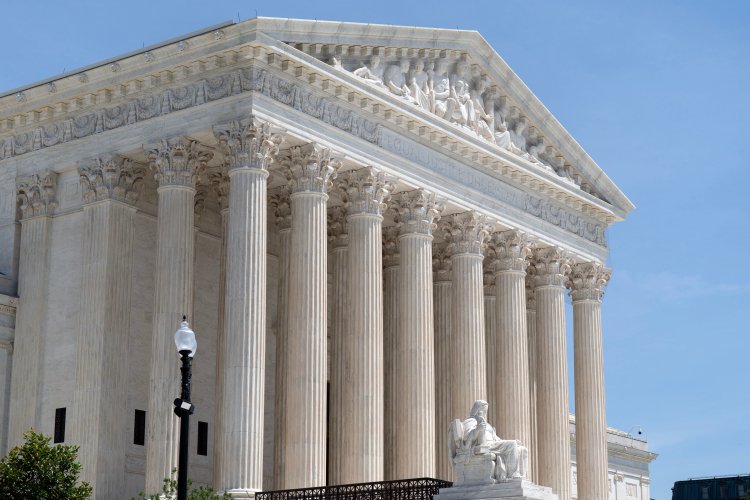
Modern campaign finance doctrine has been established, affirmed, and extended by Supreme Court decisions over the last 50 years. In Buckley v. Valeo (1976), it held that raising and spending money in political campaigns is tantamount to speech itself, and, therefore, that most legislative efforts to address the influence of money in elections would be subject to strict judicial oversight. First National Bank of Boston v. Bellotti (1978) extended this framework to corporations, and then, most famously, Citizens United v. FEC (2010) extended it further to independent spending.
The court’s campaign finance jurisprudence was not built with artificial intelligence in mind, but its logic isn’t confined to the campaign finance context. If “speaker identity” does not matter for corporations and unions and super PACs, why should it matter when it comes to AI platforms?
It is thus easy to envision the Supreme Court concluding that AI-generated output is protected speech. Indeed, serious legal scholars are already arguing so. These scholars are not distorting the court’s doctrine, but simply following it to its logical conclusion. As John Ehrett and Brad Littlejohn recently warned, “The logic of the Court’s caselaw pushes forcefully in a single direction: Toward constitutional protections for everything AI, and beyond.” It is only a matter of time before an AI company, facing a regulation or decision it would rather not live with, asks the court to make that conclusion the law of the land. (This isn’t hypothetical; an AI company has already raised a First Amendment defense against a wrongful death lawsuit.)
Today, a Congress or state legislature that wanted to regulate AI-generated political advertising, set limits on AI-driven electoral spending, or simply require that AI outputs in political contexts be labeled as such, would face the same Supreme Court-imposed wall that already blocks most efforts at campaign finance reform.
AI companies and their legal teams should not read this argument as validation of their free speech case. The point is the opposite: The court has boxed itself into a doctrine whose logic now leads, with disturbing ease, to outcomes that should alarm anyone who cares about American self-government.
None of this was inevitable. The doctrine that would extend free speech protections to machines is a 50-year construction of the court itself, and it represents a sharp departure from how the Founders understood the First Amendment. Speech, as they understood it, is a fundamental natural right of human beings, and its applications in hard cases were to be worked out primarily through democratic deliberation, with lawmakers taking the First Amendment seriously as a guidepost for their legislative judgment. But the court has steadily transformed the First Amendment into a tool for its own ever-expanding authority over contested policy questions, placing the rules it prefers beyond the reach of ordinary politics.
The stakes here run beyond AI and campaign finance. They go to a more basic question: What does self-government mean in a country where the most consequential questions of the next century – how we regulate artificial intelligence, how we structure our elections, how we draw the line between human and machine participation in public life – are increasingly treated as questions for nine unelected judges rather than for citizens and the representatives they choose?
Those who wrote and ratified the First Amendment did not hand these questions over to the judiciary. They entrusted them to us.
