
Close Menu
  • Home
  • Alternative News
    • Politics & Policy
    • Independent Journalism
    • Geopolitics & War
    • Economy & Power
    • Investigative Reports
  • Double Speak
    • Media Bias
    • Fact Check & Misinformation
    • Political Spin
    • Propaganda & Narrative
  • Truth or Scare
    • UFO & Extraterrestrial
    • Myth Busting & Debunking
    • Paranormal & Mysteries
    • Conspiracy Theories
  • Contact Us
  • About Us

Subscribe to Updates

Get the latest creative news from FooBar about art, design and business.

What's Hot

Big Government Inevitably Invites Corruption

July 21, 2026

Mamdani's Working-Class Costume is Falling Apart

July 21, 2026

Crypto IPO market stalls as capital rotates to AI and macro uncertainty weighs

July 21, 2026
Facebook X (Twitter) Instagram
TheOthernews
Subscribe
  • Home
  • Alternative News
    • Politics & Policy
    • Independent Journalism
    • Geopolitics & War
    • Economy & Power
    • Investigative Reports
  • Double Speak
    • Media Bias
    • Fact Check & Misinformation
    • Political Spin
    • Propaganda & Narrative
  • Truth or Scare
    • UFO & Extraterrestrial
    • Myth Busting & Debunking
    • Paranormal & Mysteries
    • Conspiracy Theories
  • Contact Us
  • About Us
TheOthernews
Home»Political Spin»What Ben Sasse’s treatment says about the future of cancer cures
Political Spin

What Ben Sasse’s treatment says about the future of cancer cures

nickBy nickJuly 14, 2026No Comments3 Mins Read
Facebook Twitter Pinterest LinkedIn Tumblr Email
Share
Facebook Twitter LinkedIn Pinterest Email


The age-adjusted cancer mortality rate in the United States continues to fall. The decrease is largely the result of a combination of the continuing decline in smoking, the development of earlier detection diagnostics, and ever more effective treatments.
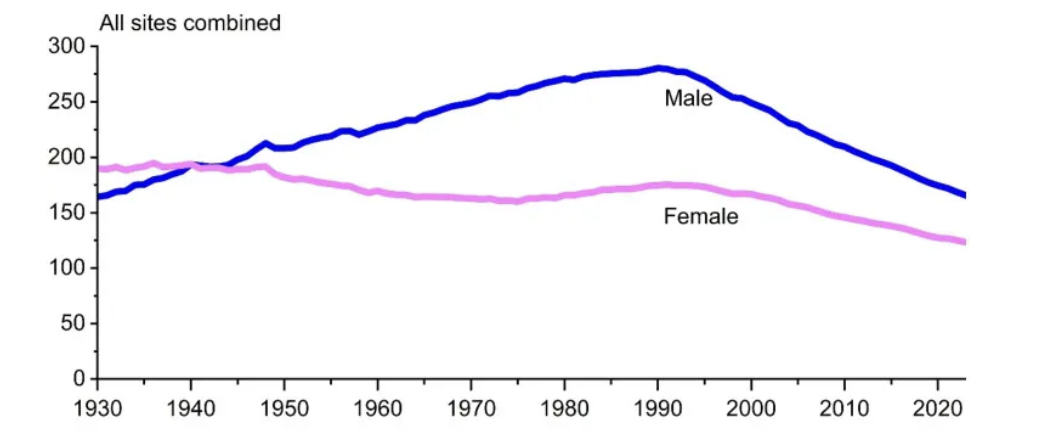
Cancer Statistics, 2026

The experience of former Sen. Ben Sasse (R–Neb.) is an example of the development of more effective treatments. In December, Sasse was diagnosed with Stage 4 pancreatic cancer and given just a few months to live. His continuing survival can likely be chalked up to participating in a clinical trial of the new anti-cancer drug daraxonrasib that targets a specific genetic mutation associated with the cancer. In a preliminary trial, the drug doubled the survival (13.2 months vs. 6.6 months) of patients diagnosed with advanced pancreatic cancer. While acknowledging fierce side effects of the drug like facial bleeding due to the reduced ability to grow skin, Sasse said in a recent interview that his pancreatic cancer tumors had shrunk about 80 percent.

Daraxonrasib is the newest immunotherapeutic entry in the growing arsenal in the fight against various cancers. Researchers are developing an array of anti-cancer vaccines. After administering one such vaccine, pancreatic cancer patients survived for an average of 29 months, remaining cancer-free for 15 months after vaccination. Vaccines against the human papillomavirus (HPV) have dramatically reduced the incidence of cervical cancer, as well as head-and-neck cancers among men. A preliminary trial of a personalized anti-cancer vaccine increased the recurrence-free survival of several patients with glioblastoma brain cancer. An mRNA melanoma vaccine combined with Keytruda immunotherapy reduced the risk of skin cancer occurrence or death by nearly 50 percent.

The good news is that researchers are pursuing more than 120 clinical trials for mRNA anti-cancer vaccines.

Increased detection of cancers at earlier, more treatable stages also contributes to the falling mortality rates. For example, the five-year survival rate is 99 percent when breast cancer is detected at an early localized stage. The five-year survival rate of people diagnosed at the early stages of colon cancer is nearly 90 percent.

But specific diagnostic tests do not exist for most cancers, e.g., pancreatic cancer. Here, progress is also being made. Several companies have developed and are offering multicancer detection blood tests. Both the Galleri and Cancerguard tests screen for biomarkers of over 50 different types of cancer. In a recent trial involving over 142,000 participants, the Galleri test did increase the detection of cancers at earlier, more treatable stages.

The risk of an American being diagnosed with some type of cancer during his or her lifetime is still about 40 percent. But the coming flood of new diagnostics and effective treatments provides genuine hope that the cancer mortality curve will bend ever more steeply downward.


Source link

Share. Facebook Twitter Pinterest LinkedIn Tumblr Email
nick
  • Website

Related Posts

Mamdani's Working-Class Costume is Falling Apart

July 21, 2026

South Dakota can’t stop website from informing women there about abortion pills

July 21, 2026

Trump Imposes New Illegal Tariffs on Canada

July 21, 2026
Leave A Reply Cancel Reply

Demo
Our Picks

Putin Says Western Sanctions are Akin to Declaration of War

January 9, 2020

Investors Jump into Commodities While Keeping Eye on Recession Risk

January 8, 2020

Marquez Explains Lack of Confidence During Qatar GP Race

January 7, 2020

There’s No Bigger Prospect in World Football Than Pedri

January 6, 2020
Stay In Touch
  • Facebook
  • Twitter
  • Pinterest
  • Instagram
  • YouTube
  • Vimeo
Don't Miss

Big Government Inevitably Invites Corruption

Media Bias July 21, 2026

Big Government Inevitably Invites Corruption Source link

Mamdani's Working-Class Costume is Falling Apart

July 21, 2026

Crypto IPO market stalls as capital rotates to AI and macro uncertainty weighs

July 21, 2026

An Iranian Vision of the New Middle East

July 21, 2026

Subscribe to Updates

Get the latest creative news from SmartMag about art & design.

Facebook X (Twitter) Instagram Pinterest
© 2026 ThemeSphere. Designed by ThemeSphere.

Type above and press Enter to search. Press Esc to cancel.