
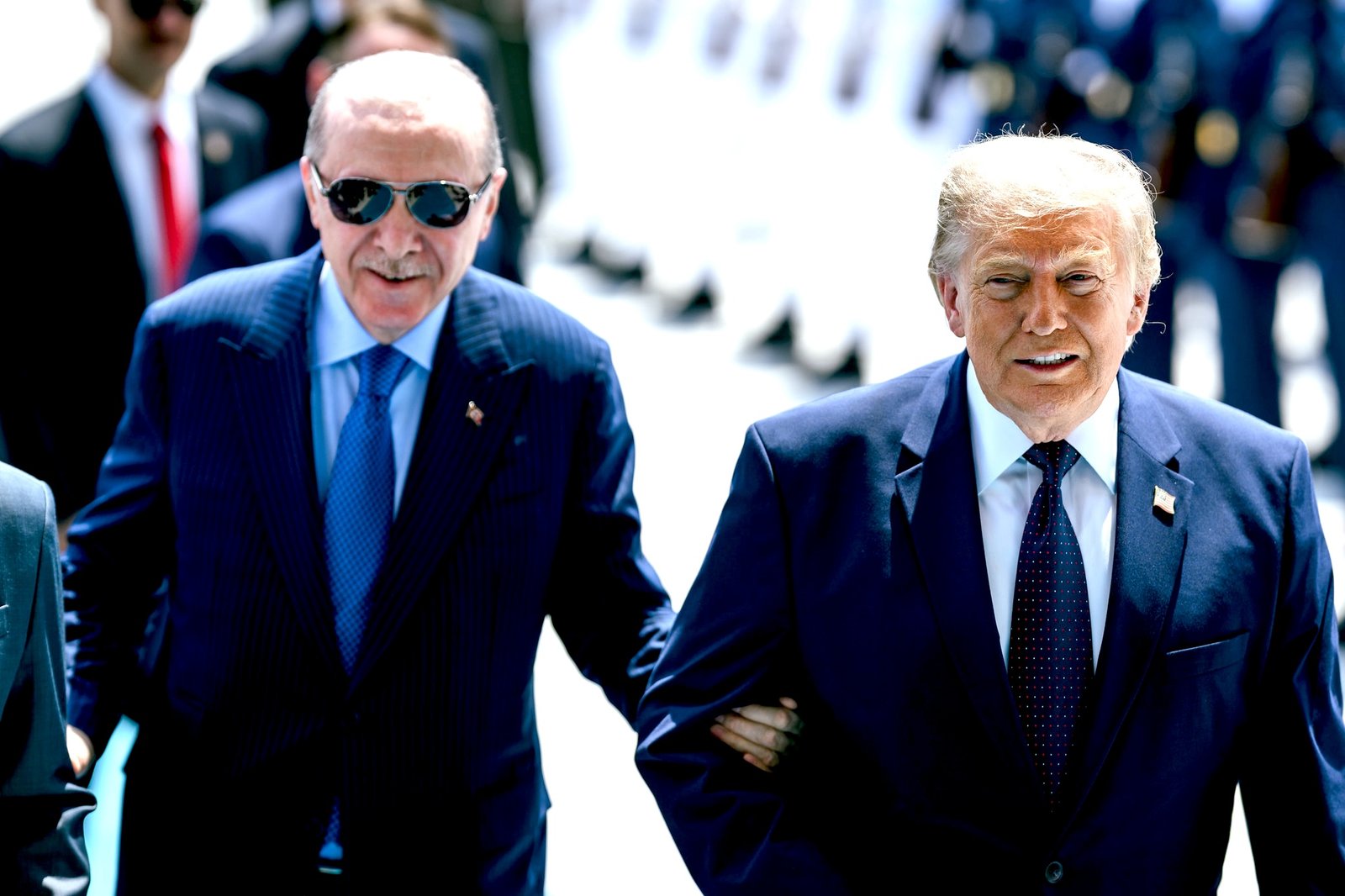
[ad_1]
The timing made the debate especially striking. As leaders met to discuss pouring hundreds of billions more into weapons and armies, Europe was enduring one of the most severe heat waves in its recorded history, with deadly temperatures, wildfires, strained electricity grids, and mounting pressure on public health systems.
The contrast raised an unavoidable question: at a time when climate change is already killing people and overwhelming governments, why is the overriding political priority dramatically expanding military budgets instead of investing in the threats people are facing today?
2. NATO Countries Reluctant to Support Trump on Iran
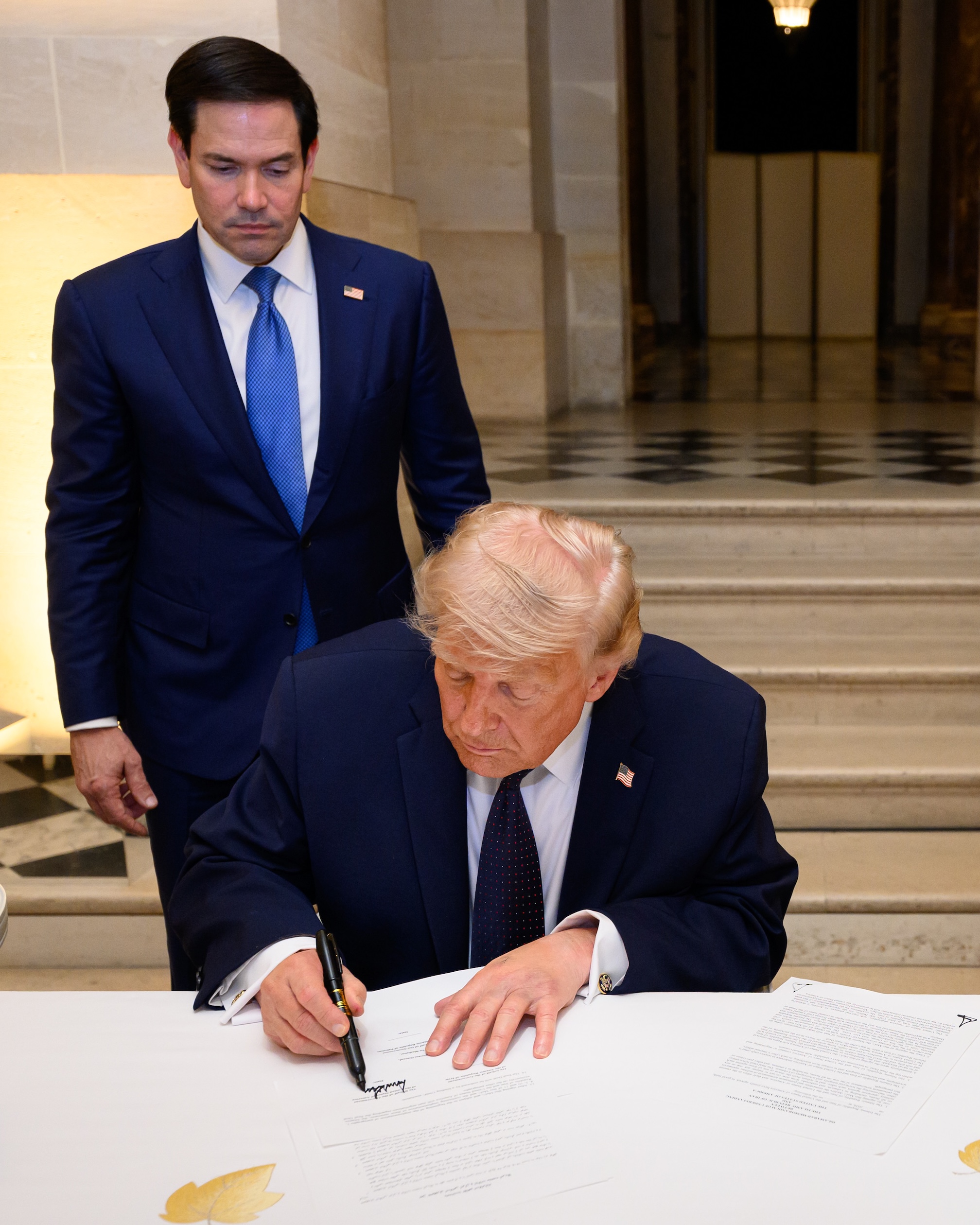
Trump signing the memorandum of understanding with Iran at the Palace of Versailles on June 17 as U.S. Secretary of State Marco Rubio looks on. (White House /Daniel Torok)
The recent U.S.-Israeli war on Iran cast a long shadow over the summit. While most European leaders continued calling for diplomacy and de-escalation, the summit itself began with renewed U.S. bombing of Iranian targets after attacks in the Strait of Hormuz.
During the meeting, Trump declared the U.S.-Iran memorandum of understanding “over,” dismissed further negotiations as “a waste of time,” and referred to Iran’s leaders as “scum.”
Trump also complained that European allies had failed to support Washington’s military campaign, saying, “We are there for them, but they are not there for us.”
Spain was among the strongest critics of the war, and Prime Minister Pedro Sánchez refused U.S. requests to allow American bases in Spain to be used for offensive operations against Iran. Before the summit, Trump publicly feuded with Italian Prime Minister Giorgia Meloni after she likewise refused to allow Italian bases to be used for attacks on Iran. Germany and France also declined to participate militarily.
The contradiction was unmistakable: NATO presents itself as a defensive alliance, yet its most powerful member expected allies to support an offensive war against a country thousands of miles from the North Atlantic that had not attacked a single NATO member.
3. Europe Pushes Support for Ukraine as US Pulls Back
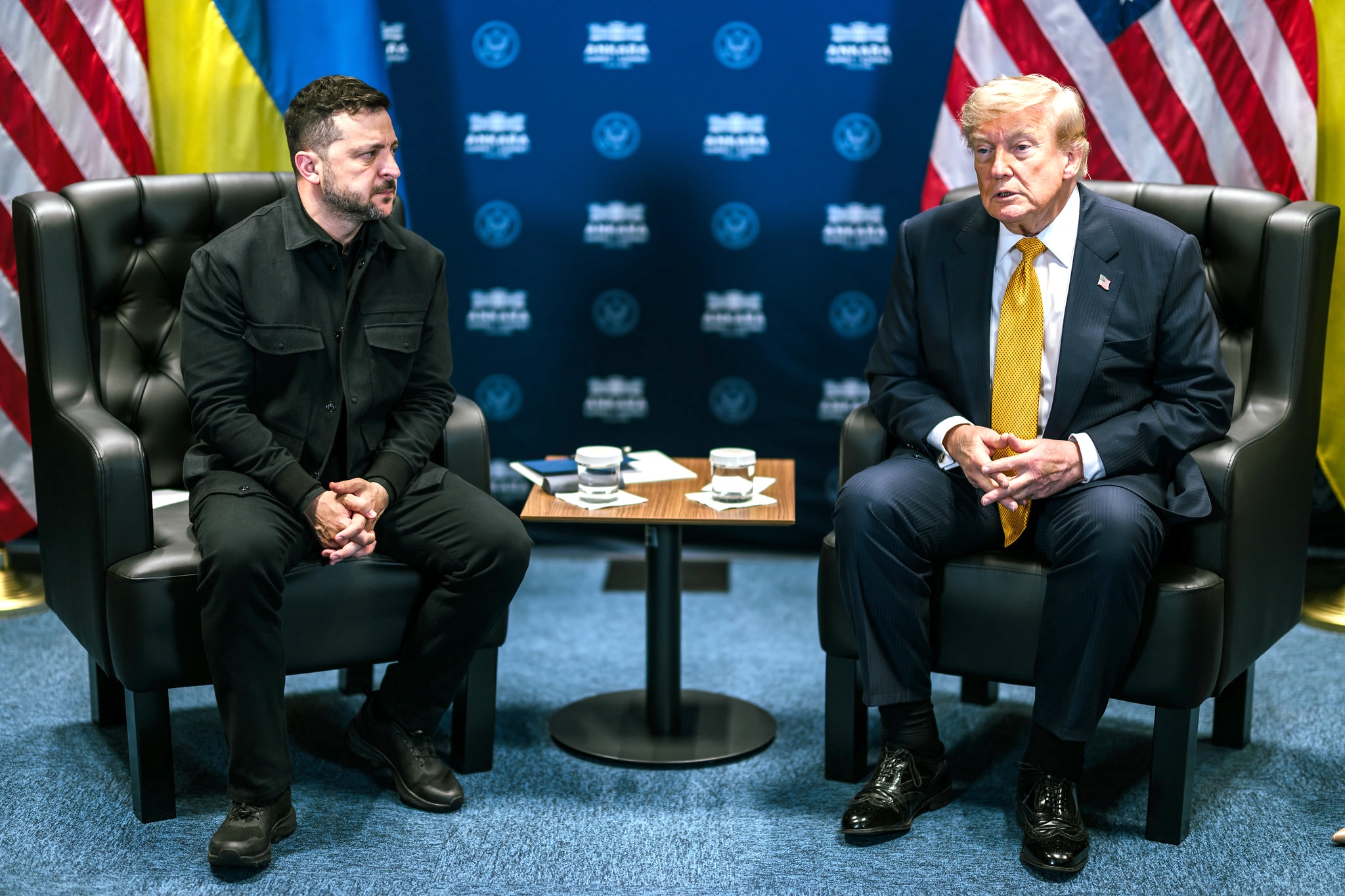
Ukraine’s President Volodymyr Zelenskyy meeting with U.S. President Donald Trump at the 2026 NATO Summit on July 8, 2026, at the Bestepe Presidential Compound in Ankara. ( White House / Daniel Torok)
Missing from NATO’s final declaration was its previous pledge that Ukraine would eventually become a member of the alliance — a notable concession to Trump’s opposition. [Last year’s summit declaration also made no mention of it.]
Ukraine’s prospective NATO membership, first strongly backed by President George W. Bush at the alliance’s 2008 Bucharest summit, has long been one of Russia’s central stated objections and was repeatedly cited by Putin as a justification for the 2022 invasion. Its omission from the declaration reflects a significant shift in NATO’s position.
The declaration pledged roughly $82 billion in military assistance for Ukraine in both 2026 and 2027, but unlike in previous years, the overwhelming share will come from European allies and Canada rather than the United States. After Washington poured well over $100 billion into Ukraine’s war effort, the United States is now stepping back.
That reflects a growing sentiment among Trump supporters that the U.S. should stop financing what they see as another endless foreign war. Many European governments, however, continue to see Russia as a direct threat and remain committed to arming Ukraine rather than pushing for a diplomatic solution.
4. Europe Wants US Troops, Trump Wants Fewer Overseas Commitments

NATO’S April 2008 summit in Bucharest, Romania, where Ukraine’s “aspirations to join NATO” were formally welcomed. (Archive of the Chancellery of the President of the Republic of Poland, Wikimedia Commons/CC BY 4.0)
Before the summit, Trump reportedly floated the idea of reducing the U.S. military presence in Europe by as much as one-third, raising questions about the future of the roughly 80,000–90,000 U.S. troops currently stationed across NATO countries.
While U.S. bases remain deeply controversial among peace movements in NATO countries such as Germany, Italy, Spain and the United Kingdom, their governments continue to regard the U.S. military presence as essential to European security and have resisted calls for their removal.
Trump’s willingness to reduce that presence exposed another growing contradiction: many European governments want Washington’s security guarantee to remain firmly in place, while many Americans increasingly question why tens of thousands of U.S. troops should remain stationed in Europe more than three decades after the Cold War ended.
5. Trump Keeps Questioning Denmark’s Sovereignty Over Greenland
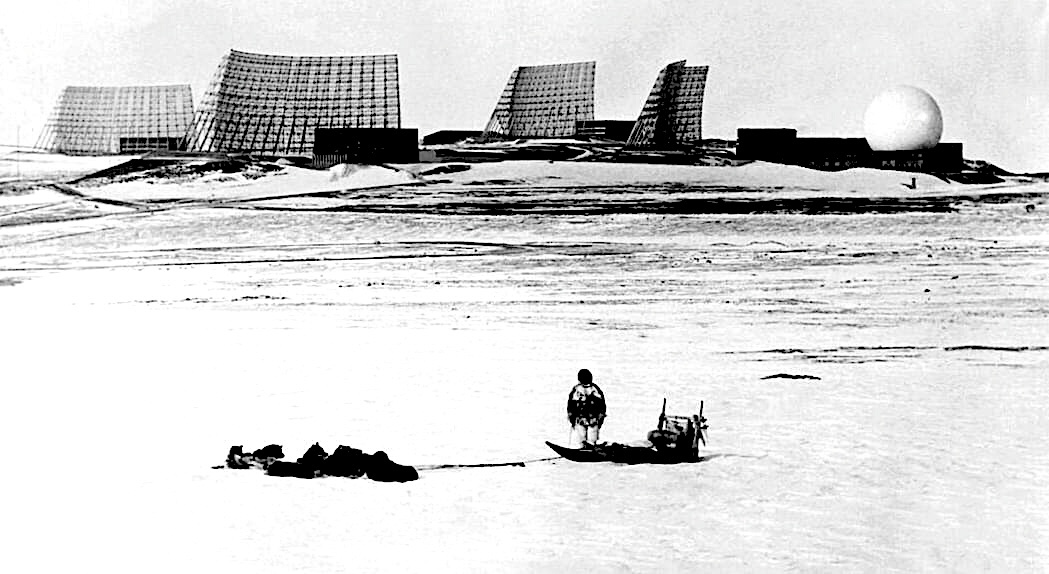
In 1966, a Greenlandic Inuit man looks at a U.S. radar station for missile warning and spacecraft tracking in Greenland near Pituffik Space Base, formerly Thule Air Base. (Telegram / Wikimedia Commons/ CC0)
Trump again insisted that the United States should control Greenland. Denmark, backed by the rest of NATO, firmly rejected the idea, insisting that Greenland’s future is for Greenlanders and Denmark — not Washington — to decide. Danish officials also note that the United States already enjoys extensive military access to Greenland under a 1951 defense agreement, making U.S. ownership unnecessary to protect its security interests.
At the NATO summit, Danish Prime Minister Mette Frederiksen reaffirmed that Denmark would “defend every inch” of the Kingdom of Denmark, including Greenland, while reiterating that the island is not for sale and that its future must be decided by Greenlanders.
The episode laid bare one of the summit’s sharpest contradictions: an alliance that claims to defend the territorial integrity of its members was forced to confront its most powerful member that is openly challenging the sovereignty of one of them.
6. Turkey Exposes NATO’s Democracy Dilemma
There was a striking irony in holding NATO’s summit in Turkey. Inside the conference halls, leaders celebrated democracy, freedom and shared values. Outside, Turkish authorities banned anti-NATO demonstrations and arrested hundreds of protesters, journalists, lawyers and activists engaged in peaceful protest.
More than 100 people were detained in Ankara after the Communist Party of Turkey organized an anti-NATO protest march ahead of an alliance summit in the city next week https://t.co/xu4xxM5kdz pic.twitter.com/Gw3QqZTbGQ
— Reuters (@Reuters) July 5, 2026
Trump praised President Recep Tayyip Erdogan as “a very strong leader,” even as Erdogan has spent years systematically suppressing dissent, jailing critics, restricting press freedom, and targeting political opponents.
Trump also used the summit to signal his willingness to restore Turkey’s access to advanced U.S. weapons, including the F-35 fighter jet program, from which it had been suspended after purchasing Russia’s S-400 air defense system.
#Gravitas | World leaders who attended the NATO Summit in Ankara felt rather taken aback when they received a revolver and like ammunition as a return gift by Turkish President Recep Erdogan. Some were forced to leave behind their gifts due to gun laws in their countries… pic.twitter.com/Z6LhTWriNb
— WION (@WIONews) July 10, 2026
Turkey, however, is hardly unique. Across NATO countries, governments that proclaim their commitment to democracy and human rights have increasingly cracked down on dissent, particularly pro-Palestinian activism. From police raids and protest restrictions to arrests, prosecutions and efforts to silence critics in the United States, Germany, the United Kingdom, and elsewhere, NATO governments have repeatedly shown that democratic freedoms become conditional when they collide with political and strategic priorities.
7. Europe Is Expected to Defend Itself — but Still Rely on NATO
One question lingered behind the scenes throughout the summit: if Europe is now expected to invest more in its military, pay for the war in Ukraine, and prepare for a reduced U.S. military presence, what exactly is NATO’s future role? European leaders continue to describe the alliance as indispensable, but Washington increasingly expects Europe to stand on its own while remaining available to support U.S.-led military operations elsewhere.
That contradiction is fueling a broader debate across Europe. If Europeans are expected to pay more, defend themselves, and shoulder greater responsibility for their own security, why should they remain dependent on an alliance dominated by Washington?
8. Should NATO Still Exist?
The biggest question hanging over the Ankara summit was not inside the conference halls but in the streets: should NATO still exist?
Created in 1949 to contain the Soviet Union, the alliance steadily expanded its mission long after the Cold War ended, intervening in places from the Balkans to Afghanistan and increasingly projecting military power far beyond its original mandate.
The protests in Ankara were part of a broader international movement represented by the No to NATO Network, which brings together peace organizations across NATO countries calling for the alliance to be replaced with a common security architecture based on diplomacy, disarmament, and cooperation.
Trump’s claim that there was “tremendous love in that room” may have made for a memorable soundbite, but it bore little resemblance to the summit itself. Ankara exposed an alliance divided over military spending, Ukraine, Iran, democracy, sovereignty, and even its own purpose.
For peace activists across NATO countries, those contradictions only reinforce what they have argued for decades: Europe needs a new security architecture based on diplomacy, arms control, common security, and cooperation, while the United States needs a foreign policy that relies on diplomacy rather than militarism. For them, the ultimate lesson is clear: the time has come to dissolve NATO and replace it with a security system that reduces tensions instead of fueling arms races and preparing for endless war.
Medea Benjamin is a cofounder of both CODEPINK and the international human rights organization Global Exchange. She is the author of 11 books, including Drone Warfare: Killing by Remote Control, Kingdom of the Unjust: Behind the U.S.-Saudi Connection, Inside Iran: The Real History and Politics of the Islamic Republic of Iran and War in Ukraine: Making Sense of a Senseless Conflict, coauthored with Nicolas J.S. Davies. Her most recent book, coauthored with David Swanson, is NATO: What You Need to Know.
[ad_2]
Source link
