
[ad_1]

Some Americans who have always celebrated the anniversary of our country’s independence see us losing independence and so much else on the eve of our 250th. They aren’t in the mood for a parade.
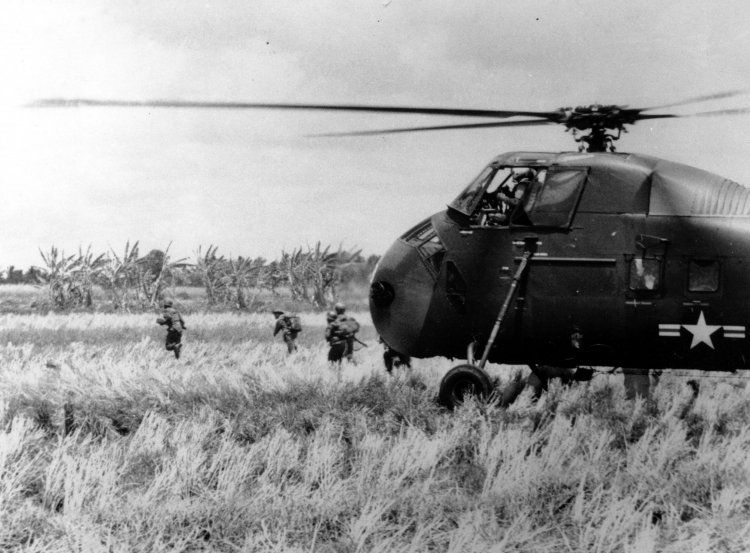
But maybe this is a good time to remind us of one chapter of relatively recent American history that also tore us in two, and no longer does. I’m going to tell you that story through one woman, 79-year-old former U.S. Army nurse Anita Malott, who volunteered to serve in Vietnam and then, when she came home to Kansas City, Kansas, was treated just as despicably as the men she’d helped keep alive in the war zone. At least now we can agree that it took so much longer than it should have for us to see that Anita and those men whose wounds she bound deserved much better far sooner.
She was 22 in 1968, a year out of nursing school and working in a hospital. She was watching a Bob Hope special when she felt the call. “I realized that there were so many young men that didn’t want to be there but went because they were fulfilling a duty, and I felt for them,” she told me. “There were the people who went to Canada, and those who could get deferments, and then there were the guys that just did it; they just went. So my good friend and I, who had graduated from nursing school together, we decided that we were going to join the Army and go to Vietnam.”
To do what they could for those men.
“I’m Going Anyway”
Anita came from a military family – her dad had been in the Army Air Corps during the Second World War, two of her five brothers had already served, and a third had joined the U.S. Navy. Yet they all thought this plan outrageous: “My father ranted, raved and had a fit, pacing back and forth, totally upset. He said when your country calls you to serve, you serve, but you don’t have to. I remember sitting there thinking, ‘I’m going anyway, I don’t care.’”
She never considered herself pro-war. Quite the opposite, in fact. And beyond her altruism, “if I’m honest, wanderlust” – a pull to see the other side of the world, and even to see the conflict for herself – were factors in her enlistment, she tells me. Her war, though, was as a soldier for the soldiers.
After she signed up and trained at Fort Sam Houston in San Antonio, Anita had to serve a year stateside first, in Denver. During that time, her friend from Topeka met someone and decided not to go to Vietnam after all. So “I didn’t know a soul” when she got on the plane to Saigon.
In her initial assignment in Pleiku, in the lush Central Highlands 60 miles from Cambodia, she worked in the surgical ICU of the Army’s 71st Evacuation Hospital. By the time she arrived, in 1970, the area was no longer the hotspot it had been during the Tet Offensive; the guerrilla war had for the most part moved on.
Yet she was still on the job 12 hours a day, six days a week, treating mostly Americans but also “a few Vietcong, or a Vietnamese soldier. A village would get bombed and we’d see a mix.”
“His Life Would Never Be the Same”
The faces of some of her patients have never left her – the young southerner telling his father in a brief phone call that he’d lost his leg and would be coming home. The 10-year-old Vietnamese boy with shrapnel in his abdomen who she finally got to smile. And most of all, one of the two American soldiers who’d suffered burns over 80 to 90 percent of their bodies after a fire they’d started to clear the brush – better to see where the enemy was – blew back on them when the wind changed.
Even now, she says, “I get a twinge in my stomach thinking about it. In the States we had tanks of water we would submerge people in to clean burn wounds. And you had to keep the wound clean, or they would die of sepsis.”
Without any such equipment, “I had to take a sponge, sterile water and soap and wash his wound. And I know it hurt. We gave him morphine before. He yelled every profanity at me, screaming like he hated me. His life would never be the same, ever. Those scars would be on him. His arms were tied in a spread-arm position and wrapped in gauze; I had to take off the gauze – it would stick, it was a process, it was oozing. He’s in pain, and he wants me to stop because he wants the pain to stop, but I can’t because I have to keep the wound clean. That was one of the worst; I think I got off and got drunk.”
She never knew what happened to him, beyond that he did survive to be evacuated to another hospital. But she feels sure he understood that she had to do what she did, just as she understood that he had to lash out at her.
The War Within the War
After six months, Anita was transferred to the 85th Army Evacuation Hospital in Phu Bai, where she treated more war wounds and also saw uglier aspects of the war, as the U.S. Army was disintegrating.
“I became aware of soldiers fighting each other, and that was shocking to me,” she recalled. “There was a breakdown in moral principles. When you’re there and you don’t have supervision and you’re angry at someone, some of those young soldiers would strike out at the sergeant. It wasn’t like it was common, but it wasn’t rare that a sergeant would be in his hooch and somebody would throw a grenade in there.”
When these men came into the hospital to be treated, “it came out muttered that he’d been in his hooch. This was an American that threw a grenade in there. So there was a war within a war. They didn’t want to be there. They didn’t want to be told what to do. I was shocked that this kind of thing would go on. And then, I saw a lot of friendly fire injuries.”
At the same time, “I have to say that the men I worked with – the surgeons, the nurses and the corpsmen, nurse’s aides, 18 or 19 years old – they were good. They dug their heels in and took care of people. And the other thing is, you bonded with them. If we worked the night shift, we’d go to the mess hall and eat breakfast, then go drink, sit and talk – tell our life story.”
When it came time to leave, after her year was up, the celebration was there, where she would be missed, not here, where “no one in my family asked, ‘What was it like?’ No one asked that question. No one.”
Unlike so many coming back from Vietnam, she said, she did have a profession to return to, and she took a nursing job at the University of Kansas Medical Center in her hometown. But “if I brought up Vietnam, the subject would get changed.”
They wanted to talk about their cool new jeans, or music, she said. And that was the nicer part. “The feeling that I got when I got home is that I was a traitor; there was a lot of suspicion.”
Even friends told her they just didn’t want to hear about it. “So I quit putting myself in that position. I wanted to talk about the experience. I wanted to talk about the bonding, the soldiers, the men I saw who thought they were going to go home, were so excited, and then something happened and they got worse and died. I wanted to tell those stories, of men who didn’t make it and men who did.”
In a KU Med Center family practice clinic where she worked in the early 80s, now a dozen years since her return from the war, Anita had a great working relationship with the doctor in charge until she finally dared to say something about serving in Vietnam.
“I was a good nurse in that clinic, looked up to, and I’d felt safe bringing it up,” but the doctor let her know otherwise. “She looked at me like she’d found out I’d killed somebody. She’d protested the war, and she was really upset.”
First Supportive Comment
The first time she got the slightest validation or expression of interest in hearing about her experience, she said, was while she was working on an advanced nursing degree in Chicago between 1992 and 1994. This, in other words, was more than 20 years after her return from the war and a full decade after the Vietnam Veterans Memorial’s November 1982 dedication. It was even after ‘China Beach,’ the soapy TV presentation of an evacuation hospital that ran between 1988 and 1991.
Figuring she’d never see those Chicagoans again after she finished the program, Anita brought up her experience in the war during a hospital shift in the cardiac surgical unit. But this time, two completely new things happened: The phone clerk said, “I knew there was something about you,” in an approving way. This, she said, was literally the first positive feedback she had ever received.
Later, another nurse on the unit asked if she’d be willing to speak to her husband’s high school social studies class. Of course, yes. But “I had stuffed it down for so long, what was my story?” That was a great day, as it turned out, because “they were so full of questions.”
Since then, all of this has changed.
It’s meant a lot to Anita to visit the Vietnam Veterans Memorial, and the Vietnam Women’s Memorial, too. The former exposes the magnitude of the sacrifice so long ignored, she said, while the latter, dedicated in 1993, “was finally, finally something that acknowledges that women left their homes and went there, too. Women exposed themselves to some really tough stuff they didn’t have to do.”
The best–selling 2024 novel, The Women, by Kristin Hannah, about a Vietnam nurse, may be made into a movie. And “now I’m a heroine,” Anita says. “Oh, you served in Vietnam? Can you tell us?” After the decades of being hushed and treated like a criminal instead of someone who saved lives, though, “I hate ‘Thank you for your service.’ It’s so disingenuous to me.”
When it comes to taking credit for what she did, Anita reminds me more than you might think of the World War II veteran I interviewed a couple of years ago, who saw an incredible 171 days of consecutive combat in Europe, and yet was adamant that I steer clear of calling him a hero, or anything of the kind. (He didn’t liberate any concentration camp, but only rolled by in his tank, he said.) In case you’re wondering, I talked to him again this week, to thank him for helping get us to 250, and he’s still sharp and well at age 100.
Blamed for Sins That Were Never Theirs
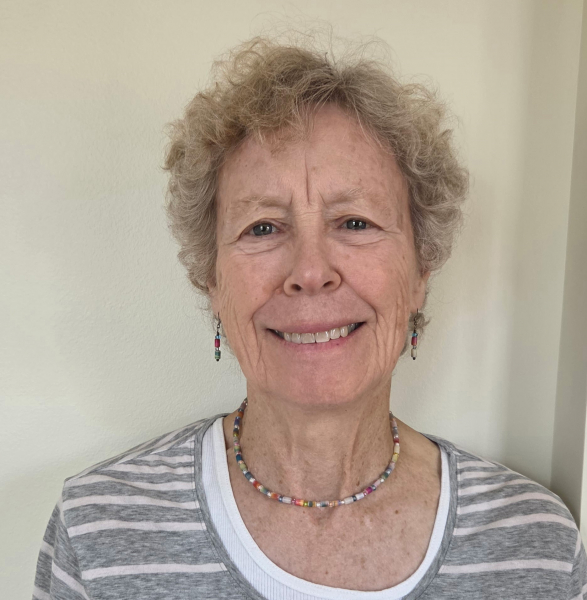
Anita Malott
RCP
When I asked Anita about saving lives, she too acted like she’d just rolled by in her tank: “I was there, I was a dedicated nurse, as most of us – I can’t think of anybody who wasn’t. We were dedicated to the profession, we were dedicated to serving our patients, so yeah. We took our positions seriously. And it wasn’t as if, ‘Oh, this is just a Vietnamese patient, we don’t have to take care of them.’ So absolutely, we saved lives.” We, she insisted. We.
Instead of understanding this, she was blamed for sins that were never hers.
So I also thank Anita Malott, who calls herself a disillusioned Pollyanna wannabe, for helping get us to 250. It should never have taken America so long to see that the men and women who “just did it – just went” were done a great disservice, first by their government and then by the public.
And if we are going to get much past 250, there will have to be a lot less demonizing and a lot more “we.”
Melinda Henneberger is a RealClearPolitics columnist based in Kansas City. She won the 2022 Pulitzer Prize for commentary and was a Pulitzer finalist for commentary in 2021, for editorial writing in 2020 and for commentary in 2019, all for her work at The Kansas City Star. For 10 years, she was a reporter for The New York Times, based in New York, Washington, D.C., and Rome.
[ad_2]
Source link
