
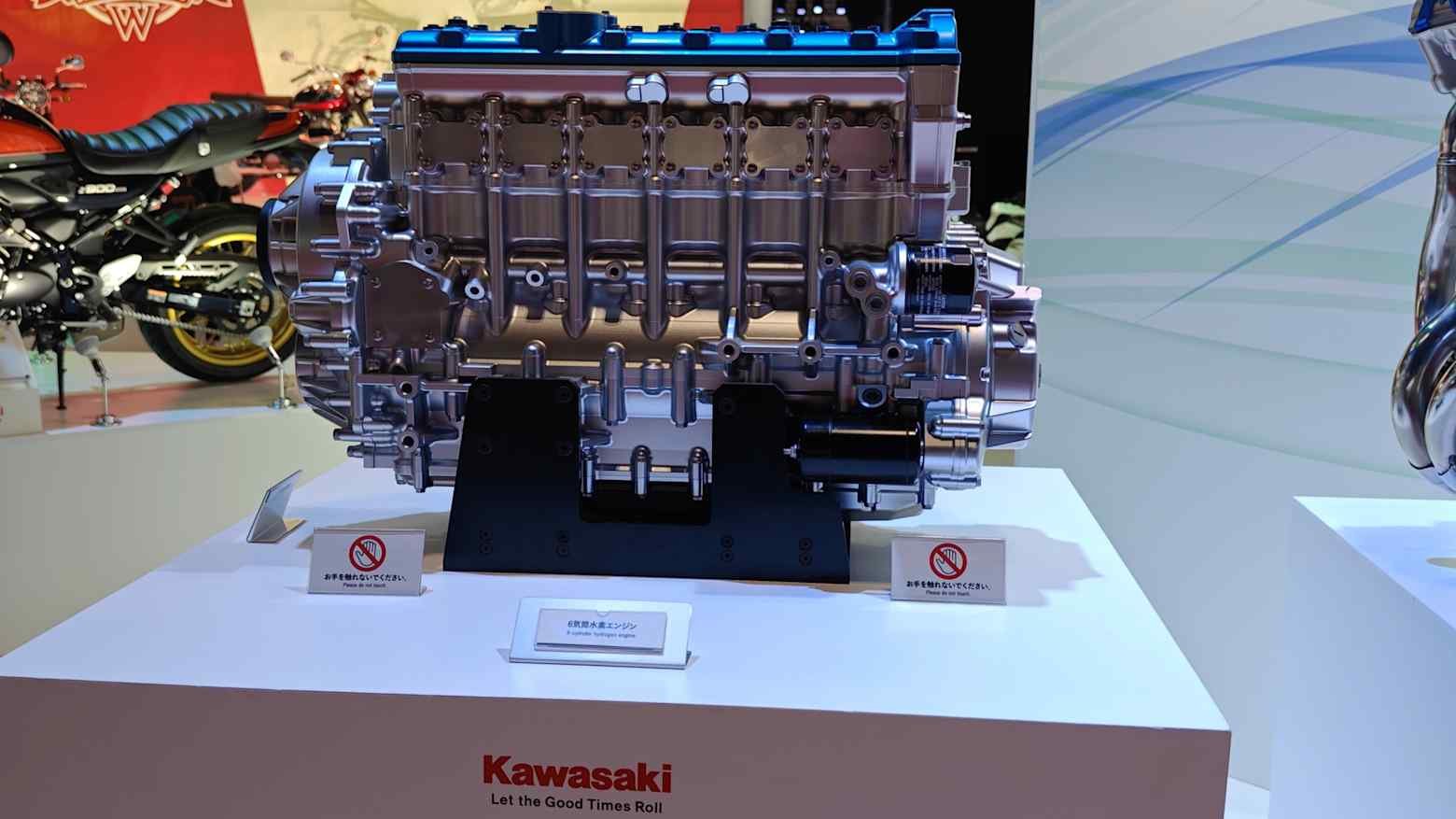
I often get questions like the one below:
“I live part time in Japan. Everyone sees hydrogen powered generators, trains, trucks, etc regularly. High density population means it’s easy to get enough synergy to justify the infrastructure. So sad we aren’t doing more to utilize this great tech. Hydrogen combustion engines emerge as cheap alternative to fuel cells.”
https://asia.nikkei.com/business/energy/hydrogen-combustion-engines-emerge-as-cheap-alternative-to-fuel-cells
This is often how news about advances in hydrogen tech are framed. The problem is – the limitations with hydrogen technology have nothing to do with the tech itself, so tech advances are mostly irrelevant. Also, hydrogen combustion is not a better solution for most use cases then hydrogen fuel cells. Fuel cells use an electrochemical process to combine hydrogen and oxygen, producing electricity and water. They are about 60% efficient, produce no pollution, and have no moving parts. Hydrogen combustion operates more like a regular engine, but with hydrogen as the fuel. They are about 40% efficient, produce nitrogen oxides as pollution, and have moving parts that operate at high pressure and temperature. They can be, however, more powerful for heavy applications and are cheaper to build.
For cars hydrogen combustion is a terrible idea. Maybe there is a use case for large generators, trains, and heavy trucks. Even there, however, there are current limitations that the technology of hydrogen engines or fuel cells do not address.
1 – Storage is a problem. They never figured out the storage problem, so just reverted to compressed hydrogen gas. There are efficiency, range, and safety issues with this. Plus, hydrogen is very leaky and destructive to infrastructure like pipes.
2 – Only about 1% of the world’s hydrogen production is green. Most of the rest is gray – essentially stripped from hydrocarbons. This is actually worse then just burning the hydrocarbons for fuel. If we do manage to ramp up green hydrogen production, it should be used first in industry, like steel production. Massive green hydrogen for transportation is a long way off.
3 – Even if we solve 1 and 2, hydrogen cars are less efficient than battery EV, and always will be (60% vs 80% efficient). This is just physics. Further, battery tech has simply advanced more quickly than hydrogen, and it continues to advance. Hydrogen lost this technology race.
We may be able to fix the first issue with new materials, but until we do this is a major limitation. This is the main reason that the “coming hydrogen economy” promised back in the early 2000s never happened.
There are three promising ways we may solve the second issue. The first is scalable green hydrogen production. If we had solar arrays or wind farms generating electricity to electrolyze water into hydrogen and oxygen, that could produce green hydrogen. The problem here is – we would be better off using that green energy for electricity. Round trip energy efficiency (electricity to hydrogen back to electricity) is only 30-40%. Better to use the electricity directly. Until we have decarbonized the energy infrastructure, don’t use green energy to make hydrogen for light transportation. Where there may be reasonable use is for hydrogen for heat-intensive industries, like steel, and for heavy vehicles like trains and ships.
The second possible solution is if there turns out to be vast reservoirs of hydrogen under the ground we can tap into (so-called gold or white hydrogen). This remains to be seen, however. A third potential source is as a byproduct of nuclear reactors. Any reactor can make some hydrogen by radiolysis – splitting water by radiation. High temperature reactors can also make hydrogen through thermal methods. And any reactor can use their electricity for electrolysis, but this has the same issue as using renewable power.
The third issue I think is just inherent to these processes. Battery EVs are likely to be always more efficient than hydrogen fuel cells.
There may have been a window 20-30 years ago where hydrogen fuel cells could have leap-frogged BEV’s, but that window is now closed. Battery technology won, and also continues to steadily improve. Even if we make progress in hydrogen fuel cells or hydrogen combustion, we still have a hydrogen storage and transportation bottleneck. There have been advances here as well, but they come at a cost.
Liquid Organic Hydrogen Carriers (LOHCs) can bind hydrogen to a fluid for easy storage and transportation, then heat the fluid to release the hydrogen. However, this has massive infrastructure and energy requirements, and would further reduce the energy efficiency of hydrogen. We have also engineered better storage tanks – Type IV tanks, which feature a seamless polymer liner fully wrapped in high-strength carbon fiber. This doubles the pressure under which hydrogen can be stored, doubling the range of hydrogen fuel cells. But it takes 12-15% of the energy stored in the hydrogen to compress it to these higher pressures.
A hydrogen economy for transportation would have massive infrastructure needs, from production to pipelines, storage, and distribution, likely to take decades. This is all just to get us to a system that is less efficient than BEVs with similar range. Meanwhile there is already existing battery technology with twice the range of common BEVs today (silicone anode Li ion), or similar range at half the cost (Na ion). Solid state and lithium air batteries could potentially five times or more today’s energy density (1,500 vs 300 kWh).
Meanwhile we are already near the theoretical limit of compressing hydrogen (700 bar). At 1000 bar hydrogen atoms repel each other and you get exponential energy requirements for further compression.
If we are going to invest in infrastructure, those investments should go to fleshing out a fast-charging network for EVs and securing raw materials for making batteries.
