
[ad_1]
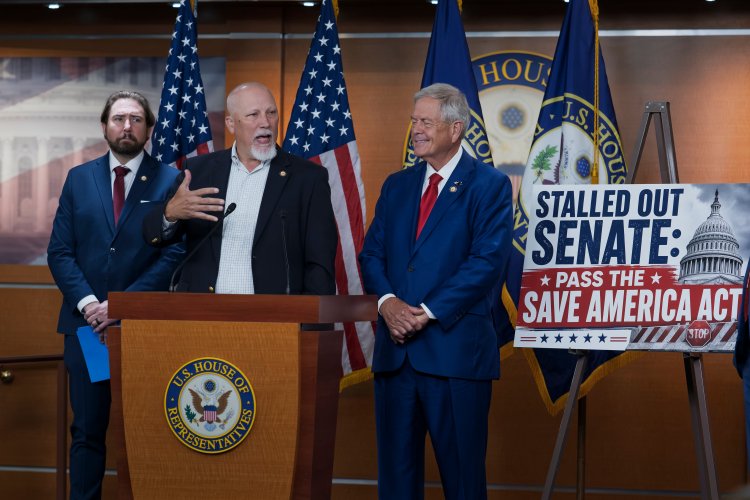
The SAVE America Act has extensive provisions on the requirements for an individual to register to vote in a federal election. The Act is premised on a simple idea: Anyone registering to vote in a federal election should provide proof of U.S. citizenship. On its face, that seems pretty reasonable. But this is definitely a case where the devil is in the details.
The Act requires that a person must present “documentary proof” of citizenship to register. That will generally be either a birth certificate, a passport, or a naturalization certificate. (There are some other acceptable documents, but they are held by very few Americans.) For people with a passport or a naturalization certificate, the process of proving citizenship should be fairly straightforward, although the Act is silent on how the documentary proof is to be “presented.” Some commentators have suggested that it must be presented in person.
According to the State Department, there are currently about 170 million passports in circulation and about 25 million Americans who have been naturalized. There are about 235 million citizens who are over 18. So at least 40 million citizens would have to rely on a birth certificate to register. (Because some passports are issued to children under 18, the State Department double-counts passports and passport cards, and because many naturalized citizens have passports, the number is likely quite a bit higher.)
Here is where the details begin getting a bit sticky. The Act requires that the birth certificate must be certified. I don’t know about you, but I certainly do not have a certified copy of mine. I recently had to get a certified copy for a probate matter I was helping a friend with, and while it wasn’t super hard, it was a bit of a hassle and required a visit to the county clerk’s office. Of course, if someone has moved to a new state and has to track a certified copy from their home state, that would be even more of an inconvenience.
But here is the really important aspect of the Act. This requirement applies not only when a person first registers. It also applies when there is any change in a person’s voter registration, such as a change of address or name. Whenever you move, you will need to dig out your passport, naturalization certificate, or certified birth certificate to update the address on your voter registration. Most states allow voters to update their voter registration address online.
This burden will fall disproportionately on women, who are much more likely than men to have changed their legal names because of marriage or divorce. A woman whose birth certificate, passport, or other citizenship document is in a prior name may have to produce a certified marriage certificate, divorce decree, or other documentation – or sign an affidavit – to connect that document to her current voter-registration name. I have a feeling that Republicans would regret passing the Act with provisions that are especially burdensome for women. They might want to remember, “Hell hath no fury …”
Documented cases of noncitizens being registered to vote have been very rare. There is certainly no evidence that noncitizens are registered to vote in sufficient numbers to affect election outcomes. Nonetheless, requiring a person to provide proof of citizenship when they first register to vote is not a bad idea, if only to reassure those who believe registration of noncitizens is widespread. But requiring a person to prove their citizenship every time they update their address or name is absurd. This requirement would likely spark widespread outrage across the political spectrum once voters realize the hassles they will face.
The other significant problem is that the Act would impose major new duties on local election officials while leaving many implementation questions for states and counties to work out under tight deadlines. There is simply no way to make contemplated changes to the registration process this late in the election season. If the bill were to pass, it would immediately face multiple legal challenges, almost certainly delaying its implementation until well after the 2026 election.
Most Americans support the concept that a person should provide proof of citizenship before being allowed to register to vote. It is a commonsense notion. And it could be implemented rationally. But that is not what these provisions are. Quite the opposite – they are poorly drafted, with little thought given to their practical effect on voters or election administration. That is why it is unlikely the SAVE Act will ever be passed in its current form.
[ad_2]
Source link
