
[ad_1]
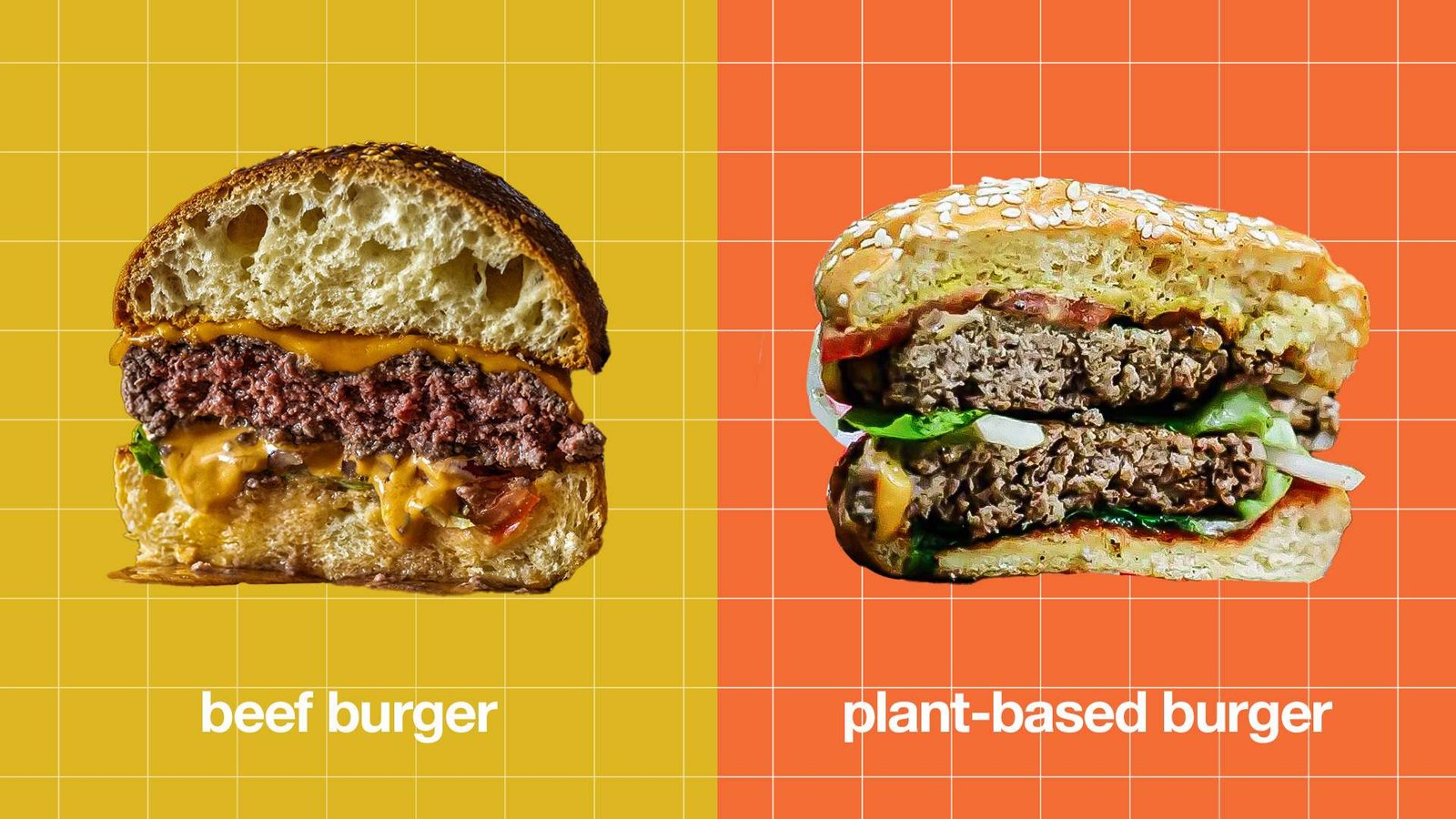
Critics of the growing plant-based meat business say that unless a burger began with a heartbeat, it has no right to be called “meat.”
Even as cattlemen-backed state laws on the topic are being struck down by courts, both federal lawmakers and their counterparts in Europe are contemplating legislation to ensure that “meat” is a label reserved for foods carved from once-living creatures. As Florida legislator Dean Black (R–Nassau), a cattle rancher, put it: animal-free meat “is not meat…it is made by man, real meat is made by God Himself.”
History is full of examples of established companies pleading with the government to intervene when a new technology disrupts their market. It is protectionism dressed up as consumer protection. Labels like “plant-based burger” or “vegan sausage” don’t hide the ball. They tell consumers exactly what they’re buying. The real question is whether the government should let incumbent industries monopolize ordinary words.
More than a century ago, another incumbent industry tried to defend its turf by insisting that a new technology could imitate nature but never deserve nature’s name. The product was ice.
America’s lucrative natural ice industry was being disrupted by a cheaper, cleaner, more reliable competitor: manufactured ice, or as its detractors insisted it be called, artificial ice.
The incumbent industry fought back with a message that sounds remarkably familiar today: the new thing was an imitation, an artificial product masquerading as nature’s own.
The industry even formed the Natural Ice Association of America. In 1910, at the association’s second annual convention, its president declared: “It is high time for us to stand up for our rights and advertise throughout the country that we stand for what is wholesome and pure, namely, natural ice….Man can imitate God but he cannot improve upon Him. Man can imitate Nature and make ice but he cannot improve upon the works of Nature.”
The anxiety soon extended beyond ice itself to the foods kept cold by the new technology, which were derided as unnatural and unsafe. Natural ice-makers even tied artificially cooled foods to cholera and cancer, a view held by many public health authorities at the time.
To show that refrigerated food was safe, the nascent artificial-cooling industry hosted a 1911 banquet in Chicago consisting entirely of refrigerated foods. Historian Nicola Twilley notes that the first-of-a-kind meal was widely covered and mocked; one Chicago newspaper previewed it under the headline “To Dine on Embalmed Food.” The Journal of the American Medical Association, meanwhile, had already warned that cold storage posed public health challenges, including “well-known abuses.”
Of course, the campaign against human-made ice eventually melted away. Today, nobody opens a freezer and asks whether the cubes are “real ice.” The source changed, while the name remained the same.
Had the natural ice industry persuaded lawmakers to reserve the word “ice” for frozen water harvested from ponds, consumers would not have been protected; competitors would have been.
Will something similar happen to meats made from plants and fungi? Already, very few people have a hard time understanding that coconut milk didn’t come from a cow, or that peanut butter doesn’t contain dairy. As plant-based meats improve, many are now rated in blind taste tests either as good as or even better tasting than their animal counterparts. With less saturated fat, zero cholesterol, and more fiber, it’s no surprise this is now a billion-dollar industry.
That is how innovation often works: the experience arrives before the vocabulary catches up. New technologies almost always borrow the language of what they replace before becoming ordinary in their own right.
The best we could do for “cars” at first was to call them “horseless carriages,” but today, no one thinks our vehicles are “fake carriages” any more than we think digital pictures are “fake photographs.” The idea that one could read a book without holding a bundle of papers in their hands would be foreign to past generations too, but no one thinks they’re reading a “fake book” when enjoying a novel on their Kindle. And the supercomputer in your pocket certainly isn’t an “imitation telephone.”
Plant-based burgers and meatballs are following the same pattern. For thousands of years, the experience of eating meat required cutting it from an animal’s body. Now, human ingenuity has found new ways to deliver much of that same culinary experience without the slaughter.
Of course labels should be clear: plant-based meat should say it is plant-based, just as oat milk says it’s made from oats and doesn’t pretend to come from a cow.
Consumers buy plant-based meats for different reasons: taste, price, health, environmental concerns, animal welfare, or simple curiosity. In any case, they know what they’re buying. Real confusion comes when old production methods claim ownership of words and new technologies are forced to use descriptors consumers won’t recognize. A package labeled “plant-based meat” is not a trick; it is a disclosure. If a label is truthful and clear, the government should not ban it merely because an incumbent industry dislikes the comparison.
Ice doesn’t have to come from a pond. Transportation doesn’t have to come with horses. Photos didn’t have to come from film. Books don’t have to be printed on paper. And meat, increasingly, does not have to come from a slaughtered animal. All disruptive technologies sound fake right up until the moment everyone starts using them. That’s how progress works. The government can’t—and shouldn’t try—to stop them.
[ad_2]
Source link
