
[ad_1]
Flashback to 1980: Out of milk? Drive to the store. Need to deposit a check? Wait in line at the bank. Want a new bathing suit? Trudge through the mall. Kids need books for a school paper? Go to the library.
Today, Americans have options to buy and do a long list of things in the comfort of their homes, from grocery delivery to depositing a check.
A similar evolution happened with voting.
As technology expanded options for purchases and services, the same changes extended to voting. Many state lawmakers gave constituents flexibility to vote when they wanted, where they wanted. Election Day became election season. Most states now offer weeks of in person early voting or expansive voting by mail; many offer both.
That convenience — used by millions of voters from all political parties — now faces a challenger: President Donald Trump.
As the leader of the Republican Party for a decade, Trump has repeatedly called for holding one day of in-person voting.
“I’d like to see one day voting,” he said in November. “I’d like to see not 65 days of voting from all over the place.”
At an Arizona rally weeks before the 2020 election, he was nostalgic: “Remember the old fashioned days when you’d actually go out and vote?”
Trump’s call for a simpler time with voting is complicated. It never quite worked the way he described, not even in the country’s earliest elections.
“This idea that there was a time in American history when everyone voted on a single day within 12 hours is a manufactured concept,” said David Becker, executive director of the nonpartisan Center for Election Innovation & Research. “It never happened. It never existed. We had mail voting at least since the Civil War. Voting often took place over a period of days, often weeks.”
As the United States celebrates the 250th anniversary of the Declaration of Independence, we look at how the nation has adapted voting to make it more convenient.
Voting in early America: a public act for those who qualified, with partying
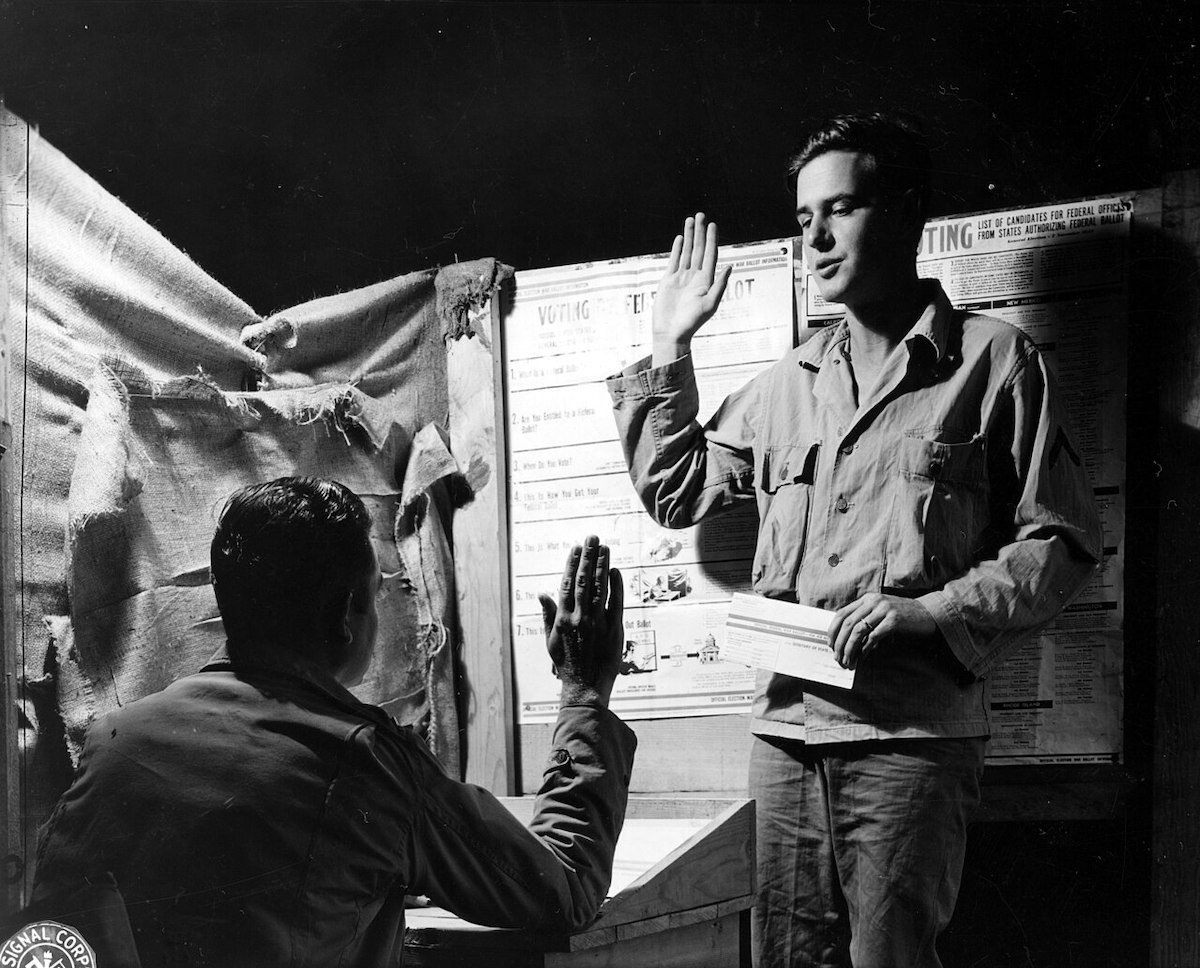
1st Lt. Wm. M. Norton, administers the oath to Pfc. Robert K. Mansfield. Mansfield marked his supplementary federal ballot in secrecy in October 1944. (WikiCommons)
At the time of the American Revolution, only landowners could vote.
Between 50% and 70% of all adult white men met the requirement, said Rosemarie Zagarri, a history professor at George Mason University who has researched voting in early America. CUNY history professor Andrew Robertston also explained how property requirements for voting changed over time.
By the 1820s, though, almost all states had eliminated property qualifications for voting. The U.S. Constitution declared that each state had the right to establish its own qualifications for voting, so the requirements varied. Some states allowed Black men to vote in the early 1800s. Unmarried women who met the property requirements voted from 1776 to 1807 in New Jersey.
The election atmosphere varied, too. Southern state voting was more raucous than in the north. Candidates hosted barbecues or picnics and offered copious amounts of liquor, called “treating” the voters.
In 1758, George Washington, who was running for the Virginia House of Burgesses, served over 160 gallons of rum punch, wine, beer and other spirits. He won.
“In many states, election days could be either festive or rowdy,” Zagarri wrote. “Voting occurred at public buildings, including taverns or churches. There was often an air of celebration as voters turned out to exercise what they considered a cherished right: the right to vote.”
In 1845, Congress passed a law establishing a uniform presidential election day; before that, each state determined when its elections were held and voting often took place over several days.
Mail voting evolved from soldiers to traveling salesmen to everyone
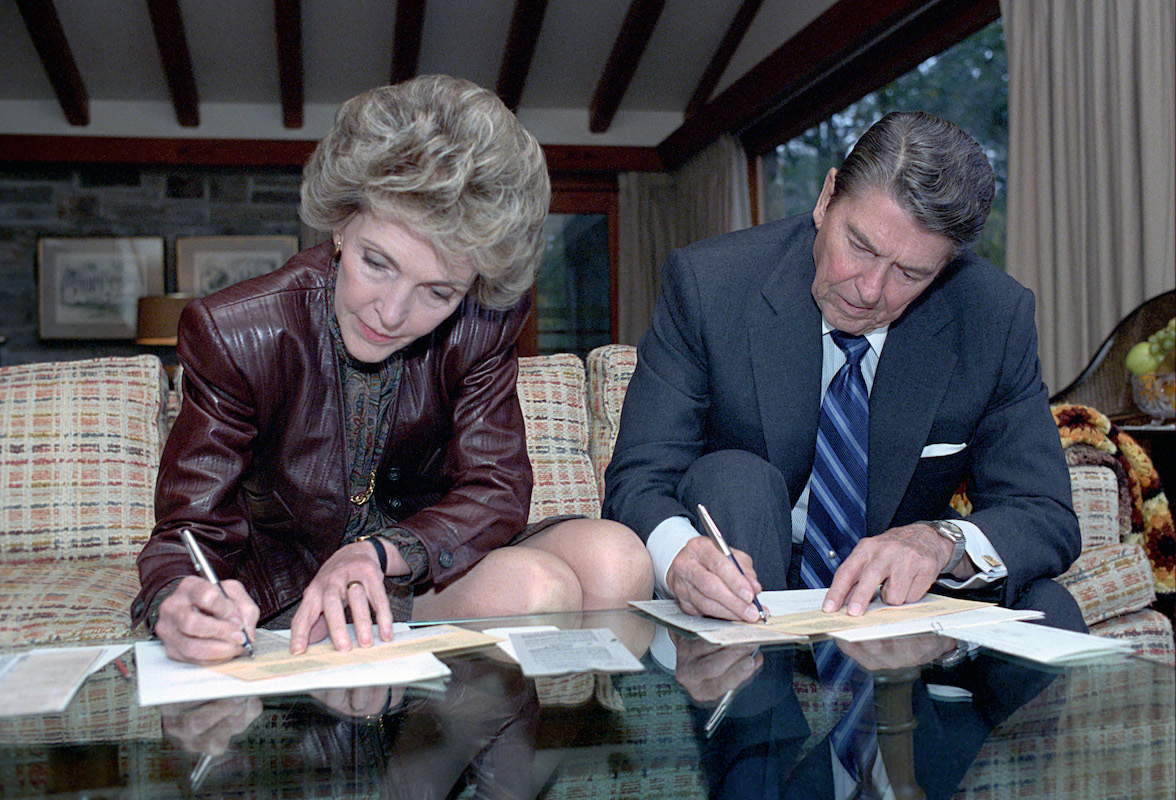
President Ronald Reagan and first lady Nancy Reagan signed their absentee ballots at Camp David, Oct. 17, 1986. (National Archives)
Absentee voting dates to the Civil War, when it applied only to military members.
In the early 20th century most states added absentee voting for some civilians, as more American workers, such as traveling salesmen, were away from home on Election Day. The majority of voters continued to cast ballots in person. In the 1936 presidential election year, 2% voted absentee; that percentage rose to 14% who cast a ballot before Election Day in 2000.
The rise was driven in part by western states, where voting before Election Day rose in the 1980s and 1990s.
That happened through two major developments: States allowed voters to cast an absentee ballot without requiring an excuse such as being out of town on Election Day; and some states allowed voters to permanently sign up to receive absentee ballots.
Both parties embraced the changes, said John Fortier, an American Enterprise Institute elections expert. For example, Republican secretaries of state in Oregon and Washington advocated for vote by mail, and Democrats controlled Texas and Tennessee when early voting in person took off in the 1990s in both states.
By 2008 the idea of Election Day was a “historical relic,” wrote Paul Gronke, director of the Early Voting Information Center at Reed College.
“Citizens have voted with their feet (or stamps), increasingly choosing early voting over precinct voting on election day,” Gronke wrote. “This has led to a rapid growth in early voting among those states that have relaxed their requirements.”
Some Republican politicians have sought to reverse the trend, with strategies that backfired. In 2011, the Florida Legislature reduced the number of early voting days — including the Sunday before Election Day, when Black churches organized voting drives known as “souls to the polls.” On Election Day in 2012, voters waited in line up to seven hours in Miami-Dade County, the state’s most populous. Then-Gov. Rick Scott and the legislature were forced to undo their cuts.
Other Republicans have stood by voting by mail, including Utah Lt. Gov. Deidre Henderson, who oversees elections. Responding to a Trump social media post criticizing the state’s embrace of voting by mail, Henderson wrote that 90% of voters choose to vote by mail, and the majority “appear to love both vote by mail AND the Republican Party.”
COVID-19 pandemic led to voting by mail expansion
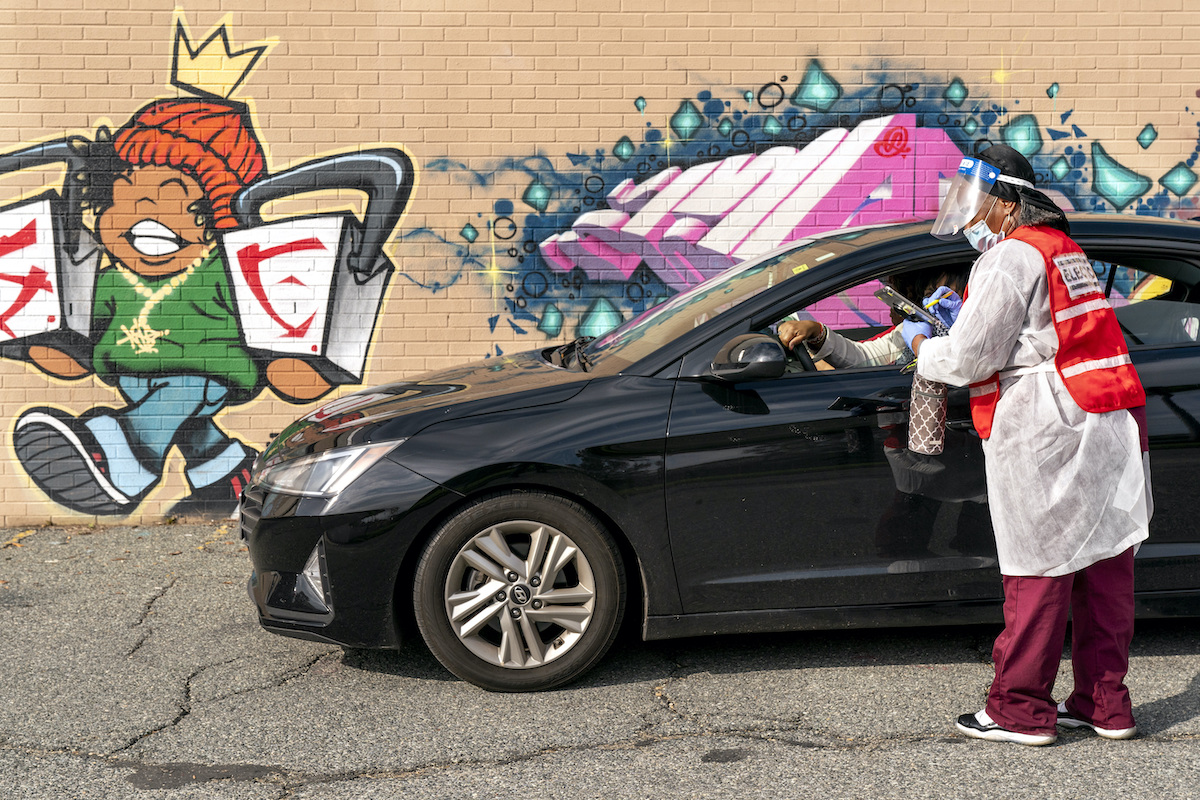
Poll worker Mildred Henson helps voters submit ballots in the curbside line, Oct. 27, 2020, at Malcolm X Opportunity Center in Washington. (AP)
The pandemic created an unprecedented crisis, with voters and election officials demanding a safe way to hold the election.
Many states changed procedures to ease voting by mail. Most of the states that required voters to have an excuse to vote absentee dropped that rule, and a few states transitioned to mostly voting by mail. Several states sent mail ballot applications to all voters and added drop boxes.
Trump said it amounted to cheating, a ridiculous accusation contrary to the facts. These changes were made openly, through executive orders, administrative actions or law. Republican voters also used these expanded options.
During the 2020 presidential election, about 43% voted by mail. By 2024, after the pandemic, it dropped to about 30%.
Trump wants to scale back mail-in voting
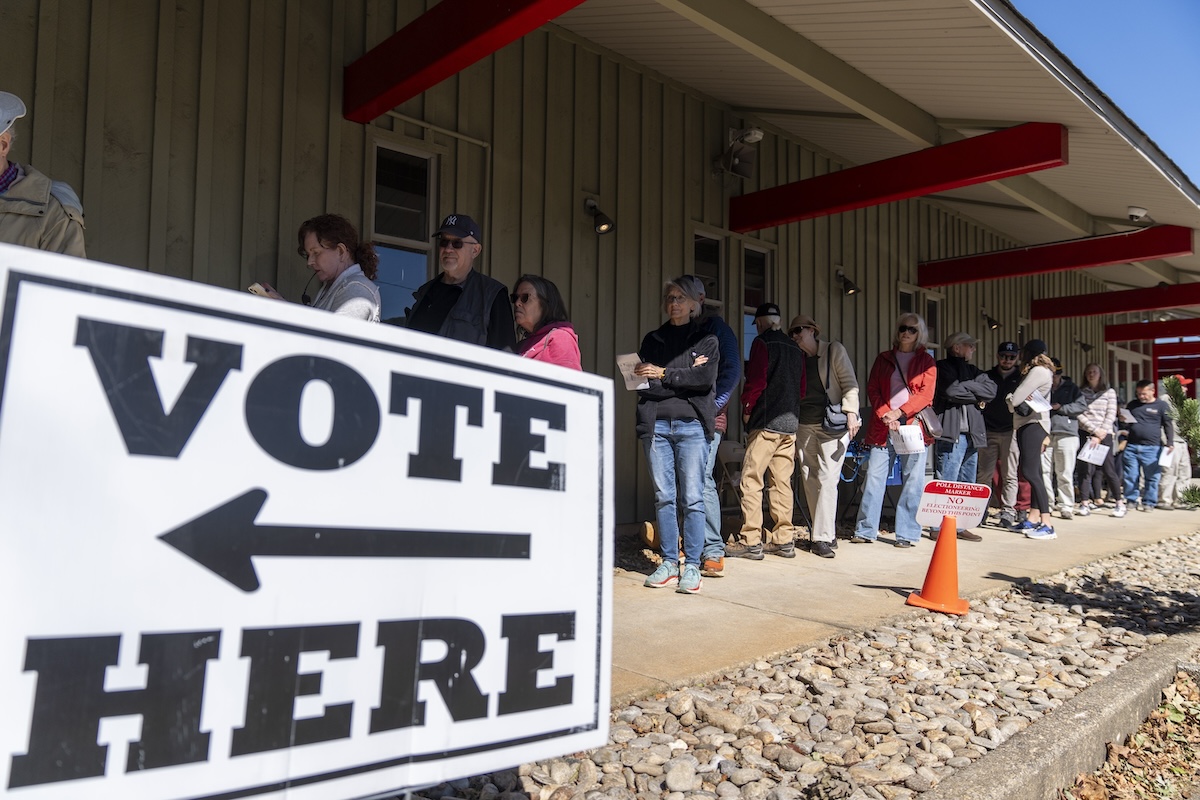
People stand in line at a polling place on the first day of early in-person voting in Black Mountain, N.C., Oct. 17, 2024. (AP)
During the past year, Trump has spun distortions about voting by mail into action. As of June 26, his efforts to dramatically change voting had not succeeded, although a pending case before the Supreme Court about whether certain mail ballots can be counted if received after Election Day has the potential to change the landscape.
Trump, who has at times voted by mail himself, has said he wants to ban mail voting except in cases of travel, illness, disability or military service as part of the SAVE America Act. But the Senate lacks the votes to pass the legislation.
The president’s idea for “one day voting” would presumably eliminate in-person early voting,
Ironically, returning to having nearly everyone vote on one day would raise the possibility of something going wrong on a large scale, such as a physical or cybersecurity attack, bad weather or mass power outage.
Spreading voting over days or weeks allows election officials to identify and fix problems such as equipment issues when turnout is lower, rather than on Election Day under maximum strain.
“It would literally create a single point of failure for the entire system,” Becker said. “We would minimize our resilience against any of those things by concentrating all voting in a single 12 hour period.”
If Trump scales back voting by mail, he would be bucking what the majority of Americans want.
An April Pew Research Center survey found that 59% of Americans say early or absentee voting should be available to voters without the need to provide a reason. There is a major partisan split: About 81% of Democrats and Democratic-leaning independents support that policy, while 34% of Republicans and GOP leaners do.
The Republican Party might not benefit from Trump’s preferred policies. Over decades, Republicans encouraged no-excuse absentee voting, Gronke said, because those voters were “older, whiter, better educated, higher income, categories that used to trend Republican.”
If nearly everyone voted on Election Day, states and counties would have to spend millions — if not billions —– of dollars reversing decades of changes.
“It would mean that voters would have to adjust and re-learn how to vote on Election Day,” Gronke said. “Convenience voting is far too embedded into our political and legal institutions for this to quickly go away. “
RELATED: All of our stories about the 250th anniversary of the signing of the Declaration of Independence
[ad_2]
Source link
