
[ad_1]
If America’s Founding Fathers were still with us today, they wouldn’t avoid social media – they’d master it.
Popular platforms like X, Facebook, Truth Social, and Instagram can reduce our ability to build trusting relationships and cross political boundaries. But they are also incredibly powerful tools to spread news and perspectives – and are not inherently incompatible with thoughtful citizenship.
The American Revolution itself was fueled by the disruptive communication methods of its day. Patriots embraced every available tool to spread their message, rally support, and build a movement for liberty.
The Founders were not communication purists, but communication innovators. They were the pamphlet generation, and in a way, progenitors of the modern keyboard generation.
The prominent methods of the day in 1776 were elite formal speeches and scholarly essays. But as John Adams wisely noted, “Liberty cannot be preserved without general knowledge among the people.”
So the “ungrateful colonials” used nails, trees, horses, and town criers to inform the public. We employ websites and phones. Although we don’t even need to leave our chairs to promote liberty, the goal is no different.
Revolutionary communications specialists like Thomas Paine and Benjamin Franklin used pamphlets and newspapers to connect citizens across 13 colonies, allowing information and ideas to travel faster than ever before.
Paine understood communication perhaps better than anyone. His pamphlet “Common Sense” became one of the most influential political publications in American history. Written in plain language for ordinary citizens, it transformed public opinion and helped turn colonial frustration into a movement for independence.
If Ben Franklin had access to the Internet, he would have used his liberty-based writings in The Pennsylvania Gazette to shape public opinion throughout the colonies.
Paine and Franklin both had a gift for distilling complex political arguments into memorable phrases that would today become viral posts shared millions of times. They knew that ideas only matter if people hear them.
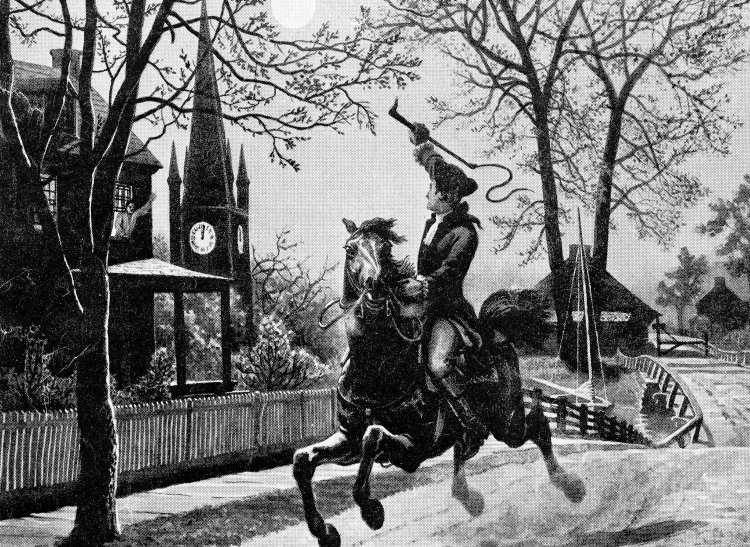
Consider Paul Revere’s famous midnight ride. His mission was simple: Get critical information to as many people as possible before it was too late, using horses and lanterns. If Revere could have sent a Tweet, posted on Instagram, or blasted a group text warning that British troops were on the move, he would have done it without hesitation, and the patriots of Lexington and Concord would be assembling before the British left Boston.
The Founders would also not have shied away from vigorous online debate – would you want to argue with James Madison on the blessings of liberty and Natural Law?
One can easily imagine Alexander Hamilton and Jefferson airing their political differences on podcasts or posting back and forth at each other on X. Disagreements between the two men were often fierce, but both recognized that a healthy republic requires citizens to hear competing viewpoints and weigh arguments for themselves.
As the Founders were gifted with incredible discernment, they also would recognize the dangers that accompany modern communications technology.
Social media allows information to travel faster than ever before, often at the expense of accuracy – both accidental and on purpose. A message may reach millions of people, but reach is not the same thing as trust.
The Revolutionary era was also not free from misinformation, rumor, exaggeration, and political attacks. Newspapers regularly published anonymous essays. False stories circulated. Political opponents accused one another of dangerous intentions. Human nature has not changed much in 250 years.
The challenges facing Americans today are remarkably similar to those facing the founding generation: how to use powerful communications tools to strengthen self-government rather than weaken it.
Used wisely and with accuracy, social media can expand opportunities for citizen engagement and advance the cause of liberty just as pamphlets, newspapers, and correspondence networks did during the Revolution.
But it requires citizens who value truth over tribalism, persuasion over intimidation, and dialog over outrage.
Citizens still need trustworthy information. Leaders still need credibility. Public trust still matters. And a free society still depends upon the open exchange of ideas.
Modern communicators must use today’s tools with the commitment to truth, honesty, and liberty the Founders brought to their public squares to strengthen self-government rather than weaken it.
Over two centuries later, they still have it right.
Kerri Toloczko is Proven Media Solutions’ director of public affairs, and has been a senior policy advisor to grassroots coalitions and public policy organizations.
[ad_2]
Source link
