
[ad_1]
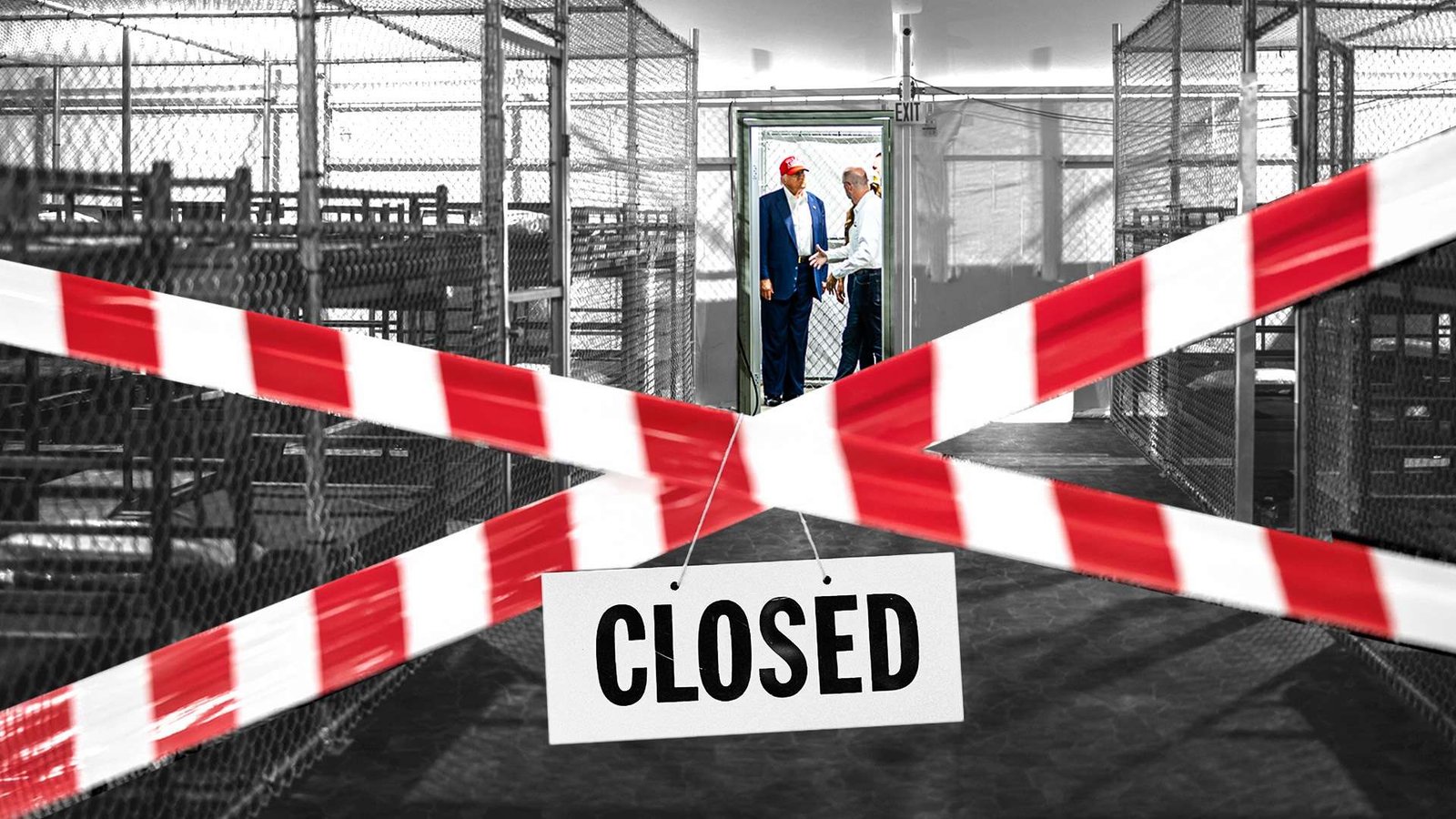
Republican Florida Gov. Ron DeSantis announced at a press conference Thursday that the state’s “Alligator Alcatraz” detention camp is shutting down after less than a year in operation.
It’s a quiet end for a detention camp that the state of Florida opened last July with a splashy media rollout, including Alligator Alcatraz merchandise and tours by President Donald Trump and conservative social media influencers. But the hype faded as the camp, located on a remote airstrip in the middle of the Big Cypress National Preserve, racked up huge operating costs and numerous lawsuits—a sort of Fyre Festival of incipient authoritarianism.
Nevertheless, DeSantis said at Thursday’s press conference that the experiment “fulfilled the role it was designed to serve,” saying it held more than 20,000 detainees who were eventually deported.
“There’s no question this mission has made the state of Florida safer,” DeSantis said.
Even if one doesn’t question DeSantis’ premise, Florida taxpayers should question whether the end goal really required spending hundreds of millions of dollars to build and operate a detention camp in the middle of a protected wetlands habitat, not to mention defend it in court from lawsuits—and then close it all down less than a year later.
And if the detention camp was such a success, Florida taxpayers might question why the DeSantis administration has done its best to hide the costs and day-to-day operations from the public. Contract details were scrubbed from state databases. Detainees disappeared from ICE’s online locator, leaving families and attorneys with no way to locate them. State and federal lawmakers were denied access to the camp. Attorneys had to sue for the right to secure phone and in-person visits with clients. While state and federal officials publicly estimated that the facility would cost $450 million a year to operate, Florida secretly requested a $1.49 billion grant from the Trump administration. Internal figures showed that the camp had an average “burn rate” of $1.2 million a day to hold 500 detainees. These figures were only revealed after environmental groups obtained a court order forcing the state to release financial estimates and other communications.
DeSantis’ premise does deserve questioning, though. To seize the property for the camp from Miami-Dade County, DeSantis relied on a 2023 state-of-emergency declaration claiming that “the migration of unauthorized aliens to the State of Florida is likely to constitute a major disaster.” The declaration was in response to waves of Cuban and Haitian migrants landing in the Florida Keys, but even after the landings mostly stopped, DeSantis continued to annually renew the state of emergency. That also allowed him to tap into a no-strings-attached disaster fund to hastily build the detention camp.
The Republican-controlled Florida Legislature had enough questions that, although it renewed the disaster emergency fund this year, it included a way for lawmakers to claw back misspent funds.
(One might also question whether, since the camp has been such a success, DeSantis will finally end Florida’s six-year-long state of emergency. The Florida Governor’s Office did not immediately respond to a request for comment.)
And although federal and state officials claimed that the camp was holding violent gang members and hardened criminals, internal documents obtained by the Miami Herald and Tampa Bay Times last year showed that hundreds of them didn’t have any underlying criminal records.
But whether the detention camp improved public safety or was cost-efficient is irrelevant to whether it comported with the Constitution, and civil liberties and immigrant aid groups say it was a human rights disaster. The camp was plagued with allegations of medical neglect, brutality, and lack of due process. Detainees were kept in metal cages underneath tents. Numerous first-hand reports described inadequate access to water, food, and showers, as well as overflowing toilets, miserable heat, and flooding during rainstorms.
One former Alligator Alcatraz detainee, Luis Miguel Rubiano, told Reason that although he was also held at an ICE field office, a county jail, and another DHS detention center, “Alligator Alcatraz was the worst place for [medical] treatment.”
“They didn’t have the tools,” Rubiano said. “They always told us to wait for the next day or something like that. They were supposed to take my blood pressure, but the machine was without batteries for like two days straight.”
This April, attorneys for Alligator Alcatraz detainees claimed in court filings that guards cut off phone access to detainees and then beat and pepper-sprayed detainees who complained. One attorney filed a declaration that included pictures of her client with a large, dark bruise surrounding one of his eyes.
Sens. Jon Ossoff (D–Ga.) and Dick Durbin (D–Ill.) sent a letter on March 25 to Department of Homeland Security Secretary Markwayne Mullin demanding information about multiple reports of detainees at the detention camp being put in a small, stifling hot box as punishment.
“There have been credible allegations that detainees at ‘Alligator Alcatraz’ have been punished with confinement in a small cage-like structure known as ‘the box,’ where they are held in stress positions with hands and feet tightly shackled for hours at a time, in direct sunlight with no access to food or water,” the senators wrote.
The Department of Homeland Security (DHS) apparently decided it’s had enough. Since former DHS Secretary Kristi Noem was replaced by Mullin this spring, the department has been paring back its most ostentatious spending projects, and anonymously sourced reports began appearing last month indicating that Alligator Alcatraz could be on the chopping block.
Then suddenly last week, Immigration and Customs Enforcement (ICE) announced that it was transferring all detainees out of the detention camp in preparation for Florida’s hurricane season, which runs from June through November.
Civil rights advocates and immigrant aid organizations did not believe the explanation, since the camp had opened last July during hurricane season and remained open throughout. Meanwhile, the head of Florida’s Division of Emergency Management, which operates the detention camp, said he didn’t know that ICE was removing the detainees until he read about it in the media.
DeSantis put Florida on the hook for hundreds of millions of dollars for a cruel, expensive, and ultimately needless P.R. stunt. When DeSantis insists that Alligator Alcatraz was always meant to be a temporary facility, what he means is he hopes you’ll forget about it before too long.
There’s little likelihood of that. Civil rights groups and environmental advocates released a salvo of press releases Thursday vowing to continue litigating several ongoing lawsuits regarding the camp.
“This outrageously expensive internment camp inflicted documented harm on the Everglades, and Gov. DeSantis and Attorney General Uthmeier are trying to sweep it under the rug,” Eve Samples, executive director of Friends of the Everglades, said in a press release. “We won’t allow it. The public deserves a full, transparent assessment of the extent of the damage at ‘Alligator Alcatraz.'”
[ad_2]
Source link
