
[ad_1]
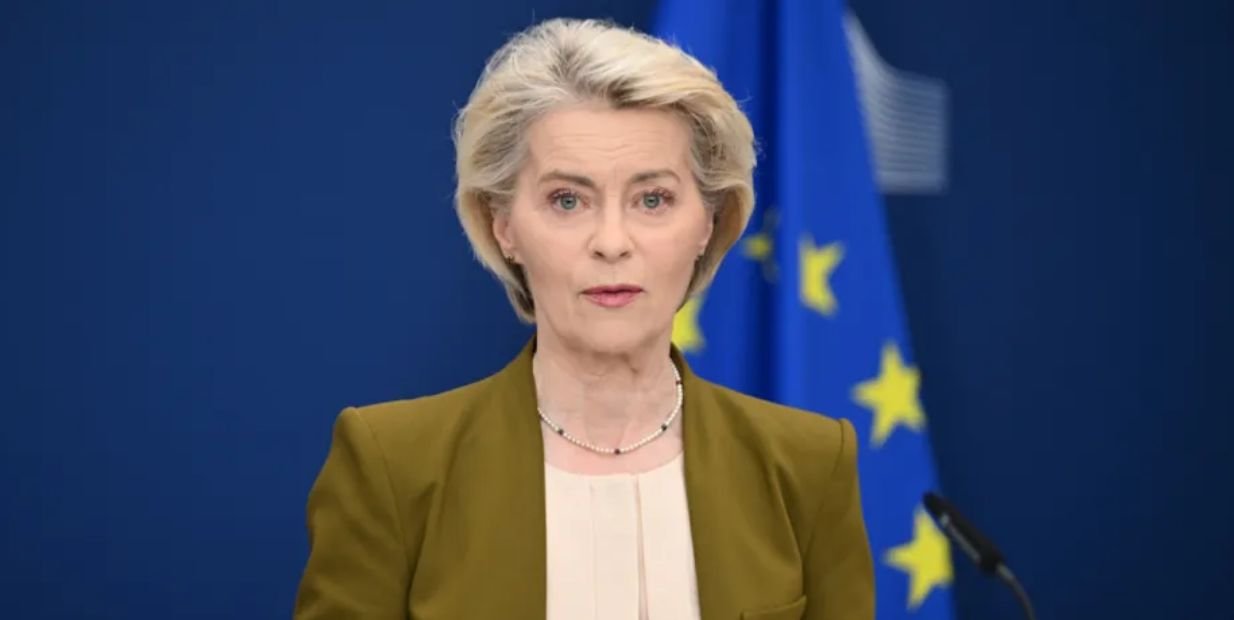
European Commission President Ursula von der Leyen has every right to condition European relations with any other country or bloc on respect for human rights. That, of course, would hold true if she genuinely cared about such values herself.
In response to the June 19 signing of the memorandum of understanding between the United States and Iran – intended to bring an end to a destructive war – von der Leyen declared that the European Union does not intend to lift its sanctions on Tehran.
Speaking on June 15, ahead of the G7 summit, she firmly conditioned any diplomatic thawing on domestic changes within the Islamic Republic.
“The principle of sanctions is that we need real change on the ground before we can think about lifting them,” she stated, adding: “As long as there is no behavioral change, you cannot lift the sanctions because of human rights violations.”
Viewed in isolation, the European position might appear principled, even commendable. In its broader geopolitical context, however, it exposes a staggering level of hypocrisy.
On that very same day, the European Union’s duplicity was laid bare. During a Foreign Affairs Council meeting in Luxembourg, Europe effectively refused to take a unified stand on imposing trade sanctions on Israel, despite its ongoing genocide in the Gaza Strip and unchecked colonial violence and expansionist policies in the occupied West Bank.
The discussion itself would not have taken place had it not been for the persistent efforts of Spain and Ireland, which have repeatedly urged the bloc to suspend the EU-Israel Association Agreement over Israel’s flagrant violations of international law. The initiative failed because the EU remains deeply divided, constrained by the requirement of unanimity on foreign policy and repeatedly blocked by pro-Israel governments.
While Europe continues to engage Israel – providing Israeli Prime Minister Benjamin Netanyahu and his extremist coalition with desperately needed political and economic lifelines – the European public has increasingly moved in the opposite direction.
Recent polling across numerous countries has revealed growing opposition to Israel’s war and genocide in Gaza and increasing support for Palestinian rights. Across Europe, mass demonstrations, consumer boycotts, campus mobilizations, and divestment campaigns have reflected a widening gap between public opinion and official policy.
This reality appears entirely irrelevant to von der Leyen, who remains preoccupied with the human rights records of states viewed as Western adversaries. Such concern is not motivated by solidarity with victims, but by the desire to maintain political leverage that can be invoked when convenient and ignored when necessary.
Lest we forget, von der Leyen was among the first Western leaders to visit Israel following the events of October 7, arriving in Tel Aviv on October 13, 2023. Standing alongside Israeli leaders, she offered unconditional backing, declaring that “Europe stands with Israel.” She did so as Palestinians in Gaza were already being subjected to a devastating military assault that would soon claim tens of thousands of lives.
Although her rhetoric became somewhat more cautious as international legal institutions began investigating Israel for genocide and pursuing war crimes cases against its leaders, her fundamental political alignment never truly changed.
For anyone to believe that von der Leyen has suddenly discovered that human rights should occupy center stage in any responsible foreign policy is simply delusional. This is especially true given how restrained she remained, both in language and action, as the US-Israeli war on Iran expanded into a regional catastrophe that should never have been allowed to unfold.
None of that matters to von der Leyen, of course, since such immense human suffering does not neatly fit within her geopolitical priorities.
It is tempting to conclude that, for von der Leyen and many Western leaders, some human rights matter more than others. Yet even that assessment grants too much credibility to their position, because it assumes that human rights are the actual basis of policy. More often than not, they are merely invoked when politically convenient.
Even the Catholic Church appears to be moving away from this selective moral framework. Since his election in May 2025, Pope Leo XIV has repeatedly emphasized a vision of “just peace” over the traditional doctrine of “just war,” warning against the use of moral and religious language to legitimize military aggression. During his Palm Sunday homily earlier this 2026, he stressed that “God rejects the prayers of those who wage war,” a direct challenge to the normalization of violence by political leaders.
But von der Leyen cannot help herself. The instrumentalization of human rights has long been a staple of Western foreign policy, despite mounting evidence that such commitments are rarely applied consistently. In that sense, Europe appears increasingly bankrupt – not only morally, but politically as well.
The war involving Iran, the subsequent US-Iran agreement, and the major geopolitical shifts surrounding both unfolded largely without meaningful European involvement. Reduced to the role of spectator – or occasional cheerleader – the EU exerted little influence over events, underscoring its diminishing relevance in Middle Eastern and global affairs.
This helps explain why von der Leyen resorted to familiar rhetoric about human rights in Iran while remaining largely silent on Israel’s devastating actions in Palestine, Lebanon, Syria, and elsewhere in the region. With Europe’s influence steadily shrinking, moral posturing has become a substitute for meaningful diplomacy.
Will the EU continue along this path of growing irrelevance, or will it finally heed the views of its own citizens, challenge Israel’s impunity, and pursue a foreign policy genuinely independent of Washington? The answer may determine whether Europe can reclaim political relevance – or continue its slide into long-term decline.
[ad_2]
Source link
