Close Menu
  • Home
  • Alternative News
    • Politics & Policy
    • Independent Journalism
    • Geopolitics & War
    • Economy & Power
    • Investigative Reports
  • Double Speak
    • Media Bias
    • Fact Check & Misinformation
    • Political Spin
    • Propaganda & Narrative
  • Truth or Scare
    • UFO & Extraterrestrial
    • Myth Busting & Debunking
    • Paranormal & Mysteries
    • Conspiracy Theories
  • Contact Us
  • About Us

Subscribe to Updates

Get the latest creative news from FooBar about art, design and business.

What's Hot

Iran Declares Memorandum of Understanding A “Record of US Failure”

June 26, 2026

He Went to Prison. Now He Is in Charge of Them

June 26, 2026

Jan Brady, We Need You

June 26, 2026
Facebook X (Twitter) Instagram
TheOthernews
Subscribe
  • Home
  • Alternative News
    • Politics & Policy
    • Independent Journalism
    • Geopolitics & War
    • Economy & Power
    • Investigative Reports
  • Double Speak
    • Media Bias
    • Fact Check & Misinformation
    • Political Spin
    • Propaganda & Narrative
  • Truth or Scare
    • UFO & Extraterrestrial
    • Myth Busting & Debunking
    • Paranormal & Mysteries
    • Conspiracy Theories
  • Contact Us
  • About Us
TheOthernews
Home»Politics & Policy»SCOTUS lets Trump end temporary protected status for Haitian, Syrian nationals residing in U.S.
Politics & Policy

SCOTUS lets Trump end temporary protected status for Haitian, Syrian nationals residing in U.S.

nickBy nickJune 26, 2026No Comments3 Mins Read
Facebook Twitter Pinterest LinkedIn Tumblr Email
Share
Facebook Twitter LinkedIn Pinterest Email


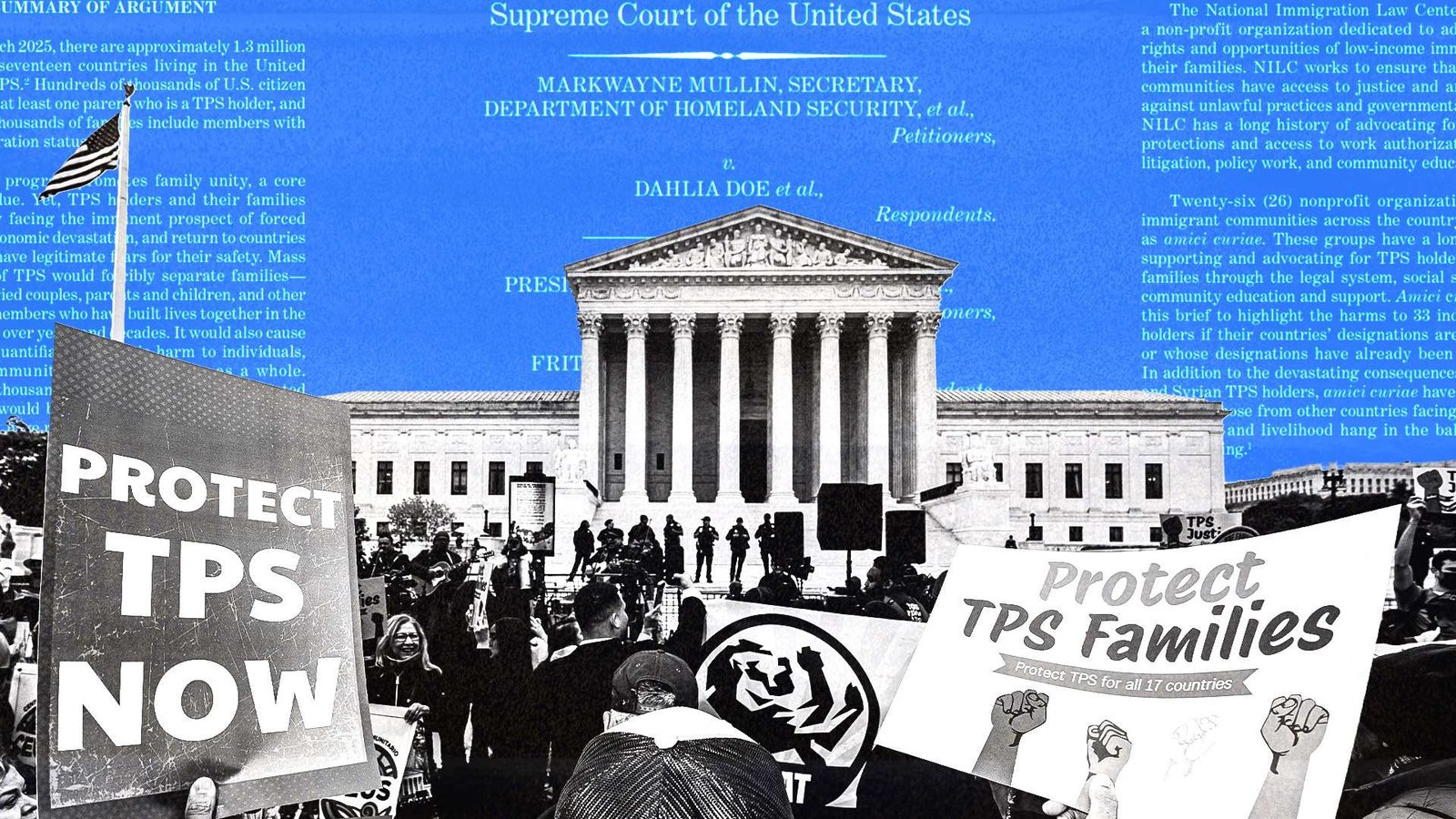
The U.S. Supreme Court ruled 6–3 Thursday in favor of the Trump administration’s decision to strip Haitian and Syrian nationals of a legal protection that had allowed them to lawfully remain in the United States because it was too risky for them to be deported to their home countries.

The case is Mullin v. Doe. It centers on the temporary protected status (TPS) program, in which executive branch officials are authorized to designate qualifying countries based on the existence of certain conditions that make those countries especially dangerous, such as military conflicts or natural disasters. Once designated, foreign nationals from such countries may remain lawfully in the United States without fear of deportation since the U.S. government has determined that it would be too dangerous for them to return.

Thursday’s decision by the Supreme Court affirms the Trump administration’s authority to end TPS protections for Haitian and Syrian nationals.

Under the TPS statute, “there is no judicial review of any determination…with respect to the designation, or termination or extension of a designation.” According to the majority opinion of Justice Samuel Alito, that language was sufficient to dispose of most of the case, as it “squarely bars all of respondents’ non-constitutional claims.”

Turning then to the constitutional claims, Alito dismissed them as well. “Citing statements made by President Trump and former Secretary of Homeland Security Kristi Noem,” Alito wrote, “one set of respondents advances an equal protection claim that Haiti’s TPS designation was terminated because of the racial makeup of that country’s population.” But that argument failed, according to Alito, because, “ironically, one of respondents’ other arguments undermines the equal protection claim by offering a strong, race-neutral explanation for Haiti’s termination: namely, that the current administration, which has terminated every TPS designation that has come up for renewal, simply opposes the TPS program, at least as it has been implemented in the past.”

Writing in dissent, Justice Elena Kagan, joined by Justices Sonia Sotomayor and Ketanji Brown Jackson, maintained that the TPS statute actually does allow “judicial review of whether the Secretary adhered to the procedures it mandates—which is what the plaintiffs dispute here.” And Kagan likewise rejected the majority’s claim that race likely did not motivate the government’s actions. “The evidence [the Haitian plaintiffs] have offered includes statements by the President so repellent and racially inflected,” Kagan wrote, “that the majority declines to put them in print.”

The upshot of this decision is that hundreds of thousands of people who have been residing lawfully in the United States have now lost a key legal protection against deportation while the executive’s control over the immigration system has been strengthened.

The Supreme Court’s decision in Mullin v. Doe is available here.


Source link

Share. Facebook Twitter Pinterest LinkedIn Tumblr Email
nick
  • Website

Related Posts

Jan Brady, We Need You

June 26, 2026

SCOTUS overturns Hawaii’s default rule against guns on private property open to the public

June 26, 2026

What to expect from Abelardo de la Espriella, Colombia’s new president

June 25, 2026
Leave A Reply Cancel Reply

Demo
Our Picks

Putin Says Western Sanctions are Akin to Declaration of War

January 9, 2020

Investors Jump into Commodities While Keeping Eye on Recession Risk

January 8, 2020

Marquez Explains Lack of Confidence During Qatar GP Race

January 7, 2020

There’s No Bigger Prospect in World Football Than Pedri

January 6, 2020
Stay In Touch
  • Facebook
  • Twitter
  • Pinterest
  • Instagram
  • YouTube
  • Vimeo
Don't Miss

Iran Declares Memorandum of Understanding A “Record of US Failure”

Conspiracy Theories June 26, 2026

Iran has declared victory over the United States. The newly signed memorandum of understanding between…

He Went to Prison. Now He Is in Charge of Them

June 26, 2026

Jan Brady, We Need You

June 26, 2026

Iran Didn't Win

June 26, 2026

Subscribe to Updates

Get the latest creative news from SmartMag about art & design.

Facebook X (Twitter) Instagram Pinterest
© 2026 ThemeSphere. Designed by ThemeSphere.

Type above and press Enter to search. Press Esc to cancel.