
[ad_1]
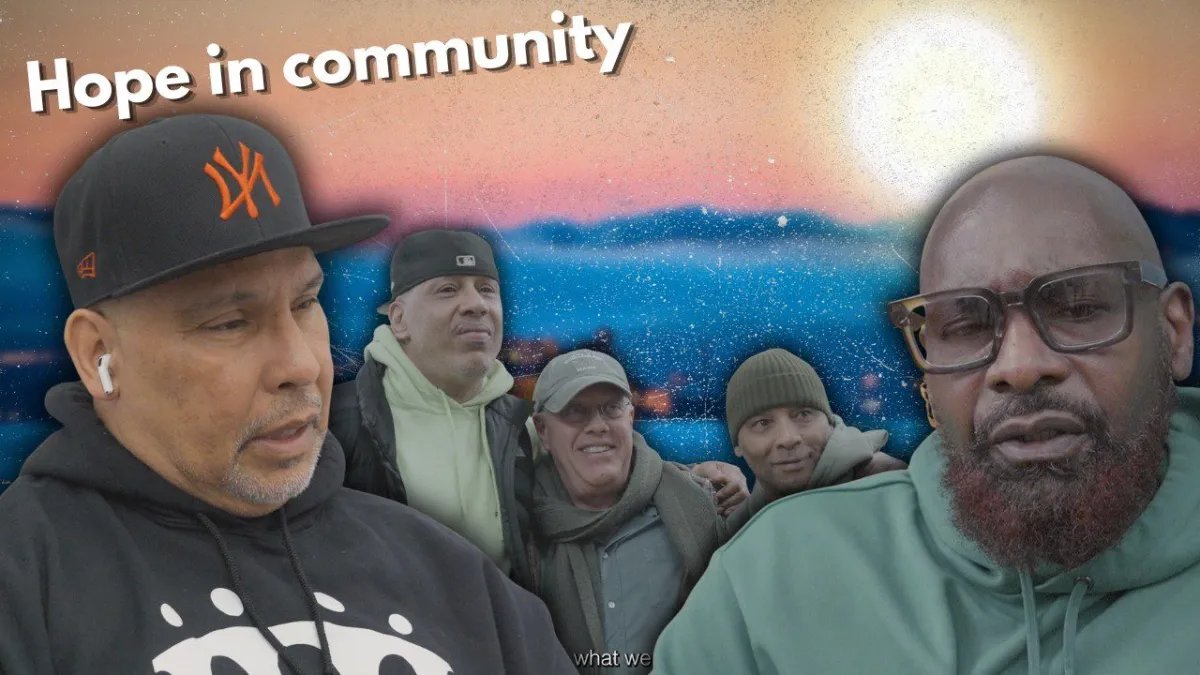
The Return Citizen Support Group in New Jersey has constructed a community that utilizes parallel structures of mutual aid to support formerly incarcerated civilians in their journeys beyond prison.
America’s prison system does not end at the prison gate. For millions of formerly incarcerated people, release marks the beginning of another sentence—one enforced not by prison guards, but by laws, discrimination, economic exclusion, and a political system that too often values punishment over rehabilitation. While politicians routinely invoke the language of “second chances,” returning citizens face barriers to housing, employment, education, voting, and even basic dignity that make successful reentry deliberately difficult.
In this powerful new documentary, journalist Chris Hedges turns his attention away from the machinery of mass incarceration and toward the communities building alternatives to it. Centered on the Returning Citizen Support Group in Newark, New Jersey, the film reveals how mutual aid, solidarity, and collective care succeed where government institutions have largely failed. Rather than accepting a system designed to isolate and recycle people back into prison, these returning citizens are creating something profoundly different: a community rooted in healing, accountability, and hope. In doing so, they challenge one of the central myths of America’s carceral state—that redemption comes from punishment rather than from one another.
An Original Documentary from The Chris Hedges Report
The Chris Hedges Report
Editor’s Note: This transcript has been edited for clarity, grammar, punctuation, and readability while remaining faithful to the speakers’ original words and intended meaning. Minor verbal repetitions and transcription errors have been corrected without altering substance.
Edited Transcript (Part 1)
Chris Hedges:
The United States has 25 percent of the world’s prison population—more than two million people—despite representing less than 5 percent of the global population.
America’s prisons are notorious for violence, overcrowding, and widespread human rights abuses, including the extensive use of solitary confinement.
But what is often overlooked is what happens after people are released.
Formerly incarcerated people return to a society where they face legalized discrimination through countless laws, regulations, and policies that impose permanent marginalization. Thrust into what amounts to a criminal caste system, many are denied the right to vote, lose access to passports, are barred from receiving public assistance—including housing—and are excluded from a wide range of employment opportunities.
They are often burdened with exorbitant fines, forced to comply with arbitrary probation requirements, and risk being sent back to prison for even minor violations.
The obstacles placed before them are enormous, helping explain why, within five years of release, nearly 70 percent return to prison.
I have taught students in the New Jersey prison system through the Rutgers University college degree program since 2010.
My students and I have learned that, with little or no institutional support and countless barriers standing in their way, they can often rely only on one another.
This network of solidarity—of mutual aid—is what keeps many of my students going.
This short documentary follows a weekly support group in Newark, New Jersey, and captures both their struggle and their determination.
Support Group Facilitator:
Today is Thursday.
We’re gathered here at the Greater Newark Conservancy, located at 32 Prince Street in Newark, New Jersey.
Every Thursday evening from 6:00 to 8:00 p.m., the Returning Citizen Support Group comes together to support one another, support our families, support our community, and stand with everyone directly impacted by mass incarceration.
We’re here because people leaving prison often don’t have genuine support.
Who better to help one another than those of us who have lived through the experience ourselves?
We understand what you’ve been through because we’ve been there too.
George Corbett:
My name is George Corbett.
I served 30 years and five months in prison.
I’ve now been home for about fourteen months, and today I’m a senior technician at Valvoline.
Gerald Wilson Prince:
My name is Gerald Wilson Prince.
I’m here to support this group and everyone who comes through these doors.
I served 30 years and nine months.
While I was incarcerated, I watched men come in and out of prison—not once, not twice, but three, four, five, even six times.
I was fortunate.
When I came home after thirty years, my family was waiting outside for me.
But even with that love and support, I struggled.
I began reaching out to brothers who had already been home for seven or ten years. They helped me understand what I was feeling—the anxiety, the confusion, and all the emotions that came with reentering society.
Those conversations became the foundation for the Returning Citizen Support Group.
We’ve been meeting here continuously since early 2017.
Participant:
I served eleven years and two months.
I come here for support—and to find support for my son.
One of the greatest blessings in my life has been my relationship with Shuka.
She’s my girlfriend.
(Applause.)
Support Group Facilitator:
We have returning citizens here who work throughout government and community organizations.
They bring information about changes in parole, new resources, and updates for people preparing to come home.
That information helps everyone.
Dav Muhammad:
My name is Dav Muhammad.
I served twenty-five years in prison.
Today I work with the Urban League of Essex County in reentry services.
One of my goals is to continue advocating—especially for women.
There simply aren’t enough services available for women returning home.
We’re trying to build something better.
When I came home, I didn’t have this kind of support.
The brothers here wrapped their arms around me.
This became my extended family.
Many people returning home carry deep trauma.
We want to provide a place where people can share openly, feel safe, and allow themselves to be vulnerable.
A lot of us genuinely want to do the right thing.
But we’re denied opportunities because we’re constantly discriminated against and stigmatized.
There’s a myth that prison automatically makes people worse.
That simply isn’t true.
Many people spend their years inside educating themselves, growing, and preparing to contribute something positive when they return.
That’s exactly what we’re trying to do.
And it feels good just to be out here.
The public needs to understand something.
We’re human beings.
We’re individuals.
All we’re asking for is a place in society.
Edited Transcript (Part 2)
Participant:
When you grow up in the streets, you learn to make sense of violence. It becomes normal. It’s the world you know.
When I went to prison, though, I found some of the greatest mentors I’ve ever had.
These men understood me because they’d lived through the same experiences. They knew what I was carrying inside before I even had the words to describe it. They understood what it meant to come from a place where violence becomes a form of currency.
Chris Hedges:
The prison system itself offers very little.
It is overwhelmingly punitive, and I don’t believe it comes anywhere close to accomplishing what it claims to do in terms of rehabilitation.
There may be programs here and there, but they barely scratch the surface.
Everything people truly need in order to succeed has to be created outside the prison system itself.
The foundation already exists within these men and women. What they need is an opportunity to reconnect with one another, build community, and help each other move forward.
That is why groups like this matter so deeply.
Participant:
When we come home, we don’t even know how to use an ATM card anymore.
We’re afraid to get on a bus.
People laugh when they hear that, but it’s true.
After decades inside, everyday life feels overwhelming.
Sometimes you have to call another brother and say, “Listen, I’m trying to use this ATM card,” or, “I’m trying to figure out the bus system.”
Those little things matter.
They help you become part of society again.
My second day home, I was supposed to take the bus here to the organization.
I was scared.
But I made it.
Now I’m here.
And I have a community of people who know exactly what that fear feels like because they’ve lived it themselves.
That’s a beautiful thing.
Support Group Leader:
There is a real brotherhood here in the Returning Citizen Support Group.
One of our goals is to make sure that no one has to struggle alone.
We try to make sure people have housing.
We try to make sure they have food.
If someone needs help finding resources, we help.
If someone needs encouragement, we help with that too.
That’s what makes this group so important.
It’s practical support.
But it’s also therapeutic.
For many of us, this is where healing begins.
Participant:
When I first came home, I wasn’t thinking about going to college.
Someone here told me, “We have a college program.”
I said, “I don’t have time for that.”
He looked at me and said, “That’s the dumbest thing I’ve ever heard anybody say.”
He said, “This opportunity is being given to you for free. Take advantage of it.”
I listened.
Today I’m only three classes away from earning my bachelor’s degree.
That has completely changed my life.
(Applause.)
It gave me confidence.
It gave me direction.
Most importantly, it gave me hope.
Support Group Facilitator:
People walk through these doors and immediately feel welcome.
They’re surrounded by others who understand their trauma, their struggles, and the obstacles they continue to face every day.
No one has to explain what incarceration feels like.
Everyone here already knows.
That’s what creates trust.
That’s what creates healing.
Edited Transcript (Part 3)
Participant:
I believe my path to healing began years ago, but it’s continued every time I walk through these doors.
The support I’ve found here has been tremendous.
It’s been life-changing.
I’ve only been home for about three months, but I’m excited about what’s ahead.
For the first time in a long time, I feel like I’m moving toward something instead of running from something.
Support Group Member:
At the end of the day, we can endure far more than we think we can.
That’s what freedom has taught me.
Freedom isn’t simply walking out of prison.
Freedom is learning how to live again.
It’s learning how to trust people.
It’s learning how to ask for help.
It’s learning that your past doesn’t have to determine your future.
Chris Hedges:
One of the great myths surrounding incarceration is that punishment alone produces rehabilitation.
It does not.
People rebuild their lives through relationships, education, solidarity, and mutual support—not through isolation and humiliation.
The American prison system is extraordinarily effective at punishing people.
It is remarkably ineffective at preparing them to return home.
What truly changes lives are the bonds people create with one another after they leave prison.
These support networks provide something the prison system rarely offers: hope.
Participant:
Everybody here understands what it’s like to start over.
Nobody judges you because everybody has their own story.
When someone walks through that door for the first time, they’re scared.
Many of us were scared too.
So we welcome them.
We let them know they’re not alone.
That’s important because loneliness is dangerous.
Isolation can pull people backward.
Community helps move people forward.
Dav Muhammad:
We don’t just meet once a week and disappear.
We’re constantly checking on each other.
If someone misses a meeting, somebody calls.
If somebody needs transportation, somebody steps up.
If someone needs food, clothing, housing, or simply someone to listen, we try to make sure those needs are met.
This isn’t charity.
It’s family.
It’s accountability.
It’s mutual responsibility.
Because we’ve all survived something together, we understand that none of us succeeds unless all of us have the opportunity to succeed.
Participant:
People often see the conviction before they see the person.
They see the prison sentence before they see the father.
Before they see the mother.
Before they see the worker.
Before they see the student.
What we’re trying to do here is remind people that we’re more than the worst thing we’ve ever done.
We’re human beings trying to build meaningful lives.
That’s all we’ve ever wanted.
Edited Transcript (Part 4)
Participant:
People assume that when you leave prison, everything just goes back to normal.
It doesn’t.
You leave one institution, but you’re immediately confronted by another set of barriers.
Finding work isn’t easy.
Finding housing isn’t easy.
Even simple interactions with people can be difficult because you’ve spent years in an environment where trust wasn’t always possible.
That’s why spaces like this matter.
They remind us that we’re not facing those challenges alone.
Gerald Wilson Prince:
When I first came home, I had family who loved me.
But even with that support, I struggled to process everything I was feeling.
I didn’t understand the anxiety.
I didn’t understand why simple things seemed so overwhelming.
The men who had come home before me helped me make sense of it.
They reminded me that what I was experiencing wasn’t weakness—it was part of the process of coming home.
That’s why we continue this work.
Everyone deserves someone who’s already walked the road they’re about to travel.
George Corbett:
For many of us, success isn’t measured by money.
Success means waking up every morning with purpose.
It means going to work.
Being there for your family.
Helping someone else who’s just coming home.
That’s how you rebuild your life.
Not all at once.
One day at a time.
Chris Hedges:
The United States spends enormous sums expanding prisons, policing communities, and maintaining one of the largest systems of incarceration in human history.
Far less attention—and far fewer resources—are devoted to helping people successfully return to society.
The result is predictable.
People released from prison are expected to navigate overwhelming legal, economic, and social barriers largely on their own.
When those institutions fail, communities are forced to create their own systems of care.
That is precisely what these men and women have done.
They have built a model based not on punishment, but on solidarity.
Not on exclusion, but on belonging.
Not on fear, but on hope.
Participant:
When somebody new walks into this room, we don’t ask them what they did.
We ask them what they need.
That’s a big difference.
We know people can change because we’ve changed.
We’ve seen it happen over and over again.
Every person sitting here represents proof that another future is possible.
Dav Muhammad:
The work doesn’t stop when someone leaves prison.
In many ways, that’s when the real work begins.
Freedom brings responsibility.
Healing takes time.
Community takes commitment.
Every week we come together because every week someone needs encouragement.
Every week someone needs information.
Every week someone needs to know they haven’t been forgotten.
And every week we remind one another that we’re stronger together than we ever were alone.
Edited Transcript (Part 5)
Participant:
The greatest thing I’ve gained since coming home isn’t just a job or a place to live.
It’s hope.
Hope that I can continue growing.
Hope that I can give something back.
Hope that my life can mean something beyond my mistakes.
That’s what this group has given me.
Support Group Member:
Every person who comes through these doors brings a different story.
Some have been home for years.
Some have been home for only a few days.
But once you’re here, you’re family.
We celebrate each other’s victories.
When somebody gets a job, we celebrate.
When someone earns a degree, we celebrate.
When somebody simply makes it through another difficult week, we celebrate that too.
Those victories matter.
They remind us that progress isn’t always dramatic.
Sometimes it’s simply refusing to give up.
Gerald Wilson Prince:
People often ask why we continue doing this work.
The answer is simple.
Because someone did it for us.
Somebody reached back and helped us find our footing.
Now it’s our responsibility to do the same for the next person coming home.
That’s how community grows.
That’s how cycles are broken.
Dav Muhammad:
Our mission isn’t simply to survive after prison.
It’s to thrive.
We want people to become leaders.
We want them to become fathers, mothers, students, workers, mentors, and organizers.
We want them to recognize that they still have value—that they always had value.
The prison system may define people by the worst moment of their lives.
We refuse to do that.
We see the whole person.
That’s what restoration looks like.
Chris Hedges:
The crisis of mass incarceration cannot be solved through harsher punishment, longer sentences, or larger prisons.
Nor can it be solved by expecting those released from prison to overcome impossible barriers on their own.
The answer lies in the very communities abandoned by the state.
It lies in mutual aid.
It lies in solidarity.
It lies in people willing to stand beside one another when institutions refuse to do so.
The Returning Citizen Support Group demonstrates a simple but profound truth.
Human beings heal through community.
They rebuild their lives through trust.
They reclaim their dignity through relationships founded on compassion, accountability, and shared experience.
These are the institutions that make freedom possible.
Participant:
At the end of the day, we’ve learned something important.
We can endure far more than we ever imagined.
And we don’t have to endure it alone.
That’s what freedom really means.
It’s not simply walking out of prison.
It’s knowing that when you walk through the next door, someone is there waiting to welcome you home.
Editor’s Note: At a moment when the once vaunted model of responsible journalism is overwhelmingly the play thing of self-serving billionaires and their corporate scribes, alternatives of integrity are desperately needed, and ScheerPost is one of them. Please support our independent journalism by contributing to our online donation platform, Network for Good, or send a check to our new PO Box. We can’t thank you enough, and promise to keep bringing you this kind of vital news.
You can also make a donation to our PayPal or subscribe to our Patreon.
Please share this story and help us grow our network!
[ad_2]
Source link
