
[ad_1]
It is so obvious that I shouldn’t have to say it, but at this perilous moment in U.S. history, I will:
Alliances matter.
The willingness of other countries to work with and alongside America to counter threats and solve big problems matters.
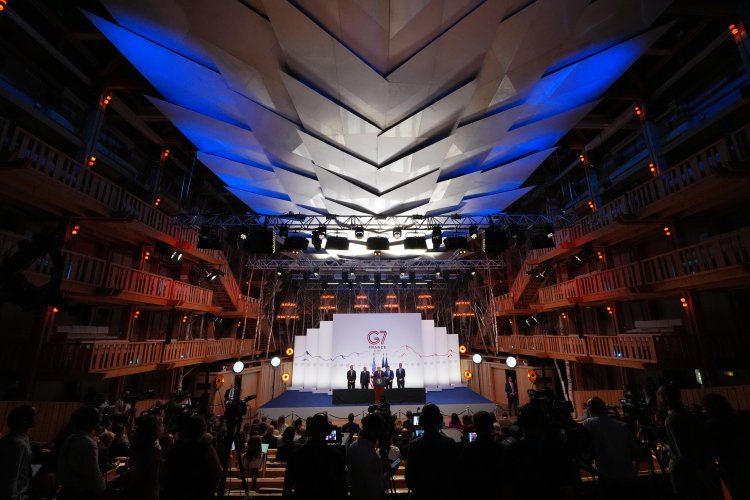
There are times when the Trump administration seems to forget this timeless truth. So, it was heartening this week to see President Trump gather in France with leaders of the world’s other major democracies at the G7. President Trump said the leaders “found a great deal of unity” at the meeting. He joined the other countries in reinforcing their “unwavering support for Ukraine.” In a nice touch, French President Emmanuel Macron even invited President Trump for a private dinner at the Palace of Versailles.
I had the honor of attending two G7s when I was in the Reagan administration, and I can tell you these meetings – and other gatherings like them – are much more than staged diplomatic events. In years past, agreements on issues ranging from arms control and trade to terrorism were advanced or finalized at these in-person gatherings of the world’s most powerful leaders. At this year’s G7, the leaders discussed Ukraine, the Middle East amid the tenuous ceasefire with Iran, the implications of artificial intelligence, and much more.
Since the end of World War II, the G7 and most of the world’s most consequential international bodies have been primarily led, financed, or shaped by the U.S. Although these institutions are imperfect and often frustrating, they have proved critical in helping the U.S. advance the cause of freedom and counter emerging threats.
They may become even more important in the future because other forums – often led or organized by U.S. competitors like Russia and China – have been created to challenge the U.S.-led world order.
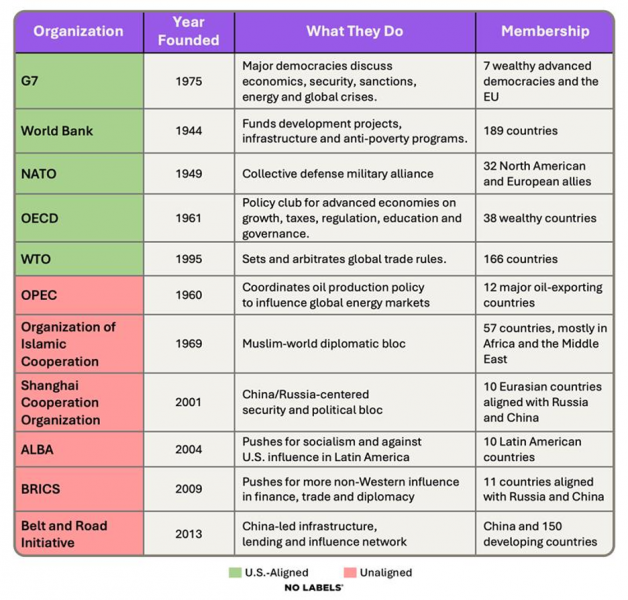
There is certainly nothing wrong with other countries with shared interests and concerns coming together to discuss them. But every American should be clear-eyed about the fact that our adversaries are becoming increasingly assertive in undermining the post-World War II order built by the U.S. which, on balance, has made the world a safer, more prosperous place.
In 2022, Chinese President Xi Jinping and Russian President Vladimir Putin notably coauthored a statement declaring that the partnership between their countries had “no limits” and that they sought to create a multipolar world order. If there was any question about what Putin and Xi thought was standing in the way of this order, their statement included nine direct criticisms of the United States.
This is a profoundly dangerous moment in the world, and the U.S. needs to redouble its focus on expanding and deepening its alliances worldwide.
Here at home, it’s time for our leaders in Washington to wake up and realize that the mindless hatred and tribalism infecting our politics are doing the work of Putin and Xi for them. Our adversaries love nothing more than to see Americans and their leaders at one another’s throats. They laugh when they see the happenings such as the one earlier this month, when authorization for an essential intelligence-gathering tool – Section 702 of the Foreign Intelligence Surveillance Act (FISA) – lapsed due to partisan infighting between the White House and Congress.
In many ways, the United States is still at the peak of its powers, with the world’s strongest economy. With artificial intelligence, we are once more leading the world in developing a technology capable of changing the world. But U.S. global leadership certainly is not guaranteed, and we will eventually cede our position if we do not elect better leaders and develop better solutions in our political system.
It’s a reminder why the work of No Labels – to counter the extremism in our politics and empower America’s increasingly frustrated commonsense majority – is more important than ever before.
[ad_2]
Source link
