
[ad_1]
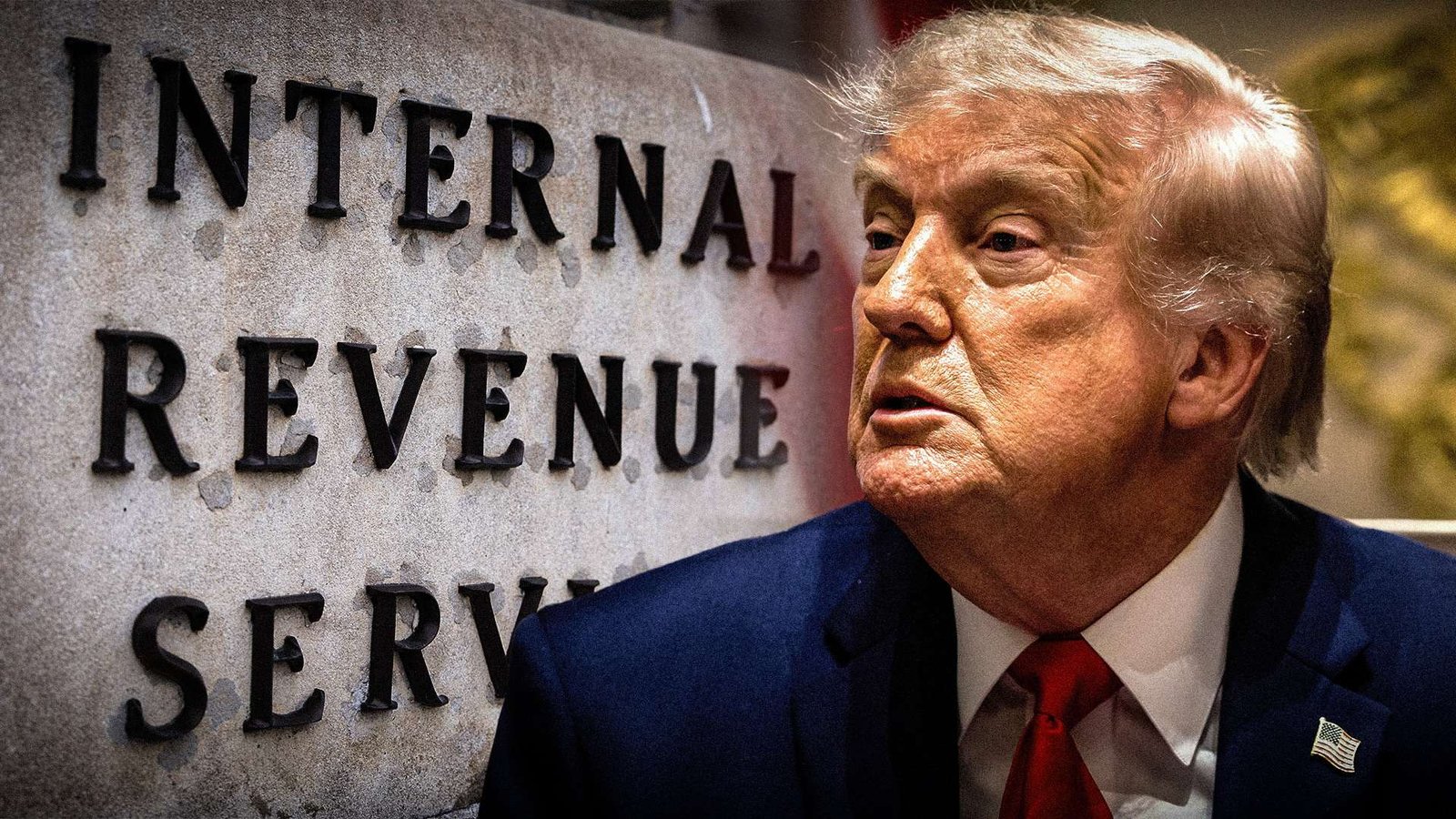
As President Donald Trump’s lawyers tell it, there is “no evidence” that the May 18 “settlement” of his lawsuit against the IRS, which included huge favors for him, his family, and his supporters, was a product of collusion. That position is hard to take seriously, since both sides in the lawsuit were represented by attorneys who worked for Trump, and the president himself has described the cozy arrangement as “a settlement with myself.”
In a June 12 brief ordered by Kathleen Williams, the federal judge in Florida who oversaw Trump v. IRS, the president’s lawyers improbably maintained that the “settlement” was business as usual at the Department of Justice (DOJ). That brief “only underscores the need to investigate whether the parties have perpetrated a fraud on this Court and corrupted the integrity of the judicial process,” 35 former federal judges argue in a response filed on Friday.
Trump sued the IRS on January 29, claiming that an IRS contractor’s illegal disclosure of his tax returns had caused “at least” $10 billion in damages. In addition to offering a plainly preposterous estimate of the injury he had suffered, Trump missed the statutory deadline for filing such claims. And even if he had filed his lawsuit on time, he would have faced the challenge of arguing that the contractor qualified as an “officer or employee of the United States”—a point that the DOJ has disputed in other cases involving similar claims.
Despite those manifest legal weaknesses, the DOJ never contested Trump’s claims, in sharp contrast with the way it has handled lawsuits against the IRS by plaintiffs who were not the president. That failure underlined the blatant conflicts of interest created by the case, which pitted Trump against an agency he oversees, represented by DOJ lawyers who serve at his pleasure. Further compromising the DOJ’s ability to represent the IRS, an executive order that Trump issued in February 2025 bars the government’s lawyers from taking legal positions that contradict the president’s.
The situation was so bizarre that Williams questioned whether the case involved a genuine controversy between adverse parties, as required for the lawsuit to proceed. But two days before the deadline for briefing on that crucial issue, Trump dropped his lawsuit, and Acting Attorney General Todd Blanche announced a “settlement agreement” that promised $1.8 billion in taxpayer money for an “Anti-Weaponization Fund” designed to benefit Trump’s friends and followers. The next day, Blanche revealed an addendum that purports to shield Trump and his family from liability for tax violations and any other federal offenses they might have committed prior to May 19.
Neither of those provisions was logically related to Trump’s complaint that the IRS had failed to properly supervise contractors entrusted with confidential tax information, and the benefits they offered were starkly different from the terms of prior settlements involving unauthorized disclosure of tax returns. The Anti-Weaponization Fund provoked an intense, bipartisan backlash, prompting Blanche to ditch the plan two weeks after announcing it. But Blanche said the sweeping immunity deal, which could save Trump more than $100 million in back taxes, interest, and penalties, remained in place.
The retired judges, who include former 4th Circuit Judge Michael Luttig and several other Republican appointees, note that the June 12 brief from Trump’s lawyers glides over “clear and convincing” evidence of collusion, which they say is “more than enough to warrant further investigation.” That evidence, they say, suggests “the parties used this suit and subsequent settlement to give cover for a give-away to the lead Plaintiff, who also controls the Defendants.”
As Luttig et al. see it, Trump’s case against the IRS features “an obviously collusive suit; an unprecedented, clearly unwarranted settlement premised on the supposed legitimacy of that suit; active steps to prevent the Court from scrutinizing the legitimacy of their invocation of the judicial process; and now, the Justice Department unilaterally walking away from the huge settlement slush fund, even as it keeps the Plaintiffs’ broad personal release.” The abandonment of the Anti-Weaponization Fund, they say, is itself striking evidence of collusion.
“That one ‘side’ of the purported dispute could unilaterally scrap a material term without even so much as a revised written agreement makes it crystal clear that these parties were never adverse,” the retired judges argue. “Instead, this suit was collusive from the start: the same person controlled it on both sides of the ‘v’: President Trump. DOJ’s failure to raise dispositive winning defenses while ‘settling’ the case for an astronomical sum of taxpayer dollars and extraordinarily broad releases to plaintiffs just days before having to answer this Court’s questions about collusiveness is further evidence of both collusion and fraud on the court.”
Trump’s lawyers argued that the DOJ would have been authorized to settle Trump’s claims even if he had never filed a lawsuit. Not so, Luttig et al. say: “No authority permits the Government to settle truly non-adverse cases. The statute permitting the Attorney General to settle ‘imminent litigation,’ for example, does not extend such authority to situations where there is no actual dispute to ‘compromise.’ The same is true for the statutes authorizing the compromise of tax liabilities and federal claims. For all these statutes, it beggars belief that Congress intended to open the Treasury to ‘settlements’ orchestrated by the same party controlling both sides of the collusive ‘dispute.'”
In an effort to show that Trump’s case involved a real legal dispute between adverse parties, his lawyers noted that three of the plaintiffs—Donald Trump Jr., Eric Trump, and the Trump Organization—were not the president of the United States or even “employees of the federal government.” When “private plaintiffs sue the United States for statutory violations,” they said, the case is “inherently adversarial.”
Please, Luttig et al. say. They note that the individual plaintiffs are “from the same family,” that they are “business partners with the same financial interests and counsel,” and that they “own or manage the corporate plaintiff.” In any event, “Plaintiffs have no answer for the fact that the lead Plaintiff, President Trump, directs and controls the Defendants. That alone renders this lawsuit non-adversarial, collusive, and jurisdictionally improper.”
Trump’s lawyers suggested he could have won the case on the merits. But as Luttig et al. note, they did not offer “any explanation of how they could overcome the statute of
limitations defense,” which “would eviscerate liability.”
Despite that fatal flaw, Trump’s lawyers claimed the DOJ reached “a fully proper government settlement” after weighing the merits of Trump’s claims and assessing the cost of defending against them. They noted that civil defendants routinely decide against litigating claims based on “the entirely rational conclusion that the cost of defense exceeds the cost of settlement.”
That suggestion, Luttig et al. say, “is laughable given the facts of this case: a settlement worth nearly $1.8 billion in taxpayer funds plus a capacious and extraordinary general release that purports to forfeit claims for substantial sums in unpaid taxes and other potential damages and fines.” Such “monumental relief, they note, “dwarfs any conceivable ‘cost of defense.'”
Trump’s lawyers argued that the former federal judges did not have standing to file the May 27 motion in which they urged Williams to reopen the case. But that issue is “a red herring,” Luttig et al. say, because Williams has “inherent authority” to “investigate fraud.”
If Williams concludes that Trump used a phony lawsuit to obtain favors for himself, his relatives, and his supporters, Luttig et al. note, she can impose sanctions under Rule 11 of the Federal Rules of Civil Procedure, which covers “a range of bad faith conduct,” including submissions filed “for an improper purpose,” claims with “no reasonable
factual basis,” and filings “based on a legal theory that has no reasonable chance of success and that cannot be advanced as a reasonable argument to change existing law.” They add that “a bad faith or improper purpose might include collusively filing a lawsuit with claims subject to multiple dispositive defenses solely to provide cover for a collusive settlement.”
Luttig et al. say Williams also has “inherent power” to reopen the case under Rule 60, which applies to submissions that “defile the court itself” or constitute “a fraud perpetrated by officers of the court so that the judicial machinery cannot perform in the usual manner its impartial task of adjudging cases that are presented for adjudication.” They add that Rule 60 “also encompasses an ‘unconscionable plan or scheme’ perpetrated upon the court.”
Because “it addresses schemes that fall in the cracks between existing statutory
mechanisms, the Court’s inherent authority confers broad power to remedy fraudulent conduct and sanction litigants and attorneys,” Luttig et al. say. “A court’s power in such cases is expansive: ‘whatever form the relief has taken in particular cases, the net result in every case has been the same: where the situation has required [it] the court has, in some manner, devitalized the judgment.'”
When Williams ordered Trump’s lawyers to address Luttig et al.’s charges of collusion and fraud, she did not ask the DOJ for its take on the “settlement agreement.” But we can be confident that its response would be similar, since its lawyers also work for Trump—a basic reality that underlies the brazen corruption of his “settlement with myself.”
[ad_2]
Source link
