
[ad_1]
The forecast for summer 2026 is hot, hot, hot.
Warming ocean temperatures from an El Niño weather pattern are expected on top of already rising global temperatures, so it’s especially important to know how to stay safe in this summer’s sweltering heat.
You’ve probably seen public advisories about heat stroke, but did you know that some common medications can make you more susceptible? Or that older people are at higher risk?
How can you spot the difference between heat exhaustion and heat stroke, which is a call-911-right-now emergency?
Here are essential facts about heat exhaustion and heat stroke, who’s at greatest risk, and how to stay safe.
Heat stroke vs. heat exhaustion: How to spot the difference
Heat exhaustion happens when your body is dehydrated or has sweat so much that your water and salt reserves are depleted. Dizziness, nausea, weakness, and muscle cramps are all symptoms.
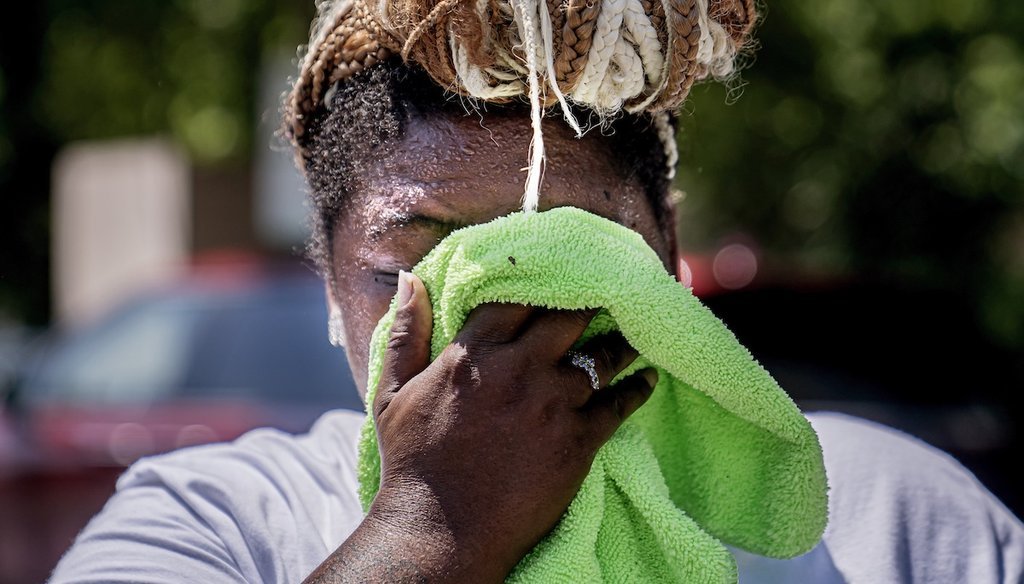
It’s serious but not usually life-threatening. It can typically be treated by drinking water, getting electrolytes through food or a sports drink and resting in an air-conditioned or shaded place. Loosening tight clothing and putting cold cloths on the head, neck, and wrists can help the body cool down quicker.
Heat stroke, on the other hand, can be fatal. It happens when the body’s attempts to cool itself fail and body temperature begins to rise rapidly, above 104 degrees, which can damage the brain and major internal organs.
The symptoms can be similar, so how do you tell the difference?
“Someone with heat exhaustion has a normal mental status, someone with heat stroke does not,” said Dr. Ken Zafren, professor of emergency medicine at Stanford University.
If a person is acting confused, behaving strangely, having seizures, can’t answer basic questions, or is passed out — those are all signs of heat stroke and you should call 911 immediately.
While waiting for paramedics, use whatever means available to cool the person down: Put them in a cold bath. Spray them with a garden hose. Fan them while misting them with cold water. Put ice packs on the person’s neck, armpits and groin, or cover them with cold, wet sheets.
Heat exhaustion can become heat stroke if it’s not addressed. But one does not always lead to the other — heat stroke can happen without signs of heat exhaustion.

Salem Fire Department Capt. Matt Brozovich, left, and Falck Northwest ambulance personnel help treat a man experiencing heat exposure during a heat wave in Salem, Oregon, June 26, 2021. (AP)
Certain common medications can make a person more sensitive to heat-related illness
High blood pressure medications, aspirin, anti-depressants, antipsychotics, mood stabilizers, and ADHD medications are just some of the classes of drugs that heighten the risk of heat-related illnesses. Check out this list of medications to see if you are taking any.
Each medication is different, but they are on this list because they interfere with the body’s mechanisms for cooling itself. Taking more than one medication on the list can have a cumulative effect.
So what do you do if you are prescribed one of these medications?
“Keep taking those medicines,” Zafren said, “but just be a little more cautious.”
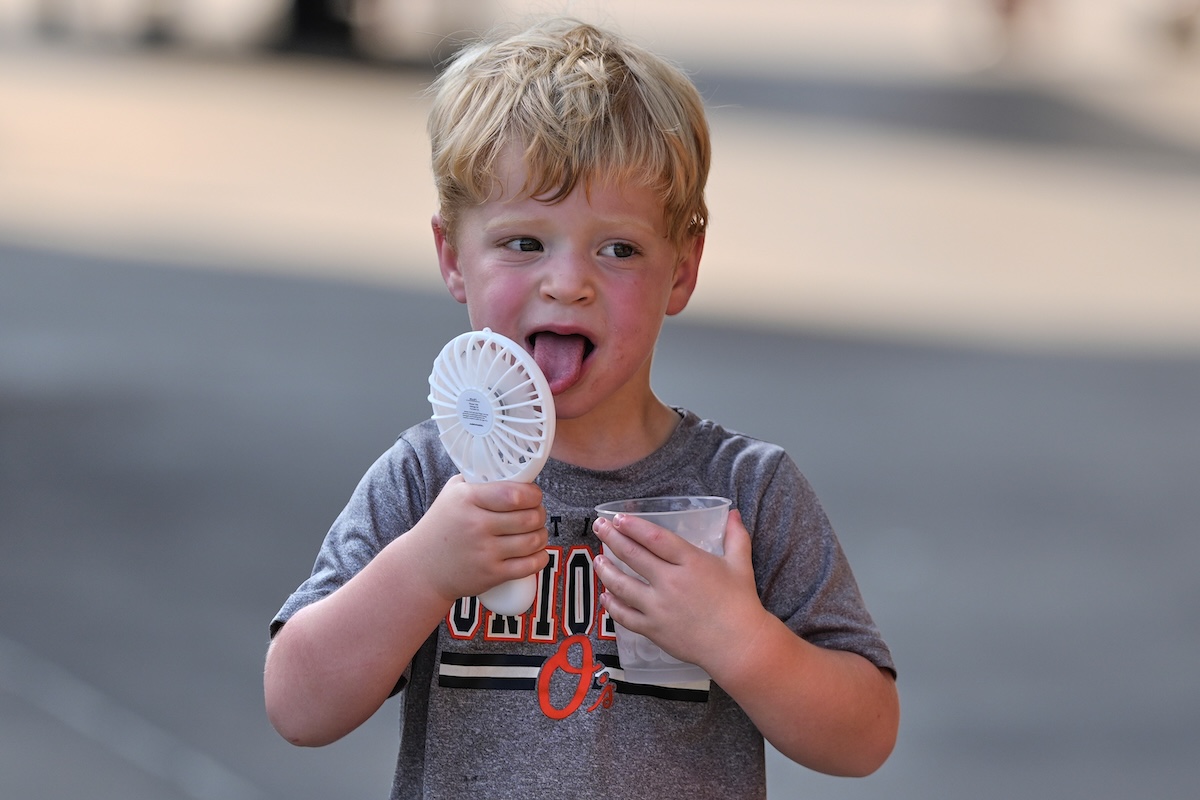
Asher Gillen, 3, uses a battery-powered fan while holding a cup of ice to cool off during hot weather before a baseball game between the Baltimore Orioles and the Texas Rangers, Monday, June 23, 2025, in Baltimore, Maryland. (AP)
Age, humidity, and activity level can all increase risk
Kids sweat less, have less body surface area to cool themselves off, spend more time outside in the heat, and aren’t great about remembering to take a break and drink water. Adult supervision, enforcing breaks for hydration and time in the shade, and avoiding sports in the heat of the day can help keep kids safer.
Older adults are susceptible for different reasons. As we age, our bodies’ systems for temperature regulation — notably our blood vessels ability to widen and constrict — can weaken. Older adults are also more likely to be taking several medications — including blood pressure medications — that heighten risk.
Dr. Ian Neel, a specialist in geratric medicine at the University of California San Diego, advises his patients to stay hydrated, exercise indoors, and if a home does not have air-conditioning, to check their county’s website to find nearby cooling zones.
Humidity matters too, regardless of age. Sweat only cools a body down if it can evaporate from skin, which is harder to do when it’s more humid outside. Checking the heat index, which accounts for humidity, can help you assess how safe it is to spend time outdoors. If the heat index is higher than 90 degrees, the National Weather Service advises using “extreme caution” while spending long periods of time outside or exercising in the heat.
You can check the Centers for Disease Control and Prevention’s Heat Risk forecast for your zip code.
Your risk of heat stroke also increases the more energy you exert. If you are exercising or doing hard labor in the sun, you can get heat stroke even if it’s not very hot.
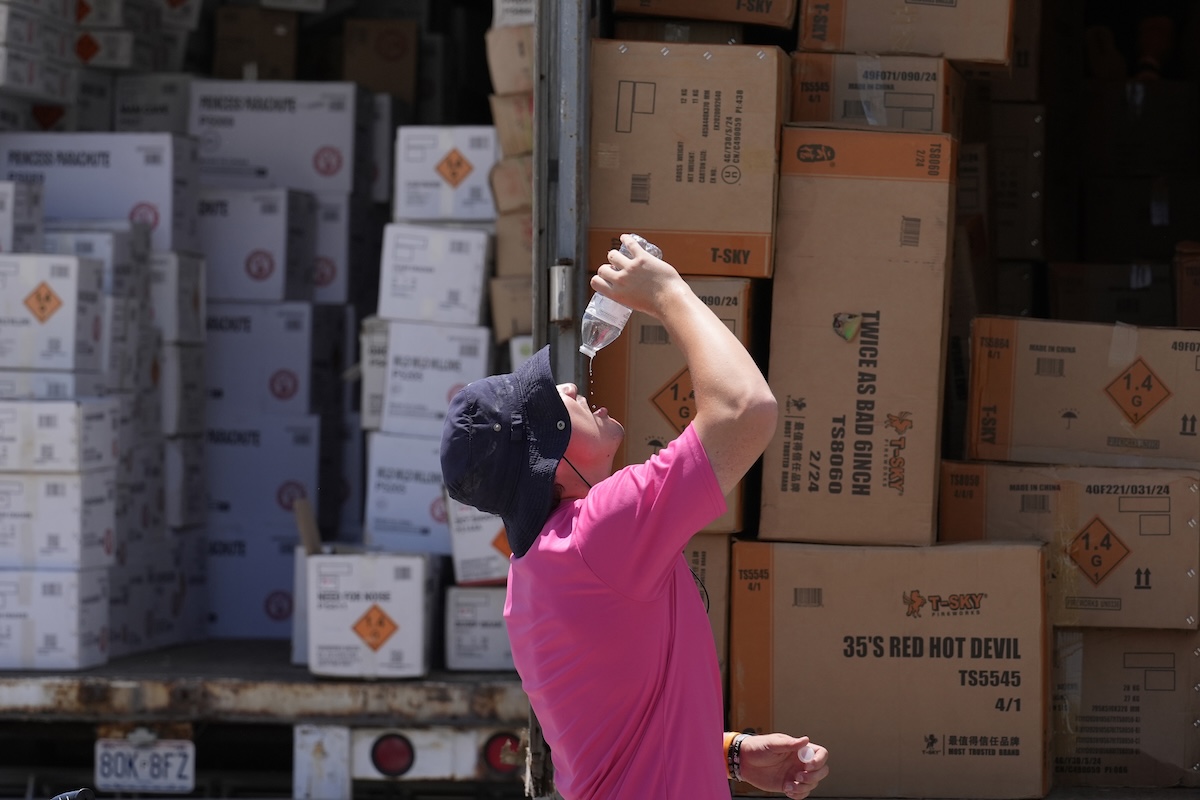
Wyatt Seymore pours the last drops of liquid from a water bottle into his mouth as he takes a break from unloading a stiflingly hot trailer of fireworks outside Powder Monkey Fireworks ahead of the opening of the stand, June 17, 2024, in Weldon Spring, Montana. (AP)
Preventing heat-related illnesses
Drinking water is the most important thing a person can do to prevent dehydration and reduce stroke risk. Dehydration makes it harder for a body to cool itself down. Here are some other tips that can help you stay healthy without spending summer inside:
-
Be flexible with plans. Check the heat index before you head out — if the risk is high consider rescheduling or moving the activity indoors. Avoid planning outdoor activities during the hottest part of the day: midday through the afternoon.
-
Wear light-colored and loose-fitting clothing. Tight clothes can make it harder for sweat to evaporate and trap warm air against your body.
-
Take breaks in the shade or air-conditioning. If your house doesn’t have air conditioning, check if your city has opened any local cooling centers.
-
Limit physical activity. If you are exercising, take frequent breaks to cool down and rest.
[ad_2]
Source link
